Roles
Labourer Job Description: Duties, Skills and Template
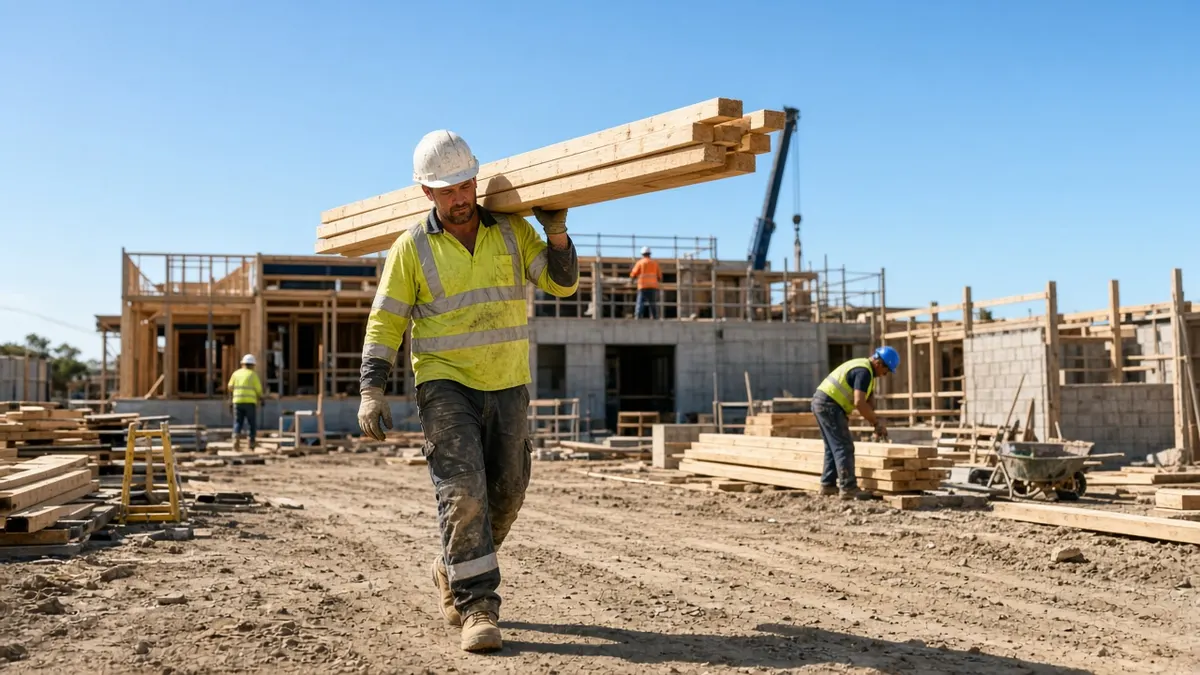
A labourer job description covers the physical groundwork that keeps a job moving: loading and moving materials, preparing and cleaning work areas, digging, using hand and power tools, and assisting tradespeople. Duties change with the setting, whether construction, civil, warehouse or landscaping. Most roles need a white card for building sites, good fitness and reliability.
What does a labourer do?
Across almost every setting, a general labourer is responsible for:
- loading, unloading and carrying materials, tools and equipment
- preparing work areas, including setting out barriers, signage and protection
- keeping the site clean, removing waste and maintaining clear walkways
- digging, backfilling, levelling and compacting by hand or with small plant
- assisting tradespeople by cutting, holding, fetching and cleaning up
- operating power tools such as drills, grinders, demo saws and compactors
- following safe work method statements, site rules and supervisor instructions
- reporting hazards, damage and near misses
Labourers are often the first on site and the last to leave. The best ones anticipate what the trades need next, so carpenters, concreters and bricklayers never stand around waiting for materials.
What are labourer duties in construction, civil, warehouse and landscaping work?
Pay bands below are indicative 2026 market observations for casual employees in capital cities. Confirm award minimums before setting a rate.
| Setting | Typical duties | Common tickets | Indicative casual band (AUD/hr) |
|---|---|---|---|
| Construction (residential and commercial) | Site clean, material handling, assisting trades, set-out, small demolition | White card, working at heights | $35–46 |
| Civil (roads, drainage, earthworks) | Pipe laying assistance, shovelling, compacting, spotting for plant, traffic set-up | White card, traffic control, plant tickets | $38–50 |
| Warehouse and logistics | Picking, packing, loading containers, stocktakes, wrapping pallets | Forklift licence for some roles | $30–40 |
| Landscaping | Digging, laying turf and paving bases, mulching, carrying stone, planting | White card on new-build sites | $32–42 |
| Demolition and strip-out | Removing ceilings and partitions, breaking concrete, loading skips | White card, demolition course, asbestos awareness | $35–48 |
Construction labourer duties
On a house frame in Box Hill or a mid-rise in Parramatta, a construction labourer stacks timber and steel, cleans each floor for the next trade, sets up edge protection under supervision, mixes mortar for bricklayers and helps with concrete pours by barrowing, spreading and cleaning tools.
Civil labourer duties
Civil labourers work on roads, drainage and subdivisions. Expect long days outdoors, spotting for excavators, laying and bedding pipes, shovelling and compacting, and working near live traffic, which is why a traffic control ticket adds value.
Warehouse labourer duties
In a warehouse in Erskine Park or Truganina, labourers pick and pack orders, unload containers, wrap and label pallets and keep aisles clear. Shifts often run early mornings, evenings or nights.
Landscape labourer duties
Landscape labourers dig garden beds, prepare bases for paving and retaining walls, barrow soil and mulch, lay turf and clean up green waste. Work is seasonal, with peaks in spring and autumn.
What skills does a labourer need?
- Reliability: turning up on time, every time, is the skill hirers mention most.
- Safety awareness: understanding exclusion zones, manual handling and when to stop work.
- Tool competence: safe use of common hand and power tools.
- Following instructions: working from a supervisor's directions and a safe work method statement.
- Teamwork and communication: clear, simple communication on noisy sites, including reporting problems early.
- Licence and transport: a driver's licence and own transport help for early starts and changing sites.
What are the physical demands of labouring?
Labouring is physically demanding. Most roles involve standing and walking for most of the shift, repeated lifting and carrying, bending, kneeling and working outdoors in heat, cold and rain. Good manual handling technique, sun protection and hydration matter as much as strength. Hirers should describe the physical demands honestly in the ad so applicants can judge whether the role suits them.
On construction sites, Safe Work Australia's guidance on working on a construction site says workers must hold a construction induction (white card) before they start. Read what is a white card for how to get one.
Labourer job description template for hirers
Copy and adapt this template for your job post. Replace the bracketed sections with your details.
General Labourer, [suburb], [casual or full-time]
About the job: We are a [type of business] working on [type of project] in [suburb]. We need a reliable labourer to support our team from [start date], [days and hours].
Duties:
- Load, unload and move materials around site
- Keep work areas clean, safe and clear of waste
- Assist [trades] with set-up, cutting and clean-up
- Operate hand and power tools safely
- Follow site safety rules and safe work method statements
Requirements:
- White card (construction induction) [required for construction sites]
- Steel-capped boots and [any other PPE the worker must supply]
- Able to lift and carry materials and work outdoors
- [Driver's licence and own transport, if needed]
- [Any tickets: traffic control, forklift, working at heights]
Pay and conditions: $[rate]/hr [casual, including casual loading], paid [weekly or per job]. Start time [time], finish around [time].
What we provide: [site induction, PPE such as hard hat, gloves and eye protection, tools and equipment, parking or transport details].
To apply: send a short message with your experience, tickets and availability.
A few tips make the ad work harder. Put the suburb and start date in the first line, because workers filter by location and timing. Be specific about tickets, so you are not sorting through applicants who cannot get on site. State the physical demands plainly, such as "lifting bags up to 20 kg" or "full day outdoors". And list anything unusual, such as night shifts, travel between sites or work at heights, so the people who apply are the people who will stay.
How do you use a labourer job description on a resume?
Workers can turn the duty list above into resume bullet points. Start each point with an action verb and add a number where you can, for example "Prepared and cleaned 12 townhouse sites for handover" or "Loaded and unloaded up to four containers a shift". List your tickets near the top. Our labourer resume example shows a full layout, and labourer interview questions helps you prepare for the phone screen.
Which award covers labourers?
It depends on the workplace. Labourers on building and construction sites are generally covered by the Building and Construction General On-site Award, while warehouse, landscaping and cleaning labourers usually fall under other awards. Our guide to what award a labourer comes under explains how to check, and the Fair Work pay guides list current minimum rates.
How to hire a labourer on Yakka
Yakka Labour is the hiring marketplace, not the workwear brand with a similar name. You post the job and hire directly, without an agency margin on top of wages.
- Paste your adapted job description into a new job post with the suburb, start time, tickets required and AUD rate.
- Review labourer profiles showing skills, tickets and photos, and message the ones that fit.
- Agree the rate and hours in writing and pay through the platform.
Yakka is a marketplace, not an employer, so the hirer and worker agree the engagement. Need someone tomorrow? See how to hire a labourer for a day.
Frequently asked questions
What is the difference between a labourer and a trades assistant?
The roles overlap. A general labourer supports the whole site with materials, cleaning and basic tasks. A trades assistant usually works alongside one trade, such as an electrician or carpenter, and learns more specialised tasks. Trades assistant roles can lead to apprenticeships, and they often pay slightly more once the worker has relevant experience.
Do labourers need experience?
Many entry-level labouring jobs do not need previous experience, especially site cleaning, warehouse and landscaping roles. Hirers look for reliability, fitness, a white card for construction sites and willingness to learn. Experience with tools, plant or specific tickets such as traffic control or forklift helps you move into better-paid roles faster.
What hours do labourers usually work?
Construction labourers commonly start between 6 and 7am and finish mid-afternoon, Monday to Friday, with some Saturday work. Civil jobs can run longer days, and warehouse labouring often includes evening and night shifts. Casual roles may be offered day by day, so confirm the expected hours and minimum shift length before you accept.
Should a labourer job ad include the pay rate?
Yes. Ads with a clear hourly rate attract more suitable applicants and save time on both sides. State whether the rate is casual and includes casual loading, how often pay is made and any allowances. Make sure the rate meets the minimum for the applicable award and classification, which you can check in the Fair Work pay guides.
What should a labourer bring on the first day?
Bring your white card, photo ID, steel-capped boots, hi-vis clothing, a hat, sunscreen, water and lunch. Some hirers also ask for gloves, safety glasses and hearing protection. Have your tax file number, bank details and superannuation fund details ready if you are starting as an employee, so the paperwork does not delay your first pay.
Official sources
Award rates, licences and safety rules change. Check the official source before you hire or take on a shift.
- Fair Work Ombudsman — pay guidesMinimum award rates, casual loading and penalty rates
- Fair Work Pay CalculatorWork out the minimum pay for a specific award and shift
- Safe Work AustraliaNational work health and safety framework, including high-risk work licences
- Asbestos Safety and Eradication AgencyWhere asbestos is found in homes and how to deal with it safely
- Australian Taxation Office — super for employersSuperannuation guarantee obligations when you pay workers