Compliance
What Award Does a Labourer Come Under? (2026)
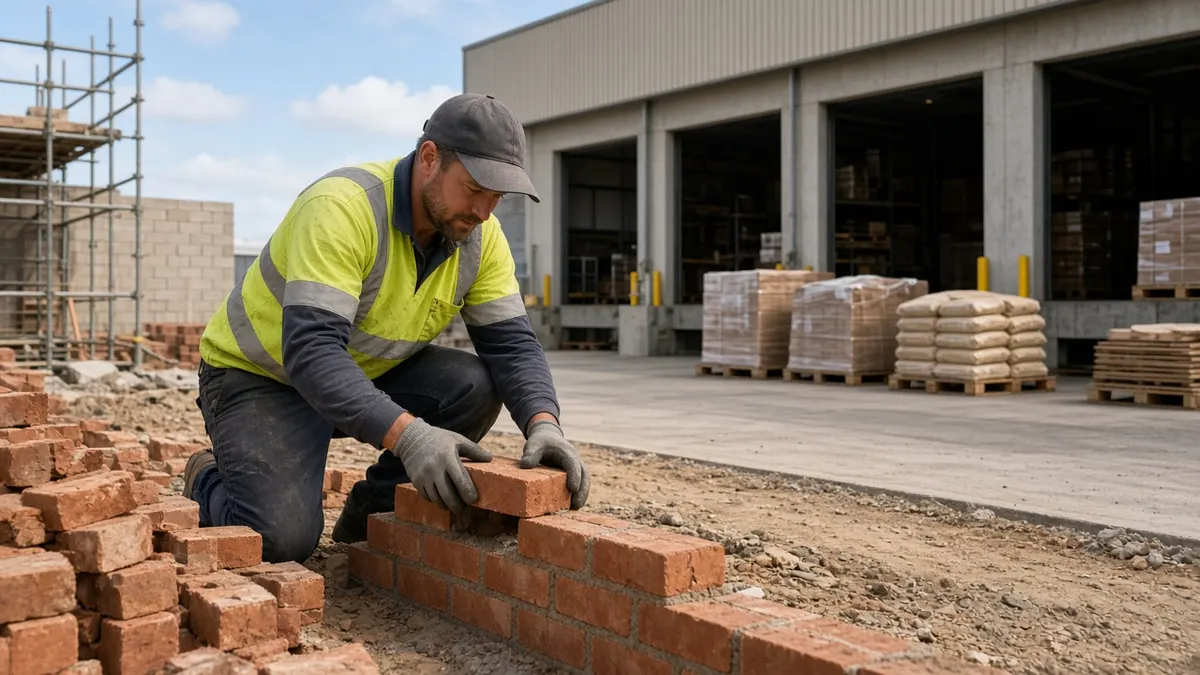
What award does a labourer come under? It depends on the employer's industry, not the job title. A labourer on a building site is usually covered by the Building and Construction General On-site Award, a warehouse labourer by the Storage Services and Wholesale Award, and a factory hand by the Manufacturing Award. Check with Fair Work's Find my award tool.
Below is a decision table, examples of tricky cases, the 2026 starting rate for construction labourers and how to confirm your award. General information, not legal advice. Yakka Labour is the hiring marketplace, not the workwear brand with a similar name.
Which award covers a labourer in each type of workplace?
| Where the labourer works | Usual award | Award code |
|---|---|---|
| Building, civil or engineering construction site, including site clearance and landscaping associated with building works | Building and Construction General On-site Award 2020 | MA000020 |
| Off-site joinery, shopfitting workshop or building trades factory | Joinery and Building Trades Award | MA000029 |
| Warehouse, distribution centre, cold store, wholesaler | Storage Services and Wholesale Award 2020 | MA000084 |
| Factory, metal fabrication, process line | Manufacturing and Associated Industries and Occupations Award 2020 | MA000010 |
| Garden maintenance and landscaping not part of building works | Gardening and Landscaping Services Award 2020 | MA000101 |
| Commercial cleaning contractor | Cleaning Services Award 2020 | MA000022 |
| Fruit, vegetable or nursery farm | Horticulture Award 2020 | MA000028 |
| Hotel, caterer or venue kitchen and cellar | Hospitality Industry (General) Award 2020 | MA000009 |
| Event, exhibition or recreation facility operator | Amusement, Events and Recreation Award 2020 | MA000080 |
This is a starting point, not a ruling. Coverage clauses contain exclusions, and an enterprise agreement can replace the award entirely. Fair Work's list of awards links to every award's text.
What is the labourer award wage in 2026?
For construction labourers, the Building and Construction General On-site Award sets a CW1 (level a) new entrant at $1,013.50 per week, or $26.67 per hour, from 1 July 2026. That is the classification rate only. The ordinary hourly rate adds the weekly industry allowance ($67.15 for general building, $53.72 for residential), and casuals receive 25% on top for ordinary hours. Rates step up after 3 and 12 months in the industry.
For warehouse labourers, a new Storeworker grade 1 casual is $33.85/hr including loading under the Storage Services and Wholesale Award from 1 July 2026. Other awards have their own tables. Get exact figures from the Fair Work pay guides. Level-by-level detail for construction is in building and construction award levels, and warehouse rates are in warehouse casual pay rates.
Does the labourer award change in NSW, QLD, VIC or WA?
Modern awards are national, so a labourer in Penrith, Ipswich or Geelong working for a private company is covered by the same award and rates. The main exception is Western Australia. According to Fair Work's guide to the national and state systems, WA sole traders, partnerships, other unincorporated entities and non-trading corporations are covered by the WA state system, so a labourer working for a WA sole-trader builder may be under a state award. State public sector and some local government employees are also outside the national system.
Which award applies when the work overlaps?
Real jobs blur lines. Some examples:
- Landscaping: a labourer laying turf and retaining walls as part of a new housing estate's civil works is usually under the construction award, which covers landscaping associated with building works. A labourer maintaining established gardens for a garden services company is usually under the Gardening and Landscaping Services Award.
- Forklift work: a forklift-licensed labourer in a 3PL warehouse is under the Storage Services award, but the same person driving a forklift on a building site is under the construction award.
- Cleaning: a builders cleaner employed by a cleaning company is usually under the Cleaning Services Award; one employed directly by the builder may be under the construction award.
- Labour hire: several awards, including the construction and storage awards, expressly cover on-hire employees while they work for a business in that industry. The host's industry often decides which award applies.
- Demolition and strip-out: a demolition labourer is listed in the construction award's CW1 classifications, so strip-outs in a commercial fit-out are usually construction work even when no new building is going up.
- Farm work: a labourer picking fruit or pruning vines is usually under the Horticulture Award, while one building sheds or fencing for a construction contractor on the same property may be under the construction award.
Where a business's employees could fall under more than one award, the award with the classification that best fits the work and environment generally applies. If it is genuinely unclear, ask Fair Work in writing and keep the answer.
How do I check which award covers me?
- Write down the employer's main business, not just your tasks (for example, a builder, a logistics company or a garden maintenance contractor).
- Use the Find my award tool or Pay and Conditions Tool on the Fair Work website and answer the industry questions.
- Read the coverage clause (usually clause 4) of the suggested award, then the classification definitions, to find your level.
- Ask whether your employer has a registered enterprise agreement, which can replace the award.
- Download the pay guide and compare it with your payslip, including penalties and allowances.
Keep a copy of what you find, including the date. If duties change later, for example a warehouse labourer starts working mostly on a building site, run the check again, because the award can change with the work.
What should a casual labourer check on their payslip?
Look for the classification or level, the ordinary hourly rate, hours at each rate, any casual loading (or a note that the rate includes it), allowances such as industry or tool allowances, penalty rates for weekends, and super. Fair Work requires payslips within one working day of pay day. If anything is missing, ask the employer first, then contact Fair Work.
It also helps to keep your own simple diary of each shift: the date, site address, start and finish times, breaks and any tasks that might change your classification, such as driving a forklift or supervising others. If a payslip looks wrong, that record makes the conversation with the employer much quicker. Hirers can find the basics in labour hire compliance in Australia.
How do I hire or find labouring work on Yakka?
Hirers post the job with the suburb, the type of workplace, tasks, tickets and an AUD hourly rate at or above the correct award, then agree the rate directly with each worker and pay through the platform. Workers create a free profile listing their tickets and apply for jobs nearby. Hirers who are unsure which award applies should describe the workplace in the job post, for example "civil works on a new estate in Box Hill" or "3PL warehouse in Truganina", and confirm coverage with Fair Work before agreeing a rate. Browse warehouse labourers or landscapers near you.
Frequently asked questions
Is there a general labourer award in Australia?
No. There is no single award called the general labourer award. Labourers are covered by the award for the industry they work in, such as construction, storage, manufacturing, gardening or cleaning, and each has its own classifications and rates. Employees with no award or agreement are covered by the national minimum wage and the National Employment Standards.
What is the national minimum wage in 2026?
Fair Work states that from 1 July 2026 the national minimum wage is $26.44 per hour, or $1,004.90 per week. It applies to employees not covered by an award or registered agreement. Award-covered employees must be paid at least their award rate, which may be higher, plus any penalty rates and allowances that apply.
Can an employer choose which award to use?
No. Award coverage is decided by the employer's industry and the work performed, as set out in each award's coverage clause. An employer cannot pick a cheaper award. They can make a registered enterprise agreement that passes the better off overall test, which then applies instead of the award.
Does a labourer with an ABN come under an award?
A genuine independent contractor running their own business is not covered by an award. However, holding an ABN does not by itself make someone a contractor. If the working relationship is really employment, the award applies regardless of the ABN, and the business may face sham contracting and underpayment risks.
Do labour hire workers get the same award as permanent staff on site?
Often yes, where the award covers on-hire employees in that industry, as the construction and storage awards do. If the host has an enterprise agreement, labour hire workers are not automatically covered by it, but a regulated labour hire arrangement order from the Fair Work Commission can require them to be paid at least the host's rates.
Official sources
Award rates, licences and safety rules change. Check the official source before you hire or take on a shift.
- Fair Work Ombudsman — pay guidesMinimum award rates, casual loading and penalty rates
- Fair Work Commission: Hospitality Industry (General) Award 2020The full award text (MA000009), including classifications and Schedule B pay tables
- Fair Work Pay CalculatorWork out the minimum pay for a specific award and shift