Rates
Warehouse Casual Pay Rate Australia (2026)
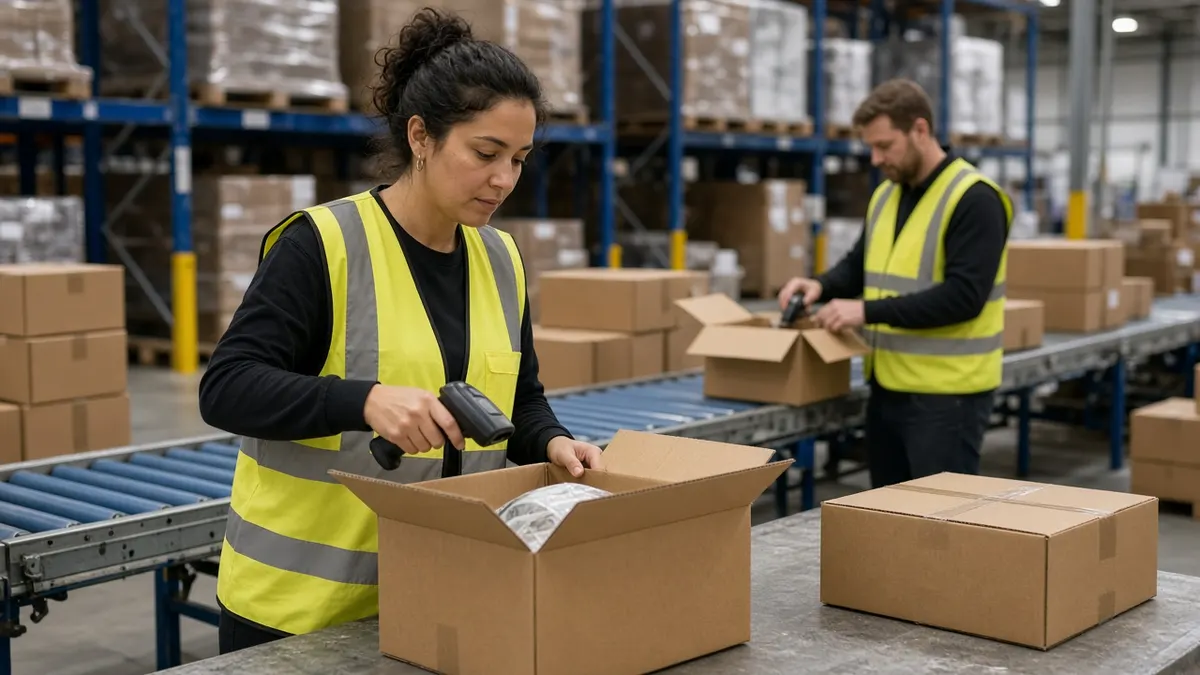
The warehouse casual pay rate in Australia starts at $33.85/hr under the Storage Services and Wholesale Award for a new casual from 1 July 2026, rising with grade and penalties. In the market, casual pick-packers are commonly offered $32–38/hr and licensed forklift drivers $35–42/hr. Market figures are indicative; confirm award minimums on Fair Work.
Below are the award grades, real role examples, penalty rates and tips for getting more shifts. Yakka Labour is the hiring marketplace, not the workwear brand with a similar name.
What is the casual warehouse award rate?
Most warehouse, distribution and storage workers are covered by the Storage Services and Wholesale Award 2020. These are the casual day-worker rates from the award's 1 July 2026 summary table, including the 25% casual loading:
| Classification | Typical duties | Casual ordinary rate (AUD/hr) |
|---|---|---|
| Storeworker grade 1, on commencement | New starter: picking, packing, stock checks, non-licensed equipment | $33.85 |
| Storeworker grade 1, after 3 months | As above with experience | $34.26 |
| Storeworker grade 1, after 12 months | As above with experience | $34.65 |
| Storeworker grade 2 | Licensed operation of materials handling equipment, basic maintenance | $34.96 |
| Storeworker grade 3 | All licensed equipment, store layout, supervising up to 10 people | $35.96 |
| Storeworker grade 4 | Higher-level duties defined in the award | $37.01 |
These are legal minimums at the time of writing and change each July. Always check the latest figures in the Fair Work pay guides, and note that sites with an enterprise agreement may pay more.
How much do pick-packers, storepeople and forklift drivers earn?
Market rates sit above the award floor in busy hubs. These are indicative 2026 market observations for casual day shifts, before super:
| Role | Common tickets | Casual day rate (AUD/hr) |
|---|---|---|
| Pick-packer | None; RF scanner experience helps | $32–38 |
| Storeperson / warehouse assistant | None or LF | $33–40 |
| Forklift driver (counterbalance) | LF licence | $35–42 |
| Reach truck or high-reach driver | LF licence plus experience | $38–46 |
| Leading hand / team leader | LF, supervision experience | $40–50 |
Detail on drivers is in our forklift driver hourly rate guide.
How do warehouse casual rates compare by city?
Location matters because the big hubs compete for the same pool of reliable casuals. These are indicative 2026 market observations for a casual pick-packer or storeperson on day shift without a licence:
| City | Main warehouse areas | Casual day rate (AUD/hr) |
|---|---|---|
| Sydney | Eastern Creek, Kemps Creek, Moorebank, Wetherill Park | $34–39 |
| Melbourne | Truganina, Laverton North, Dandenong South, Epping | $33–38 |
| Brisbane | Richlands, Crestmead, Heathwood, Pinkenba | $33–37 |
| Perth | Kewdale, Hazelmere, Jandakot, Malaga | $34–39 |
| Adelaide | Wingfield, Regency Park, Burton | $32–36 |
Rates at the top of each band usually come with harder conditions: freezer work, heavy manual handling, strict pick-rate targets or early starts. Peak periods such as November and December can lift rates temporarily as retailers and parcel networks build stock.
Do casual warehouse workers get paid more on nights and weekends?
Yes. Under the Storage Services and Wholesale Award, casual penalty rates are expressed as a percentage of the minimum hourly rate with the casual loading already included. For a new grade 1 casual, the award's 1 July 2026 tables show:
- Saturday: 175%, or $47.39/hr
- Sunday: 225%, or $60.93/hr
- Public holiday: 275%, or $74.47/hr
- Early morning shift (starting 2am–7am): 137.5%, or $37.24/hr
- Afternoon shift (finishing after 6pm, by midnight): 140%, or $37.91/hr
- Night shift (finishing after midnight, by 8.30am): 155%, or $41.97/hr
The award also guarantees casuals at least 4 hours' engagement each start, and freezer work below about minus 15 degrees attracts an hourly cold allowance. How the 25% interacts with penalties differs between awards; see casual loading explained.
Is every warehouse job under the Storage Services award?
No. The award itself excludes employers covered by another award with relevant classifications, and the Road Transport and Distribution Award. In practice:
- A warehouse inside a factory may use the Manufacturing and Associated Industries and Occupations Award.
- A transport company's depot may use the Road Transport and Distribution Award.
- A retailer's own distribution centre may be covered by an enterprise agreement.
- Labour hire workers placed in a storage business are covered by the Storage Services award while doing that work, because the award expressly covers on-hire employees in the industry.
If you are unsure, use Fair Work's Find my award tool, or read what award a labourer comes under.
What does a casual warehouse shift look like in dollars?
Example: Priya is a grade 2 casual storeperson with an LF licence at a third-party logistics site in Truganina. In one week she works three 8-hour day shifts and one 8-hour Saturday. At the award minimums from 1 July 2026, that is 24 hours at $34.96 ($839.04) plus 8 hours at $48.95 ($391.60), or $1,230.64 before tax. Her employer also pays 12% super on qualifying earnings. If the site pays a market rate of $38/hr weekdays, the weekday portion rises to $912.
Now compare a night-shift week. If Priya instead works four 8-hour night shifts finishing after midnight, the award grade 2 casual night rate of $43.35 applies, giving $1,387.20 for 32 hours before tax. That is why many casuals who can handle the hours chase night rosters, and why hosts find nights the hardest shifts to fill.
How do I get casual warehouse work?
- Create a free Yakka profile listing your warehouse experience, RF scanner and WMS systems you know, and any LF or LO licence with its expiry date.
- Set your availability, especially nights and weekends, which are the shifts hosts struggle to fill.
- Apply for jobs near you, and message the host to confirm the start time, PPE and rate before accepting.
- Turn up early to the first shift with steel-capped boots and hi-vis; reliability is what gets you rebooked.
Getting an LF licence is the quickest way to lift your rate. Browse broader options on casual jobs.
What hosts look for is consistent across Sydney, Melbourne and Brisbane: people who arrive on time, keep up with pick rates without cutting safety corners, and can be trusted on the scanner. Mention specific numbers on your profile if you have them, such as the cartons per hour you averaged at your last site or the WMS you used. A short, specific profile beats a long generic one.
If you are new to the work, start with pick-packing or loading shifts, which rarely need a licence, then ask the host about training on equipment once you have proven yourself over a few weeks. Many storepeople move into licensed driving, leading hand or inventory control roles this way.
How do businesses hire casual warehouse staff on Yakka?
Post the job with the suburb, shift times, tasks, tickets and an AUD hourly rate at or above the award. Workers apply directly; you check profiles, message them and agree the rate in writing in the app, then pay through the platform with no agency margin on top. Start with warehouse labourers near you or warehouse labour hire in Sydney.
Frequently asked questions
Do casual warehouse workers get super?
Yes. Employers must pay superannuation guarantee for eligible casual employees, currently 12% of qualifying earnings. Since 1 July 2026, under Payday Super, contributions must generally reach the fund within seven business days after each payday. Casual loading counts toward qualifying earnings, according to the ATO. Check your payslip shows the super amount for each pay.
Can a 16-year-old do casual warehouse work?
Often yes, for duties that do not need a licence, but junior pay rates apply under most awards and a forklift high risk work licence requires the applicant to be at least 18. Some sites set their own minimum age for safety or insurance reasons. Check the junior rates table in the relevant Fair Work pay guide before agreeing a rate.
Is warehouse work paid weekly?
Many warehouse employers and labour hire providers pay weekly, but awards set the minimum frequency, not a universal rule. The Storage Services and Wholesale Award has its own payment of wages clause, and your employment contract may set the cycle. Ask about the pay cycle before your first shift and confirm it on your first payslip.
What should I wear to a warehouse shift?
Most sites require steel-capped or composite-toe safety boots, hi-vis clothing and long pants. Some add gloves, safety glasses or freezer jackets for cold rooms. Check what the host supplies and what you must bring before accepting the shift. Arriving without the right PPE can mean being sent home and losing the shift.
Can casual warehouse workers become permanent?
Yes. Under the employee choice pathway, a casual employee can give written notice to change to permanent employment after at least 6 months with the employer, or 12 months with a small business, if they believe they no longer meet the casual definition. Employers can also offer permanent roles at any time. Fair Work explains the process in detail.
Official sources
Award rates, licences and safety rules change. Check the official source before you hire or take on a shift.
- Fair Work Ombudsman — pay guidesMinimum award rates, casual loading and penalty rates
- Fair Work Pay CalculatorWork out the minimum pay for a specific award and shift
- Australian Taxation Office — super for employersSuperannuation guarantee obligations when you pay workers