Build & Renovate cost guide
Bathroom Renovation Cost in Australia: 2026 Price Guide
Typical cost in Australia (2026, inc. GST)
$15,000 to $45,000 per job
full renovation of a standard 5-8 m² bathroom, layout mostly unchanged
A full renovation of a standard 5 to 8 m² Australian bathroom costs about $15,000 to $45,000 in 2026, including GST. Budget jobs with the same layout start near $15,000, mid-range family bathrooms sit around $25,000 to $45,000, and premium rooms with layout changes pass $60,000. Plumbing, tiling, waterproofing and fixture choice drive most of the price, along with access and the age of the house.
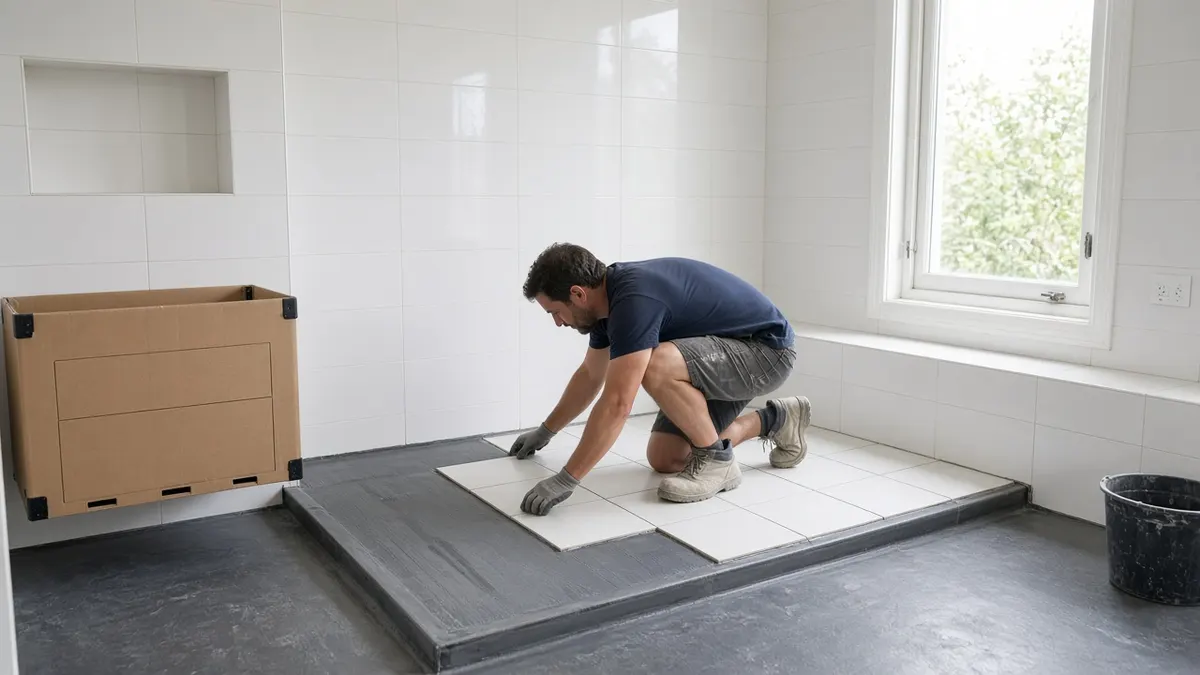
A full bathroom renovation in Australia costs roughly $15,000 to $45,000 in 2026 for a standard 5 to 8 m² room, with GST included. Most families land between $25,000 and $35,000 once they choose floor-to-ceiling tiles, a frameless shower screen and mid-range tapware, while small ensuites with the plumbing left where it is can come in under $20,000.
The spread is wide because a bathroom packs six or seven trades into a tiny space. A plumber, electrician, carpenter, waterproofer, tiler, glazier and painter all need their turn, usually in a fixed order, and every one of them charges for travel and setup no matter how small the room is. The figures below are indicative only. Prices move with your suburb, the age of the house and what is hiding behind the old tiles, so get at least three written quotes before you commit.
Bathroom renovation prices at a glance
These bands assume a licensed builder or bathroom company runs the job and that the existing room is structurally sound. Owner-managed jobs can come in lower, but you take on the scheduling risk.
| Type of renovation | Typical scope | Indicative cost (inc. GST) |
|---|---|---|
| Cosmetic refresh | New vanity, toilet, tapware and paint, existing tiles kept or resurfaced | $5,000 to $12,000 |
| Small ensuite, full reno | 3 to 4 m², shower, toilet, vanity, same layout | $14,000 to $25,000 |
| Budget main bathroom | 5 to 6 m², same layout, builder-range fittings, part-height tiles | $15,000 to $25,000 |
| Mid-range family bathroom | 6 to 8 m², bath and separate shower, floor-to-ceiling tiles, frameless screen | $25,000 to $45,000 |
| Premium or reconfigured | Layout change, freestanding bath, niches, underfloor heating, custom joinery | $45,000 to $80,000+ |
If you only want to freshen tired tiles and a chipped bath without pulling anything out, read our bathroom resurfacing cost guide first. Resurfacing costs a fraction of a renovation, though it does nothing for a leaking shower.
Where the money goes in a standard bathroom
A quote that shows one lump sum tells you very little. Ask for a breakdown like the one below, which is for a mid-range 6 m² main bathroom with a bath, a separate shower and the toilet staying in place. Ranges are per item, including GST, before any builder margin.
| Line item | Indicative range | Notes |
|---|---|---|
| Strip-out and rubbish removal | $1,800 to $3,000 | Includes a 4 to 6 m³ skip; more if the floor is a mortar bed |
| Plumbing rough-in and fit-off | $4,000 to $6,500 | Moving the toilet or floor waste adds $1,500 to $4,000 |
| Electrical | $1,200 to $2,500 | Exhaust fan ducted outside, lights, GPOs, heated towel rail |
| Carpentry and wet-area sheeting | $1,500 to $3,000 | Framing repairs, noggins for wall-hung fixtures, fibre cement board |
| Waterproofing | $1,000 to $2,000 | Licensed or certified applicator, membrane certificate supplied |
| Tiling labour | $4,500 to $7,500 | About 30 m² of wall and floor, including screed and falls |
| Tiles, adhesive and grout | $1,500 to $4,000 | $30 to $90 per m² for most porcelain; large format costs more to lay |
| Fixtures and fittings | $4,500 to $10,000 | Vanity, toilet, bath, tapware, shower set, accessories |
| Shower screen | $1,000 to $2,000 | Semi-frameless at the low end, fully frameless 10 mm glass at the high end |
| Painting | $500 to $1,000 | Ceiling, cornice, door and frame in wet-area paint |
Add those up and you get roughly $21,500 to $41,500. A builder or bathroom company then adds 15 to 25 percent for supervision, insurance, warranty and profit, which is how a mid-range job ends up between $25,000 and $50,000. Tiling is usually the single biggest labour line; our tiler cost guide breaks down per-m² rates by tile size and pattern.
Cost per square metre, and why small rooms cost more
People often ask for a per-m² rate. As a rough guide, a full renovation works out at $3,000 to $7,000 per m² of floor area. The catch is that the rate climbs as the room shrinks. A 3.5 m² ensuite still needs a plumber rough-in, an electrician, a waterproofer and a full set of fixtures, so its fixed costs are spread over far fewer square metres. It is common to see an ensuite at $4,500 per m² and a large 10 m² bathroom at $3,500 per m², even though the bigger room costs more in total.
Wall area matters more than floor area for tiling. A 6 m² room with a 2.4 m ceiling has around 22 to 26 m² of wall once you subtract the door and window, so floor-to-ceiling tiles nearly triple the tiling quantity compared with tiling the floor and the shower recess alone. Half-height tiling with a painted wet-area finish above is one of the easiest ways to take a few thousand dollars off a quote.
How prices compare across Australia
Labour rates explain most of the difference between cities. Sydney and Canberra tradies charge more per hour, Darwin pays for freight on tiles and fixtures, and smaller markets like Hobart and Adelaide tend to be cheaper for labour but have fewer specialist waterproofers and glaziers, which can stretch timeframes.
| Location | Budget main bathroom | Mid-range family bathroom | Why it differs |
|---|---|---|---|
| Sydney | $18,000 to $27,000 | $28,000 to $50,000 | Highest labour rates, parking and access costs in inner suburbs |
| Melbourne | $16,000 to $25,000 | $26,000 to $46,000 | Older housing stock means more asbestos and floor repairs |
| Brisbane | $15,000 to $24,000 | $25,000 to $42,000 | Timber-framed Queenslanders often need subfloor work |
| Perth | $15,000 to $25,000 | $25,000 to $44,000 | Double-brick walls make moving plumbing slower |
| Adelaide | $14,000 to $22,000 | $23,000 to $40,000 | Lower labour rates, steady trade availability |
| Hobart | $14,000 to $23,000 | $24,000 to $42,000 | Smaller trade pool, freight on some fixtures |
| Canberra | $17,000 to $26,000 | $27,000 to $48,000 | High labour rates, strong demand |
| Darwin | $18,000 to $28,000 | $28,000 to $50,000 | Freight, humidity-rated materials, limited trades in the wet season |
Regional towns vary a lot. Labour is often cheaper, but if the nearest waterproofer or frameless glass supplier is two hours away you will pay travel time on every visit.
Three real budgets, line by line
These worked examples use realistic Australian houses and current trade rates. All amounts include GST.
Budget: 5.5 m² main bathroom in Penrith, NSW
A 1990s three-bedroom brick veneer. The owners swap the tired bath-shower combination for a walk-in shower, keep every drain where it is, choose builder-range fittings and hire each licensed trade directly.
| Item | Cost |
|---|---|
| Strip-out by labourers plus 4 m³ skip | $1,400 |
| Plumbing rough-in and fit-off | $3,800 |
| Electrical (new fan, LED downlights, GPO) | $1,100 |
| Wet-area sheeting and minor framing | $1,300 |
| Waterproofing with certificate | $1,100 |
| Tiling labour, 26 m² including screed | $3,900 |
| Tiles, adhesive and grout | $1,500 |
| Fixtures: vanity, toilet suite, tapware, rail shower, semi-frameless screen, accessories | $3,150 |
| Painting | $500 |
| Total | $17,750 |
That works out at about $3,230 per m². The saving comes from having no builder margin, but the owners carried the scheduling, and a single trade running late pushed the job from three weeks to five.
Mid-range: 7 m² family bathroom in Moorabbin, VIC
A 1960s double-fronted brick house run through a registered builder. The owners keep a bath, add a separate shower with a niche and go floor-to-ceiling with porcelain tiles. The old wall sheeting tested positive for asbestos.
| Item | Cost |
|---|---|
| Demolition and rubbish removal | $2,600 |
| Asbestos testing and licensed removal of wall sheeting | $1,800 |
| Plumbing | $5,500 |
| Electrical including heated towel rail circuit | $2,000 |
| Carpentry, noggins and wet-area board | $2,400 |
| Waterproofing | $1,600 |
| Tiling labour, 38 m² at $150 per m² | $5,700 |
| Tiles and setting materials | $3,200 |
| Fixtures: bath, wall-hung vanity, in-wall cistern toilet, tapware, frameless screen, towel rail | $7,400 |
| Painting | $800 |
| Builder margin and supervision, 18% | $5,940 |
| Total | $38,940 |
The asbestos line is the one most people forget. Any house built before 1990 can have bonded asbestos in wall sheeting, floor underlay or the old cistern, and our asbestos removal cost guide covers testing and removal prices in more detail.
Small ensuite: 3.5 m² in a Brisbane project home
A 2005 brick and tile home on the northside. Shower, toilet and vanity stay where they are, with mid-range fittings and a QBCC-licensed builder managing the trades.
| Item | Cost |
|---|---|
| Strip-out and rubbish | $1,200 |
| Plumbing | $3,200 |
| Electrical | $800 |
| Sheeting | $900 |
| Waterproofing | $900 |
| Tiling labour, 20 m² | $2,800 |
| Tiles | $1,000 |
| Fixtures and semi-frameless screen | $2,900 |
| Painting | $350 |
| Builder margin, 15% | $2,100 |
| Total | $16,150 |
At about $4,600 per m², the ensuite costs more per square metre than either bigger bathroom, which is the fixed-cost effect described above.
Waterproofing is the part you cannot cut
Failed waterproofing is the most common reason Australian bathrooms get ripped out early. Water creeps through the grout, soaks the substrate, rots the bottom plate of the wall frame and shows up as lifting floorboards or mould in the room next door. By the time you see it, the fix is usually a full redo.
In most states the membrane must be applied by a licensed or certified waterproofer, and the work has to meet the National Construction Code and AS 3740, the Australian Standard for waterproofing domestic wet areas. In practice that means the whole shower floor and walls are membraned to a set height, the rest of the floor gets a membrane or water-resistant treatment, there is a bond breaker at every wall-floor junction and a puddle flange at each floor waste. Ask for a waterproofing certificate when the job is done and keep it with your house papers; buyers and building inspectors ask for it.
Expect $1,000 to $2,000 for a standard bathroom and around $800 to $1,200 for a small ensuite. The membrane needs to cure before tiling starts, usually 24 to 48 hours depending on the product and the weather. A quote that has the tiler waterproofing on the same day as screeding, without a licence for it, is a warning sign. You can find a licensed waterproofer near you if your builder does not have one.
Which parts must be done by licensed trades
Plumbing and drainage work in every state and territory must be done by a licensed plumber, and electrical work by a licensed electrician, regardless of the job size. That includes moving a waste, adding a tap, connecting a toilet and wiring a fan or heated towel rail. A handyman cannot legally do this work, and insurers can refuse a water damage claim if they find unlicensed plumbing. Our article on whether a handyman can do plumbing goes through the state rules.
The overall renovation also falls under building licence rules once it passes each state's threshold:
- NSW: residential building work over $5,000 (labour and materials) needs a licensed contractor, and waterproofing is a licensed trade in its own right. Home building compensation cover is required on jobs over $20,000. Check the current figures with NSW Fair Trading.
- Queensland: building work over $3,300 needs a QBCC licence, and waterproofing has its own licence class. Home warranty cover applies above the same threshold. The QBCC website lets you check any licence number.
- Victoria: larger domestic building jobs need a registered builder and a written major domestic building contract, and domestic building insurance applies above a set value. The Building and Plumbing Commission now handles what the Victorian Building Authority used to; check the current thresholds there.
- WA, SA, Tasmania, ACT and NT: each has its own builder registration threshold, set by Building and Energy (WA), Consumer and Business Services (SA), CBOS (TAS), Access Canberra and the NT Building Practitioners Board. Check the current threshold with the relevant regulator before signing.
Most bathroom renovations that keep the room inside the existing walls do not need council approval. Removing a load-bearing wall, extending the room or changing a strata bathroom usually does. In a unit block, the owners corporation will almost always want notice, proof of insurance and the waterproofing certificate before work starts.
What pushes a quote up
- Moving things. Relocating a toilet or shower waste means cutting the slab or reworking the subfloor. On a concrete slab that can add $1,500 to $4,000 for the plumbing alone.
- Old floors. Many pre-1980 bathrooms sit on a thick mortar bed. Breaking it out is heavy, slow and fills a skip fast.
- Rot and termite damage. Timber-framed homes often hide a rotten bottom plate under the shower. Replacing framing adds carpentry days.
- Large-format tiles. 600 x 1200 mm tiles look clean but need a flatter substrate, more handling and often two tilers. Expect a higher per-m² labour rate than standard 300 x 600 mm tiles.
- Wall-hung fixtures and in-wall cisterns. They need extra framing and a plumber with the right brackets, and they cost more to buy.
- Access. A second-floor apartment with no lift or a terrace with no street parking adds labour hours for carrying materials in and rubbish out.
- Hot water upgrades. If the new shower outflows your old system, the plumber may recommend an upgrade. See our plumber cost guide for typical call-out and hourly rates.
Spending less without regretting it
Keep the layout. Leaving the toilet, shower waste and vanity in their existing spots is the biggest single saving available, often $3,000 or more.
Buy fixtures yourself, but buy them early and confirm the specs with your plumber first. A tapware set that needs a different wall depth, or a toilet with the wrong set-out, costs more to fix on the day than any discount you got online. Most plumbers will install owner-supplied fittings but will not warrant the product itself.
Tile to half height outside the shower and paint above with a quality wet-area paint. Choose a standard tile size that your tiler likes working with. Skip the niche if budget is tight; a corner shelf costs far less.
Do the labour-heavy prep with a crew rather than paying trade rates for it. Strip-out, carrying debris down the side path, loading a skip and the final clean do not need a licence, and they eat a surprising number of hours. The parts that touch water, waste, power or the membrane stay with the licensed trades.
Book outside the pre-Christmas rush. October to December is the busiest stretch for bathroom companies, and you will have more choice of start dates in late summer or winter.
How long a bathroom renovation takes
A standard bathroom takes three to five weeks on site when trades are booked back to back. A small ensuite can be done in two to three weeks. Here is a typical sequence:
- Days 1 to 2: strip-out, rubbish removal, asbestos removal if needed.
- Days 3 to 5: plumbing and electrical rough-in, carpentry repairs, new sheeting.
- Days 6 to 8: screed with falls to the waste, then waterproofing and curing.
- Days 9 to 15: wall and floor tiling, grouting, silicone.
- Days 16 to 20: plumbing and electrical fit-off, vanity and toilet installed, painting.
- After tiling: shower screen measured, made and fitted, often a week or more after the measure.
The glass is the usual hold-up. Frameless screens are made to measure after the tiles are on, so the room is often usable with a temporary curtain for a week before the screen arrives.
Reading a quote properly
A good written quote for a bathroom renovation lists the builder's licence number, the scope room by room, who supplies each fixture, the tile allowance per m², the waterproofing product and who applies it, rubbish removal, the payment schedule and the warranty. If any of those are missing, ask before you sign.
Watch for these red flags:
- No licence number on the quote, or a number that does not match the name when you check it with the regulator.
- Cash-only pricing or a request to skip the written contract.
- A deposit above the legal limit. In NSW the cap is 10 percent; in Victoria and Queensland it is 10 percent on smaller jobs and 5 percent on jobs of $20,000 or more. Check the current limits with your regulator.
- Large provisional sums with vague wording, which can blow out once work starts.
- Waterproofing listed as "included" with no mention of a licensed applicator or certificate.
- No public liability insurance, or a refusal to show the certificate of currency.
Compare at least three quotes on the same scope. If one is far cheaper, line it up against the breakdown table above and find the missing item. You can browse bathroom renovation specialists in your area to build a shortlist.
Lifespan and resale value
A well-built bathroom with a properly installed membrane should last 20 years or more before it needs another full renovation. Silicone joints need replacing every five to ten years, and grout sealing every couple of years helps in hard-water areas. Tapware cartridges and toilet inlet valves are cheap service items.
Bathrooms help sell houses, but they rarely return every dollar spent. A clean, modern, neutral bathroom in a mid-market home is a safer bet than a premium fit-out that the next owner may not share your taste for. If you plan to sell within two years, aim for the budget to mid-range band.
Where Yakka can help
Yakka Labour connects you with local workers for the heavy, unlicensed parts of a bathroom job: stripping out old vanities, tiles and mortar beds, carrying debris to the skip, removing rubbish and doing the post-build clean. Booking a crew for the strip-out day can take a chunk out of the cost, especially on owner-managed jobs. You can also book rubbish removal separately if the builder does not include it.
The licensed work is a different matter. Plumbing, electrical, waterproofing and any building work over your state's threshold must be done by appropriately licensed trades, and Yakka does not replace them. Use the platform for the labour, and check every tradie's licence number with your state regulator before they start.
Frequently asked questions
How much does a small bathroom renovation cost in Australia?
A small bathroom or ensuite of 3 to 4 m² usually costs $14,000 to $25,000 for a full renovation in 2026, including GST. The price per square metre is higher than for a large bathroom because the plumber, electrician, waterproofer and tiler all have fixed costs regardless of room size. Keeping the layout and choosing standard tiles keeps a small room near the lower end.
What is the most expensive part of a bathroom renovation?
Labour is the largest cost overall, and within that, tiling and plumbing are usually the two biggest lines. Tiling a mid-size bathroom floor to ceiling can cost $4,500 to $7,500 in labour alone. Plumbing rough-in and fit-off often runs $4,000 to $6,500, and more if you move the toilet or shower waste. Fixtures can rival either if you choose premium brands.
Do I need council approval to renovate my bathroom?
Most bathroom renovations that stay within the existing room and do not touch structural walls do not need council approval. You will need approval if you remove a load-bearing wall, extend the house or change the building's use. Strata properties almost always need owners corporation approval. Check with your local council and your strata manager before work starts.
Can I do my own bathroom renovation to save money?
You can do unlicensed tasks yourself, such as removing old vanities and tiles, painting and cleaning up. Plumbing, drainage and electrical work must be done by licensed trades in every state, and waterproofing must be done by a licensed or certified waterproofer in most states. Unlicensed work can void insurance and cause problems when you sell.
How long does a bathroom renovation take?
A standard bathroom renovation usually takes three to five weeks on site, and a small ensuite two to three weeks. Waterproofing cure time, tiling and the wait for a made-to-measure frameless shower screen set the pace. Add time for planning, quotes and ordering fixtures before work starts, as popular tapware and vanities can take several weeks to arrive.
Is it cheaper to resurface or renovate a bathroom?
Resurfacing is much cheaper, often $1,500 to $4,000 for tiles, bath and basin, compared with $15,000 or more for a full renovation. It suits bathrooms that are watertight and laid out well but look dated. It does not fix leaks, failed waterproofing or rotten framing, so if water is getting through, a renovation is the only proper fix.
How much should I budget for bathroom fixtures?
For a main bathroom, budget around $3,000 to $5,000 for builder-range fixtures and $6,000 to $10,000 for mid-range brands, covering the vanity, toilet, tapware, shower set, bath and accessories. Premium freestanding baths, wall-hung vanities and in-wall cisterns can push the fixture bill past $15,000. Confirm dimensions and set-outs with your plumber before ordering.
Official sources
Award rates, licences and safety rules change. Check the official source before you hire or take on a shift.
- Queensland Building and Construction Commission (QBCC)Contractor, plumbing and drainage licence search in Queensland
- Consumer and Business Services SALabour hire licensing in South Australia
- NSW Fair TradingTrade licence checks for electricians, plumbers and builders in New South Wales
- Building and Plumbing Commission (Victoria)Builder and plumber registration, domestic building insurance and licence checks in Victoria
- Asbestos Safety and Eradication AgencyWhere asbestos is found in homes and how to deal with it safely
- Consumer, Building and Occupational Services (Tasmania)Building, plumbing and electrical licensing in Tasmania