Exterior cost guide
Roof Restoration Cost (2026): Tile and Metal Prices in Australia
Typical cost in Australia (2026, inc. GST)
$4,500 to $11,000 per job
single-storey home, 150-220 m² tile or metal roof, full restoration with coating
A full roof restoration costs about $4,500 to $11,000 for a typical single-storey Australian home in 2026, or roughly $25 to $50 per m². That covers cleaning, replacing broken tiles or screws, rebedding and repointing ridges on tile roofs, and a primer plus two coats. Roof size, storeys, the number of repairs and whether you coat at all decide the price.
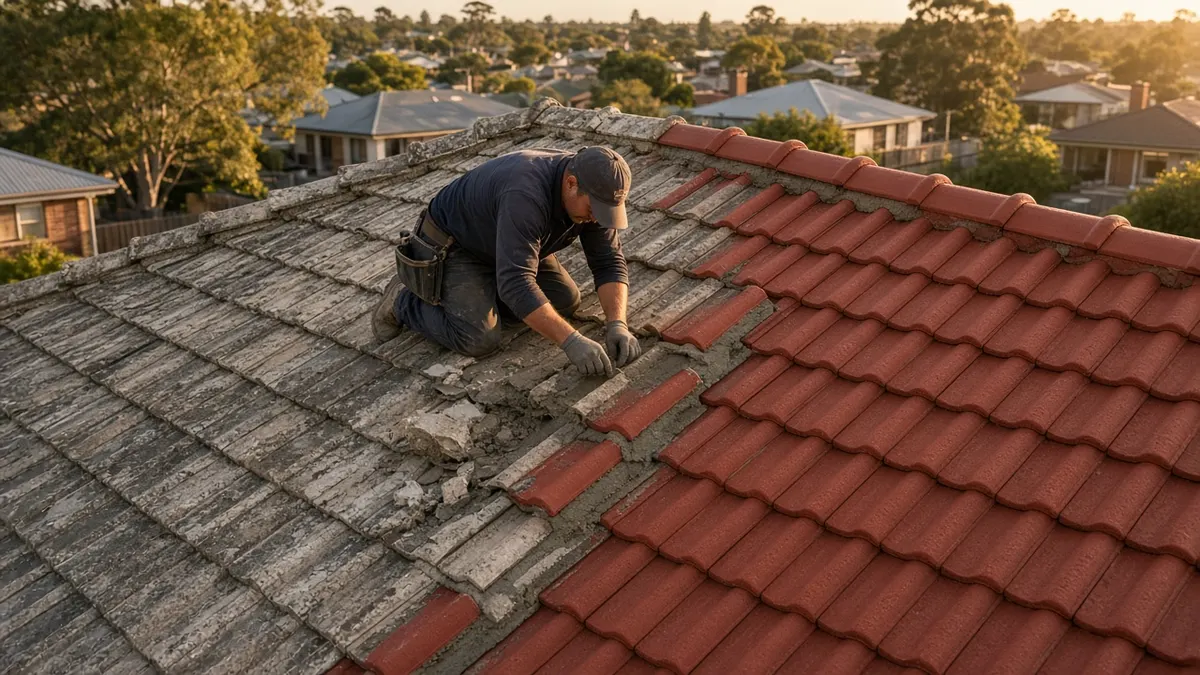
A roof restoration on an average single-storey home in Australia costs $4,500 to $11,000 in 2026. Per square metre, that is about $25 to $50 for a full job that includes cleaning, repairs, ridge rebedding and repointing on a tile roof, and a three-coat paint system.
Restoration is the middle option between a quick fix and a new roof. It keeps your existing tiles or steel and brings them back to sound, watertight condition. That makes it different from a roof paint, which is the coating stage on its own for a roof that needs little or no repair, covered in the roof painting cost guide. It is also far cheaper than stripping the roof and starting again, which is in the roof replacement guide.
The figures below are indicative and include GST. Restoration quotes vary widely because nobody knows exactly how many tiles are cracked or how much pointing has failed until they are on the roof. Get at least three written quotes from roofers who have actually been up there.
What a proper restoration includes
The word "restoration" gets stretched. Some companies call a pressure wash and one coat of paint a restoration. A full job on a tiled roof normally includes these stages, in this order:
- Inspection. The roofer checks every plane for cracked or slipped tiles, failed pointing, rusted valleys, damaged flashings and signs of leaks in the roof space.
- High-pressure clean. Moss, lichen, dirt and loose surface material come off, usually at 3,000 to 4,000 psi. Gutters are cleared of the run-off.
- Repairs. Broken tiles are replaced, slipped tiles are re-fixed and damaged valley irons or flashings are repaired or replaced.
- Rebedding. Loose ridge and hip caps are lifted, the old bedding mortar is removed and the caps are re-laid on fresh bedding.
- Repointing. A flexible pointing compound is applied over the bedding to seal the caps. Flexible pointing has largely replaced old cement pointing because it moves with the roof and does not crack as easily.
- Coating. A sealer or primer goes on first, followed by two top coats of roof membrane or roof paint. Unglazed terracotta is often left uncoated.
- Clean-up. Gutters, downpipes, paths and gardens are cleaned and the crew checks for overspray on cars, windows and neighbouring properties.
A metal roof restoration follows the same idea with different repairs: rust treatment, replacing rusted or loose screws, resealing laps and flashings, swapping out any sheets that are rusted through, then primer and two coats.
Signs a roof is due for restoration
Most tiled roofs in Australia need their first restoration somewhere between 15 and 25 years old, depending on climate, shade and how well they were laid. You do not need to climb up to spot the warning signs. From the ground or a ladder at the gutter line, look for:
- Cracked, gappy or missing mortar along the ridge and hip caps, or caps that look out of line.
- Dark patches of moss or lichen, especially on south-facing planes and under trees.
- Tiles that look bleached, patchy or rough, which means the surface has worn through.
- Bits of tile, mortar or granules collecting in the gutters.
- Rust spots around screws or along the lower edge of steel sheets.
- Water stains on ceilings or in the roof space after heavy rain.
One or two of these on a younger roof usually means a repair, not a restoration. Several together on a roof over 20 years old is the typical restoration case.
Restoration prices by roof type and size
| Roof | Small (under 150 m²) | Medium (150 to 220 m²) | Large (over 220 m²) |
|---|---|---|---|
| Concrete tile, full restoration with coating | $3,800 to $6,500 | $5,000 to $10,000 | $8,000 to $14,000 |
| Terracotta tile, repairs and repointing, no coating | $3,000 to $5,500 | $4,000 to $7,500 | $6,500 to $11,000 |
| Terracotta tile, with coating | $4,000 to $7,000 | $5,500 to $10,500 | $9,000 to $15,000 |
| Metal, full restoration with coating | $3,500 to $6,500 | $4,500 to $9,500 | $7,500 to $13,000 |
Two-storey homes typically add $1,500 to $5,000 for scaffold or extra edge protection, and steep roofs cost more because crews work in harnesses and move slower.
Line-item prices
Most restorers build their quote from these pieces. If you only need some of them, you can ask for a partial job instead of the full package.
| Item | Typical price | Notes |
|---|---|---|
| High-pressure roof clean | $3 to $7 per m² | Includes clearing gutters of debris |
| Replace broken concrete tiles | $10 to $25 per tile | As part of a restoration, matching tiles |
| Replace broken terracotta tiles | $15 to $40 per tile | Old profiles may need salvaged tiles |
| Rebed and repoint ridges and hips | $35 to $60 per linear metre | Most homes have 40 to 70 metres |
| Repoint only (bedding still sound) | $15 to $30 per linear metre | Cheaper, only if the bedding is solid |
| Replace valley irons | $60 to $120 per linear metre | Rusted valleys are a common leak source |
| Sealer plus two coats of membrane | $15 to $30 per m² | Price depends on product and colour |
| Replace all roof screws (metal) | $900 to $2,000 per roof | Worthwhile on roofs over 20 years old |
| Replace rusted steel sheets | $80 to $150 per m² | Usually only a few sheets near gutters |
The ridge work is the part that keeps water out. If the budget is tight, rebedding and repointing with repairs, and skipping the coating for now, is a sensible order of priorities. Paint makes the roof look new. Bedding and pointing make it watertight.
Hourly and daily rates behind the quote
Restorations are almost always quoted as a fixed price, but they are built from crew days. Knowing the rates helps you judge whether a quote is realistic or whether someone has left out a stage.
| Who | Hourly | Per day | Typical time on a single-storey job |
|---|---|---|---|
| Roofer (tiling and rebedding) | $75 to $120 | $600 to $950 | 1.5 to 3 days |
| Roof painter or coating applicator | $65 to $100 | $520 to $800 | 1 to 2 days |
| Roof restoration labourer | $45 to $65 | $360 to $520 | Throughout, for cleaning and carrying |
| Edge protection hire, single-storey | n/a | $1,000 to $1,800 per job | Usually a one-week hire |
| Scaffold, two-storey | n/a | $2,500 to $5,000 per job | Depends on access and weeks on site |
A crew of two doing a full 200 m² tile restoration over four days, with $3,000 to $4,000 of materials and edge protection, lands around the middle of the price range. A quote of $2,500 for the same job either leaves out rebedding, coats once, or skips safety equipment.
Prices around the country
| City | Typical single-storey tile restoration | Rebed and repoint per lm | Local factors |
|---|---|---|---|
| Sydney | $5,500 to $11,500 | $40 to $65 | Higher labour rates, more two-storey and steep roofs |
| Melbourne | $5,000 to $10,500 | $38 to $60 | Moss and lichen growth in damp suburbs, weather delays in winter |
| Brisbane | $4,500 to $10,000 | $35 to $58 | Storm season demand, heat-reflective coatings popular |
| Perth | $4,500 to $10,000 | $35 to $58 | Many 1970s and 1980s concrete tile roofs due for restoration |
| Adelaide | $4,000 to $9,000 | $32 to $55 | Lower labour costs, lots of terracotta |
| Hobart | $4,500 to $10,000 | $35 to $58 | Short dry season for coatings |
| Canberra | $5,000 to $10,500 | $38 to $62 | Frost limits coating days in winter |
| Darwin | $5,500 to $12,000 | $40 to $65 | Coating only in the dry season, freight on products |
Three restorations, costed
Concrete tiles, Campbelltown, NSW
A single-storey 1980s brick veneer, 200 m² of faded concrete tile roof, 50 metres of ridges and hips, cracked pointing and about 30 broken tiles.
| Item | Cost |
|---|---|
| Pressure clean including gutters | $1,000 |
| Replace 30 broken tiles | $450 |
| Rebed and repoint 50 lm at $45 | $2,250 |
| Valley clean-out and minor flashing repairs | $350 |
| Sealer and two coats, 200 m² at $18 | $3,600 |
| Edge protection | $1,200 |
| Total including GST | $8,850 |
About $44 per m². In NSW, a job at this value is over the licensing threshold, so the contractor needs the right NSW Fair Trading licence and a written contract.
Terracotta tiles, Unley, South Australia
A 1920s bungalow with 180 m² of unglazed terracotta, 45 metres of ridges, two rusted valleys. The owners chose not to coat, to keep the natural terracotta.
| Item | Cost |
|---|---|
| Clean (lower pressure for old terracotta) | $800 |
| Replace 15 tiles with salvaged matches | $375 |
| Rebed and repoint 45 lm at $40 | $1,800 |
| Replace valley irons, 12 lm at $90 | $1,080 |
| Edge protection | $1,000 |
| Total including GST | $5,055 |
About $28 per m². Old terracotta can be brittle, so a careful crew uses lower pressure and walks on the tile edges.
Faded Colorbond, Chermside, Queensland
A low-set home with 160 m² of 25-year-old steel roofing, chalky paint, surface rust around screws and three sheets rusted through near the gutter.
| Item | Cost |
|---|---|
| Clean and degrease | $640 |
| Rust treatment | $600 |
| Replace all roof screws | $1,300 |
| Replace three rusted sheets | $700 |
| Metal primer and two coats, 160 m² at $20 | $3,200 |
| Edge protection | $1,100 |
| Total including GST | $7,540 |
About $47 per m². In Queensland, work over $3,300 needs a QBCC licence in the right class. You can check any licence on the QBCC website.
Restore, paint or replace?
These three jobs get mixed up all the time, and the right one depends on the condition of the roof, not how it looks from the street.
| Roof condition | Best option | Typical cost, single-storey |
|---|---|---|
| Tiles sound, pointing fine, just faded or dirty | Clean and paint, or clean only | $500 to $7,000 |
| Some broken tiles, cracked or loose pointing, faded | Full restoration | $4,500 to $11,000 |
| Pointing failed but tiles and colour acceptable | Rebed and repoint only | $1,500 to $4,000 |
| Tiles crumbling, battens rotten, steel rusted through | Replacement | $18,000 to $45,000 |
For a roof that just looks grubby, a clean is enough, and the roof cleaning cost guide covers that. For a sound roof with a tired colour, a paint job is cheaper than a full restoration. A restoration is the right call when there is real repair work to do but the tiles or sheets themselves still have life left. If more than about a third of a tile roof is cracked or soft, or a steel roof is rusting through in many places, put the restoration money toward a new roof instead.
Concrete, terracotta and metal: what changes
Concrete tiles are the most commonly restored roofs in Australia. The tile body lasts a long time, but the coloured surface wears away over 15 to 25 years, leaving a porous tile that grows moss and absorbs water. That is why concrete tile restorations nearly always include a sealer and coating.
Terracotta is fired clay and its colour goes all the way through, so unglazed terracotta does not need painting to stay weatherproof. Restoration is mostly about ridge capping, valleys and replacing broken tiles. Glazed terracotta should not be painted at all, because coatings do not bond well to the glaze. Finding matching tiles for old terracotta profiles can take time, and salvaged tiles are often the best option.
Metal roofs are restored when the paint has chalked and faded, screws have rusted or lifted, and there is surface rust that has not yet eaten through. The key is rust treatment and a primer made for metal. Painting straight over rust without treatment looks fine for a year, then fails.
Coatings and what you are paying for
Roof coatings sold in Australia range from basic acrylic roof paint to thicker membrane systems with flexible, heat-reflective finishes. Membranes cost more per litre and need correct application thickness, but they hide hairline cracks and last longer. Light colours with heat-reflective pigments can noticeably reduce roof space temperatures in hot climates.
What matters most is the system, not the brand. A good quote names the sealer or primer, the top coat product, the number of coats and the colour. Coating warranties usually depend on the product being applied at the manufacturer's specified thickness on a properly cleaned and prepared roof, so ask whether the warranty is from the manufacturer, the contractor, or both, and what it actually covers.
Choosing a colour
A restoration is a chance to change the colour of the roof, and most coatings cost the same across their standard colour range. The practical choice is between light and dark. Light greys, off-whites and pale stone colours reflect much more summer heat, which can make a real difference to upstairs bedrooms and air-conditioning bills in Brisbane, Perth, Adelaide and western Sydney. Dark charcoals look sharp and hide dirt, but they run hotter.
Think about the gutters, fascias and walls too. A new roof colour can make old cream gutters look tired, and suddenly the restoration becomes a gutter and fascia repaint as well. If you are in an estate with a covenant or a heritage area, check whether roof colours are restricted before you pick one.
What you can do yourself
Restoring a roof yourself is possible on a low, single-storey roof with an easy pitch, but most homeowners underestimate the work. Pressure cleaning a 200 m² roof takes a full day with a petrol unit, and walking tiles without cracking them is a skill. Rebedding ridge caps properly takes practice, and coating with an airless sprayer needs care to avoid overspray drifting onto cars and neighbours' houses.
The bigger problem is safety. Falls from single-storey roofs put people in hospital every year. If you do go up, use proper fall protection, never work alone, and stay off the roof in wind, rain or morning dew. Jobs over the licensing threshold in your state, done for you by someone else, need a licensed contractor regardless.
The safe DIY share is the ground work: clear gutters from a ladder with a helper, trim trees back off the roof, move everything away from the house, protect garden beds with drop sheets, and find any spare tiles in the shed or under the house. That can trim a few hundred dollars off the bill and helps the crew finish on time.
Licences, safety and asbestos
Licensing for restoration work depends on the state and the job value:
- NSW: roof tiling, roof repairs and painting over the current licensing threshold are licensed residential building work, so check the contractor holds the right licence on the NSW Fair Trading website.
- Queensland: work over $3,300 needs a QBCC licence in the right class, such as roof tiling or painting.
- Victoria: repairing or replacing metal sheeting, flashings and gutters is roof plumbing and needs a licensed roof plumber. Tile repairs and coating are not plumbing work, but larger jobs still fall under domestic building rules overseen by the Building and Plumbing Commission (BPC).
- Other states and territories: check the current threshold with Building and Energy (WA), Consumer and Business Services (SA), CBOS (Tasmania), Access Canberra or the NT Building Practitioners Board.
All roof work with a fall risk over 2 metres needs fall protection and a safe work method statement. Asbestos is the big exception to restoration altogether: corrugated asbestos cement roofs cannot be pressure cleaned, because high-pressure water spraying of asbestos is prohibited under WHS regulations. Safe Work Australia's asbestos guidance sets out the rules. If your roof might be asbestos, get it tested before anyone quotes for restoration.
Spotting a bad restoration quote
Roof restoration attracts more cowboy operators than most trades, especially door-knockers offering a "special price because we are working in your street". Red flags:
- No licence number on the quote where your state requires one, or a business name that does not match the licence.
- One coat of paint, no sealer or primer, or no mention of how many coats.
- No rebedding, only "repointing over the top" of loose caps.
- Painting over moss or wet tiles to finish faster.
- Cash-only pricing, a deposit above your state's legal limit, or pressure to sign today.
- A suspiciously long warranty from a business that has only existed for a year or two.
A good quote lists the roof area, metres of ridge to be rebedded and repointed, tile or screw replacement allowance, the coating system and colour, safety equipment, clean-up, warranty terms and payment stages.
How long it takes and the weather
A single-storey tile restoration usually takes three to five days, spread over a week or so. Day one is cleaning, and the roof then needs to dry fully, ideally overnight in good weather. Repairs and rebedding take one to two days, and the pointing needs time to cure before coating. Coating takes one to two days for sealer and two top coats.
Coatings need dry weather and mild temperatures, and most products should not go on if rain is due within a few hours or if overnight dew will hit uncured paint. That makes spring and autumn the busiest seasons in the south, and the dry season the only practical window in Darwin. Crews will reschedule around weather, which is a good sign, not a bad one.
Making a restoration last
- Clean gutters once or twice a year so water cannot back up under the bottom row of tiles.
- Cut back overhanging branches. Leaf litter and shade bring moss back quickly.
- After big storms, check the roof space with a torch for fresh water stains.
- Get a roofer to look over the ridge capping every five years or so and patch small cracks early.
- Do not let other trades walk carelessly on the roof. Aerial, solar and air-conditioning installers often crack tiles.
A well-done restoration on a concrete tile roof typically gives 10 to 15 years before the next recoat, and the flexible pointing can last longer than that.
Selling soon? What a restoration does for resale
A tired, mossy roof is one of the first things a buyer notices from the street, and it shows up in every pre-purchase building inspection report as an item to budget for. A restoration will not add its full cost to the sale price, but it removes an easy bargaining point and makes the house photograph better. If you are selling within a year or two, a clean and a repaint on a sound roof gives most of the visual lift for less money. If the inspection is likely to flag failed pointing and cracked tiles, the full restoration is worth doing first, because buyers tend to overestimate what roof repairs cost. Keep the invoice, the coating details and any warranty paperwork to hand to the buyer.
Cutting the cost
- Ask for a split quote with and without coating. If the roof is watertight after repairs and rebedding, you can paint later.
- Keep spare tiles from the original roof if you have them in the garage or under the house. Matching tiles are often the slowest thing to find.
- Book in late autumn or winter in Queensland, when demand is lower, but not in the wettest months in the south.
- Have gutters cleaned and branches trimmed before the restorer arrives so their time goes on the roof.
- Combine with a gutter clean or gutter replacement if the scaffold or edge protection is already going up.
If you are unsure whether the roof is worth restoring at all, a roof leak investigation or inspection is cheap compared with the job, and the roof leak repair guide covers what those cost.
Yakka and roof restoration
Restoration is one of the roofing jobs with the most labour-heavy prep around it. Through Yakka you can book workers to clear yards and gutters, move outdoor furniture and cars, cover gardens and paths before pressure cleaning, and clean up run-off, overspray and debris afterwards. You can also find roof repairers and painters listed on the platform.
The roof work itself, including tile repairs and anything that falls under your state's licensing rules, needs a properly licensed and insured roofer. Yakka helps you find people; it is up to you to check the licence before work starts.
Frequently asked questions
How much does a roof restoration cost per m2?
Most full roof restorations cost about $25 to $50 per m² in 2026. That covers cleaning, repairs, rebedding and repointing ridges on tile roofs, and a sealer plus two coats. A partial job without coating can be closer to $15 to $30 per m². Two-storey and steep roofs cost more because of scaffold and slower work.
Is roof restoration worth the money?
It is usually worth it when the tiles or steel are still structurally sound but the ridge pointing has failed, some tiles are cracked and the surface has worn. For $4,500 to $11,000 you can add 10 to 15 years or more before major work. If tiles are crumbling or steel is rusted through in many places, put the money toward a replacement.
How long does a roof restoration last?
A good restoration on a concrete tile roof usually lasts 10 to 15 years before the coating needs renewing. Flexible ridge pointing often lasts longer. Life depends on preparation, the coating system, the number of coats and local conditions such as shade, salt air and leaf litter. Regular gutter cleaning helps a restoration last.
Can you restore a terracotta roof?
Yes. Terracotta restorations focus on replacing cracked tiles, rebedding and repointing ridge and hip caps, and replacing rusted valley irons. Unglazed terracotta does not need coating because its colour runs through the tile, although some owners coat it for a fresh look. Glazed terracotta should not be painted, because coatings do not bond well to the glaze.
Do I need a licence for roof restoration in NSW?
In NSW, roof tiling, roof repairs and painting are residential building work, and jobs over the current licensing threshold of $5,000 need a contractor with the right NSW Fair Trading licence and a written contract. Most full restorations are over that amount. Check the licence number on the NSW Government licence check before signing.
How long does a roof restoration take?
A typical single-storey restoration takes three to five working days, often spread over a week. Cleaning is done first, then the roof dries before repairs and rebedding. The pointing needs to cure before coating, and coats need dry weather to go on. Rain and dew can add days, especially in winter in Melbourne, Hobart and Canberra.
Can a metal roof be restored?
Yes, if the steel is not rusted through across large areas. A metal restoration includes cleaning, treating surface rust, replacing rusted or loose screws, resealing flashings and laps, replacing any sheets with holes, then a metal primer and two top coats. It usually costs $25 to $50 per m², far less than a new metal roof.
Official sources
Award rates, licences and safety rules change. Check the official source before you hire or take on a shift.
- Safe Work AustraliaNational work health and safety framework, including high-risk work licences
- Queensland Building and Construction Commission (QBCC)Contractor, plumbing and drainage licence search in Queensland
- Consumer and Business Services SALabour hire licensing in South Australia
- NSW Fair TradingTrade licence checks for electricians, plumbers and builders in New South Wales
- Building and Plumbing Commission (Victoria)Builder and plumber registration, domestic building insurance and licence checks in Victoria
- Asbestos Safety and Eradication AgencyWhere asbestos is found in homes and how to deal with it safely