Exterior cost guide
Repointing Cost 2026: Brick and Stone Mortar Prices in Australia
Typical cost in Australia (2026, inc. GST)
$70 to $180 per m²
raking out and repointing brick walls, single-storey access, excluding scaffolding
Repointing brickwork typically costs $70 to $140 per square metre in cement-based mortar and $120 to $220 per square metre in lime mortar on heritage homes. Decorative tuckpointing runs $180 to $350 per square metre. A partial repoint of two weathered walls is often $2,000 to $6,000, while a full heritage facade can reach $10,000 or more. Mortar type, brick condition, access and scaffolding drive the cost.
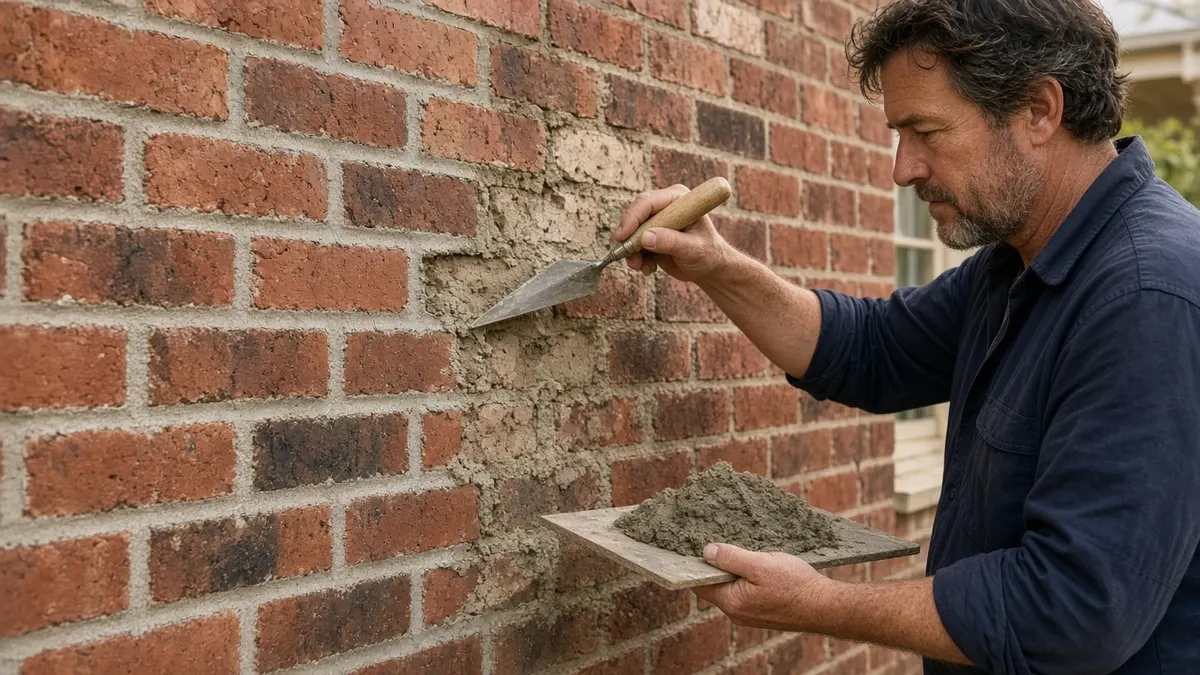
Repointing usually costs between $70 and $180 per square metre of wall in Australia in 2026, depending on whether the bricklayer uses a modern cement-based mortar or a traditional lime mortar, and how carefully the old joints have to be raked out. Most owners are not repointing a whole house; a typical job covers the two or three walls that cop the worst weather and lands somewhere between $2,000 and $6,000.
Mortar is meant to be the sacrificial part of a brick wall. It is softer than the brick so that moisture and movement wear the joint rather than the brick face. After 50 to 100 years, the joints recess, crumble and let water in, and that is when repointing makes sense. Done properly, it adds decades to the wall. Done badly, with hard cement mortar in soft old bricks, it can speed up the damage it was meant to fix. The prices here are indicative and include GST. Get at least three written quotes, ideally from bricklayers who can show you photos of similar work.
Repointing, tuckpointing and re-mortaring: what you are paying for
These words get mixed up, and quotes can differ by thousands depending on which one is meant.
- Repointing means raking out the damaged mortar to a set depth, usually around 15 to 20 mm or about twice the joint width, then packing in new mortar and finishing the joint to match the existing profile.
- Tuckpointing is a decorative technique found on many Victorian and Federation homes, particularly in Melbourne, Sydney and Adelaide. The joint is filled with mortar coloured to match the brick, then a thin raised line of contrasting lime putty, often white or black, is applied to make the brickwork look perfectly regular. It is slow, skilled work.
- Re-bedding or rebuilding is needed when bricks themselves are loose, cracked or bowing out. That is beyond repointing and may point to a structural issue.
Repointing prices by job type
| Type of work | Typical rate (incl. GST) | Where you see it |
|---|---|---|
| Cement or general-purpose mortar repointing | $70 to $140 per m² | Brick veneer and post-war double brick homes |
| Lime mortar repointing | $120 to $220 per m² | Pre-1940s homes with soft bricks or sandstone |
| Tuckpointing | $180 to $350 per m² | Victorian and Federation facades |
| Sandstone or bluestone repointing | $150 to $300 per m² | Colonial cottages, Adelaide villas, foundations |
| Garden, fence or retaining wall repointing | $60 to $120 per m² | Freestanding brick walls |
| Chimney repoint and re-cap | $600 to $2,500 per chimney | Older homes with brick chimneys |
| Spot repairs, small areas | $400 to $1,500 per visit | Around downpipes, window sills, a few cracked joints |
Small jobs cost more per square metre because a bricklayer still has to mix mortar, set up and clean up whether the job is 3 m² or 30 m². Many will not take on a job under about half a day, so expect a minimum charge in the $400 to $700 range.
Whole-wall and whole-house estimates
To estimate your own job, work out the wall area that needs doing, subtract large windows and doors, and multiply by the rate. A single-storey wall 12 metres long and 2.7 metres high is about 32 m², or roughly 26 m² once windows are taken out.
| Scope | Approximate area | Typical total |
|---|---|---|
| One weathered wall, cement mortar | 20 to 30 m² | $1,600 to $4,000 |
| Two or three walls, cement mortar | 40 to 70 m² | $3,200 to $9,500 |
| Front facade of a Federation cottage, lime mortar | 25 to 40 m² | $3,500 to $8,500 |
| Full single-storey double brick house, cement mortar | 130 to 170 m² | $10,000 to $22,000 |
| Full single-storey heritage house, lime mortar | 130 to 170 m² | $17,000 to $35,000 |
| Tuckpointed Victorian facade | 20 to 35 m² | $4,500 to $11,000 |
Two-storey work adds scaffolding, typically $1,500 to $5,000 for the walls being repointed, depending on height, length and hire period.
What decides the price
Mortar type
This is the big one. Houses built before roughly the 1940s were laid in lime mortar, which is soft, breathable and flexible. Modern mortar is cement-based and much harder. Putting hard cement mortar into an old wall of soft bricks traps moisture in the brick and makes the brick face the weakest point, so the brick spalls and crumbles instead of the joint. A good heritage bricklayer will match the original mix, often a hot or hydraulic lime mortar, which takes longer to mix, cure and finish. That is why lime work costs more.
How the old mortar is removed
On hard modern bricks, a bricklayer can rake joints with a grinder and a narrow diamond blade or a dedicated mortar raking tool, which is fast. On soft heritage bricks or narrow joints, careful bricklayers rake by hand with a plugging chisel to avoid widening the joints and chipping arrises, the brick edges. Hand raking can double the labour time.
Joint profile
Flush, weatherstruck, ironed (concave), raked and tuckpointed joints all take different time. Matching an unusual existing profile, so new work blends in, is slower than a simple ironed joint.
Colour matching
New mortar dries lighter or darker than it looks wet. For street-facing walls, a good bricklayer makes test panels with different sand and oxide mixes and lets them dry before starting. Some heritage specialists send a sample for mortar analysis. Allow $150 to $400 for testing and sample panels on heritage jobs.
Brick condition
Replacing a handful of cracked or spalled bricks is common. Expect $25 to $60 per brick to cut out and replace, plus the cost of sourcing second-hand bricks to match. Badly eroded walls may also need a lime-based repair mortar on the brick faces.
Access and height
Single-storey walls are done from trestles or a mobile tower. Second-storey walls, chimneys and walls on boundaries with tight access need scaffolding, which can add more than the repointing itself on a small job.
Clean-down
Mortar smears and dust need cleaning off once the joints have cured. Harsh hydrochloric acid washes can burn and stain brickwork, particularly light-coloured and heritage bricks. Gentle cleaning with water and a soft brush, or a mild proprietary cleaner, takes longer but is safer.
Repointing prices by city
The table assumes about 30 m² of cement-mortar repointing on a single-storey wall with normal access. Heritage lime work in each city typically costs 50 to 80 percent more.
| City | 30 m² cement repoint | Notes |
|---|---|---|
| Sydney | $2,700 to $4,500 | Large stock of Federation and inter-war brick homes, high labour costs |
| Melbourne | $2,500 to $4,300 | Strong heritage and tuckpointing trade in inner suburbs |
| Brisbane | $2,300 to $4,000 | Fewer brick heritage homes, more garden and retaining walls |
| Perth | $2,300 to $3,900 | Double brick is common; many bricklayers available |
| Adelaide | $2,200 to $3,800 | Lots of sandstone and bluestone villas, which cost more |
| Hobart | $2,400 to $4,200 | Colonial sandstone and brick, limited specialists |
| Canberra | $2,600 to $4,400 | Small trade pool, travel from surrounding regions |
| Darwin | $2,700 to $4,600 | Few brick homes, specialists are scarce |
| Regional | $2,100 to $4,200 plus travel | Heritage towns such as Ballarat, Bendigo and Goulburn have specialists |
Bricklayers generally charge around $70 to $110 per hour or $600 to $900 per day. Heritage stonemasons and specialist tuckpointers sit higher, often $90 to $140 per hour.
Three repointing jobs, broken down
All amounts include GST.
Federation cottage in Marrickville, NSW
A 1910s double-brick cottage with soft red face bricks and badly recessed lime mortar on the front and the west side wall. About 60 m² of wall after deducting windows. Single storey, owner wants lime mortar to protect the bricks.
| Item | Cost |
|---|---|
| Mortar sample panels and colour matching | $250 |
| Hand rake and repoint in lime mortar, 60 m² at $160 per m² | $9,600 |
| Replace 10 spalled bricks with second-hand matches | $450 |
| Mobile scaffold tower hire | $400 |
| Gentle clean-down and site clean-up | $300 |
| Total | $11,000 |
1960s brick veneer in Reservoir, VIC
A post-war brick veneer with hard clay bricks. The south and west walls have sandy, crumbling joints, especially below the windows. About 30 m² in cement-lime mortar.
| Item | Cost |
|---|---|
| Machine rake and repoint, 30 m² at $95 per m² | $2,850 |
| Replace 8 cracked bricks under a window sill | $240 |
| Clean-down and disposal | $150 |
| Total | $3,240 |
Sandstone villa in Unley, SA
A late 1800s villa with a sandstone front, brick quoins and a chimney with loose mortar near the top. About 25 m² of stone wall plus one chimney.
| Item | Cost |
|---|---|
| Repoint sandstone in lime mortar, 25 m² at $220 per m² | $5,500 |
| Chimney repoint and new mortar cap | $1,400 |
| Roof access and edge protection for the chimney | $500 |
| Total | $7,400 |
In each case the labour is most of the bill. Mortar materials are cheap; a skilled worker's time with a chisel and a pointing iron is not.
Signs your brickwork needs repointing
- Joints have recessed more than a few millimetres behind the brick face.
- Mortar crumbles into sand when you scratch it with a key or screwdriver.
- There are gaps you can see light or daylight through, often around windows and under sills.
- Damp patches, bubbling paint or salt staining appear on inside walls after rain.
- Plants, moss or weeds are growing out of joints.
- Bricks are starting to spall, with faces flaking off, which often means moisture is trapped.
Stepped cracks running diagonally through several courses, bricks moving, or walls leaning are different. Those can be signs of footing movement, failing wall ties or tree roots, and repointing over them only hides the symptom. Get advice first. Our structural engineer cost guide explains what an assessment costs, and a building inspection is a cheaper first step if you are not sure what you are looking at.
Licences and approvals
Repointing counts as residential building work in most states once it passes a value threshold, and bricklaying is a licensed trade in some states.
- NSW: bricklaying work worth more than $5,000, including labour and materials, needs a licensed contractor. Check the licence on the NSW Fair Trading register.
- Queensland: bricklaying and blocklaying is a QBCC licence class, and work over the QBCC threshold of $3,300 needs a licensed contractor. Check the register on the QBCC website.
- Victoria: domestic building work above a set value needs a registered builder; repointing is usually below that on a single wall but can exceed it on a whole house. Check the current threshold with the Building and Plumbing Commission (formerly the VBA).
- WA, SA, TAS, ACT and NT: check with Building and Energy, Consumer and Business Services, CBOS, Access Canberra or the NT Building Practitioners Board.
Council approval is not normally needed for like-for-like repointing. The exception is heritage. If your home is heritage-listed or in a heritage conservation area, council may need to approve the mortar type, colour and joint profile, especially on the street facade. Councils with large heritage areas usually prefer lime mortar on pre-1940s buildings. Ask the council's heritage adviser before work starts, since many offer free advice.
Silica dust and site safety
Raking out old mortar with a grinder releases respirable crystalline silica, the dust that causes silicosis. Work health and safety laws require controls when cutting or grinding mortar and masonry, such as on-tool dust extraction with an industrial vacuum, water suppression and a properly fitted respirator. Dry cutting with a grinder and no extraction is not acceptable on a professional job. Safe Work Australia explains the risks on its crystalline silica page.
For you, this means keeping windows shut on the side being raked, keeping kids and pets away, and asking the bricklayer how they control dust. A good one will have an answer ready. Scaffolding over four metres must be erected by a licensed scaffolder, and anyone working at height should be using a stable platform, not a ladder.
Can you repoint brickwork yourself?
A small garden wall or a few joints around a tap are realistic DIY jobs. The tools cost $100 to $300: a plugging chisel, club hammer, pointing trowel, jointing iron, hawk, a stiff brush and mortar. A bag of premixed mortar or lime and sand costs very little.
Where DIY goes wrong:
- Using a hard cement mix in soft old bricks, which damages the bricks over time.
- Not raking deep enough, so the new mortar falls out within a couple of years.
- Over-cutting with a grinder, which widens joints and chips brick edges for good.
- Smearing mortar across the brick faces, which stains and is hard to clean.
- Generating silica dust without extraction or a respirator.
On a street-facing wall or anything heritage, pay a specialist. Poor repointing is obvious from the footpath and expensive to undo.
Repoint, render or leave it?
Some owners consider rendering over tired brickwork instead of repointing. Render covers the joints, changes the look completely and can cost a similar amount per square metre. On a heritage home, rendering face brick is usually a mistake, and in a conservation area it may not be allowed. On a plain 1970s brick veneer where the owner wants a modern look, it can make sense. Our rendering cost guide compares the options.
If the mortar is a bit weathered but not crumbling and there is no damp inside, it is often fine to leave it and check again in a few years. Repointing perfectly sound mortar is money spent for no benefit.
How long repointing lasts
Well-matched lime pointing on a heritage wall can last 30 to 50 years or more. Cement-based pointing on hard modern bricks lasts at least as long. The walls that need repointing soonest are the ones that get the weather: west-facing walls in the southern states, walls near leaking downpipes or garden sprinklers, and the lower courses where splashback keeps the bricks wet.
Fixing the water source is part of the job. Repointing a wall that keeps getting soaked by a broken downpipe, or where garden beds are piled up above the damp-proof course, will only buy a few years.
Spending less without a worse result
- Prioritise the weather walls. Repoint the west and south walls and the areas under windows first. The sheltered walls under the eaves often have years left in them.
- Combine with other scaffold work. If you are painting eaves, fixing gutters or repairing the roof, schedule the second-storey repointing at the same time so you only pay for scaffolding once.
- Keep your old bricks. If you are removing a garden wall or a chimney breast, stack the bricks. Matching second-hand bricks are often the hardest and most expensive part of a heritage repair.
- Book in mild weather. Spring and autumn suit lime mortar best, and a bricklayer who does not have to tent walls against rain or heat works faster.
- Do the prep yourself. Clearing creepers off the walls, cutting back shrubs and moving pots and furniture saves paid hours.
What the job looks like on site
Expect the bricklayer to start with a short walk around and a sample panel, then to work wall by wall: rake out a section, brush and dampen the joints, pack in mortar in layers, and finish the profile once the mortar has firmed up to the right point. Lime mortar needs to be kept damp for several days as it cures, so you may see hessian or plastic sheeting hung over finished walls. The noisy, dusty part is the raking; the pointing itself is quiet.
Quotes, questions and red flags
A solid written quote for repointing should cover:
- The walls included and the approximate area in square metres
- The mortar type and mix, for example a lime and sand ratio, and why it suits your bricks
- How the old mortar will be raked out and to what depth
- The joint profile to be matched
- Whether sample panels and colour matching are included
- Brick replacement rates, scaffolding, clean-down and disposal
- Licence number where required, ABN, public liability insurance and a workmanship warranty
Questions worth asking: Can I see photos of heritage work you have done? How do you control silica dust? What do you do if you find cracked bricks or failed wall ties? Red flags include a quote with no mortar specification, a plan to grind out soft heritage joints at speed, a promise to "seal" the bricks with a coating afterwards, cash-only pricing, and a large deposit for a job that has not started.
Getting help with the labour side through Yakka
The skilled part of repointing belongs to a bricklayer or heritage tradesperson, and Yakka Labour does not change that. The platform is useful for the labour around the job: a labourer to carry scaffolding planks and materials down a narrow side passage, mix mortar under the bricklayer's direction, clean up dust and offcuts each day, or clear garden beds and move pot plants away from the walls before work begins. Our labourer day rate guide shows what that kind of help typically costs.
You can also browse bricklayers near you or stonemasons for sandstone and bluestone work, and check their experience with your type of brick before you ask for a quote.
Frequently asked questions
How much does repointing cost per m2 in Australia?
Repointing with a cement-based mortar usually costs $70 to $140 per square metre. Lime mortar repointing on heritage homes costs $120 to $220 per square metre, and decorative tuckpointing $180 to $350. Small jobs cost more per square metre because of minimum charges, and scaffolding for second-storey walls is usually priced separately.
How long does it take to repoint a house?
A skilled bricklayer typically repoints around 5 to 10 square metres a day in cement mortar, less for hand-raked lime work or tuckpointing. A single weathered wall takes two to four days. A full single-storey house can take three to six weeks depending on the mortar, brick condition, weather and how much hand raking is needed.
Should I use lime mortar or cement mortar for repointing?
Match the original. Houses built before about the 1940s were usually laid in lime mortar with softer bricks, and they should be repointed in lime so moisture can escape through the joints. Using hard cement mortar on soft bricks can cause the brick faces to crumble. Modern hard bricks laid in cement mortar can be repointed in a cement-lime mix.
Do I need a licence to repoint brickwork in NSW?
In NSW, bricklaying work worth more than $5,000 including labour and materials needs a licensed contractor under the Home Building Act. Smaller jobs do not need a licence, but you should still hire someone with experience and insurance. Check any contractor licence on the NSW Fair Trading register before signing a contract or paying a deposit.
Is repointing worth it?
Yes, when the mortar is crumbling, recessed or letting moisture into the wall. Repointing stops water getting into the brickwork, which protects the bricks, the wall cavity and internal finishes. It also improves the look of the house. If the mortar is weathered but sound and there is no damp, it can often wait a few years.
What is the difference between repointing and tuckpointing?
Repointing replaces worn mortar with new mortar finished to a standard joint profile. Tuckpointing is a decorative finish on many Victorian and Federation homes, where the joint is filled with brick-coloured mortar and then a thin raised line of contrasting lime putty is applied. Tuckpointing is slower and more skilled, so it costs roughly twice as much per square metre.
Can you repoint in winter?
Yes, but mortar should not be laid when frost is likely or temperatures are very low, as it can fail before it cures. Lime mortars are especially sensitive and need protection from frost, heavy rain and hot drying winds. In colder areas such as Canberra, Hobart and the tablelands, many bricklayers schedule lime work for spring and autumn.
Official sources
Award rates, licences and safety rules change. Check the official source before you hire or take on a shift.
- Safe Work AustraliaNational work health and safety framework, including high-risk work licences
- Queensland Building and Construction Commission (QBCC)Contractor, plumbing and drainage licence search in Queensland
- Consumer and Business Services SALabour hire licensing in South Australia
- NSW Fair TradingTrade licence checks for electricians, plumbers and builders in New South Wales
- Building and Plumbing Commission (Victoria)Builder and plumber registration, domestic building insurance and licence checks in Victoria
- Consumer, Building and Occupational Services (Tasmania)Building, plumbing and electrical licensing in Tasmania