Rates
Labourer Day Rate Australia (2026): What to Pay
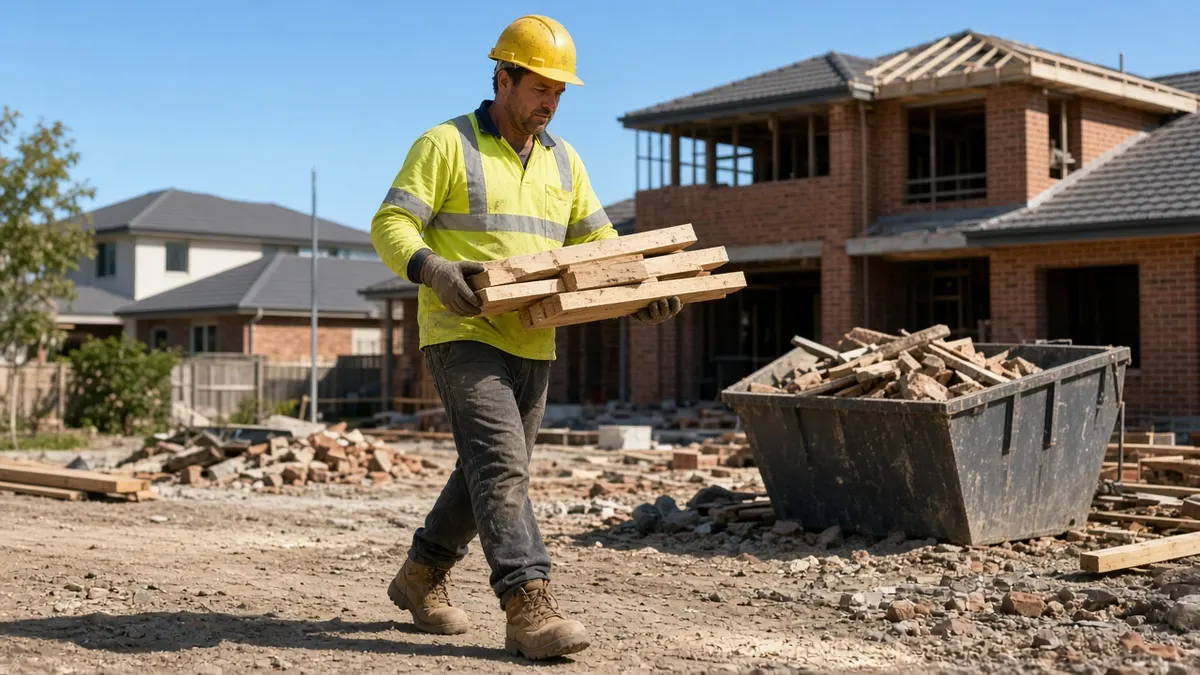
A labourer day rate in Australia typically runs $300–420 for a casual employee working an eight-hour day in 2026, and $320–480 for an ABN labourer who invoices for the day. Sydney and Perth sit at the top, regional towns lower. These are indicative market observations; legal minimums come from the award on Fair Work.
This guide covers day rates versus hourly rates, what a labourer's day actually includes, how ABN rates compare with casual pay, and a worked costing for a real job. For the full role-by-role table across trades, warehouse and hospitality, see the 2026 labour hire rates guide. Yakka Labour is the hiring marketplace, not the workwear brand with a similar name.
How much does a labourer get paid per day in Australia?
Most site labourers are quoted by the hour and the day rate is simply the hourly rate multiplied by the hours on site. The table shows indicative 2026 bands for general and site labourers with a white card. Treat them as market observations, not legal rates.
| Location | Casual employee (AUD/hr) | Casual day, 8 hours (AUD) | ABN labourer day rate (AUD) |
|---|---|---|---|
| Sydney | $40–52 | $320–416 | $360–480 |
| Melbourne | $38–50 | $304–400 | $340–460 |
| Brisbane | $38–49 | $304–392 | $340–450 |
| Perth | $40–52 | $320–416 | $360–480 |
| Adelaide | $38–47 | $304–376 | $330–420 |
| Regional NSW, VIC and QLD | $38–46 | $304–368 | $320–400 |
Award minimums sit underneath these bands. Most construction labourers fall under the Building and Construction General On-site Award (MA000020). From 1 July 2026 its base minimum hourly rate for a new-entrant CW/ECW 1 labourer is $26.67 (clause 19.1), before the industry allowance, any other allowances and the 25% casual loading. The award also says a casual must be paid for at least 4 hours per engagement. The National Minimum Wage is $26.44 an hour from 1 July 2026 for employees not covered by an award. Check the full award text and the Fair Work pay guides for the all-in hourly figure for each classification.
Day rate or hourly rate: which should you use?
A day rate is simple to budget and easy to agree on a Monday morning. An hourly rate is fairer when the job might finish at 1pm or run past knock-off. Both work, with one rule for employees: a flat day rate must still pay at least what the award would pay for the hours actually worked, including any overtime and weekend penalties. If a casual on a $340 flat day works ten hours, check the award maths before assuming the flat rate covers it.
- Use a day rate for predictable full days: site cleans, strip-outs, landscaping digs, loading out a skip.
- Use an hourly rate when hours are uncertain, the job is a half day, or weather could stop work.
- Agree it in writing before the start: rate, start time, expected finish and what happens if you finish early.
Some things push a labourer's day rate to the top of the band or beyond it: extra tickets such as forklift, EWP, traffic control or asbestos awareness; a 6am start or a short-notice booking for tomorrow; dirty or heavy work like demolition and trenching; inner-city sites where the worker pays for parking or tolls; and long travel to the outer suburbs or regional jobs. An experienced labourer who can read plans, run a small crew or operate a mini excavator is worth paying more because they save the supervisor time.
What does a labourer's day include?
"A day" means different things on different sites, which is where most pay disputes start. Under the Building and Construction award, ordinary hours average 38 a week, worked between 7am and 6pm Monday to Friday. In practice a labourer's day usually looks like this:
- Hours: 7am start, 3:30pm finish, eight paid hours with an unpaid lunch break. Some sites run 6:30am to 3pm.
- Breaks: a paid morning break and an unpaid meal break are common; the award sets the details.
- Travel: the award includes fares and travel allowances for many construction employees. ABN labourers usually build travel into their day rate.
- Induction: site induction time on day one is work time and should be paid.
- Tools and PPE: labourers normally bring boots, hi-vis, gloves and basic hand tools. The hirer supplies plant, power tools and job-specific PPE.
What is the ABN labourer rate compared with casual pay?
ABN labourers usually quote $40–60 an hour, or $320–480 a day, because they cover their own insurance, tools, admin and time between jobs. That premium only makes sense if the person is genuinely running a business. A labourer who turns up, follows your instructions and uses your gear is very likely an employee, whatever their invoice says. Read can a labourer have an ABN before you agree to an ABN arrangement.
Super is the detail many hirers miss. The ATO says independent contractors who are paid mainly for their labour are eligible for super guarantee on the labour component of their invoice, even if they quote an ABN (see the ATO guidance). The super guarantee rate is 12%, and from 1 July 2026 employers pay it under the Payday Super rules.
What does a labourer cost the hirer for a full day?
Here is a worked example. A renovator in Kellyville needs two casual labourers for a weekday bathroom and kitchen strip-out, 7am to 3:30pm.
- Wages: 2 labourers × 8 hours × $42/hr = $672
- Super at 12% of $672 = about $81
- Workers compensation premium: varies by state and insurer, so get a quote
- Skip bin and tip fees: separate from labour
Labour comes to roughly $753 plus workers comp. If the same two people invoiced on ABNs at $400 a day each, the bill is $800, and if they are paid mainly for labour you may still owe super on top, taking it to about $896. The cheapest-looking option is not always the cheapest once super and risk are counted. For a step-by-step payment process, see how to pay labourers.
Is a cash rate for a labourer legal?
Paying in cash is not illegal in itself. What makes a cash rate illegal is skipping the obligations: withholding PAYG tax, paying super, issuing payslips and keeping records. A "cash rate" that is lower because none of that happens leaves the hirer exposed to back-pay, penalties and an uninsured worker on site, and leaves the labourer with no super and no workers comp. The full rules are in can I pay a labourer cash in hand.
How do you book a labourer for the day on Yakka?
Yakka is a marketplace: you agree the engagement directly with the worker, and there is no agency margin added on top of wages.
- Post the job with the suburb, start time, expected hours, tickets needed (usually a white card) and your day or hourly rate.
- Browse profiles of labourers near the site, check their tickets and message the ones who fit.
- Agree the rate, hours and inclusions in writing in the chat.
- Pay through the platform once the day is done.
If you only need someone for one day, the guide to hiring a labourer for a day covers safety duties and what a day labourer can and cannot do. Builders in Sydney can also see labour hire in Sydney for local context.
Frequently asked questions
How much does a labourer earn per week in Australia?
A casual labourer working five eight-hour days at $38–52 an hour earns roughly $1,520–2,080 a week before tax in 2026, based on indicative market observations. Weekend work, overtime and site allowances push that higher. Award minimums are lower than these bands, so check the Building and Construction award pay guide on Fair Work for the legal floor.
Do labourers get paid more on Saturdays?
Usually, yes. Under the Building and Construction General On-site Award, Saturday and Sunday work attracts penalty rates, and casual employees receive those penalties with their casual loading built in. The exact percentages depend on the hours worked and the award clause, so check the Fair Work pay guide before agreeing a weekend day rate.
Can I hire a labourer for half a day?
You can, but a casual covered by the Building and Construction award must be paid for at least four hours per engagement. That makes a four-hour block the practical minimum for construction labour. Agree the start time, the four-hour minimum and what happens if the job runs over before the labourer arrives.
How much should I pay an inexperienced labourer?
New labourers with a white card but little site experience typically sit at the bottom of the band, around $38–44 an hour as a casual in most capitals in 2026, as an indicative market observation. The award sets the legal floor for new entrants, and the market usually pays above it. Pair new starters with an experienced worker for the first few days.
Can I negotiate a labourer day rate on Yakka?
Yes. You set a rate or budget when you post the job, and workers can message you before accepting. Agree the final rate, hours and inclusions in writing in the chat so both sides have a record. The rate you agree must still meet any award minimums that apply to the engagement.
Official sources
Award rates, licences and safety rules change. Check the official source before you hire or take on a shift.
- Fair Work Ombudsman — pay guidesMinimum award rates, casual loading and penalty rates
- Fair Work Pay CalculatorWork out the minimum pay for a specific award and shift
- Safe Work AustraliaNational work health and safety framework, including high-risk work licences
- Asbestos Safety and Eradication AgencyWhere asbestos is found in homes and how to deal with it safely
- Australian Taxation Office — super for employersSuperannuation guarantee obligations when you pay workers