Careers
Labourer Interview Questions and Answers (2026)
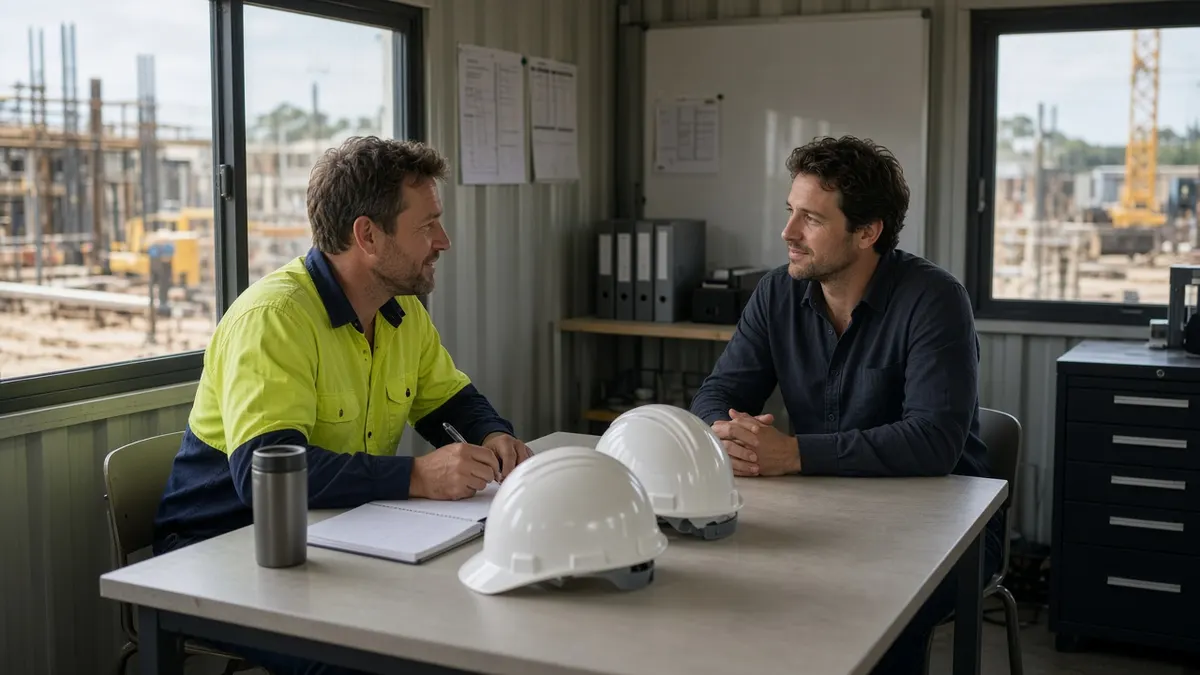
Most labourer interview questions and answers come down to four things: your tickets (white card, licences), whether you'll turn up on time every day, how you work safely, and whether you can handle physical work in a team. Below are 18 common questions with model answers, plus phone screening questions and what to bring.
Labouring interviews are often short: a ten-minute phone call, then a chat at the site shed or a trial shift. Prepare honest, specific answers drawn from real jobs. Yakka Labour is the hiring marketplace, not the workwear brand with a similar name.
What do hirers listen for in a labourer interview?
Supervisors aren't looking for polished speeches. They're listening for:
- Reliability: a clear yes on start times, transport and availability.
- Safety awareness: you know what a SWMS and a toolbox talk are, and you'll speak up.
- Specifics: real sites, real tasks, real numbers, not "I'm a hard worker".
- Attitude: willing to do the unglamorous jobs and learn from tradespeople.
- Paperwork: white card and any licences ready to show.
A simple way to answer is: what the job was, what you did, and how it turned out. "On a duplex in Kellyville I barrowed concrete for three slab pours, and we finished each pour before the afternoon heat" beats "I've done concreting". Keep answers to 20–40 seconds. If you don't know something, say so and explain how you'd find out, usually by asking the supervisor or checking the SWMS. Supervisors trust people who admit gaps far more than people who bluff.
General labourer interview questions with answers
1. Tell me about yourself.
"I've been labouring for two years, mostly residential builds around Penrith and the Hills. I hold a white card and a forklift licence, I've got my own car and boots, and I'm available Monday to Saturday from 6 am."
2. Why do you want to work as a labourer?
"I like physical work and seeing a job finished at the end of the day. I'm keen to learn from the trades on site, and long term I'd like to get into concreting."
3. What experience do you have?
"On my last job I did site clean-ups, carried materials up to second-storey frames, loaded skips and helped the concreter set up for slab pours. Before that I worked in a warehouse for a year, so I'm used to early starts and lifting all day."
4. Are you comfortable with heavy, physical work?
"Yes. I'm fit and used to lifting, but I use trolleys and team lifts for anything awkward or heavy rather than risk an injury that takes me off the job."
5. What tickets and licences do you hold?
"White card, plus working at heights done last year. I'm happy to get other tickets if the role needs them." Have the cards on you. If you've lost one, see our white card replacement guide.
6. What would your last supervisor say about you?
"That I showed up every day, didn't need to be told twice and kept the site tidy. I can give you his number."
Construction labourer interview questions
7. What is a SWMS and have you used one?
"A safe work method statement sets out the hazards and controls for high risk construction work. I read and sign the SWMS before starting, and I'll ask if something on site doesn't match it." Safe Work Australia lists the work that needs a SWMS.
8. What would you do if you saw something unsafe?
"Stop, make it safe if I can do that without putting myself at risk, and tell the supervisor straight away. If it's someone else's work, I'd still say something."
9. What PPE do you wear on site?
"Steel caps, hi-vis, hard hat and glasses as standard, plus hearing protection, gloves and a dust mask when the task needs it."
10. What tools can you use?
"Hand tools, wheelbarrows, jackhammers, plate compactors and a demo saw under supervision. I'm not licensed for anything that needs a ticket I don't hold, and I won't operate it."
11. Have you worked at heights or in trenches?
Answer honestly. If yes, name the controls used: scaffolds with edge protection, harnesses, shoring or benching. If no, say you'll follow the SWMS and supervision.
12. How do you take instructions from several trades at once?
"I check who has priority with the supervisor, finish one task properly before starting the next, and let people know if I'm tied up so nobody's left waiting."
Questions about reliability and availability
13. How will you get to site?
"I drive and have a licence, so I can get to any site in Western Sydney by 6:30."
14. Can you work weekends or start early?
Be specific about what you can actually commit to. Hirers would rather hear "Saturdays yes, Sundays no" than a yes you can't keep.
15. What pay rate are you expecting?
Know the range before you go in. Check the award minimum on the Fair Work pay guides and indicative market rates in our labourer day rate guide, then give a range rather than a single number.
16. Why did you leave your last job?
Keep it short and positive: the project finished, you wanted more hours, or you moved. Don't criticise a former boss.
Phone screening questions for labourers
| Question | Why they ask | Good short answer |
|---|---|---|
| 17. Do you have a white card? | No card means no site access | "Yes, NSW card, I can send a photo now." |
| 18. Can you start Monday at 6:30? | They need a body on site | "Yes. What's the address and who do I report to?" |
| Do you have your own transport? | Sites move and start early | "Yes, licence and car." |
| Do you have boots and PPE? | Saves a trip to the store | "Steel caps, hi-vis and gloves. Do you supply hard hats?" |
| Are you employee or ABN? | Affects pay and paperwork | Say what you are and ask how they engage workers. |
What to bring to a labourer interview
- White card and any licences (forklift, EWP, traffic control), or photos of them.
- Photo ID and your tax file number and bank details in case you start that day.
- Boots, hi-vis and work clothes if there's any chance of a trial shift.
- A one-page resume. See our labourer resume example.
- Two references with phone numbers.
Good questions to ask back: what the site and hours are, who you report to, what tickets they want you to get next, and how and when pay is processed.
How interviews work for Yakka jobs
On Yakka, hirers post a job with the suburb, start time, tickets required and an AUD rate, then message workers who apply. Expect a few of the screening questions above in the chat, and sometimes a quick call before you're booked. Keep your profile current with your tickets, suburb and photo so hirers can shortlist you fast. Yakka is a marketplace, not an employer: you and the hirer agree the engagement directly.
Frequently asked questions
How long is a labourer interview?
Usually short. Many start with a five to ten minute phone screen covering tickets, transport and availability, followed by a fifteen to thirty minute chat on site or a paid trial shift. Larger builders and labour hire companies may add an induction, a medical or a drug and alcohol test before your first day on a major project.
What should I wear to a labourer interview?
Wear clean work clothes and safety boots rather than a suit. If the interview is on site you will need boots and hi-vis anyway, and turning up ready to work shows you understand the job. Bring a hard hat and glasses if you own them, in case the supervisor offers a walk around or a trial shift.
How do I answer labourer interview questions with no experience?
Use experience from other physical or team jobs, such as warehouse work, farm work, hospitality or sport, and explain what it shows about reliability and fitness. Get your white card before applying, mention any tools you can already use, and say you are keen to learn. Offering a trial shift is often the fastest way to prove yourself.
Do I need a resume for labouring jobs?
For many casual and labour hire roles a phone call and your tickets get you started, but a one-page resume still helps. It gives the hirer your tickets, recent sites and references in one place, and many larger builders and labour hire companies screen applications through online systems that expect a resume. Keep it short, specific and current.
Is a trial shift paid?
Unpaid trials are only allowed in limited circumstances, such as a short demonstration of skills that is no longer than necessary and done under direct supervision. A trial shift where you do productive work should be paid at least the minimum rate. Check the Fair Work Ombudsman guidance on unpaid trials if a hirer suggests working for free.
Official sources
Award rates, licences and safety rules change. Check the official source before you hire or take on a shift.
- Fair Work Ombudsman — pay guidesMinimum award rates, casual loading and penalty rates
- Fair Work Pay CalculatorWork out the minimum pay for a specific award and shift
- Safe Work AustraliaNational work health and safety framework, including high-risk work licences