Interior cost guide
House Painting Cost Australia 2026: Interior, Exterior and by Room
Typical cost in Australia (2026, inc. GST)
$6,000 to $12,000 per job
interior repaint, three-bedroom single-storey house, walls, ceilings and trims
A professional interior repaint of a three-bedroom single-storey house, covering walls, ceilings and trims, usually costs $6,000 to $12,000 in 2026. Exterior painting runs from about $3,500 for a brick veneer home where only trims and eaves are painted, to $8,000 to $16,000 for weatherboard. Doing both on a typical home costs $10,000 to $25,000. Home size, surface condition, preparation, height and paint quality set the price.
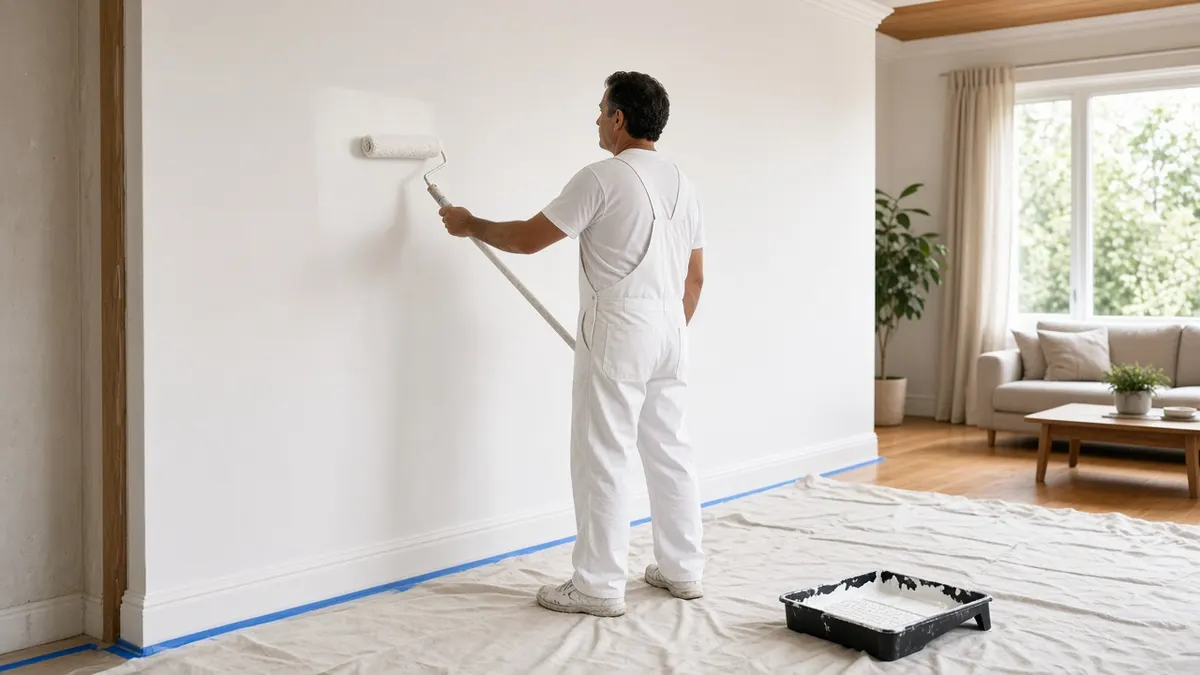
Painting the inside of a typical three-bedroom Australian house costs about $6,000 to $12,000 in 2026 for walls, ceilings, doors and trims, done by professional painters with good-quality paint. The exterior is where prices spread out: a brick veneer house where only the eaves, fascia and trims get painted can cost $3,500 to $8,000, while a weatherboard home of the same size often runs $8,000 to $16,000 because every board needs preparation and two coats.
This guide is about the total cost of a paint job: whole homes, single rooms and exteriors. If you want the hourly and daily rates painters charge, see our separate guide to painter hourly rates in Australia. All figures here are indicative, include GST and assume a professional finish. Paint jobs vary a lot with condition and preparation, so get at least three written quotes for the same scope.
Interior painting cost by home size
These ranges cover a full interior repaint with two coats on walls and ceilings, doors, frames and skirting boards, standard patching, and mid-to-premium trade paint.
| Home | Approximate floor area | Full interior repaint (incl. GST) |
|---|---|---|
| One-bedroom apartment | 50 to 65 m² | $2,500 to $5,000 |
| Two-bedroom unit or townhouse | 70 to 100 m² | $3,500 to $6,500 |
| Three-bedroom single-storey house | 110 to 150 m² | $6,000 to $12,000 |
| Four-bedroom single-storey house | 160 to 220 m² | $8,000 to $15,000 |
| Four to five-bedroom two-storey house | 220 to 320 m² | $11,000 to $22,000 |
Walls only, without ceilings and trims, typically costs 40 to 55 percent of these figures. High ceilings, raked ceilings, stairwells and voids push the price up because they need scaffolding or tall platforms.
Rates by surface
Painters often build their quote from area rates like these, which include paint and labour:
- Walls, two coats: $14 to $25 per m² of wall area
- Ceilings, two coats: $12 to $22 per m² of ceiling
- Doors and frames: $120 to $250 per door, both sides
- Skirting boards: $8 to $15 per linear metre
- Feature wall in a strong colour: $150 to $350
A three-bedroom house of around 125 m² has roughly 350 to 400 m² of wall area. At $14 to $25 per m² that is $4,900 to $10,000 for walls alone, which is why most whole-home quotes land in the range above once ceilings and trims are added.
What each room costs to paint
For one or two rooms, painters usually quote per room. These prices include walls, ceiling and trims with two coats, assuming the room is emptied or furniture is moved to the centre.
| Room | Typical size | Typical price (incl. GST) |
|---|---|---|
| Standard bedroom | 3 x 3.5 m | $500 to $1,100 |
| Master bedroom | 4 x 4 m | $700 to $1,400 |
| Living or family room | 5 x 6 m | $1,000 to $2,200 |
| Kitchen (walls and ceiling) | 3 x 4 m | $600 to $1,300 |
| Bathroom (walls and ceiling) | 2.5 x 3 m | $450 to $900 |
| Hallway with several doors | 8 to 10 m long | $600 to $1,400 |
| Laundry or separate toilet | 2 x 2 m | $300 to $650 |
| Ceiling only, average room | 12 to 16 m² | $250 to $600 |
Kitchens and bathrooms cost more per square metre than their size suggests. There is a lot of cutting in around cabinets, tiles and fittings, and bathrooms need a mould-resistant paint and often a stain-blocking undercoat on ceilings. A single small room also carries the painter's setup time and minimum charge, so one bedroom on its own costs more per square metre than the same room as part of a whole-house job.
Exterior painting cost by house type
Exterior prices depend more on the wall material than on floor area, because the material decides how much of the house actually gets painted and how much preparation it needs.
| House type | What gets painted | Typical price (incl. GST) |
|---|---|---|
| Single-storey brick veneer | Eaves, fascia, gutters, timber trims, doors | $3,500 to $8,000 |
| Single-storey rendered | Render walls, eaves, fascia, trims | $7,000 to $14,000 |
| Single-storey weatherboard | Boards, eaves, windows, trims, doors | $8,000 to $16,000 |
| Two-storey brick or rendered | Render or trims, eaves, fascia, doors | $10,000 to $22,000 |
| Two-storey weatherboard | Boards, eaves, windows, trims, doors | $16,000 to $32,000 |
| Queenslander or heritage home with verandahs | Boards, verandahs, fretwork, balustrades, stumps | $15,000 to $35,000 |
Painting rendered or weatherboard walls usually costs $15 to $30 per m² of wall for two coats including standard preparation. Weatherboards with flaking paint can need far more preparation than that, and older timber windows with putty and multiple panes are slow work at $150 to $350 each.
Roofs are a separate job with different gear and coatings. See our roof painting cost guide if you are considering doing the roof at the same time.
Painting inside and out: whole-home totals
For a typical three-bedroom single-storey home, a full interior and exterior repaint usually costs:
- Brick veneer: $10,000 to $19,000
- Rendered: $13,000 to $25,000
- Weatherboard: $14,000 to $27,000
Booking both with one painter can save some money on setup and travel, and the painter can match colours across trims inside and out. The trade-off is time: a whole-home job takes several weeks, and exterior work is weather-dependent.
Prices around the country
The table is for an interior repaint of a three-bedroom single-storey house, walls, ceilings and trims.
| City | Typical interior repaint | Notes |
|---|---|---|
| Sydney | $7,000 to $13,500 | Highest labour costs, parking and access in older suburbs |
| Melbourne | $6,500 to $12,500 | Competitive market, many period homes with high ceilings |
| Brisbane | $6,000 to $11,500 | Timber homes with VJ walls take longer to prepare |
| Perth | $6,000 to $11,500 | Mostly single-storey homes with straightforward layouts |
| Adelaide | $5,500 to $10,500 | Lower labour rates |
| Hobart | $6,000 to $11,500 | Fewer painters, older housing stock |
| Canberra | $6,500 to $12,500 | Steady government-driven demand, small trade pool |
| Darwin | $7,000 to $13,500 | Freight on paint and materials, humidity affects drying |
| Regional | $5,500 to $12,000 | Rates vary; travel fees are common outside towns |
Three paint jobs, line by line
All figures include GST and paint.
Interior repaint of a brick veneer home in Campbelltown, NSW
A three-bedroom house of about 125 m², furnished, with scuffed walls, a few nail holes and a water stain on the bathroom ceiling. Owner chose a warm white throughout with one feature wall.
| Item | Cost |
|---|---|
| Preparation, patching, stain-block undercoat on bathroom ceiling | $600 |
| Walls, two coats, 360 m² at $15 per m² | $5,400 |
| Ceilings, two coats, 125 m² at $13 per m² | $1,625 |
| Doors and frames, 9 at $160 each | $1,440 |
| Skirting boards, 110 m at $9 per metre | $990 |
| Total | $10,055 |
Exterior of a weatherboard cottage in Ballarat, VIC
A single-storey Edwardian weatherboard with about 140 m² of boards, flaking paint on the west side, ten timber sash windows and a front verandah.
| Item | Cost |
|---|---|
| Trestles and planks | $400 |
| Wash, scrape, sand and fill, 140 m² at $18 per m² | $2,520 |
| Prime bare timber | $600 |
| Two top coats on weatherboards, 140 m² at $25 per m² | $3,500 |
| Eaves and fascia, 45 m at $25 per metre | $1,125 |
| Timber sash windows, 10 at $180 each | $1,800 |
| Front and back doors with frames | $500 |
| Verandah posts and balustrade | $900 |
| Total | $11,345 |
Exterior of a two-storey rendered home in Baldivis, WA
A 2000s two-storey with about 260 m² of painted render, aluminium windows that do not need painting, and fine cracking on the west wall.
| Item | Cost |
|---|---|
| Soft wash of walls and eaves | $650 |
| Crack repairs | $400 |
| Boom lift hire for upper walls | $1,800 |
| Render, two coats of membrane paint, 260 m² at $20 per m² | $5,200 |
| Eaves, 70 m at $22 per metre | $1,540 |
| Fascia and gutter faces, 70 m at $12 per metre | $840 |
| Front door and garage door | $600 |
| Total | $11,030 |
What makes a paint quote go up
Surface condition and preparation
Preparation is most of a good paint job. Filling cracks, sanding, washing, spot-priming and sealing stains take longer than the painting itself on an older home. A newish house in good condition is quick. A 1960s house with cracked cornices, gloss enamel trims and nicotine-stained ceilings is not, and the quote should reflect it. If there are plaster cracks or holes beyond simple patching, our plaster repair cost guide covers what those repairs cost before painting.
Colour changes
Going from a dark colour to a light one, or covering a strong feature wall, often needs a sealer or undercoat plus two top coats. Expect 15 to 30 percent more for big colour changes.
Ceiling height and access
Standard 2.4 to 2.7 metre ceilings are done from a small step or platform. Period homes with 3.3 metre ceilings, stairwells and raked ceilings need taller platforms or internal scaffolding. Outside, two-storey walls need scaffolding, a boom lift or ladders with proper fall protection.
Occupied or empty
Painting an empty house is faster than working around furniture, pets and a family. Many painters charge 10 to 20 percent more for a furnished home because of the time spent moving and covering things.
Paint quality
Premium paints cost more per litre but cover better, wash better and last longer. On a full interior, the difference between budget and premium paint might be $500 to $1,500, a small share of the total. Ask which brand and product range is quoted.
Trims and detail
Ornate cornices, picture rails, timber panelling, VJ walls in Queenslanders, decorative fretwork and old sash windows all take far longer than flat plasterboard. Gloss enamel trims usually need sanding and an adhesion primer before a water-based topcoat will stick.
Labour and paint: how the money splits
On most residential jobs, paint and materials make up roughly 15 to 25 percent of the price and labour the rest. A three-bedroom interior might use 60 to 100 litres of paint, which at trade prices is perhaps $1,000 to $2,000 depending on the brand. The remaining $5,000 to $10,000 is two or three painters for one to two weeks. That is why buying the paint yourself rarely saves much, and why preparation time, not paint, is what separates quotes. For a breakdown of what painters charge per hour and per day, read our painter rates guide.
Licensing rules for painters by state
- NSW: residential painting work worth more than $5,000, including labour and materials, needs a licensed painter or contractor. Check the licence on the NSW Fair Trading register. Jobs over $20,000 also need home building compensation cover.
- Queensland: painting and decorating work valued over $3,300 needs a QBCC licence.
- Western Australia: painting work valued over $1,000 must be done by a registered painting contractor. See Building and Energy WA for current rules.
- Victoria, SA, Tasmania, the ACT and the NT: there is generally no separate painting licence for residential repaints, though general building rules can apply to larger jobs. Check with the Building and Plumbing Commission (VIC), Consumer and Business Services (SA), CBOS (TAS), Access Canberra or the NT Building Practitioners Board.
Whatever the state, ask for public liability insurance. Paint on carpets, benchtops and cars is the most common claim.
Lead paint, asbestos and working at heights
Homes built before about 1970 may have lead-based paint in older layers, especially on trims, windows, doors and exterior weatherboards. Sanding, scraping or heat-gunning it creates toxic dust and fumes that are particularly harmful to young children and pregnant women. A painter working on an older home should test suspect paint and use lead-safe methods, such as wet sanding, dust containment, and HEPA vacuuming. Ask how they handle it.
Some textured ceilings and fibro eaves in homes built before 1990 may contain asbestos. Painting over intact asbestos sheeting is generally fine, but sanding, scraping or pressure washing it is not. If in doubt, get it tested.
Exterior painting at height is a common source of falls. Professionals should use scaffolding, platforms or boom lifts for upper-storey work, not leaning ladders for long periods. Safe Work Australia has guidance on working at heights that applies to painters as much as roofers.
How long a paint job takes and lasts
A three-bedroom interior takes a crew of two about one to two weeks. A single-storey exterior takes one to three weeks depending on material and weather. Two-storey homes and heritage weatherboards can take a month or more. Paint should not go on exterior surfaces in rain, heavy dew, strong wind or extreme heat, so build in some slack.
Interior paint generally lasts 7 to 10 years in bedrooms and living areas, less in kids' rooms, hallways and kitchens. Exterior paint on render and brick trims lasts about 8 to 12 years; on weatherboards facing west or north, 6 to 10 years is more realistic. Dark exterior colours fade and heat up faster. A soft wash every couple of years extends the life of exterior paint; our pressure cleaning cost guide covers that cost.
Painting before a sale or between tenants
A fresh coat of neutral paint is one of the most common pre-sale jobs, because scuffed walls and dated colours show up badly in listing photos. Vendors usually focus on the rooms buyers notice first: the entry, living areas, kitchen and main bedroom, plus the front of the house. A targeted pre-sale repaint of those areas often costs $3,000 to $7,000 rather than the full interior price. Agents tend to recommend light, warm whites and soft greys that suit most furniture.
For landlords, a repaint between tenancies works best when the property is empty, which keeps the price down and the job fast. Use a washable low-sheen paint in living areas so marks can be wiped off rather than repainted, and keep a labelled tin of each colour for touch-ups. Damage beyond fair wear and tear can sometimes be claimed against the bond, but normal fading and minor scuffs over several years usually cannot.
Picking sheen levels that last
Sheen affects how long a paint job looks good. Flat or matt finishes hide imperfections on ceilings and walls with uneven plaster but mark easily. Low sheen is the standard for living areas and bedrooms because it wipes clean without highlighting every bump. Semi-gloss suits kitchens, bathrooms and laundries, where moisture and splashes are common. Gloss or semi-gloss enamel is the usual choice for doors, frames and skirting boards. Choosing the right sheen for each room costs nothing extra and saves a repaint later.
DIY painting: what you really save
Interior painting is the most DIY-friendly job in the house. If you paint a bedroom yourself, you will spend about $150 to $300 on paint and supplies and save $400 to $900 in labour. The catch is time and finish. A professional crew paints a bedroom in a day; most owners take a weekend and still end up with uneven cut-in lines and roller marks on ceilings.
A sensible split for many households: do the simple bedrooms and walls yourself, and pay a painter for ceilings, stairwells, trims, kitchens, bathrooms and anything outside above the ground floor. Exterior work on two-storey homes, and anything involving lead paint, is best left to professionals.
Practical ways to reduce the bill
- Empty the rooms. Moving furniture out or to the centre and taking down pictures, curtains and hooks saves painter hours.
- Stick to one colour throughout. One wall colour and one trim colour cuts time, reduces leftover paint and simplifies touch-ups.
- Skip the ceilings if they are fine. Ceilings often look good for years longer than walls.
- Book in the quieter months. Late autumn and winter are quieter for interiors in the southern states. Exterior painters are busiest in spring and summer.
- Do the patching prep yourself, carefully. Filling nail holes and removing fittings is easy. Leave sanding of older homes to the painter if lead paint is possible.
- Bundle interior and exterior. A single booking for both often earns a discount and avoids two lots of setup.
Getting a painting quote you can trust
A written painting quote should spell out:
- Every room and surface included, and what is excluded
- Preparation steps: washing, patching, sanding, sealing, priming
- Paint brand, product range, sheen and number of coats for each surface
- Who moves furniture and protects floors and fittings
- Scaffolding or access equipment for high areas
- Start date, expected duration and payment schedule
- Licence number where required, ABN, insurance and a workmanship warranty
Be wary of a single lump-sum quote with no breakdown, no mention of preparation, a price far below others, cash-only deals, or a big deposit before the job starts. In NSW, the deposit on residential work over $5,000 is capped at 10 percent; other states have their own limits.
Hiring painters and prep help through Yakka
Painting is a natural fit for Yakka Labour. You can find painters near you for a single room, a full interior or an exterior repaint, and compare their rates and reviews. For bigger jobs, many owners also book a labourer for a day of painting prep: moving furniture, removing curtains and fittings, masking, washing walls and cleaning up drop sheets at the end.
Check licences where your state requires them, particularly in NSW, Queensland and WA, and confirm insurance before work begins.
Frequently asked questions
How much does it cost to paint the inside of a three-bedroom house?
A professional interior repaint of a three-bedroom single-storey house usually costs $6,000 to $12,000, covering walls, ceilings, doors and skirting boards with two coats. Walls only can cost roughly half that. High ceilings, major colour changes, lots of patching, and painting around furniture push the price higher, while an empty house in good condition sits at the lower end.
How much does it cost to paint the exterior of a house in Australia?
Exterior painting ranges from about $3,500 to $8,000 for a single-storey brick veneer home where only eaves, fascia and trims are painted, to $8,000 to $16,000 for a single-storey weatherboard house. Two-storey homes typically cost $10,000 to $32,000 depending on the material, access and preparation needed. Heritage homes with verandahs and fretwork cost more.
How much does it cost to paint one room?
A standard bedroom typically costs $500 to $1,100 to paint, including walls, ceiling and trims with two coats. A large living room costs $1,000 to $2,200. Bathrooms and kitchens cost $450 to $1,300 because of the cutting in around fixtures. A single room costs more per square metre than the same room within a whole-house job because of setup time.
How long does it take to paint a house?
A professional crew of two usually paints a three-bedroom interior in one to two weeks. A single-storey exterior takes one to three weeks depending on whether it is brick, render or weatherboard, and on the weather. Two-storey and heritage homes can take a month or more, especially when weatherboards need heavy scraping and priming.
Do painters need a licence in Australia?
It depends on the state. In NSW, residential painting over $5,000 needs a licence from NSW Fair Trading. In Queensland, painting work over $3,300 needs a QBCC licence. In WA, painting work over $1,000 must be done by a registered painting contractor. Victoria, SA, Tasmania, the ACT and the NT generally have no separate painting licence.
Is it cheaper to buy my own paint?
Usually not by much. Painters buy at trade prices, and paint is only about 15 to 25 percent of a typical job. Supplying your own paint can also complicate warranties if the product fails. It can make sense if you have a specific product you want or leftover paint to use, but agree this with the painter before they quote.
How often should a house be repainted?
Interior walls typically need repainting every 7 to 10 years, sooner in busy areas like hallways, kitchens and kids' bedrooms. Exterior paint lasts around 8 to 12 years on render and brick trims, and 6 to 10 years on weatherboards in sunny or exposed positions. Regular washing and touching up damaged spots extend the life of the paint.
Official sources
Award rates, licences and safety rules change. Check the official source before you hire or take on a shift.
- Safe Work AustraliaNational work health and safety framework, including high-risk work licences
- Queensland Building and Construction Commission (QBCC)Contractor, plumbing and drainage licence search in Queensland
- Consumer and Business Services SALabour hire licensing in South Australia
- NSW Fair TradingTrade licence checks for electricians, plumbers and builders in New South Wales
- Building and Plumbing Commission (Victoria)Builder and plumber registration, domestic building insurance and licence checks in Victoria
- Asbestos Safety and Eradication AgencyWhere asbestos is found in homes and how to deal with it safely