Rates
Painter Hourly Rate Australia (2026): Costs Explained
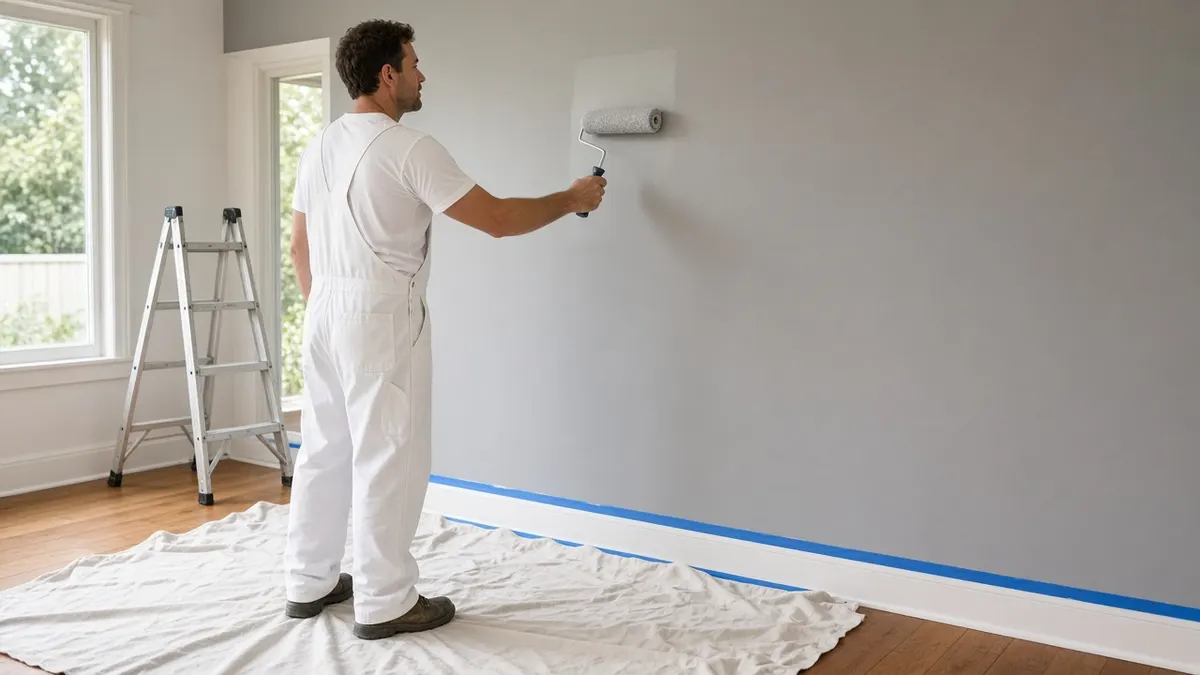
The painter hourly rate in Australia in 2026 is typically $55–90/hr when you hire a painting business, or $450–700 per painter per day, while painters employed on a casual basis earn roughly $44–58/hr. Many residential jobs are quoted per square metre, around $15–35/m² for interior walls, or per room. These are indicative market observations; check award minimums on Fair Work.
This guide explains the different ways painters price, how house and commercial rates differ, when labour-only makes sense, and which states require a licence above a set job value. Yakka Labour is the hiring marketplace, not the workwear brand with a similar name.
How much should I pay a painter per hour?
| Who you hire | Indicative 2026 rate | What the rate covers |
|---|---|---|
| Casual painter (employee) | $44–58/hr | Wage including casual loading; super and workers comp on top |
| Labour-only painter (ABN) | $50–70/hr or $400–560/day | Labour and own brushes, rollers, drop sheets and ladders |
| Painting business, residential | $55–90/hr or $450–700/day | Labour, insurance, vehicle, equipment and margin; paint usually extra |
| Commercial painter (casual) | $46–62/hr | Night, weekend and site work, often with EWP or height tickets |
Sydney and Perth sit at the top of each band; Adelaide, Hobart and regional areas lower. Rates rise for heritage work, high ceilings, lead paint precautions and tight deadlines.
Do painters charge per hour, per m² or per room?
All three are common, and the best choice depends on how well-defined the job is.
| Pricing method | Indicative 2026 range (AUD) | Best for |
|---|---|---|
| Interior walls, two coats | $15–35 per m² | Whole-house repaints with clear areas |
| Ceilings | $15–30 per m² | Repaints where ceilings are included |
| Standard bedroom (walls and ceiling) | $450–900 per room | One or two rooms |
| Exterior walls | $25–55 per m² | Weatherboard, render or brick, depending on prep |
| Doors and frames | $100–200 per door | Add-on to a room or whole-house job |
Per-m² and per-room prices usually include standard prep such as light patching and sanding. Major repairs, mould treatment, stripping old paint and colour changes from dark to light add time and cost.
Other factors that move a painting quote:
- Height and access: stairwells, raked ceilings and two-storey exteriors need planks, scaffolding or an EWP.
- Surface condition: flaking, chalky or water-stained surfaces need more prep and sealer.
- Number of colours: feature walls and different trim colours mean more cutting in.
- Occupied homes: working around furniture and family routines is slower than an empty house.
- Older homes: older paint layers can contain lead, which needs specific precautions before sanding or stripping.
What does a house painter cost compared with a commercial painter?
House painters work in occupied homes, protect furniture and floors, and care about finish on walls you see every day. Commercial painters work at scale on offices, shops, schools and strata buildings, often at night or on weekends so the building stays open, and frequently need EWP tickets, a white card and site inductions. Commercial hourly rates are similar or slightly higher, but commercial jobs are usually quoted as a lump sum from drawings and specifications.
Strata and property managers sit in between. A repaint of a stairwell, car park line marking or a vacant rental between tenants needs fast turnaround and tidy work, and is often booked as labour-only painters for a set number of days. That is where hiring painters directly, at a day rate agreed in writing, can save money compared with a full-service quote.
Is labour-only cheaper than a painter who supplies paint?
Labour-only means you buy the paint and the painter supplies the labour and their own tools. It suits builders, property managers and homeowners who already know the product and colours. The saving is the painter's margin on materials, but you take on the risk of buying the wrong quantity or a product unsuited to the surface. If you go labour-only, ask the painter to write down the product, sheen and litres needed before you buy.
Labour-only also changes who is responsible for what. Agree in writing who supplies drop sheets, masking tape, fillers, sandpaper and ladders, who cleans up and removes empty tins, and how many coats are included. Painters on a day rate will expect the paint and materials on site when they arrive; a wasted morning waiting for a delivery is still a paid morning.
Does a painter need a licence in Australia?
Several states require a licence once a residential painting job goes over a set value. Verify before you sign anything.
| State | Rule for painting work | Where to check |
|---|---|---|
| NSW | Contractor licence needed for residential painting valued at more than $5,000 in labour and materials, including GST | NSW Government licensing pages |
| Queensland | QBCC licence needed for building work valued over $3,300; painting and decorating is a QBCC licence class | QBCC |
| Victoria | Registration rules depend on the type and value of domestic building work | Building and Plumbing Commission |
| Other states and territories | Rules vary | Your state building regulator |
Sources: NSW painting licence rules and QBCC: when you need a licence. In NSW, the government says individuals can be fined $22,000 for unlicensed work over the threshold.
What is the award rate for a painter?
Painters on building and construction sites are covered by the Building and Construction General On-site Award (MA000020). Fair Work's coverage summary lists painters among the tradespersons it covers. A qualified painter is generally classified as a tradesperson, with a base minimum hourly rate of $29.45 from 1 July 2026, before allowances and the 25% casual loading for casuals. The pay guide on Fair Work shows the all-in hourly figure.
What does it cost to repaint a three-bedroom house? A worked example
A homeowner in Morphett Vale, Adelaide, wants the interior walls of a three-bedroom house repainted, about 300 m² of wall area, ceilings excluded.
- Per-m² quote: 300 m² × $18–28 = $5,400–8,400 including standard prep, plus paint
- Labour-only alternative: 2 painters × 4 days × $480/day = $3,840, plus paint you buy, plus your time organising it
If the owner later wants the exterior done too, say 180 m² of rendered walls at $25–45 per m², that adds $4,500–8,100, plus scaffolding or an EWP for any second-storey sections. Bundling interior and exterior into one booking can win a better rate because the painter avoids a second mobilisation.
The same job in Brisbane or Sydney would exceed the Queensland $3,300 and NSW $5,000 thresholds, so the contractor would need the right licence. For small touch-ups, a handyman may be cheaper; for anything bigger, follow the checks in how to find trusted tradies.
How do you hire a painter on Yakka?
Ask for photos of recent jobs similar to yours, the products they usually use, and how they protect floors and furniture. For any residential job over your state's licence threshold, confirm the licence number on the state register before paying a deposit.
- Post the job with suburb, rooms or m², surfaces, whether you supply paint, and your rate or budget.
- Browse painter profiles near you and check experience, photos and any licence details for jobs over your state's threshold.
- Agree scope, prep, number of coats and price in writing.
- Pay through the platform when the job is done.
Builders in Sydney can compare painting labour hire Sydney bands or browse painters by area.
Frequently asked questions
How long does it take to paint a room?
One experienced painter can usually prep and paint the walls and ceiling of a standard bedroom with two coats in about one day, as an indicative observation. Large rooms, high ceilings, lots of patching, feature walls or a dark-to-light colour change can stretch that to two days. Drying time between coats also depends on weather and ventilation.
Do painters charge more for dark colours?
Often, yes. Covering a dark colour with a light one, or applying deep reds and navy blues, can need an extra coat or a tinted undercoat, which adds labour and paint. Ask whether the quote assumes two coats and what happens if a third is needed. A sample patch before starting avoids disputes.
Do painters move furniture?
Most residential painters will move light furniture to the centre of the room and cover it, but many ask you to clear fragile items, wall hangings and electronics beforehand. Moving heavy items such as pianos or full bookcases is usually excluded. Confirm in the quote who moves what, so the painter is not paid an hourly rate to shift boxes.
Should I buy my own paint?
You can, and it may save the painter’s margin, but you take on the risk of buying the wrong product or quantity. Painters usually get trade pricing and know which product suits each surface. If you buy your own, get the painter to specify the brand, product line, sheen and litres needed before you go to the store.
Do painters charge for patching and prep?
Light patching of small holes and sanding is usually included in per-m² and per-room quotes. Larger repairs such as cracked cornices, water-damaged plaster, mould treatment or stripping flaking paint are normally charged separately, either hourly or as a line item. Good preparation is most of the finished result, so check the quote spells out the prep included.
Official sources
Award rates, licences and safety rules change. Check the official source before you hire or take on a shift.
- Fair Work Ombudsman — pay guidesMinimum award rates, casual loading and penalty rates
- Fair Work Pay CalculatorWork out the minimum pay for a specific award and shift
- Safe Work AustraliaNational work health and safety framework, including high-risk work licences
- Queensland Building and Construction Commission (QBCC)Contractor, plumbing and drainage licence search in Queensland
- Building and Plumbing Commission (Victoria)Builder and plumber registration, domestic building insurance and licence checks in Victoria
- Australian Taxation Office — super for employersSuperannuation guarantee obligations when you pay workers