Rates
Landscaper Hourly Rate Australia (2026): Costs & Pay
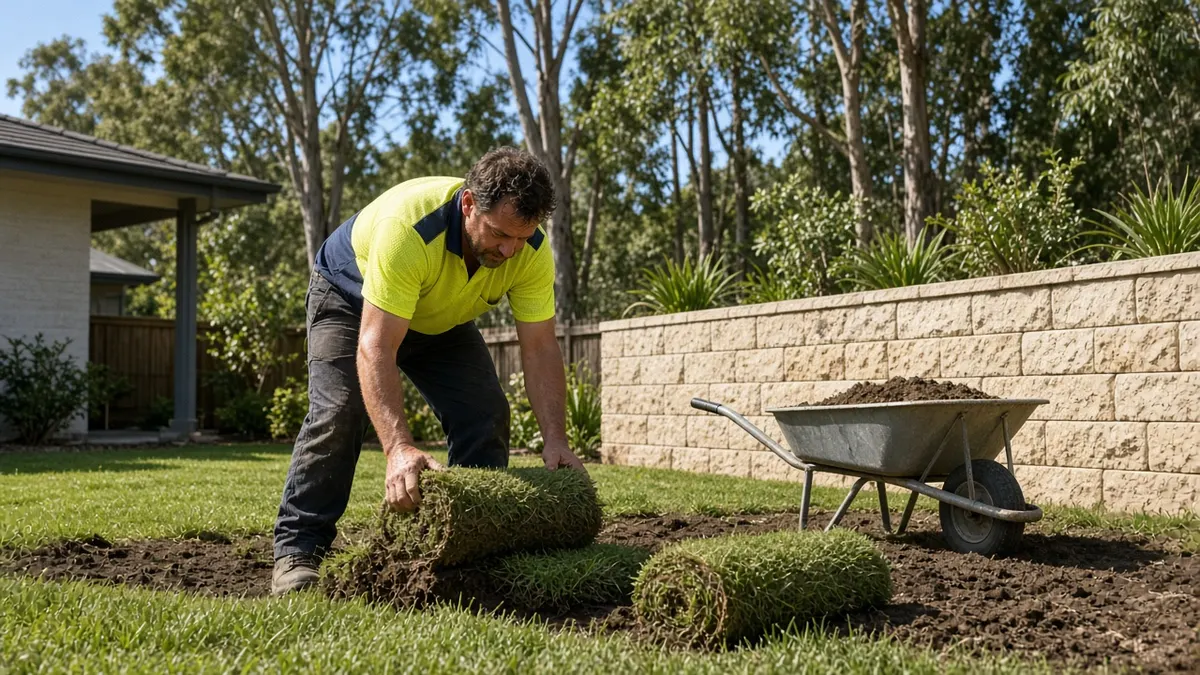
The landscaper hourly rate in Australia in 2026 is roughly $65–100/hr per qualified landscaper when you hire a landscaping business, or $110–180/hr for a two-person crew. Landscape labourers hired directly typically earn $38–48/hr and qualified landscapers $45–65/hr. These are indicative market observations; award minimums are published on Fair Work.
Below you will find who you actually need for each kind of job, per-job price ranges for turf, garden beds, retaining walls and paving, how self-employed landscapers set their rates, and a costed backyard example. Yakka Labour is the hiring marketplace, not the workwear brand with a similar name.
How much do landscapers charge per hour?
| Who you hire | Indicative 2026 rate (AUD/hr) | Best for |
|---|---|---|
| Landscape labourer (direct, casual) | $38–48 | Digging, barrowing soil, spreading mulch, site clean-up |
| Qualified landscaper (direct, casual) | $45–65 | Setting out, levels, paving, walls, irrigation |
| Self-employed landscaper (ABN) | $55–85 | Small jobs with own ute, trailer and tools |
| Landscaping business, per person | $65–100 | Design-and-build jobs with insurance and warranty |
| Two-person crew from a business | $110–180 | Full backyard builds, multi-day jobs |
Sydney and Perth sit at the top of each band; Adelaide, Hobart and regional areas sit lower. Machine hire, materials and tip fees are always extra.
Do you need a labourer, a landscaper or a crew?
Many backyard jobs are mostly labour. Digging out a tired lawn, moving five cubic metres of soil and laying weed mat needs strong backs, not a design qualification. Paying a qualified landscaper $60 an hour to push a wheelbarrow wastes budget. On the other hand, retaining walls, drainage, falls on paving and irrigation need someone who knows levels and the relevant standards.
- Labourers only: clean-ups, mulching, demolition of old garden edging, soil and gravel moves.
- One landscaper plus labourers: turf, garden beds, simple paving and low edging walls.
- A landscaping business: structural walls, drainage, decks, pergolas and anything that needs a licence or council approval.
A common middle path for homeowners is to pay a landscaping business for the skilled parts, such as setting levels, building a wall and installing drainage, then hire labourers directly for the clearing beforehand and the mulching and clean-up afterwards. That keeps the expensive hours focused on work that needs the expertise.
What do landscapers charge per job? Turf, walls and paving prices
Most homeowners get quoted per square metre or per job rather than per hour. These indicative 2026 ranges include labour and typical materials; site access, slope and soil conditions move them a lot.
| Job | Indicative 2026 range (AUD) | What changes the price |
|---|---|---|
| Turf supply and lay with basic prep | $20–40 per m² | Turf variety, soil prep depth, removal of old lawn |
| Garden bed prep, plants and mulch | $30–70 per m² | Plant size and density, soil improvement |
| Timber sleeper retaining wall | $250–450 per m² of wall face | Height, drainage, treated pine vs hardwood |
| Concrete sleeper and steel post wall | $350–600 per m² of wall face | Post depth, footings, colour finish |
| Concrete paver paving on prepared base | $90–160 per m² | Paver type, base depth, cuts and edging |
Licensing applies above certain values. In NSW, a contractor licence is needed for residential structural landscaping worth more than $5,000 in labour and materials including GST (NSW structural landscaping rules). Taller retaining walls can also need engineering and council approval, so check with your council before you build.
What is a self-employed landscaper's hourly rate?
Self-employed landscapers on an ABN commonly charge $55–85 an hour in 2026. That rate has to cover a ute and trailer, fuel, tools and small plant, public liability insurance, tip fees they absorb, quoting time and the days lost to rain. A sole trader who charges $55 an hour but only bills 25 hours a week earns far less than the headline rate suggests. When comparing a sole trader with a business, check who supplies the machinery, who disposes of spoil and whether the quote is fixed or hourly.
A quick reality check: a sole trader charging $70 an hour who bills 30 hours in a good week grosses $2,100. Out of that come fuel, vehicle repayments, insurance, tool replacement, tip fees, phone and accounting costs, tax and their own super. In a wet fortnight, billed hours can halve. That is why experienced landscapers rarely drop their rate for small jobs and often prefer fixed-price work.
What extra costs show up on a landscaping quote?
The hourly rate is only part of the bill. Expect separate lines for some or all of these:
- Machine hire: a mini excavator, tracked loader or plate compactor, charged by the hour or day, with or without an operator.
- Materials and delivery: turf, soil, mulch, road base, sand, sleepers, pavers and plants, plus delivery fees for each drop.
- Waste: skip bins or tip fees for old turf, soil, concrete and green waste.
- Access: barrowing through a narrow side passage or carrying materials up stairs takes far longer than driving a loader straight in.
- Drainage and irrigation: agricultural pipe behind walls, stormwater connections and drip systems add materials and labour.
- Approvals: council or engineering requirements for larger retaining walls and some structures.
Ask for these to be listed separately so you can compare quotes properly and decide which items to handle yourself.
What is the award rate for a landscaper?
Employees of gardening and landscaping businesses are generally covered by the Gardening and Landscaping Services Award (MA000101). From 1 July 2026 its minimum hourly rates run from $26.44 at Level 1 to $29.45 at Level 4 and $30.38 at Level 5 (clause 15.1 of the award text). Casuals get a 25% loading on top and must be engaged for at least 3 hours. Landscaping done in connection with civil construction can fall under the Building and Construction award instead. Check the Fair Work pay guides for the right award and classification.
How much does it cost to hire landscape labourers for a day?
Here is a worked example. A homeowner in Baulkham Hills wants 60 m² of tired lawn replaced, 6 m³ of old soil removed and new garden beds prepared along the fence.
- 1 qualified landscaper × 8 hours × $58/hr = $464
- 2 landscape labourers × 8 hours × $42/hr = $672
- Labour for the day: $1,136, plus super if they are your employees
- Turf, soil, mulch, plants, skip or tip fees and any mini-excavator hire: extra
A landscaping business quoting the same job at $25–35 per m² for turf alone would come to $1,500–2,100 for the lawn, with materials, warranty and insurance included. Hiring labour directly is cheaper when you can supervise and source materials yourself. If the job is mostly clearing, see hire a labourer for a day. For ongoing upkeep rather than a build, the gardener hourly rate guide is the better fit.
How do you hire a landscaper on Yakka?
- Post the job with the suburb, a short scope (for example "lay 60 m² turf, remove old lawn"), start date and your hourly or day rate.
- Browse landscaper and labourer profiles near you and check experience and photos of past work.
- Agree the rate, hours, who supplies tools and who handles green waste, in writing.
- Pay through the platform when the work is done.
Sydney hirers can compare bands in landscaping labour hire Sydney or browse landscapers and gardeners by area.
Frequently asked questions
Do landscapers charge for quotes?
Most landscapers quote small and medium jobs for free. Some charge a design or site-visit fee for larger projects, which is often credited back if you go ahead. Ask before the visit. A written quote should list the scope, materials, who removes waste, the payment schedule and whether the price is fixed or an hourly estimate.
Is landscaping cheaper in winter?
Demand usually drops in the cooler months in southern states, so landscapers may have more availability and be more flexible on start dates. Material prices rarely change with the season. Turf and many plants establish more slowly in cold weather, so winter suits hardscaping such as walls and paving better than planting in some regions.
How long does it take to lay 100 m² of turf?
A two-person crew can usually prepare and lay around 100 m² of turf in a day on an accessible, mostly flat site, as an indicative observation. Removing an old lawn, poor soil, tight side access or slopes can add a day or more. Turf should be laid the day it is delivered, so plan labour and delivery together.
What is the difference between a gardener and a landscaper?
A gardener maintains an existing garden: mowing, weeding, pruning, hedging and mulching. A landscaper builds or changes it: turf, garden beds, retaining walls, paving, drainage and irrigation. Landscapers usually charge more per hour because the work needs more skill, machinery and, above certain values in some states, a licence.
Can I hire a landscaper for just a few hours?
Yes, but expect a minimum charge. Many self-employed landscapers have a two- to four-hour minimum because of travel and set-up time, and casual employees under the Gardening and Landscaping award must be engaged for at least three hours. Bundling several small tasks into one visit gives you better value for the minimum.
Official sources
Award rates, licences and safety rules change. Check the official source before you hire or take on a shift.
- Fair Work Ombudsman — pay guidesMinimum award rates, casual loading and penalty rates
- Fair Work Pay CalculatorWork out the minimum pay for a specific award and shift