Exterior cost guide
Roof Leak Repair Cost 2026: What Australians Pay to Fix a Leak
Typical cost in Australia (2026, inc. GST)
$250 to $1,500 per job
finding and fixing a single leak on a typical home, business hours
Most roof leak repairs in Australia cost $250 to $1,500 in 2026. A call-out and inspection runs about $120 to $250, simple fixes like replacing cracked tiles or resealing a flashing sit at the low end, and valley, box gutter or chimney work costs more. The cause of the leak, roof access, storeys and after-hours timing set the final price.
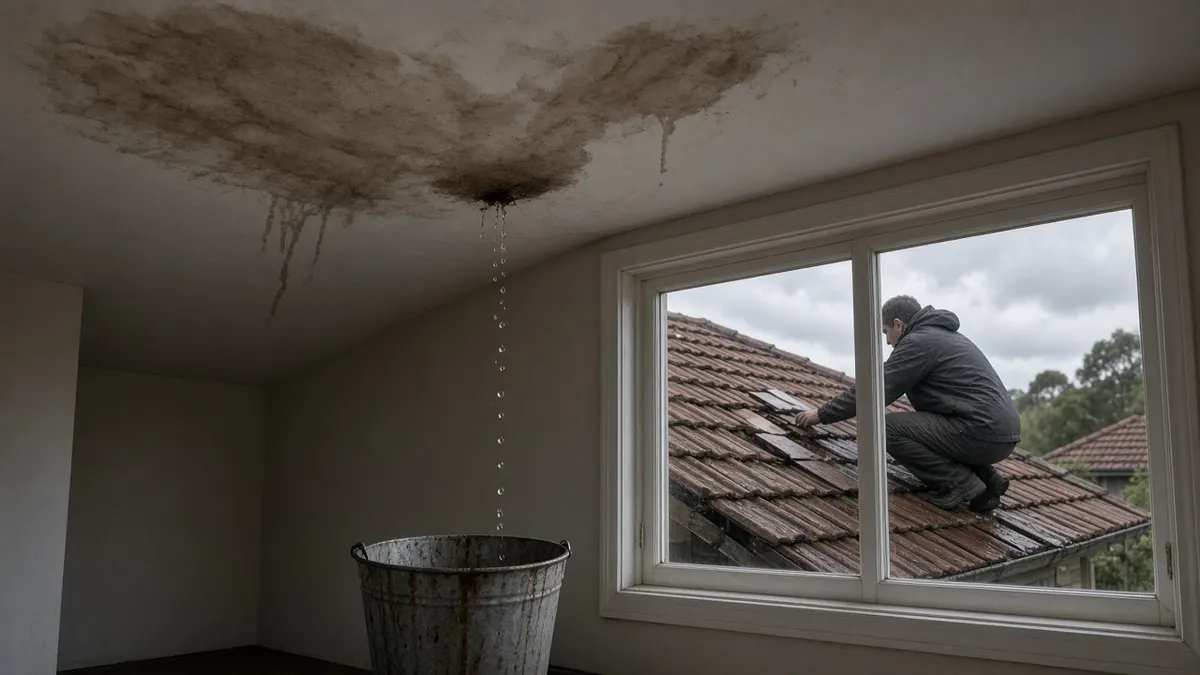
Fixing a leaking roof costs $250 to $1,500 for most Australian homes in 2026. A roofer's call-out and inspection is usually $120 to $250, a simple repair such as replacing a few cracked tiles or resealing a flashing adds a few hundred dollars, and bigger jobs like replacing a rusted valley or rebuilding a box gutter can run to $1,500 to $3,000 or more.
This guide is about finding and fixing leaks. It is not about renewing the whole roof. If the leak is a symptom of a roof that is worn out everywhere, the roof restoration guide and the roof replacement guide cover those bigger jobs. If you have a ceiling stain right under a skylight, the skylight itself may be the problem, covered in the skylight installation cost guide.
All prices are indicative and include GST. Leak repairs are often charged by the hour, so quotes can vary. For anything beyond a small fix, get at least three written quotes.
Leak repair prices by cause
The cost depends almost entirely on what is causing the leak. Here are the usual suspects and what each costs to fix, including labour and materials.
| Cause | Typical repair | Price range |
|---|---|---|
| Cracked or slipped roof tiles | Replace or re-seat tiles | $150 to $500 |
| Cracked or missing ridge pointing | Rebed and repoint a section of ridge or hip | $300 to $1,200 |
| Rusted or blocked valley iron | Lift tiles, replace the valley, relay and repoint | $600 to $1,800 per valley |
| Failed wall or step flashing | Replace flashing and reseal | $300 to $1,200 |
| Chimney leak | Reflash chimney, repoint brickwork | $500 to $1,800 |
| Rusted screws or loose sheets on steel roof | Replace screws and seals, reseal laps | $200 to $900 |
| Rusted-through steel sheet | Replace sheets | $80 to $150 per m², usually $500 to $1,500 |
| Overflowing gutters | Clean gutters and downpipes | $150 to $350 |
| Box gutter failure | Clear outlet, patch or rebuild section | $500 to $3,500 |
| Leaking skylight | Reseal or reflash | $250 to $900 |
| Penetrations (aerials, solar mounts, vents) | Reseal or replace flashing | $200 to $600 |
Many leaks have more than one cause. A valley full of leaves overflows, water runs under a few cracked tiles nearby, and a stain appears two rooms away. A good roofer fixes the cause rather than the nearest broken tile.
Call-out fees, hourly rates and leak detection
Most leak jobs start with an inspection. Some roofers charge a fixed call-out, some charge by the hour from the moment they arrive, and some offer a free quote but only for bigger jobs.
| Charge | Typical price | What it covers |
|---|---|---|
| Call-out and inspection | $120 to $250 | Travel and the first 30 to 60 minutes on site |
| Hourly rate, roofer | $75 to $120 | After the call-out period |
| Hourly rate, roof plumber | $90 to $140 | Metal roofs, gutters, flashings, box gutters |
| Leak detection with water testing | $250 to $600 | Hose testing sections of roof while someone watches inside |
| Thermal camera or moisture mapping | $300 to $700 | Locating wet areas in ceilings and walls |
| After-hours or weekend call-out | 1.5 to 2 times normal rates | Emergency attendance |
Paying for proper leak detection can save money. A roofer who guesses, fixes the wrong thing and comes back three times costs more than one who spends an extra hour finding the actual entry point.
Why the leak is rarely where the stain is
Water is sneaky. It comes in at one spot, runs down a rafter, along the top of sarking or across ceiling joists, and drips through the plaster somewhere else entirely. Stains often show up a metre or more from the real leak, sometimes in a different room.
Roofers usually track leaks by:
- Checking the roof space with a torch during or soon after rain for wet timber, drips and stained sarking.
- Walking the roof to look for cracked tiles, gaps in ridge pointing, rusty valleys, lifted flashings and debris build-up.
- Running a hose over one section at a time, starting low and working up, while someone watches inside.
- Using a moisture meter or thermal camera on ceilings to map where water has spread.
If a leak only happens in wind-driven rain from one direction, tell the roofer. That detail can point straight to a flashing or a ridge on the exposed side.
Where leaks start on different roofs
Concrete and terracotta tile roofs leak most often at the ridges and hips, where cracked or missing pointing lets water into the bedding, and in the valleys, where old galvanised valley irons rust out or fill with leaves. Cracked tiles from people walking on the roof, hail or falling branches are the next most common cause. Tiles slipped out of line by a few centimetres can also let wind-driven rain in.
Steel roofs usually leak at fixings. Over 20 years or so, rubber seals on screws perish and the screws themselves can rust or back out as the sheets expand and contract. Laps between sheets, flashings at walls, and anywhere a sheet has been cut short at the gutter are other weak points. Low-pitch steel roofs are less forgiving of poor detailing than steeper ones.
Box gutters and flat sections are where the biggest leaks come from. A box gutter sits inside the roof line, so when its outlet blocks, water has nowhere to go but into the house. Terraces, older inner-city homes and modern parapet designs all have them.
Penetrations are everything that pokes through the roof: flues, exhaust vents, aerials, solar mounts, skylights and old chimneys. Each needs a flashing, and each is a likely leak point when that flashing ages or was poorly installed.
Leaks that are not actually the roof
Sometimes the roofer finds nothing wrong with the roof at all. Before paying for big repairs, rule these out:
- Condensation. Under a steel roof without a blanket or sarking, condensation can drip on cold mornings and look exactly like a leak. Bathroom exhaust fans venting into the roof space make it worse.
- Plumbing. A hot water system, header tank or water pipe in the roof space can leak. So can a shower or bath above a ceiling in a two-storey house. That needs a licensed plumber, not a roofer.
- Air conditioning. A blocked condensate drain from a ducted unit in the roof space can overflow and stain ceilings in summer, when it has not even rained.
- Walls and windows. Water getting in around a window, through a cracked render or at a balcony can travel and show up on a ceiling below.
A clue: if the stain appears on dry days, or only when the air conditioner or shower is running, the roof is probably not the problem.
Emergency leaks and storm damage
If water is pouring in during a storm, the first job is safety, not the roof. Turn off power at the switchboard to any circuit where water is near lights, fans or power points, and keep everyone out of rooms where the ceiling is sagging. Put buckets under drips and move furniture and electronics. Do not climb on a wet roof.
For storm damage in NSW, Victoria, Queensland and other states, the State Emergency Service can help with temporary tarping when roofs are damaged in storms. Call the SES on 132 500, or see the NSW SES website for what they can help with. After a big storm the SES gets very busy, so a private roofer may get to you first.
A roofer's emergency tarp usually costs $300 to $1,200 depending on size, height and how many sheets of tarp are needed. That is a temporary fix to stop further damage, and the permanent repair comes later. If water has reached electrical fittings, get a licensed electrician to check them before turning the power back on.
Leak repair costs city by city
| City | Call-out and inspection | Typical simple repair | Notes |
|---|---|---|---|
| Sydney | $150 to $250 | $350 to $900 | Higher rates, steep older roofs in inner suburbs |
| Melbourne | $140 to $240 | $320 to $850 | Steel roof and gutter repairs need a licensed roof plumber |
| Brisbane | $130 to $230 | $300 to $800 | Storm season backlogs from October to March |
| Perth | $130 to $230 | $300 to $800 | Winter is the busy leak season |
| Adelaide | $120 to $200 | $280 to $750 | Lower labour rates |
| Hobart | $130 to $220 | $300 to $800 | Fewer roofers, longer waits in winter |
| Canberra | $140 to $240 | $320 to $850 | Hail events cause spikes in demand |
| Darwin | $160 to $280 | $380 to $950 | Wet season demand, cyclone-rated fixings |
Regional callers often pay a travel fee on top. After major hail or storm events, expect waits of days or weeks and higher prices across the board.
Three leak repairs, priced
Hallway stain in a tiled roof, Ryde, NSW
A 1960s brick home with concrete tiles. A brown stain appeared in the hallway after a storm. The roofer found cracked tiles near a rusted valley and a short section of loose ridge pointing.
| Item | Cost |
|---|---|
| Call-out and inspection | $180 |
| Replace six cracked tiles | $150 |
| Replace a 6 m valley iron, relay and repoint tiles | $900 |
| Rebed and repoint 4 lm of ridge | $160 |
| Total including GST | $1,390 |
The ceiling stain was dry and sound, so a stain-blocking primer and a repaint fixed it.
Leaking screws on a steel roof, Townsville, Queensland
A low-set home with a 25-year-old steel roof leaking at several screw holes and along one sheet lap.
| Item | Cost |
|---|---|
| Call-out and inspection | $200 |
| Replace 150 rusted screws with new sealed screws | $450 |
| Reseal lap and flashing, 8 lm | $350 |
| Replace one rusted sheet, about 6 m² | $700 |
| Total including GST | $1,700 |
In cyclonic regions, replacement screws and fixings must suit the wind rating of the house, which is one reason a cheap handyman patch is a poor idea.
Box gutter overflow on a terrace, Fitzroy, Victoria
A Victorian terrace with a hidden box gutter between the roof and the parapet. Water was pouring through the bedroom ceiling in heavy rain.
| Item | Cost |
|---|---|
| Leak detection and water testing | $350 |
| Clear blocked outlet and rainhead | $250 |
| Rebuild 6 lm of box gutter at $250 per lm | $1,500 |
| New rainhead with overflow | $350 |
| Total including GST | $2,450 |
In Victoria this is roof plumbing work, so it must be done by a licensed roof plumber, who must issue a compliance certificate for plumbing work over $750.
The cost of waiting
A small leak left for a season is one of the most expensive mistakes a homeowner can make. Water soaks insulation, which then sags and stops working. Plasterboard ceilings swell, stain and eventually collapse. Timber battens and rafters rot. Mould grows in the roof space and on ceilings, which is a health problem as well as a repair bill.
| Damage from a neglected leak | Typical repair cost |
|---|---|
| Stain-block and repaint a ceiling | $250 to $600 per room |
| Patch a water-damaged section of ceiling | $300 to $900 |
| Replace a collapsed or saturated ceiling in one room | $1,000 to $2,500 |
| Replace wet insulation batts | $15 to $30 per m² |
| Electrician to check and replace water-damaged fittings | $150 to $600 |
| Mould treatment | $400 to $1,500 depending on area |
The plaster repair cost guide has more detail on fixing ceilings once the roof is watertight. Fix the roof first, wait for the ceiling to dry out fully, then repair.
Will insurance pay for a roof leak?
It depends on the cause. Home insurance policies generally cover sudden damage, such as a branch through the roof, hail-cracked tiles or storm winds lifting sheets, and the water damage that results. They generally do not cover leaks caused by wear and tear, rust, old ridge pointing or blocked gutters, which insurers treat as maintenance. Many policies also exclude damage that happened gradually over time.
If you plan to claim, take photos and video of the damage inside and outside before anything is repaired, keep invoices for emergency tarping, and lodge the claim quickly. Ask the roofer for a written report on the cause of the leak. Insurers often want to know whether the damage was storm-related or long-term.
Licences: who can fix a roof leak
- Victoria: repairs to metal roofing, flashings, gutters and box gutters are roof plumbing work and must be done by a licensed or registered roof plumber, regardless of the job's value. Tile repairs are not plumbing work.
- NSW: roofing repairs over the current licensing threshold need a contractor with the right licence from NSW Fair Trading. Small repairs under the threshold do not, but the roofer should still be insured.
- Queensland: work valued over $3,300 needs a QBCC licence in the right class. Check licences on the QBCC website.
- Other states and territories: check the current threshold with Building and Energy (WA), Consumer and Business Services (SA), CBOS (Tasmania), Access Canberra or the NT Building Practitioners Board.
Water in light fittings, switches or the switchboard is a job for a licensed electrician in every state. Do not let a roofer or handyperson touch electrical fittings.
What you can safely do yourself
- Catch drips with buckets and towels, and move furniture, rugs and electronics.
- Poke a small hole in a bulging, water-filled ceiling patch to let water drain into a bucket, but only if the power to that area is off and the ceiling is not about to give way. If in doubt, leave it and keep people out of the room.
- Check the roof space with a torch during rain to find the wet area, staying on the ceiling joists.
- Clear gutters from a ladder in dry weather if overflow is the obvious cause.
- Take photos of every stain, drip and damaged item for the roofer and your insurer.
Climbing onto a wet roof, slapping silicone over cracked tiles or tarping in wind is how people get hurt. Silicone patches also make the proper repair harder and can trap water.
Getting a fair quote and report
A good leak repair quote or report includes:
- The cause of the leak, with photos.
- The specific repair, materials and how long it should last.
- Whether any other problems were found, separated from the leak repair so you can decide on them later.
- The total cost, or hourly rate and estimated hours.
- Licence number where required, insurance details and workmanship warranty.
Be wary if a roofer called out for one leak tells you on the spot that the whole roof needs a $10,000 restoration and offers a discount if you sign today. It may be true, but get it in writing with photos and compare it with other quotes. Cash-only pricing and refusal to show a licence are red flags.
Timing the repair
Roofers cannot safely do permanent repairs on a wet roof, and pointing and sealants need dry weather to cure. In a run of rain, expect a tarp or temporary patch first and the proper repair once the roof dries. That is normal, not a delay tactic.
Leak season varies across the country. Perth, Adelaide, Melbourne and Hobart get most of their leak calls in winter. Brisbane, Sydney and Darwin get them in the summer storm and wet seasons. The best time to fix a slow leak, or to get a pre-emptive roof check, is the dry months before your local wet season starts, when roofers have time to do the job carefully and are not juggling dozens of emergency calls.
Stopping the next leak
- Clean gutters, valleys and box gutter outlets at least once a year, twice if you have overhanging trees. Our gutter cleaning listings can help.
- Get a roofer to check ridge pointing, valleys and flashings every three to five years, and after any big hail storm.
- Make sure other trades, like antenna, solar and aircon installers, reseal every penetration they make and replace any tiles they crack.
- Trim branches back from the roof so they cannot scrape tiles or drop limbs in storms.
- Fit an overflow to any box gutter or rainhead that does not have one.
How Yakka can help after a leak
A leak usually leaves a mess inside and around the house, and the clean-up is labour, not roofing. Through Yakka you can book a labourer, handyperson or cleaner by the hour to move furniture out of wet rooms, lift and dry soaked rugs, carry ruined items to a trailer or skip, clear gutters and valleys from a ladder, and clean up once the repairs are done. You can also find roof repairers and plasterers listed on the platform for the ceiling work afterwards.
The repair itself needs a roofer, or in Victoria a licensed roof plumber for steel and gutters, and water near electrics needs a licensed electrician. Check licences before anyone starts.
Frequently asked questions
How much does it cost to fix a leaking roof?
Most roof leak repairs in Australia cost $250 to $1,500 in 2026. Replacing a few cracked tiles or resealing a flashing sits at the low end. Replacing a rusted valley iron, rebuilding a box gutter or reflashing a chimney costs more, often $600 to $3,000. A call-out and inspection fee of $120 to $250 is usually included in the total.
How do roofers find a roof leak?
Roofers check the roof space for wet timber, stains and drips, then walk the roof looking for cracked tiles, failed pointing, rusty valleys, lifted flashings and blocked gutters. If the cause is not obvious, they run a hose over one section at a time while someone watches inside. Moisture meters and thermal cameras help map wet areas in ceilings.
Does home insurance cover a leaking roof?
Insurance usually covers leaks caused by sudden events like storms, hail or fallen branches, plus the resulting water damage. It usually does not cover leaks caused by wear and tear, rust, old pointing or blocked gutters, which insurers treat as maintenance. Take photos before any repairs, keep tarping invoices and ask the roofer for a written report on the cause.
Can I fix a roof leak myself?
You can do safe temporary things like catching drips, moving belongings, checking the roof space with a torch and clearing gutters from a ladder in dry weather. Climbing onto a wet roof is dangerous, and silicone patches over cracked tiles rarely last and make proper repairs harder. In Victoria, metal roof and gutter repairs must be done by a licensed roof plumber.
Who do I call for an emergency roof leak?
For storm damage, the State Emergency Service can help with temporary tarping on 132 500. A private roofer can also attend for an emergency call-out, usually at 1.5 to 2 times normal rates, with tarping costing about $300 to $1,200. If water is near lights or power points, turn off those circuits at the switchboard and call a licensed electrician.
How long does a roof leak repair take?
Simple repairs such as replacing cracked tiles or resealing a flashing usually take one to three hours. Replacing a valley iron or rebedding a section of ridge often takes half a day to a day. Box gutter rebuilds and chimney reflashing can take one to two days. Finding the leak can take longer than fixing it if the cause is hidden.
Should I fix the roof leak or replace the roof?
Fix the leak if the rest of the roof is sound. If the roofer finds widespread rust, many cracked or crumbling tiles, rotten battens or leaks in several places, a restoration or replacement may be better value than repeated repairs. Ask for a written report with photos, then get independent quotes before committing to a larger job.
Official sources
Award rates, licences and safety rules change. Check the official source before you hire or take on a shift.
- Queensland Building and Construction Commission (QBCC)Contractor, plumbing and drainage licence search in Queensland
- Consumer and Business Services SALabour hire licensing in South Australia
- NSW Fair TradingTrade licence checks for electricians, plumbers and builders in New South Wales
- Consumer, Building and Occupational Services (Tasmania)Building, plumbing and electrical licensing in Tasmania
- Access CanberraConstruction occupation licences and building approvals in the ACT
- Building and Energy (WA)Electrical, plumbing and building licensing in Western Australia