Outdoor cost guide
How Much Does Lawn Mowing Cost? Australian Prices for 2026
Typical cost in Australia (2026, inc. GST)
$40 to $220 per visit
mow, edge, whipper-snip and blow for lawns from about 50 m² to 1,000 m²
Lawn mowing in Australia costs about $40 to $70 for a small lawn, $60 to $100 for a medium suburban lawn and $90 to $220 for large lawns in 2026, including GST. That usually covers mowing, edging, whipper-snipping and blowing paths. Overgrown first cuts, taking clippings away, steep slopes and poor access add to the price. A typical suburban household spends $1,200 to $2,200 a year.
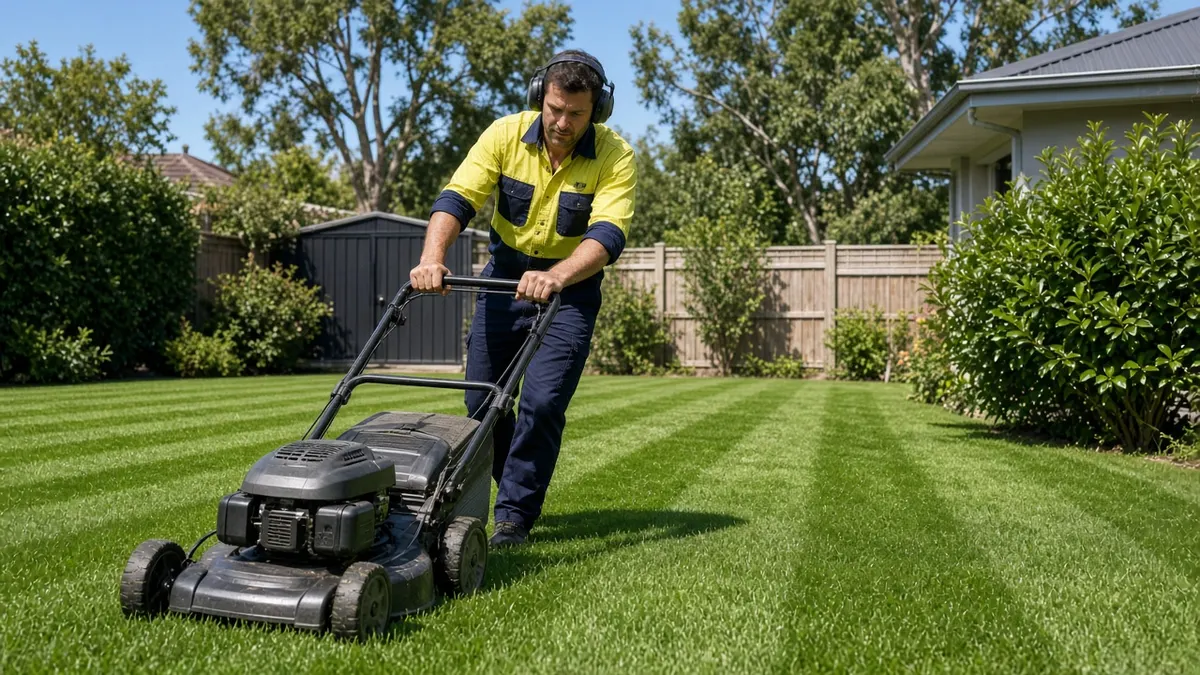
A standard lawn mowing visit costs between $40 and $220 in Australia in 2026, with most suburban front-and-back lawns sitting around $60 to $100 a cut. That price normally includes mowing, edging along paths and driveways, whipper-snipping around fences and garden beds, and blowing the clippings off hard surfaces.
Over a year, the number of cuts matters as much as the price per cut. A medium lawn in Sydney might need 18 to 22 mows a year, while the same lawn in Brisbane could need closer to 25 and one in Hobart as few as 14. The sections below break down prices by lawn size, what changes the quote, typical yearly budgets and the extra treatments that keep a lawn healthy.
These prices are indicative and include GST. Get at least three written quotes, ideally from mowers who have seen the lawn in person.
Prices per cut by lawn size
| Lawn size | Example property | Usual time | Price per visit |
|---|---|---|---|
| Small, under 100 m² | Townhouse or small courtyard lawn | 20 to 30 minutes | $40 to $70 |
| Medium, 100-300 m² | Standard house on a 450-650 m² block | 30 to 60 minutes | $60 to $100 |
| Large, 300-600 m² | Bigger suburban block, corner lot or older quarter-acre home | 45 to 90 minutes | $90 to $150 |
| Very large, 600-1,000 m² | Large established block, wide nature strip | 1.5 to 2.5 hours | $140 to $220 |
| Acreage, 2,000 m² and up | Semi-rural block needing a ride-on or slasher | 2 hours to a full day | $200 to $500+ |
On larger lawns some contractors quote per square metre, typically $0.15 to $0.40 per m² for a regular maintenance mow. A 400 m² lawn at $0.30 per m² is $120, which lines up with the table above. Per-m² pricing gets cheaper as the area grows because the mower spends a bigger share of the visit actually mowing instead of edging and setting up.
Nearly every operator has a minimum charge, usually $40 to $60, because travel and setup take time no matter how small the lawn is.
What a standard mow includes
Ask what is in the price before you agree to anything. A typical "mow, edge and blow" visit covers:
- Mowing front and back lawns at an agreed height
- Edging hard edges such as paths, driveways and kerbs
- Whipper-snipping around fences, trees, garden beds and letterboxes
- Blowing clippings off paths, patios and the driveway
- Either mulching the clippings back into the lawn, or catching them and putting them in your green bin
Not usually included: taking clippings away when your green bin is full, weeding garden beds, hedge trimming, fertilising, weed spraying and nature strips that are larger than average. Some operators include the nature strip outside your property as standard; others charge $10 to $25 extra.
What makes one lawn dearer than another
Grass type and growth rate
Kikuyu grows fast and thick in warm weather and can need cutting weekly in a wet summer. Couch is fine-leafed and grows quickly but cuts easily. Soft-leaf buffalo varieties are slower and tolerate shade, and zoysia is slower again. If a lawn has been left too long, thick kikuyu or buffalo takes far more time and effort to cut than couch.
How long between cuts
Leave a lawn for six weeks in summer and the next cut is a different job. Long grass has to be cut in two passes, the catcher fills every few metres and the clippings need removing. That is why most mowers price regular customers lower than one-off or irregular bookings.
Slopes, steps and access
Steep banks often have to be whipper-snipped rather than mowed, which is slow. Narrow side gates, stairs between front and back yards and lawns behind locked gates all add time. Lawns that need the mower carried through the house are rare, but they do exist and they cost more.
Obstacles
Kids' play equipment, trampolines, lots of garden beds, trees with low branches and dog toys all slow the job. Clearing the lawn before the mower arrives is an easy way to keep a quote down.
Clippings
Mulching mowers return fine clippings to the lawn, which feeds it and saves disposal. If you want everything caught and taken away, expect $15 to $40 extra per visit, more in spring when growth is heavy.
First cuts and overgrown lawns
An overgrown lawn costs more because it takes longer and produces far more waste. Typical pricing:
| Condition | Typical price, medium lawn | What is involved |
|---|---|---|
| Slightly long (4 to 6 weeks of growth) | $90 to $150 | Higher first pass, then a second cut at the normal height |
| Overgrown (knee height in places) | $150 to $300 | Brush cutter first, then mowing, plus green waste removal |
| Neglected or vacant property | $250 to $600 | Slashing, rubbish pickup, multiple loads of clippings, often a return visit |
After a big first cut the lawn often looks brown and scalped for a week or two. That is normal. A second cut at a normal height a fortnight later usually brings it back. If the mower offers to take the first cut very short to "save a visit", say no. Scalping a lawn in summer can kill patches, especially buffalo and kikuyu in hot weather.
How often to mow, and what that costs over a year
Mowing frequency follows the weather. A rough guide:
- Late spring and summer: every 1 to 2 weeks in Sydney, Brisbane, Perth and Darwin; every 2 weeks in Melbourne, Adelaide, Canberra and Hobart.
- Autumn: every 2 to 3 weeks.
- Winter: every 4 to 6 weeks in southern cities, and sometimes not at all in Canberra or Hobart frosts. Northern cities keep growing year-round, with the wet season the peak.
| Scenario | Cuts per year | Price per cut | Yearly cost |
|---|---|---|---|
| Small lawn, Melbourne | 14 to 18 | $45 to $65 | $630 to $1,170 |
| Medium lawn, Sydney | 18 to 22 | $65 to $95 | $1,170 to $2,090 |
| Medium lawn, Brisbane | 22 to 28 | $60 to $90 | $1,320 to $2,520 |
| Large lawn, Perth | 20 to 26 | $90 to $140 | $1,800 to $3,640 |
| Very large lawn, Adelaide | 16 to 20 | $140 to $200 | $2,240 to $4,000 |
Most mowers put regular clients on a schedule (weekly, fortnightly or every three weeks) and adjust it with the seasons. Ask whether they will automatically drop to monthly in winter or whether you need to ask.
Worked examples
All prices include GST.
Penrith, NSW: 250 m² kikuyu front and back
A three-bedroom home with a kikuyu lawn, double driveway and a nature strip. Fortnightly from October to April and monthly from May to September.
| Item | Annual cost |
|---|---|
| 15 summer cuts at $75 | $1,125 |
| 5 winter cuts at $75 | $375 |
| Nature strip (included) | $0 |
| Spring and autumn fertilising, product and spreading, $90 each | $180 |
| Extra clipping removal in November and December, 4 visits at $20 | $80 |
| Yearly total | $1,760 |
Box Hill, VIC: 60 m² buffalo courtyard lawn
A townhouse with a small buffalo lawn and a short concrete path. Mowed every three weeks most of the year and every five or six weeks in winter.
| Item | Annual cost |
|---|---|
| 15 cuts at $50 (minimum charge) | $750 |
| One-off autumn weed spray | $60 |
| Yearly total | $810 |
At this size, DIY with a battery mower costs less over a few years, but plenty of owners pay because they have no shed to store a mower.
Toowoomba, QLD: 800 m² couch lawn on a large block
An older home on a big corner block with a wide nature strip, mowed with a ride-on. Mowed every 2 weeks from September to April and every 4 weeks over winter, plus a spring renovation.
| Item | Annual cost |
|---|---|
| 18 warm-season cuts at $160 | $2,880 |
| 4 cool-season cuts at $160 | $640 |
| Spring scarify, top dress and fertilise | $750 |
| Yearly total | $4,270 |
Lawn mowing prices by city
These are typical prices for a medium suburban lawn of 100 to 300 m².
| City | Medium lawn, per visit | Notes |
|---|---|---|
| Sydney | $65 to $110 | Traffic and parking add travel time between jobs |
| Melbourne | $60 to $100 | Big seasonal swing; winter rounds are thin |
| Brisbane | $60 to $95 | Fast summer growth means more cuts, not higher prices per cut |
| Perth | $60 to $95 | Sandy soils, reticulated lawns grow steadily through summer |
| Adelaide | $55 to $90 | Competitive pricing, dry summers slow unwatered lawns |
| Canberra | $60 to $100 | Short season, lawns often go dormant in frost |
| Hobart | $55 to $95 | Slower growth, fewer cuts per year |
| Darwin | $70 to $110 | Wet season growth is relentless; dry season much quieter |
| Regional | $50 to $90 | Lower overheads, but bigger blocks and travel fees on rural properties |
Extra lawn treatments and their prices
Mowing alone keeps a lawn short. Keeping it thick, green and weed-free takes a few extra treatments a year. Prices below are for a medium lawn of around 200 m².
| Treatment | Typical price | When to do it |
|---|---|---|
| Fertilising (product and spreading) | $60 to $150 | Spring and autumn; also early summer for hungry grasses |
| Broadleaf weed spray | $60 to $150 | Autumn and spring when weeds are actively growing |
| Core aeration | $120 to $280 | Spring, on compacted or clay soils |
| Scarifying or dethatching | $180 to $400 | Late spring, warm-season grasses only |
| Top dressing with sand or lawn mix | $2 to $6 per m² | After scarifying, or to level dips |
| Full spring renovation (scarify, top dress, fertilise) | $400 to $900 | Once a year if the lawn is tired |
| Grub or pest treatment | $80 to $200 | Late summer and autumn, when lawn grubs are active |
Scarifying warm-season grasses such as couch and kikuyu is effective, but do it in late spring when the lawn can recover. Buffalo and zoysia need a gentler approach, so make sure whoever does it knows the grass type.
Cutting height matters more than people think
A lot of lawn problems that end up costing money in treatments start with mowing too low. Short grass dries out faster, lets weeds in and burns in summer. A good contractor sets the mower to suit the grass and the season rather than cutting everything as short as possible to stretch the time to the next visit.
| Grass type | Typical summer height | Shade tolerance | Mowing frequency in summer |
|---|---|---|---|
| Kikuyu | 30 to 50 mm | Low | Weekly to fortnightly |
| Couch | 15 to 30 mm | Low | Weekly to fortnightly |
| Soft-leaf buffalo | 40 to 60 mm | Good | Fortnightly |
| Zoysia | 20 to 40 mm | Moderate | Every 2 to 3 weeks |
| Tall fescue and cool-season blends | 40 to 70 mm | Moderate | Fortnightly, more in spring |
The common rule is to take off no more than about a third of the leaf in one cut. In hot weather, raising the height by a notch helps the lawn hold moisture. Over winter, leave warm-season grasses a little longer as they go semi-dormant.
One-off mows for open homes, inspections and vacates
Plenty of mowing work is one-off: a tidy-up before an open home, a mow before a rental inspection, or a clean-up when a tenant leaves. These jobs are usually priced a little higher than a regular visit because the lawn is often long and the mower is not on a set round.
Expect roughly $80 to $180 for a medium lawn that just needs a good cut, edge and blow, and $200 to $450 for a presentation package that adds hedge trimming, weeding the front beds, a fresh layer of mulch along the street frontage and removing all green waste. For an open home, book the job two or three days before the first inspection so the lawn has time to recover its colour after a big cut.
If the yard also has rubbish, old furniture or junk to clear, that is a different job. A rubbish removal service or a labourer with a ute is often cheaper than paying a mower to do it.
Paying someone versus mowing yourself
Mowing is one of the easiest jobs to DIY, and for a small or medium flat lawn, owning a mower usually works out cheaper within a couple of years. Typical equipment costs in 2026:
- Battery push mower with two batteries: $500 to $1,200
- Petrol push mower: $350 to $1,000
- Line trimmer and blower (battery combo kit): $300 to $700
- Ride-on mower for large blocks: $3,500 to $9,000
- Annual servicing of a petrol mower, blades and fuel: $100 to $250
On a medium Sydney lawn costing $1,500 a year to have mowed, a mid-range battery setup of about $1,300 pays for itself in a year or so. The sums swing the other way if you have a steep block, no storage, limited time or a physical reason not to push a mower for an hour. And a professional with commercial gear finishes a big lawn in a fraction of the time.
A middle path that many families take is mowing themselves in winter, when the job is quick and easy, and paying someone for the busy summer months.
On the day
Most regular mows are quick. A medium lawn with one operator takes 30 to 60 minutes from unloading the trailer to driving off. Many contractors work without the owner home, so agree on gate access, where the green bin lives and whether dogs will be locked away.
A few things make the visit faster and cheaper over time:
- Pick up toys, hoses, dog bones and fallen branches before the mower arrives. Hitting a stick or a garden stake can damage blades and throw debris.
- Leave the green bin empty and accessible on mowing day.
- Turn off automatic sprinklers so the lawn is dry. Wet grass clumps, tears and leaves ruts.
- Mention any hidden hazards such as sprinkler heads, star pickets, septic lids or soft ground over pipes.
Rain days are the main cause of schedule changes. Most operators push the visit back a day or two rather than mowing a soaked lawn, which is better for the grass.
Rules, insurance and safety
Lawn mowing does not need a trade licence in any state. The things to check are about insurance and who is responsible if something goes wrong:
- Public liability insurance. Mowers and line trimmers throw stones. A broken window or chipped car paint is the most common claim. Ask for a certificate of currency.
- ABN and invoices. A business mowing regularly should give you invoices with an ABN. If you own a rental property, you will want those invoices at tax time.
- Chemicals. Weed and pest spraying done as a paid service is regulated by each state. Ask what training the operator has and what product they plan to use, particularly around pets, ponds and vegetable gardens.
- Nature strips. In many areas residents are expected to mow the nature strip outside their property, but practice varies. Check with your council.
- Rentals. Who pays for mowing at a rental property depends on the lease and state tenancy rules, so check the agreement before arranging regular mowing.
Signs of a mower worth keeping
Good lawn contractors are easy to spot after a few visits. They mow at a consistent height, change direction from one visit to the next to avoid ruts, keep blades sharp so grass tips are cut cleanly rather than torn and brown, and leave edges crisp. They also tell you when something is wrong: grubs, a dry patch from a broken sprinkler, or a weed taking hold.
Red flags include turning up whenever suits them rather than on schedule, scalping the lawn to stretch out the time between cuts, leaving clippings on paths and asking for several months' payment upfront.
Before booking a regular service, ask:
- Is the price fixed per visit, and does it change between summer and winter?
- Is the nature strip included?
- Are clippings mulched, put in my bin or taken away, and is there a charge?
- What happens if it rains on the scheduled day?
- Do I need to be home, and how do you access the back yard?
- Can you send a certificate of currency for public liability insurance?
- How much notice do you need if I want to pause or cancel?
Booking a mow through Yakka
Yakka Labour connects you with local workers for lawn mowing, garden tidying and green waste removal, either as a one-off before an inspection or open home, or on a regular basis. You can describe the lawn, set the job and choose someone with their own gear.
Browse lawn mowing services or lawn and turf specialists near you. If the garden beds need attention too, our garden maintenance cost guide covers regular gardener visits, and the gardener hourly rate guide explains how time-based pricing works.
Is it time to replace the lawn?
If you are paying $2,000 or more a year to mow a lawn nobody uses, it is worth asking whether it should be there at all. Some owners replace part of the lawn with mulched garden beds, paving or synthetic turf. The artificial grass cost guide compares the 10-year cost of synthetic and real turf.
Before going synthetic, consider a better-suited grass. A shade-tolerant buffalo in a shaded yard, or a drought-tolerant couch or zoysia in a hot one, can cut mowing frequency and water use. The Australian Government's Your Home guide has practical advice on designing water-efficient outdoor areas.
Frequently asked questions
How much does lawn mowing cost per hour in Australia?
Most lawn mowers quote per visit rather than per hour, but the effective rate usually works out at roughly $60 to $90 an hour including travel and equipment. Large acreage jobs with a ride-on or slasher are sometimes charged hourly at a higher rate because of the machinery involved. Minimum charges of $40 to $60 are common.
How much should I pay for lawn mowing for a 3 bedroom house?
A typical three-bedroom house on a 450 to 650 m² block has 100 to 300 m² of lawn. Mowing, edging and blowing usually costs $60 to $100 a visit in 2026. Over a year, with fortnightly cuts in summer and monthly cuts in winter, that adds up to about $1,200 to $2,000.
How often should I get my lawn mowed?
In summer most lawns need mowing every one to two weeks, and every two to three weeks in spring and autumn. In southern cities winter mowing drops to every four to six weeks. Fast-growing kikuyu and couch in Brisbane, Darwin and Sydney may need weekly cuts during warm, wet weather.
Does lawn mowing include taking the clippings away?
It depends on the operator. Many mulch the clippings back into the lawn or put them in your green bin as part of the standard price. If you want all clippings removed from the property, especially when your green bin is full, expect to pay $15 to $40 extra a visit.
Why is the first lawn mow more expensive?
An overgrown lawn takes much longer to cut, often needs a brush cutter before the mower, fills the catcher constantly and produces far more green waste. First cuts on a medium lawn that has been left for a while usually cost $90 to $300, depending on how long the grass is and how much waste needs removing.
Is it cheaper to buy a mower or pay someone?
For a small or medium flat lawn, buying a mower is usually cheaper within one or two years. A battery mower kit costs $500 to $1,200, against $1,200 to $2,000 a year for professional mowing on a medium lawn. Paying someone makes more sense for steep blocks, large lawns or households short on time or storage.