Interior cost guide
How Much Does a Tiler Cost in Australia? 2026 Job Prices
Typical cost in Australia (2026, inc. GST)
$550 to $900 per day
one experienced tiler, labour only, tiles and materials extra
Most Australian tilers charge $60 to $100 per hour or $550 to $900 per day for labour in 2026, with minimum call-out charges of $250 to $450. For whole jobs, tiling a full bathroom usually costs $3,500 to $7,500 in labour, a kitchen splashback $400 to $1,100 and a 30 m² patio $2,400 to $4,200. Tiles, waterproofing and strip-out are extra.
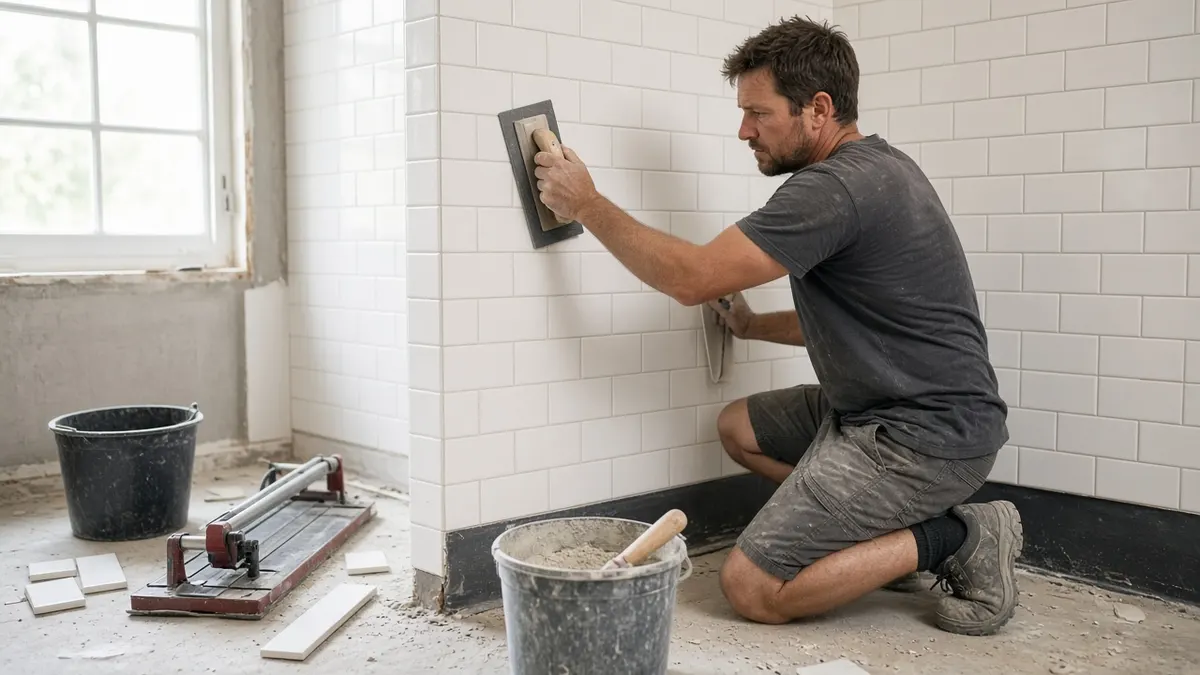
Hiring a tiler in Australia costs $60 to $100 an hour, or $550 to $900 a day, for labour in 2026. Most tilers quote larger jobs as a fixed price instead, so a full bathroom usually comes to $3,500 to $7,500 in tiling labour before tiles, waterproofing and strip-out.
The figures in this guide include GST and are indicative. Rates vary with experience, location, job size and how busy the local market is. Treat them as a starting point, and get at least three written quotes for any job worth more than a day's work.
Hourly rates, day rates and minimum charges
Tilers price work in a few different ways depending on the job. Small repairs tend to be hourly or a minimum charge. Jobs with a clear scope, such as a bathroom or patio, are usually a fixed price. Floors and walls in new builds are often priced per square metre, and if that is what you are comparing, our blog post on tiler rates per m² in Australia sets out labour rates by tile type.
| How the tiler charges | Typical cost (incl GST) | When it is used |
|---|---|---|
| Hourly rate | $60 to $100 per hour | Repairs, regrouting, small jobs with unclear scope |
| Minimum call-out | $250 to $450 | Replacing a few tiles, resiliconing a shower |
| Half day | $350 to $500 | Small splashbacks, hearths, step repairs |
| Day rate, solo tiler | $550 to $900 per day | Splashbacks, laundries, renovations on a builder's program |
| Tiler plus labourer or apprentice | $850 to $1,300 per day | Outdoor areas, large floors, heavy tiles |
| Fixed job price | Depends on scope | Bathrooms, ensuites, patios, feature walls |
A day for a tiler usually means seven to eight hours on site. Travel, collecting materials and clean-up time are often built into the rate, so it is worth asking what happens if the job finishes at lunchtime. Many tilers charge a full day regardless, which is fair given that they cannot easily book a second job for the afternoon.
What a tiler charges for common jobs
These are typical prices for the tiling portion of each job. The first column is labour only. The second includes mid-range tiles and setting materials. Neither includes plumbing, electrical work or a builder's margin.
| Job | Labour only | Labour plus mid-range tiles |
|---|---|---|
| Full bathroom, floor and walls to ceiling | $3,500 to $7,500 | $5,500 to $11,500 |
| Ensuite, floor and walls | $2,800 to $5,500 | $4,000 to $8,500 |
| Shower recess retile, walls and base | $1,800 to $3,500 | $2,800 to $5,500 |
| Kitchen splashback, 3 to 4 m² | $400 to $1,100 | $700 to $2,000 |
| Laundry floor and splashback | $1,200 to $2,500 | $1,700 to $3,500 |
| Covered patio or alfresco, about 30 m² | $2,400 to $4,200 | $5,000 to $9,000 |
| Front steps and porch, about 10 m² | $1,200 to $2,500 | $2,000 to $4,000 |
| Fireplace hearth or feature wall, about 4 m² | $500 to $1,200 | $900 to $2,500 |
| Regrouting a shower | $350 to $900 | $400 to $1,000 |
| Replacing a few cracked tiles | $200 to $500 | $250 to $600 |
The shower and bathroom rows assume waterproofing is priced separately. Many tilers hold a waterproofing licence and include it, typically $800 to $1,800 for a bathroom. Others bring in a separate waterproofer, and some builders do the reverse. Whoever does it, make sure it is on the quote.
Why bathroom tiling quotes vary so much
Two quotes for the same bathroom can differ by thousands, and it is not always because one tiler is greedy. Look at what each quote actually includes.
- Tile height: floor to ceiling uses far more tile and labour than tiling to 1.2 m with paint above.
- Tile size: large format wall tiles need flat walls and two people to lift. Small mosaics and subway tiles take hours of cutting and grouting.
- Corners and edges: mitred external corners look sharp but take longer than metal or PVC trims.
- Niches and feature walls: a shower niche adds $250 to $600 depending on size and whether it is mitred.
- Set-out: a careful tiler centres the layout on the vanity, window or niche so cuts are balanced. That takes planning time that a rushed job skips.
- Wall preparation: out-of-plumb walls may need packing, re-sheeting or a render before tiling.
- Floor falls: building a screed with falls to a linear drain costs more than tiling to a centre waste.
When you compare, line the quotes up against the same list. The cheapest is often missing the niche, the trims or the waterproofing. If you are planning the whole room, our bathroom renovation cost guide shows how tiling fits into the full budget.
Day rate or fixed price
For anything with a clear scope, a fixed price protects you. You know the number, and the tiler carries the risk of the job taking longer. Ask for the price in writing with the scope listed and a note on what counts as a variation.
Day rates make sense for repairs, for jobs where nobody knows what is under the old tiles, and for builders and renovators who want a tiler working through a program. If you go with a day rate, ask how many days the tiler expects and agree to check in at the end of each day. A tiler who estimates three days and takes six has doubled your bill, and you have little recourse without a written estimate.
A sensible middle ground is a fixed price for the defined work with an agreed day rate for extras, such as rotten framing or a cracked slab found during strip-out.
Tiler rates around Australia
Labour rates track the local cost of living and the amount of building work going on. These are typical ranges for an experienced tiler working on residential jobs.
| City or area | Hourly rate | Day rate |
|---|---|---|
| Sydney | $75 to $110 | $650 to $950 |
| Melbourne | $70 to $105 | $600 to $900 |
| Brisbane | $65 to $95 | $550 to $850 |
| Perth | $70 to $100 | $600 to $900 |
| Adelaide | $60 to $90 | $500 to $780 |
| Hobart | $60 to $90 | $520 to $800 |
| Canberra | $70 to $105 | $600 to $900 |
| Darwin | $80 to $115 | $680 to $1,000 |
| Regional areas | $55 to $95 | $480 to $850 |
In Sydney and Melbourne, parking and apartment access can add real time, and some tilers price that in. In regional towns the rates are lower, but the nearest available tiler may charge travel. Darwin and remote areas pay more for both labour and freight on tiles.
What a tiler does, and what falls to other trades
A tiler's core work is preparing surfaces, setting out, laying, cutting, grouting and sealing tiles, plus silicone joints at changes of plane. Many tilers also lay screeds, fix fibre cement sheeting and apply waterproofing membranes if they hold the right licence. Some offer strip-out of old tiles with their own labourer.
Plenty sits outside the tiler's lane. Moving a floor waste, relocating a shower outlet or setting out new pipework is plumbing and needs a licensed plumber. Moving or adding power points, heated towel rails and underfloor heating connections need a licensed electrician. Replacing rotten wall frames or a sagging floor joist is carpentry, and on bigger jobs it needs a licensed builder. A good tiler will tell you when they find one of these problems instead of tiling over it.
On a full renovation, the order usually runs strip-out, plumbing and electrical rough-in, carpentry and sheeting, waterproofing, tiling, then plumbing and electrical fit-off. Coordinating that sequence is what a builder or project manager is paid for. If you coordinate it yourself, give each trade realistic dates and confirm the day before. A tiler who turns up to find the plumber has not finished will still want paying for the day, or will move on to another job and come back in a fortnight.
When to book and how far ahead
Lead times for good tilers commonly run two to six weeks in the capital cities, longer before Christmas and after big storms, when insurance repair work soaks up capacity. Small repair jobs are easier to fit in because tilers can slot them into a half day between larger projects.
Winter is a decent time to book indoor work. Outdoor tiling is best in mild weather, because very hot days shorten adhesive working time and rain stops work on uncovered areas. In the tropics, the wet season makes outdoor jobs harder to schedule.
Three worked examples
These examples use realistic scopes and rates. All totals include GST.
Ensuite retile in the Sutherland Shire, Sydney
A 2000s two-storey home with a 3.2 m² ensuite floor and about 16 m² of wall tiled to the ceiling. Tiler engaged for a fixed price covering strip-out, waterproofing and tiling. The plumber and electrician were booked separately.
| Line item | Cost |
|---|---|
| Strip-out of old tiles and disposal | $900 |
| Waterproofing floor and shower walls by licensed waterproofer | $1,100 |
| Porcelain tiles, 22 m² at $50 | $1,100 |
| Adhesive, grout, trims and niche framing | $450 |
| Tiling labour, about 4.5 days | $3,600 |
| Silicone joints and final clean | $150 |
| Total (incl GST of about $664) | $7,300 |
Small rooms take longer per square metre than people expect, because almost every tile is cut around something. The labour here works out at roughly $800 a day.
Kitchen splashback in Sandy Bay, Hobart
A 1970s unit with a new benchtop and 3.5 m² of wall to tile in 75 x 300 gloss subway tiles. One day for the tiler, including set-out, cutting around two power points and the window, grouting and silicone.
| Line item | Cost |
|---|---|
| Subway tiles, 4 m² at $45 | $180 |
| Adhesive, grout and edge trims | $90 |
| Tiler, one day | $650 |
| Electrician to loosen and refit two power points | $180 |
| Total (incl GST of $100) | $1,100 |
Only a licensed electrician should loosen and refit power points so the tiles can sit behind the plates. It is a small cost, and it avoids the ugly look of tiles cut around a plate that sits proud.
Covered patio in Ipswich, Queensland, 30 m²
An existing slab under a new patio roof, tiled in 600 x 600 outdoor porcelain with a P5 slip rating. A tiler and labourer took three and a half days.
| Line item | Cost |
|---|---|
| Outdoor porcelain, 33 m² at $60 | $1,980 |
| Primer, exterior adhesive and grout | $420 |
| Tiler and labourer, 3.5 days at $1,100 | $3,850 |
| Bullnose step tiles, 5 linear metres at $55 | $275 |
| Clean-up and disposal | $150 |
| Total (incl GST of about $607) | $6,675 |
At over $3,300, this job needs a QBCC licensed contractor in Queensland. The labour works out at roughly $128 per m², which is normal once the step and two-person crew are counted.
Licences, waterproofing and insurance
Tiling is licensed work in most states once a job passes a set value. In NSW, a contractor licence is needed for wall and floor tiling worth more than $5,000 in labour and materials including GST. Waterproofing is a separate category in NSW, explained on the NSW Government waterproofing licence page, so a tiler who does both should hold both. In Queensland, the QBCC requires a licence for building work valued over $3,300, as explained on its page about when you need a licence. In Victoria, domestic building work over $10,000 generally needs a registered practitioner, so check with the Building and Plumbing Commission. For other states and territories, check with Building and Energy (WA), Consumer and Business Services (SA), CBOS (TAS), Access Canberra or the NT Building Practitioners Board.
Licence numbers can be checked on each regulator's public register in a couple of minutes. Do it before you pay a deposit. Ask for a certificate of currency for public liability insurance too, and for jobs above the home warranty insurance threshold in your state, make sure the insurance certificate is issued before work starts.
Finding and vetting a tiler
Good tilers are often booked weeks ahead, especially in spring and before Christmas. Start looking early, and be suspicious of anyone who can start tomorrow on a big job with no questions about the site. When you talk to candidates, these questions sort them out quickly:
- Can I see photos of bathrooms or patios you have done recently, ideally close up at corners and edges?
- Who does the waterproofing, and will I get a certificate for it?
- How do you deal with walls or floors that are out of level?
- What adhesive and grout do you use for this tile?
- How many days will you be on site, and will it be you or a subcontractor?
- What is your warranty on workmanship?
Red flags include cash-only pricing, no written quote, no licence number on a job above the threshold, no insurance and pressure for a large deposit. NSW caps deposits on residential building work at 10 percent. In Victoria the cap is 10 percent for contracts under $20,000 and 5 percent above that. For other states, check with the regulator. Our directory of local tilers is a good place to start, and if you are only doing a splashback you can also browse splashback specialists.
A typical day with a tiler on site
Most tilers start early, often around 7 am. The first hours of a new job go on set-out: measuring, snapping lines, deciding where cuts land and mixing the first batch of adhesive. A wet saw or grinder will be set up outside or in a garage, and it is noisy and messy, so warn the neighbours if you are in a terrace or unit.
Adhesive needs time to set before grouting, so most jobs have a gap between laying and grouting. Wet areas have extra gaps for screed and membrane curing. On a bathroom, you might see the tiler on site for a morning, then not for two days, then all day. That is normal. Ask for a rough schedule so you know when to expect them.
At the end of the job, a good tiler cleans off grout haze, silicones the joints where walls meet floors and fixtures, and removes offcuts and packaging. Check that the price includes this, because some quotes leave rubbish removal to you.
Repairs, regrouting and the jobs that do not need a full retile
Not every tired bathroom needs new tiles. Regrouting a shower, typically $350 to $900, replaces stained or crumbling grout and often fixes minor leaks at the joints. Replacing perished silicone around the base and corners costs $150 to $350 and should be done every few years. A few cracked tiles can be cut out and replaced if you have spares, usually within a minimum charge.
Drummy tiles, which sound hollow when tapped, are a different story. A few at the edge of a floor can be lifted and rebedded. Large areas of drummy or lifting tiles usually mean an adhesive or substrate problem, and patching rarely lasts. If the tiles are sound but you hate the colour, bathroom resurfacing can be a cheaper option than retiling.
How to cut the cost of a tiler
- Have the room empty and clear when the tiler arrives. Paying a tiler to move furniture is poor value.
- Get the strip-out done before the tiler starts, by a labourer or yourself, unless the tiler needs to see the substrate first.
- Choose standard size tiles. Small mosaics, large format slabs and herringbone all add labour.
- Bundle small jobs together, such as a splashback and laundry floor, so the tiler fills a day rather than charging two minimums.
- If you supply tiles, order 10 to 15 percent extra from one batch and confirm delivery before the start date. A tiler sitting idle waiting for tiles still gets paid.
- Be flexible on timing. A tiler with a gap between big jobs may sharpen the price.
Supplying your own tiles saves the markup some tilers add, but it also means you carry the risk if the quantity or quality is wrong. Ask the tiler to check your order before you pay for it.
Booking tiling help through Yakka
Yakka Labour connects people with local workers by the shift or by the job, including tilers listed on the platform. Many tiling jobs also have labour-heavy parts that do not need a tradesperson, such as stripping old tiles, carting rubble, carrying pallets of tiles from the kerb and cleaning up afterwards. A labourer for those tasks costs less than a tiler's day rate.
For waterproofing, any plumbing changes and electrical work around the tiling, use licensed trades with the right licence for your state. Yakka is useful for finding the extra hands, and you should still check licences and insurance for the tiler and anyone doing licensed work.
Frequently asked questions
How much does a tiler charge per hour in Australia?
Most tilers charge $60 to $100 per hour in 2026, with Sydney, Canberra and Darwin at the higher end and Adelaide, Hobart and regional areas lower. Expect a minimum charge of $250 to $450 for small jobs. For larger jobs, tilers usually quote a day rate of $550 to $900 or a fixed job price.
How much does it cost to tile a bathroom?
Tiling labour for a full bathroom with floor and walls to the ceiling usually costs $3,500 to $7,500, and $5,500 to $11,500 with mid-range tiles and materials. Waterproofing, strip-out, plumbing and electrical work are extra. A full bathroom renovation with new fixtures costs considerably more than the tiling alone.
How much does a tiler charge for a splashback?
Labour for a standard 3 to 4 m² kitchen splashback is typically $400 to $1,100, often a single day. With mid-range tiles the total is usually $700 to $2,000. Small mosaics, herringbone patterns and lots of cuts around windows and power points push the price higher.
Should I pay a tiler by the day or by the job?
For defined jobs such as bathrooms, splashbacks and patios, a fixed price is usually safer because the tiler carries the risk of delays. Day rates suit repairs and jobs where the condition under the old tiles is unknown. If you agree to a day rate, get a written estimate of how many days the job should take.
Does a tiler need a licence?
In NSW, tilers need a contractor licence for residential tiling work worth more than $5,000 including labour and materials, and waterproofing needs its own licence. Queensland requires a QBCC licence for building work over $3,300. Victoria uses a $10,000 threshold for domestic building work. Check the rules with your state regulator before hiring.
Is it cheaper to supply my own tiles?
It can be, because you avoid any markup and can shop sales. The risk is ordering the wrong quantity or a tile that does not suit the area. Order 10 to 15 percent extra from a single batch, ask your tiler to check the order, and make sure the tiles are on site before the tiler starts.
How much does regrouting a shower cost?
Regrouting a standard shower usually costs $350 to $900, depending on the size of the shower, the tile size and the condition of the old grout. Replacing silicone at corners and the base is often done at the same time. If tiles are drummy or water is getting behind them, regrouting will not fix the underlying problem.
Official sources
Award rates, licences and safety rules change. Check the official source before you hire or take on a shift.
- Queensland Building and Construction Commission (QBCC)Contractor, plumbing and drainage licence search in Queensland
- Consumer and Business Services SALabour hire licensing in South Australia
- Building and Plumbing Commission (Victoria)Builder and plumber registration, domestic building insurance and licence checks in Victoria
- Consumer, Building and Occupational Services (Tasmania)Building, plumbing and electrical licensing in Tasmania
- Access CanberraConstruction occupation licences and building approvals in the ACT
- Building and Energy (WA)Electrical, plumbing and building licensing in Western Australia