Rates
Tiling Cost per m2 Australia (2026): Labour Rates
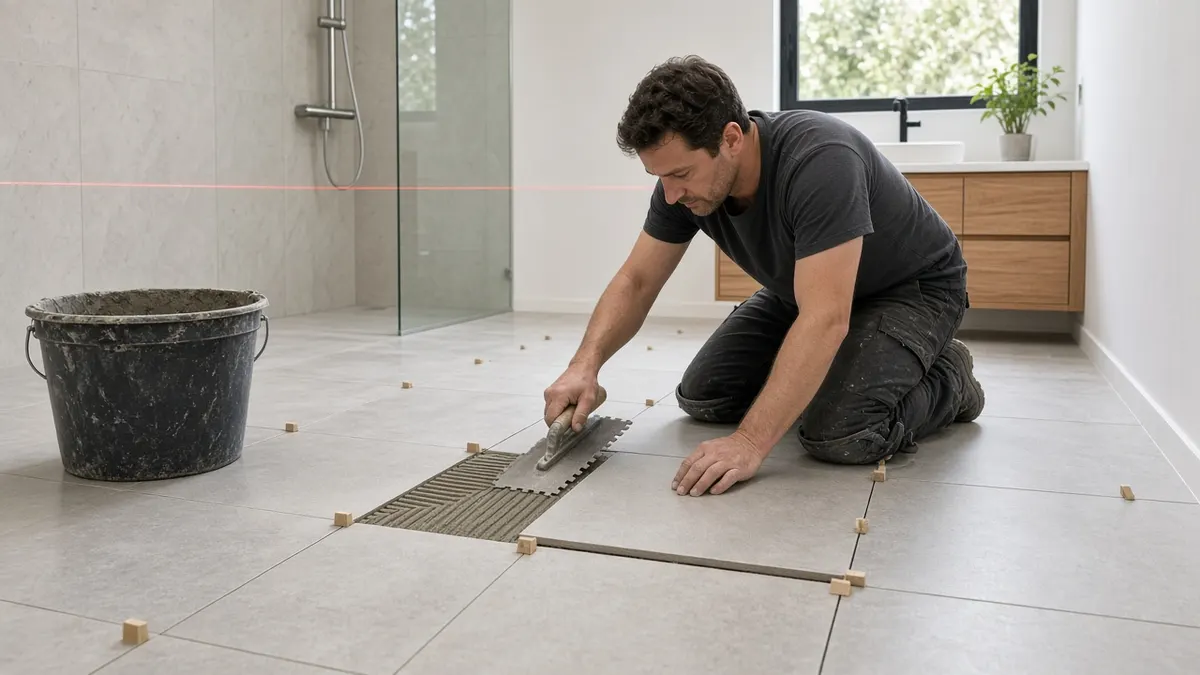
The tiling cost per m² in Australia in 2026 is typically $45–85/m² in labour for standard floor tiles and $55–95/m² for wall tiles, with large-format tiles at $75–130/m² and mosaics at $90–160/m², before tiles, adhesive, prep and waterproofing. Tilers working by the hour charge about $55–85/hr. These are indicative market observations, not quotes.
This guide breaks down labour by tile type, costs a typical bathroom, lists the extras that catch people out, compares hourly and per-m² pricing and explains licence rules for tiling and waterproofing. Yakka Labour is the hiring marketplace, not the workwear brand with a similar name.
How much do tilers charge per square metre?
| Tile type | Indicative labour 2026 (AUD per m²) | Why it costs more or less |
|---|---|---|
| Standard floor tiles (300–600 mm) | $45–85 | Flat, open areas lay quickly |
| Wall tiles | $55–95 | More cuts around fixtures, slower to set out |
| Large-format tiles (600 × 1200 mm and up) | $75–130 | Heavy, need flatter substrates, levelling systems and two people |
| Mosaics and small format | $90–160 | Slow to lay and grout, more joints |
| Feature patterns (herringbone, chevron) | $90–150 | Extra set-out and cutting |
| Outdoor and pool surrounds | $60–110 | Falls, drainage and external-grade materials |
All figures are indicative 2026 market observations for labour only. Sydney and Perth sit at the top; Adelaide and regional areas lower. Tiles, adhesive, grout and trims are extra unless the quote says otherwise.
What affects the cost of tiling per m²?
- Tile size and weight: big, heavy tiles need flatter substrates, more adhesive coverage and often two people to place.
- Substrate condition: out-of-level slabs, uneven walls and damaged sheeting need grinding, levelling or replacing first.
- Layout: herringbone, chevron, offset patterns and centred layouts take longer to set out and produce more cuts.
- Room shape: small rooms with many corners, niches and fixtures cost more per m² than an open floor.
- Grout and finish: epoxy grout, mitred edges and metal trims add time.
- Access and location: upper-floor apartments, stairs, limited parking and regional travel add to the price.
Two quotes for the "same" bathroom can differ by thousands because one includes prep, waterproofing and trims and the other does not. Ask for an itemised quote.
Timing also plays a part. Tilers are usually one of the last trades through a renovation, so delays by the plumber, plasterer or waterproofer push their start date back. A tiler who loses days waiting on other trades may build that risk into the price. Giving a firm start date, with the room ready, screeded and waterproofed as agreed, is one of the easiest ways to get a sharper quote.
How much is labour for tiling a bathroom?
Here is a worked example for a small bathroom renovation in Chermside, Brisbane: 5 m² of floor and 18 m² of wall tiles, standard format.
- Floor tiling: 5 m² × $65 = $325
- Wall tiling: 18 m² × $75 = $1,350
- Waterproofing the wet areas: often $700–1,400 for a small bathroom
- Floor screed to falls and wall preparation: often $300–800
- Silicone, trims, niche and set-out time: often $200–500
Tiling and waterproofing labour comes to roughly $2,900–4,400, before tiles, demolition and the other trades. Once tiles and materials are added, a job like this is well over $3,300, so Queensland's QBCC licensing rules apply to the contractor. Full renovations add plumbing, electrical, carpentry and plastering on top.
What prep and waterproofing extras should you budget for?
- Removing old tiles: often $25–60 per m² plus disposal, more if tiles are bonded to a concrete slab.
- Screeding and levelling: needed for falls to the waste and for large-format tiles on uneven floors.
- Waterproofing: required in wet areas under the building code; always check who is doing it and that it is the right licence class where your state requires one.
- Sheeting and substrate repairs: water-damaged walls need replacing before tiling.
- Cuts and trims: mitred edges, metal trims and niches add time.
Should you pay a tiler by the hour or per m²?
Per m² suits new work and full rooms where the area is easy to measure, because the tiler carries the risk of slow progress. Hourly suits repairs, regrouting, small splashbacks and jobs with unknown substrate problems. Tiler day rates in 2026 are commonly $450–700, and a tiler's labourer, who mixes adhesive, carries tiles and cleans up, typically earns $40–50/hr. Pairing one tiler with a labourer can speed up large-format and big floor jobs enough to save money overall.
When you buy tiles, allow extra for cuts and breakages, commonly around 10% for straight-lay and more for patterns and large-format tiles. Running short halfway through a job and finding the next batch is a slightly different shade is a common and avoidable problem.
Do tilers and waterproofers need a licence?
| State | Tiling and waterproofing rule | Where to check |
|---|---|---|
| NSW | Contractor licence needed for residential wall and floor tiling, and separately for waterproofing, valued at more than $5,000 in labour and materials including GST | NSW Government licensing pages |
| Queensland | QBCC licence needed for building work valued over $3,300; wall and floor tiling and waterproofing are separate QBCC licence classes | QBCC |
| Victoria | Registration rules depend on the type and value of domestic building work | Building and Plumbing Commission |
| Other states and territories | Rules vary | Your state building regulator |
Sources: NSW waterproofing licence rules (the NSW wall and floor tiling page sets the same $5,000 threshold) and QBCC: when you need a licence. Ask to see the licence before you pay a deposit, and check it on the state register.
What is the award rate for a tiler?
Tile layers on construction sites are covered by the Building and Construction General On-site Award, where a qualified tradesperson is generally classified at CW/ECW 3 with a base minimum hourly rate of $29.45 from 1 July 2026, before allowances and the 25% casual loading. Market rates for qualified tilers sit well above that. Check the Fair Work pay guides for the full award figures.
Most residential tilers work as subcontractors on an ABN and price per m², which is why the per-m² bands above are the numbers most homeowners see. Builders who need a tiler for a run of apartments or townhouses often agree a schedule of rates: one price per m² for floors, one for walls, and set prices for niches, waterproofing and trims. If the tiler is paid mainly for labour, the ATO's super rules for contractors can still apply, so builders should check before treating a labour-only tiler as a contractor for super purposes.
How do you hire a tiler on Yakka?
Look for photos of finished work close up, not just wide shots: straight grout lines, neat cuts around fixtures and clean silicone joints tell you more than a glossy room photo.
- Post the job with suburb, areas in m², tile size and type, whether waterproofing is included and your rate or budget.
- Browse tiler profiles near you and check photos of past work and licence details for jobs over your state's threshold.
- Agree the scope, prep, who supplies materials and the price in writing.
- Pay through the platform when the work is done.
For small repairs a handyman may be enough. For bigger jobs, use the checks in how to find trusted tradies, browse tilers by area or see tiling labour hire Sydney.
Frequently asked questions
How many square metres can a tiler lay in a day?
An experienced tiler can typically lay around 10–20 m² of standard floor tiles a day on a prepared, open floor, as an indicative observation. Wall tiles, large-format tiles, mosaics, patterns and lots of cuts reduce that considerably. Prep, waterproofing curing time and grouting also take separate days, so a small bathroom usually spans several days.
Is it cheaper to tile floors or walls?
Per square metre, floors are usually cheaper to tile than walls because they are flat, open and need fewer cuts around fixtures. Walls take longer to set out and tile around taps, niches and windows. Large-format wall tiles are the most expensive common option because they are heavy, need very flat walls and often need two people.
Do tilers remove old tiles?
Many tilers will remove old tiles for an extra charge per square metre plus disposal, while others expect demolition to be done before they arrive. Removal from a concrete slab or with old bedding can be slow and noisy. Make sure the quote says who removes old tiles, who disposes of the waste and who repairs the substrate underneath.
Should I buy the tiles myself?
You can, and many homeowners do to choose exactly what they want. Ask the tiler for the quantity first, including a wastage allowance, usually higher for patterns and large-format tiles. Buy everything from one batch so the colour matches. Your tiler should confirm the adhesive and any levelling system suited to the tile you choose.
How long after waterproofing can you tile?
It depends on the waterproofing product, the temperature and humidity, and the manufacturer’s instructions, which set the curing time before tiling. Some systems also need a flood test or an inspection before tiles go down. Do not rush this step, because a waterproofing failure behind new tiles is one of the most expensive bathroom repairs.
Official sources
Award rates, licences and safety rules change. Check the official source before you hire or take on a shift.
- Fair Work Ombudsman — pay guidesMinimum award rates, casual loading and penalty rates
- Fair Work Pay CalculatorWork out the minimum pay for a specific award and shift
- Queensland Building and Construction Commission (QBCC)Contractor, plumbing and drainage licence search in Queensland
- Building and Plumbing Commission (Victoria)Builder and plumber registration, domestic building insurance and licence checks in Victoria
- Australian Taxation Office — super for employersSuperannuation guarantee obligations when you pay workers