Rates
Scaffolder Day Rate Australia (2026): Pay & Costs
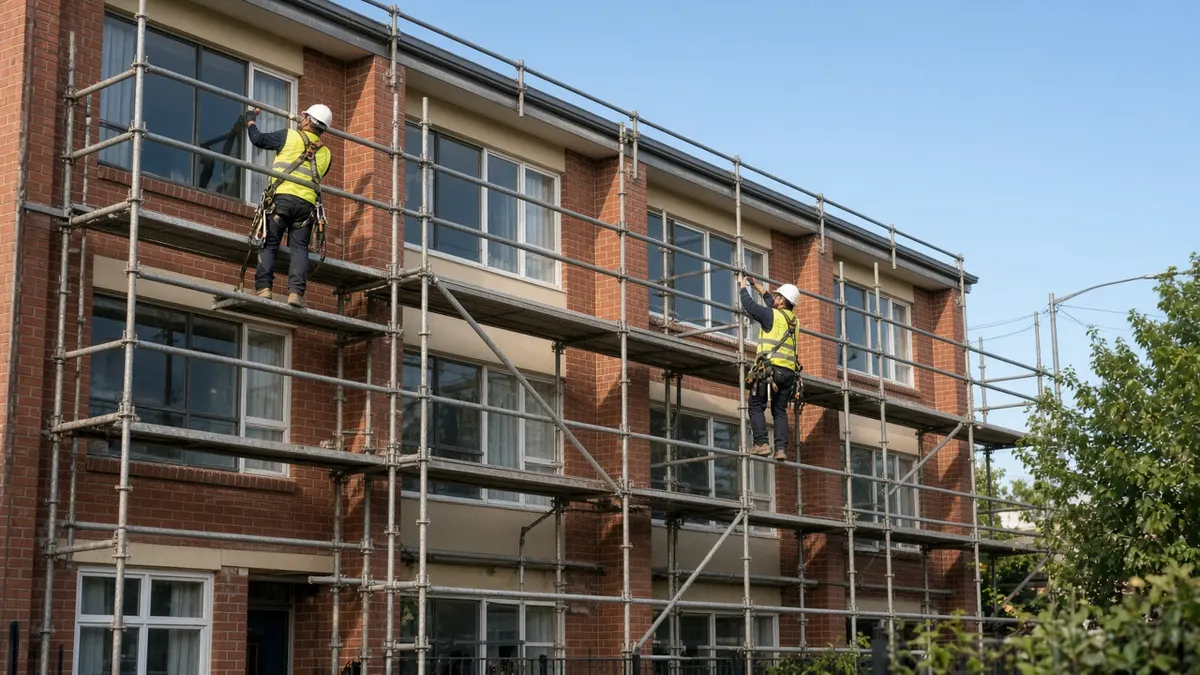
A scaffolder day rate in Australia typically runs $380–500 for a basic-licensed (SB) scaffolder and $440–600 for intermediate or advanced (SI or SA) scaffolders over an eight-hour day in 2026, while scaffold labourers earn about $320–420 a day. These are indicative market observations, not award minimums; confirm pay rates on Fair Work.
This guide breaks rates down by licence class, explains what each class allows, compares labour-only scaffolders with hire-and-erect companies, and costs a real facade job. Yakka Labour is the hiring marketplace, not the workwear brand with a similar name.
How much do scaffolders get paid per hour and per day?
| Role | Licence | Indicative hourly (AUD) | Indicative day, 8 hours (AUD) |
|---|---|---|---|
| Scaffold labourer / trainee | White card; working under supervision | $40–52 | $320–416 |
| Basic scaffolder | SB | $48–62 | $384–496 |
| Intermediate scaffolder | SI | $55–70 | $440–560 |
| Advanced scaffolder | SA | $58–75 | $464–600 |
| Leading hand / supervisor | SI or SA | $62–80 | $496–640 |
All figures are indicative 2026 market observations for casual or labour-only work. High-rise, industrial shutdowns, hung and suspended scaffolds and projects under enterprise agreements sit above these bands. Sydney, Melbourne and Perth sit at the top; regional work is lower unless it involves travel or living-away allowances.
Other things lift a scaffolder's day rate: holding dogging, rigging or EWP tickets alongside the scaffolding licence; leading-hand experience running a crew; shutdown work on industrial plant with long shifts and night work; and short-notice starts. A scaffolder who can read scaffold drawings and do handover inspections is worth more to a small scaffolding business than one who only erects.
What do basic, intermediate and advanced scaffolding licences cover?
A high risk work licence is needed for scaffolding work, which SafeWork NSW defines as erecting, altering or dismantling a temporary structure that supports a platform from which a person or object could fall more than 4 metres. The three classes build on each other (see SafeWork NSW high risk work licences):
- Basic (SB): modular or prefabricated scaffolds, cantilevered materials hoists up to 500 kg working load, ropes and gin wheels, safety nets and static lines, and bracket scaffolds.
- Intermediate (SI): everything in basic plus cantilevered crane loading platforms, cantilevered and spurred scaffolds, barrow ramps and sloping platforms, perimeter safety screens and shutters, mast climbers and tube-and-coupler scaffolds.
- Advanced (SA): everything in intermediate plus cantilevered hoists, hung scaffolds and suspended scaffolds.
A person training towards a licence can do the work under the supervision of a licensed scaffolder, which is how most scaffold labourers start. For the full pathway, see how to become a scaffolder.
How much do scaffolding companies charge?
Most homeowners and small builders do not hire scaffolders by the day. They pay a scaffolding company to supply, erect, inspect and dismantle the scaffold, with weekly hire after an initial period. Indicative 2026 ranges:
- Single-storey house, perimeter scaffold for a roof or gutter job: roughly $1,500–4,000 including erect, dismantle and the first few weeks of hire.
- Double-storey facade or render job: roughly $3,000–8,000 depending on length, access and duration.
- Priced per area: commonly $15–35 per m² of scaffold face to erect and dismantle, with weekly hire after the initial period at a few dollars per m² per week.
These are broad market observations; access, ground conditions, the need for loading bays or edge protection and council footpath permits change the price a lot. Get at least two written quotes that state the hire period and the weekly rate after it.
What should a scaffold hire quote include?
- Hire period and weekly rate: how many weeks are included and what each extra week costs.
- Erect, alter and dismantle: whether changes mid-job, such as lifting a lift for the roofers, are charged separately.
- Handover and inspections: a handover certificate and the ongoing inspections by a competent person that work health and safety rules require for scaffolds over 4 metres.
- Permits: council approval for scaffolds or hoardings over a footpath or road.
- Extras: loading bays, stair access, shade cloth or mesh, edge protection and sheeting.
- Damage and access: who pays for damaged components and who can alter the scaffold.
Labour-only scaffolders or hire-and-erect: which do you need?
Labour-only suits builders and scaffolding companies that own their own gear and need extra licensed hands for a big erect or strike. You pay the day rate and supply the scaffold, the plan and the site. Hire-and-erect suits everyone else: the company supplies the equipment, the licensed crew, the handover inspection and the paperwork.
The decision usually comes down to how often you need scaffold. A builder running three or four townhouse jobs a year may find that owning a modular system and booking labour-only crews for each erect and strike pays off within a couple of projects, as long as they have storage, a truck and someone competent to manage inspections. A homeowner re-roofing once in twenty years should simply get hire-and-erect quotes. Scaffolding companies also juggle peaks: when their own crews are flat out, they bring in licensed labour-only scaffolders for a few days, which is where much of the day-rate work comes from.
What is the award rate for a scaffolder?
Scaffolders on construction sites are covered by the Building and Construction General On-site Award (MA000020), which classifies scaffolders at CW/ECW 2. From 1 July 2026 the base minimum hourly rate for CW/ECW 2 is $28.62 (clause 19.1 of the award text), before the industry allowance, other allowances and the 25% casual loading. The award also has an inclement weather clause covering work in wet or extreme conditions. Check the Fair Work pay guides for the full hourly figure.
What does a scaffold crew cost? A worked example
A builder in Box Hill owns the scaffold and needs a labour-only crew to erect it around a two-storey townhouse facade over two days and strike it later in a single day.
- 1 SI scaffolder × 8 hours × $68/hr = $544 a day
- 1 SB scaffolder × 8 hours × $56/hr = $448 a day
- 1 scaffold labourer × 8 hours × $45/hr = $360 a day
- Crew cost per day: $1,352; three days in total: $4,056, before super and workers comp
Add the truck to move the gear, any council footpath permit and the builder's own time managing inspections. If the job runs six weeks, compare that total with a hire-and-erect quote of, say, $3,000–8,000 for the same facade; the right answer depends on whether the builder will reuse the gear on the next job.
Above 4 metres, scaffolding work must be done by licensed scaffolders or trainees under their supervision. Workers on the deck afterwards often need fall-protection training; see the working at heights ticket guide.
How do you hire scaffolders on Yakka?
- Post the job with the suburb, scaffold type, licence class needed (SB, SI or SA), dates and your day rate.
- Browse scaffolder profiles nearby and check licence classes and experience.
- Agree the crew size, hours and rate in writing.
- Pay through the platform when the work is done.
Sydney builders can compare scaffolding labour hire Sydney or browse scaffolding by area.
Frequently asked questions
Do scaffolders get paid more for working at height?
Award employees can receive extra allowances for certain conditions, and the market pays more for high-rise, hung and suspended scaffolds because the work needs SI or SA licences and more experience. On most residential jobs the day rate already reflects normal heights. Check the Building and Construction award for allowances that apply to specific conditions.
Can a scaffold labourer erect scaffold?
A labourer can carry, pass and stack scaffold components at any height. Erecting, altering or dismantling scaffolding where a person or object could fall more than 4 metres needs a licence, unless the worker is training towards one under the supervision of a licensed scaffolder. Below 4 metres no scaffolding licence is needed, but WHS duties still apply.
Do scaffolders work in the rain?
Light rain may not stop work, but wind, lightning and heavy rain make erecting and dismantling unsafe. The Building and Construction award includes an inclement weather clause that sets out what happens to pay when work stops because of weather. Labour-only scaffolders on day rates usually agree in advance how rain days are handled.
Is scaffolding a good career?
For people who like physical work at height and want a clear progression, it can be. Workers often start as scaffold labourers, earn a basic licence, then step up to intermediate and advanced classes, with pay rising at each step. The work is demanding, early-starting and weather-exposed, but licensed scaffolders are needed across residential, commercial and industrial sites.
Do I need scaffolding for a single-storey roof job?
Not always, but you need a safe way to prevent falls. Options include perimeter scaffolding, edge protection and other fall-prevention systems, depending on the roof and the work. If the platform is under 4 metres, a scaffolding licence is not required to erect it, but the scaffold must still be safe and suitable for the job.
Official sources
Award rates, licences and safety rules change. Check the official source before you hire or take on a shift.
- Fair Work Ombudsman — pay guidesMinimum award rates, casual loading and penalty rates
- Fair Work Pay CalculatorWork out the minimum pay for a specific award and shift
- Safe Work AustraliaNational work health and safety framework, including high-risk work licences
- SafeWork NSWWhite cards, high-risk work licences and WHS rules in New South Wales