Outdoor cost guide
Garden Maintenance Cost Australia 2026: Per Visit, Month and Year
Typical cost in Australia (2026, inc. GST)
$80 to $550 per visit
regular maintenance visit, small courtyard to large suburban garden, green waste removal often extra
A regular gardener costs about $80 to $150 a visit for a small courtyard, $150 to $280 for a typical suburban garden and $300 to $550 for a large established one in 2026, including GST. Over a year that is roughly $1,000 to $1,800 for a courtyard on monthly visits and $3,300 to $7,300 for a suburban garden on seasonal or fortnightly visits. Size, frequency, hedges and green waste drive the price.
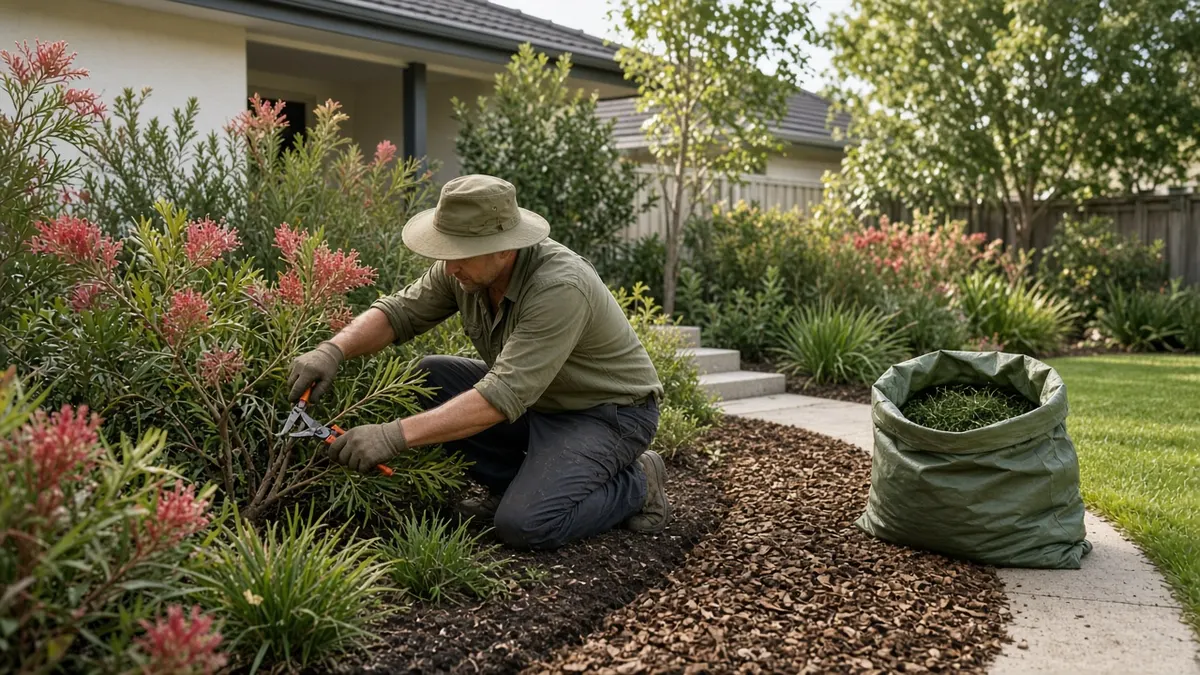
Garden maintenance in Australia costs about $80 to $550 per visit in 2026, depending mainly on how big the garden is and how much work it needs each time. A typical suburban garden on fortnightly visits costs somewhere between $300 and $600 a month, or about $3,300 to $7,300 a year depending on whether you scale back in winter.
This guide looks at the whole bill: what a visit costs, what that adds up to over a month and a year, and what one-off jobs such as hedge trimming, mulching and clean-ups cost on top. If you want the hourly figures gardeners and landscapers charge, they are covered separately in our guides to the gardener hourly rate in Australia and the landscaper hourly rate. Here the focus is on the totals you will actually pay.
All prices are indicative, include GST and assume a sole trader or small business with their own tools and vehicle. Ask at least three gardeners for a written quote after they have walked through the garden.
What a visit costs by garden size
Most gardeners either charge by time on site or agree a fixed price per visit once they know the garden. Fixed pricing is common for regular clients because both sides know where they stand. Either way, the size and complexity of the garden sets the price.
| Garden type | Typical work per visit | Time on site | Cost per visit |
|---|---|---|---|
| Courtyard or townhouse garden | Weeding, light pruning, sweeping, a few pots and a small lawn | 1 to 1.5 hours | $80 to $150 |
| Standard suburban garden (500-700 m² block) | Mowing and edging, bed weeding, pruning, blowing paths | 2 to 3 hours | $150 to $280 |
| Large established garden (800-1,200 m² block) | All of the above plus hedges, more beds and larger lawns | 4 to 6 person-hours | $300 to $550 |
| Acreage or semi-rural | Ride-on mowing, slashing, firebreaks, bed maintenance | Half day to full day, often two people | $500 to $1,200 |
Two gardeners working together for two hours usually cost about the same as one gardener for four hours, and they get through heavy jobs faster, so a two-person crew is common on bigger gardens.
Many gardeners also have a minimum charge, often equal to an hour or an hour and a half of work, because travel time between jobs is unpaid. If your garden only needs 30 minutes, you will still pay the minimum.
Monthly and yearly costs by visit frequency
How often the gardener comes matters as much as the size of the garden. Weekly visits keep a garden tidy at all times. Monthly visits mean each visit is longer because more has grown back. The table below uses the per-visit ranges above.
| Garden and frequency | Visits per year | Approx. monthly cost | Approx. yearly cost |
|---|---|---|---|
| Courtyard, monthly | 12 | $80 to $150 | $960 to $1,800 |
| Courtyard, fortnightly | 26 | $175 to $325 | $2,100 to $3,900 |
| Suburban, monthly | 12 | $170 to $320 | $2,040 to $3,840 |
| Suburban, seasonal (fortnightly spring to autumn, monthly in winter) | about 22 | $275 to $515 average | $3,300 to $6,200 |
| Suburban, fortnightly all year | 26 | $325 to $605 | $3,900 to $7,300 |
| Large garden, fortnightly | 26 | $650 to $1,190 | $7,800 to $14,300 |
| Large garden, weekly | 52 | $1,300 to $2,380 | $15,600 to $28,600 |
Monthly visits for a suburban garden cost a bit more per visit than fortnightly ones because each visit takes longer. That is why the monthly suburban row starts at $170 rather than $150.
The seasonal schedule is the one most gardeners recommend for southern cities. Growth slows sharply in Melbourne, Adelaide, Hobart and Canberra over winter, and paying for fortnightly visits from June to August often means paying someone to look for work. In Brisbane, Darwin and northern NSW the pattern is different: growth peaks in the humid wet months, and you may need weekly visits from December to March.
What is normally included, and what costs extra
There is no industry-standard list, so the first conversation with a gardener should cover exactly what a visit includes. A typical regular visit covers:
- Mowing, edging and whipper-snipping lawns (if the gardener also mows)
- Hand weeding or spot spraying garden beds and paths
- Light pruning and deadheading of shrubs, roses and perennials
- Blowing or sweeping paths, driveways and patios
- Putting clippings into your green bin
Items that usually cost extra:
- Green waste removal when your green bin is full. Expect $40 to $150 per ute or trailer load depending on the size and your local tip fees.
- Hedge trimming beyond a light tidy, especially hedges over 2 metres.
- Materials such as mulch, fertiliser, soil improver, plants and herbicide.
- Seasonal jobs like winter rose pruning, lawn renovation, aeration and top dressing.
- Anything needing a licence or special equipment, including tree work above head height, irrigation connections and pest control.
One-off task prices
Not everyone wants a regular gardener. Plenty of people book a few big jobs a year and handle the weekly tidying themselves. These are typical prices for common one-off tasks on a suburban block.
| Task | Typical price | Notes |
|---|---|---|
| Overgrown garden clean-up | $400 to $1,500 | Small to medium garden, includes removal of one or two loads of green waste |
| Major clean-up of a neglected or rental property | $1,500 to $4,000 | Large gardens, heavy weeds, multiple trailer loads or a skip |
| Hedge trimming, up to 2 m high | $8 to $20 per linear metre | Often a $150 to $250 minimum; clean-up included |
| Hedge trimming, 2 to 4 m high | $20 to $40 per linear metre | Needs ladders or a platform, more time on safe access |
| Mulch supply and spread, 75 mm deep | $10 to $18 per m² | Price depends on mulch type and how far it is barrowed |
| Winter rose and shrub pruning | $150 to $400 | Typical suburban garden with 10 to 20 roses or shrubs |
| Garden bed weeding and edging (one-off) | $150 to $500 | Depends on bed size and how bad the weeds are |
| Planting, labour only | $5 to $10 per tube stock, $15 to $35 per 200 mm pot | Plants, soil and fertiliser extra |
| Irrigation check and minor repairs | $120 to $300 | Replacing drippers, sprays and timer batteries |
| Green waste removal only | $40 to $150 per load | Varies with load size and tip fees |
Lawn mowing on its own has its own pricing logic, covered in the lawn mowing cost guide. Trees taller than a person can safely reach from the ground belong with an arborist; the tree removal cost guide explains those prices.
Three gardens, three budgets
These worked examples show how a yearly budget comes together. All prices include GST.
Townhouse courtyard in Carlton, VIC
A 40 m² courtyard with raised beds, a lemon tree, a dozen pots and no lawn. The owner travels for work and wants it kept neat with one visit a month.
| Item | Annual cost |
|---|---|
| 12 monthly visits of about 1.5 hours at $120 each | $1,440 |
| Spring mulch top-up, 15 m² supplied and spread | $210 |
| Slow-release fertiliser and potting mix for pots | $90 |
| Yearly total | $1,740 (about $145 a month) |
Family home on 650 m² in Mount Gravatt, QLD
A lowset house with front and back lawns, 60 m² of garden beds, a murraya hedge along one side and fast summer growth. The gardener visits fortnightly from October to April and monthly from May to September.
| Item | Annual cost |
|---|---|
| 15 fortnightly visits in the warm months at $200 | $3,000 |
| 5 monthly visits in the cooler months at $230 | $1,150 |
| Murraya hedge trims, 3 a year, 18 m at $12 per metre | $648 |
| Green waste removal, 4 extra loads at $80 | $320 |
| Mulch, 60 m² supplied and spread once a year at $13 | $780 |
| Yearly total | $5,898 (about $490 a month) |
The cooler-month visits cost slightly more each because more has grown between visits, even though growth is slower overall.
Large established garden in Stirling, SA
A 1,100 m² Adelaide Hills block with deciduous trees, roses, perennial borders and 40 metres of tall hedging. A two-person crew does a half-day every fortnight.
| Item | Annual cost |
|---|---|
| 26 fortnightly visits, two gardeners for about 2.5 hours, at $420 | $10,920 |
| Two big hedge trims a year, 40 m at 2.5-3 m high, $25 per metre | $2,000 |
| Autumn leaf clean-up, extra visits and green waste | $900 |
| Winter rose pruning (included in a longer visit) | $250 |
| Yearly total | $14,070 (about $1,170 a month) |
For a garden like this, the owner could cut the bill by about a third by dropping to monthly visits over winter, with a one-off leaf clean-up in late autumn.
City-by-city pricing
These are typical per-visit prices for a standard suburban garden of about 2 to 3 hours' work.
| City | Suburban visit | What shapes the price |
|---|---|---|
| Sydney | $170 to $300 | Higher living costs, traffic between jobs, steep blocks on the North Shore and Northern Beaches |
| Melbourne | $160 to $280 | Strong winter slowdown, so many gardeners discount off-peak regular bookings |
| Brisbane | $150 to $270 | Fast summer growth, frequent hedging of subtropical species |
| Perth | $150 to $270 | Sandy soils and reticulation checks are part of most visits |
| Adelaide | $140 to $250 | Lower overheads, dry summers slow lawn growth |
| Canberra | $160 to $280 | Frosts and a short growing season, busy autumn leaf work |
| Hobart | $140 to $250 | Smaller market, slow winter growth |
| Darwin | $170 to $300 | Explosive wet season growth, heat limits working hours |
| Regional towns | Often 10% to 15% lower | Lower overheads, but travel fees may apply on rural properties |
A year of garden jobs and when to budget for them
Regular visits cover the routine work. The bigger seasonal jobs are where the bill jumps, so it helps to know when they fall. This calendar suits temperate southern cities; in the subtropics, shift the heavy growth work into the wet season and treat winter as the main time for planting and tidying.
| Season | Typical extra jobs | Rough extra cost, suburban garden |
|---|---|---|
| Spring (Sep to Nov) | Fertilising beds and lawns, first hedge trim, mulch top-up, weed blitz as growth takes off | $400 to $1,200 |
| Summer (Dec to Feb) | Irrigation checks, second hedge trim, watering arrangements while you are away | $200 to $600 |
| Autumn (Mar to May) | Leaf clean-ups, lawn renovation and top dressing, planting for winter and spring | $300 to $900 |
| Winter (Jun to Aug) | Rose and fruit tree pruning, moving or planting deciduous trees and shrubs, structural tidy-up | $150 to $500 |
Spring is when gardeners are hardest to book. If you want a big clean-up and mulch before summer entertaining, ask in late winter rather than in November.
Gardener or landscaper?
The two overlap, but they price and work differently. A gardener maintains what is already there: mowing, weeding, pruning, mulching and keeping beds healthy. A landscaper builds or changes things: new beds, retaining walls, paving, turf, irrigation layouts and drainage. Landscapers bring machinery and usually quote by the project rather than by the visit.
If your garden needs a one-off rebuild before regular care makes sense, it is often cheaper overall to get a landscaper to redo the hard-to-maintain parts once, then switch to a gardener on a lighter schedule. Removing a tired lawn strip, replacing high-maintenance hedges or mulching and replanting beds with hardier plants can cut the time each regular visit takes by a third or more. The hourly side of that comparison is in the landscaper rates guide linked at the top of this page.
Some gardeners also handle small landscaping jobs, which is convenient for things like a couple of new garden beds or a few square metres of turf. For anything structural, check they hold the licence your state requires once the job is above the threshold.
Why two similar gardens get very different quotes
Gardeners price by how long the work will take and how hard it is. The things that slow them down are what add cost.
- Plant choice. Formal hedges, roses, lots of annuals and fussy perennials take time. A native garden with mulched beds and few hedges is far cheaper to maintain.
- Weed pressure. Beds without mulch, couch grass creeping into gardens and bare soil all mean more weeding time.
- Access. Steep blocks, stairs, no side access and long barrow runs to the green bin or trailer add time on every visit.
- Green waste volume. One green bin a fortnight fills fast in spring. If the gardener has to take clippings away, tip fees go on the bill.
- Starting condition. An overgrown garden usually needs a one-off clean-up before regular pricing applies.
- Frequency. Longer gaps mean longer visits, and some gardeners charge a higher rate for irregular "call me when you need me" work than for a regular round.
Licences, insurance and safety
General garden maintenance does not need a trade licence anywhere in Australia. A few related jobs do have rules attached:
- Spraying. Commercial use of herbicides and pesticides is regulated by each state, with training or licensing requirements. Ask what qualification your gardener holds if they spray for you, and keep chemical use away from vegetable beds, ponds and pets.
- Irrigation. Connecting an irrigation system to the mains water supply needs backflow prevention and, in most states, a licensed plumber.
- Structural landscaping. Retaining walls, paving and similar work can need a building licence once the job value passes your state's threshold. In Queensland check the current threshold with the QBCC; in NSW check with NSW Fair Trading.
- Trees and powerlines. Work near overhead powerlines must only be done by people authorised for vegetation work near electrical lines. Call an arborist, not a general gardener.
- Working at heights. Tall hedge work from ladders or platforms is a common source of falls. Safe Work Australia has guidance on working at heights that any professional gardener should follow.
Whoever you hire should carry public liability insurance. Ask for a certificate of currency before regular work starts, especially if they use mowers, blowers and hedge trimmers near cars and windows.
Keeping the yearly bill down
The biggest savings come from changing the garden, not squeezing the gardener on price.
- Mulch every bed. A 75 mm layer of mulch cuts weeding time dramatically and saves water. It pays for itself within a season or two of visits.
- Swap out high-maintenance plants. Replacing a hedge that needs four trims a year with a slower-growing species, or with a screen fence, can save hundreds every year.
- Go seasonal. In southern cities, monthly visits over winter are usually enough.
- Do the easy bits yourself. Many owners handle mowing and pay a gardener for the skilled work such as pruning and hedging.
- Keep your green bin free. Leaving the green bin empty on visit day saves a removal charge.
- Book one-off jobs together. A single half-day for pruning, mulching and a hedge trim is cheaper than three separate call-outs.
Owners of investment properties should keep invoices. Garden and lawn maintenance on a rental property is generally a deductible expense, but check your situation with the ATO or your accountant.
The first visit is usually the dearest
Expect the first booking to cost more than the regular price you are quoted. A gardener taking on a new garden normally spends extra time cutting back overgrowth, clearing weeds that have gone to seed and working out where taps, bins and access points are. On a suburban garden that first visit can run to double the usual time, plus a load or two of green waste.
Some gardeners quote the first visit separately as a clean-up, then lock in the regular price. That is a fair approach. Be cautious of a quote that looks cheap for regular visits but never says what happens to the overgrown state the garden starts in.
Agreeing a regular arrangement
Before you sign up for a regular service, get a written agreement or quote that covers:
- The price per visit and whether it is fixed or time-based
- How often they come, and what happens on rain days and public holidays
- Exactly what tasks are included and what is charged extra
- How green waste is handled and what removal costs
- Who supplies mulch, fertiliser and chemicals, and at what markup
- Notice period to cancel or pause the service
- Public liability insurance details and ABN
Watch for gardeners who ask for months of payment upfront, refuse to give invoices or will only work for cash. Paying a regular gardener cash with no paperwork leaves you with no record if something goes wrong.
Hiring through Yakka
Yakka Labour lets you book gardeners and general labourers by the shift or job, which works well for one-off clean-ups, mulching days, green waste removal and extra hands on a big weekend in the garden. You set the task and the hours, and you can rebook the same worker if they suit.
For ongoing care you can browse garden maintenance workers or landscapers and gardeners in your area. Tree work at height, irrigation connections to mains water and licensed spraying should still go to the right qualified trade.
Related upkeep worth budgeting for
Gardens shed leaves into gutters, and blocked gutters cause water damage that costs far more than the cleaning. The gutter cleaning cost guide covers typical prices. If lawns are the part of the garden that takes the most time and you are thinking of replacing them, our artificial grass cost guide runs through the trade-offs.
Frequently asked questions
How much does a gardener cost per visit in Australia?
A regular gardener usually costs $80 to $150 a visit for a small courtyard, $150 to $280 for a standard suburban garden and $300 to $550 for a large established garden in 2026. Prices include GST but often exclude green waste removal and materials such as mulch and fertiliser. Acreage properties often cost $500 to $1,200 for a half or full day.
How much does garden maintenance cost per year?
A small courtyard on monthly visits costs roughly $1,000 to $1,800 a year. A typical suburban garden on a seasonal schedule costs about $3,300 to $6,200, and fortnightly visits all year push that to around $3,900 to $7,300. Large gardens with hedges and two-person crews can cost $8,000 to $15,000 or more.
How often should a gardener come?
For most suburban gardens, fortnightly visits from spring to autumn and monthly visits in winter strike a good balance. Small low-maintenance gardens may only need a monthly visit all year. In Brisbane, Darwin and other humid areas, weekly visits during the wet season can be worth it because growth is so fast.
Does a gardener need a licence in Australia?
General garden maintenance such as mowing, weeding, pruning and mulching does not need a trade licence. Related work can: commercial herbicide and pesticide spraying is regulated by each state, connecting irrigation to mains water usually needs a licensed plumber, and structural landscaping over state thresholds can need a building licence.
Is green waste removal included in garden maintenance?
Usually not beyond what fits in your green bin. When there is more waste than the bin holds, most gardeners charge $40 to $150 per ute or trailer load, depending on the load size and local tip fees. Keeping your green bin empty on visit day and composting soft clippings both help keep this cost down.
How much does a one-off garden clean-up cost?
A one-off clean-up of an overgrown small to medium garden typically costs $400 to $1,500, including one or two loads of green waste. Badly neglected gardens, rental vacate clean-ups and large blocks can cost $1,500 to $4,000, especially when a skip bin or multiple trips to the tip are needed.
Is garden maintenance tax deductible?
Garden and lawn maintenance on your own home is not deductible. On a rental property it is generally treated as a deductible expense because it is part of maintaining the income-producing property. Keep invoices from your gardener and check your circumstances with the ATO or a registered tax agent.
Official sources
Award rates, licences and safety rules change. Check the official source before you hire or take on a shift.
- Safe Work AustraliaNational work health and safety framework, including high-risk work licences
- Queensland Building and Construction Commission (QBCC)Contractor, plumbing and drainage licence search in Queensland
- NSW Fair TradingTrade licence checks for electricians, plumbers and builders in New South Wales
- Australian Taxation Office — super for employersSuperannuation guarantee obligations when you pay workers