More cost guide
Pest Control Cost Australia: 2026 Prices by Pest and Home Size
Typical cost in Australia (2026, inc. GST)
$180 to $420 per treatment
general pest treatment inside and out, typical three to five bedroom house
A general pest treatment for cockroaches, spiders and ants usually costs $180 to $320 for a three bedroom house and $250 to $420 for larger homes. A termite inspection costs about $250 to $450, and a full termite barrier or baiting system $2,500 to $6,000 or more. Price depends on the pest, home size, construction type, access under the floor and roof, and whether follow-up visits are needed.
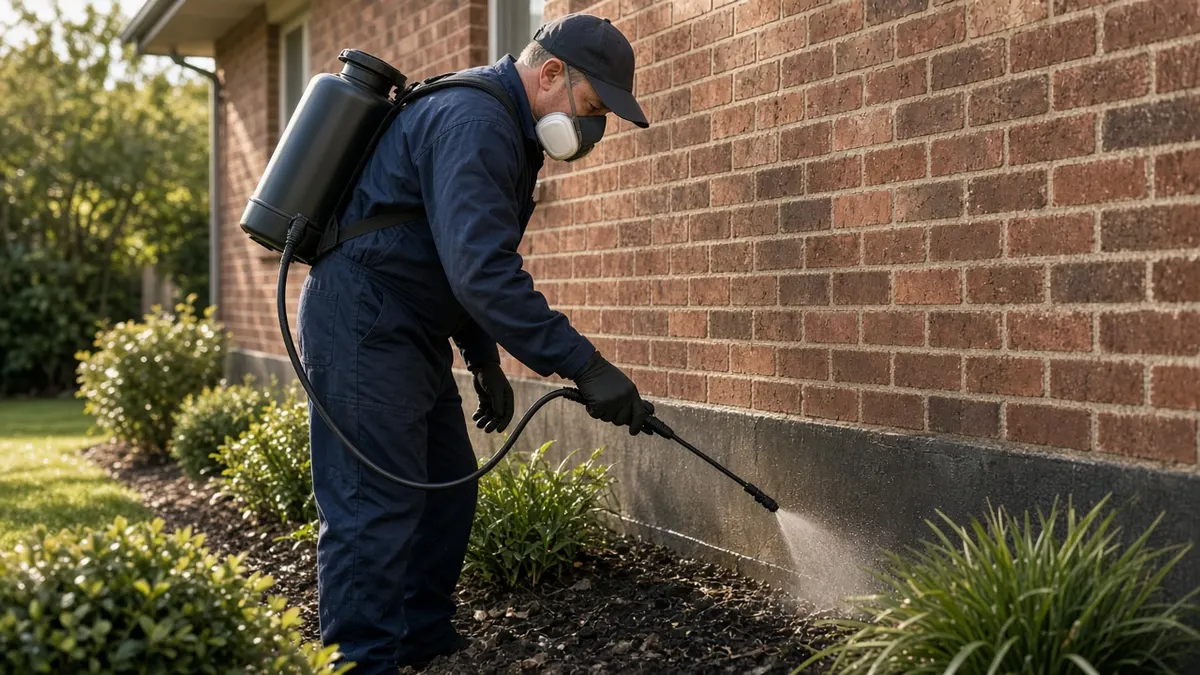
A standard pest control treatment in Australia costs between $180 and $420 for most houses, covering cockroaches, spiders, ants and silverfish inside and out. Units and small homes can be done for $130 to $220. Termites are a separate and much bigger budget item: an inspection costs $250 to $450, while treating an active infestation and installing a chemical barrier or baiting system typically runs $2,500 to $6,000.
The prices below are indicative 2026 figures in AUD including GST. Pest control is a competitive trade and quotes vary a lot, so get at least three written quotes and compare what is actually being treated, the chemicals used and the warranty, not just the headline price.
Prices by pest
| Treatment | Typical cost (inc. GST) | Notes |
|---|---|---|
| General pest (cockroaches, spiders, ants, silverfish) | $180 to $420 | Inside, roof void, subfloor and exterior |
| German cockroach gel baiting | $160 to $320 | Often needs a follow-up visit |
| Spiders only (exterior and eaves) | $150 to $280 | Popular before summer |
| Ants (inside and garden) | $150 to $320 | Baits plus residual spray |
| Rats and mice (baiting program) | $150 to $350 | Lockable bait stations cost extra |
| Fleas | $180 to $350 | Needs pets treated at the same time |
| Bed bugs | $400 to $1,500 | Usually two or more visits |
| Wasp nest removal | $150 to $350 | More for nests in walls or roofs |
| Termite inspection | $250 to $450 | Standard house, includes written report |
| Termite chemical barrier | $2,500 to $6,000+ | Depends on perimeter and concrete |
| Termite baiting and monitoring system | $2,500 to $5,000 | Plus $400 to $800 per year monitoring |
Many companies offer a discount of $50 to $100 if you book a general pest treatment and a termite inspection on the same visit. It is one of the easier ways to save, because the technician is already on site and going through the roof and subfloor.
General pest treatment by home size
For a general treatment, the main cost driver is how much area the technician has to cover, and how hard it is to get into the roof void and subfloor.
| Home | Typical cost (inc. GST) | Time on site |
|---|---|---|
| Apartment or small unit | $130 to $220 | 30 to 60 minutes |
| Two or three bedroom single storey house | $180 to $320 | 1 to 1.5 hours |
| Four or five bedroom house | $250 to $420 | 1.5 to 2.5 hours |
| Double storey or acreage home | $320 to $550 | 2 to 3 hours |
A thorough general treatment usually includes a residual spray around the external perimeter and the base of walls, treatment of eaves, window frames and door frames, dusting of the roof void, a spray or dust in the subfloor if there is one, and gel or bait inside kitchens, bathrooms and laundries. Some cheaper services skip the roof or subfloor. Ask exactly which areas are included.
What decides the price
The pest and how established it is
A few spiders around the eaves are a quick job. A German cockroach infestation in a kitchen, which breeds fast and hides inside appliances and cabinetry, can need two or three visits. Bed bugs are the most labour-intensive pest of all, because every mattress seam, bed frame, skirting board and power point area has to be treated and checked again.
Home construction and access
Homes on stumps or piers with an accessible subfloor are easier to inspect and treat for termites than slab homes, where the critical areas are hidden under paving and garden beds. Low crawl spaces, roofs with little room to move, and homes where furniture is pushed against every wall all slow the job down.
Chemicals and methods
Modern termiticides and baits cost more than the older products they replaced, but they work better and are applied in smaller amounts. Premium non-repellent soil treatments for termites cost more than repellent ones, and the price gap shows up mainly in the material line of a barrier quote.
Location and climate
Termite pressure is much higher in warm, humid parts of the country, which is why Brisbane, Darwin, coastal NSW and parts of Perth see more termite work, and why inspectors there often recommend checks every six months rather than once a year. Tasmania has a lower termite risk than the mainland, though termites are present in parts of the state.
Warranty and follow-ups
A quote that includes a free re-treatment within 3 to 12 months, or a follow-up visit for cockroaches or bed bugs, may cost more upfront but less overall. A very cheap treatment with no warranty can end up costing double if you need to pay for a second visit.
Termites: inspections, barriers and baits
Termites are the pest that can cost real money, because damage to wall framing, floors and roof timbers often goes unnoticed for years. Home insurance policies usually exclude termite damage, so prevention and regular inspections matter.
Inspections
A standard termite inspection costs $250 to $450 for a typical house and includes a written report. A good inspector checks the roof void, subfloor, interior, exterior and yard using a moisture meter and often a thermal camera, and looks for conditions that attract termites, such as leaking taps, timber in contact with soil and garden beds built up against the walls. Australian Standard AS 3660.2 recommends inspections at least once a year, and more often in high-risk areas. If you are buying a home, a pre-purchase timber pest inspection is usually done to AS 4349.3, often booked together with a building inspection. Our building inspection cost guide covers combined pricing.
Treating an active infestation
If live termites are found, the first step is usually treating the colony directly with a dust or foam applied into the workings, which the termites carry back to the nest. That costs roughly $300 to $800. After the colony activity stops, the technician will recommend ongoing protection.
Chemical soil barriers
A chemical barrier treats the soil around and under the house so termites cannot get in without contacting the product. For a slab home, the technician digs a trench along the external perimeter, treats the soil and backfills, and drills through paths, patios and driveways that abut the house, injecting chemical and patching the holes. Expect roughly $35 to $80 per linear metre of perimeter, with concrete drilling at the higher end. A typical single storey house works out at $2,500 to $6,000. Most products are labelled to last around five to eight years, but annual inspections are still recommended.
Baiting and monitoring systems
Baiting systems place in-ground stations around the house at regular intervals. When termites find a station, the technician adds bait that they carry back to the colony. Installation usually costs $2,500 to $5,000, with monitoring visits costing $400 to $800 a year. Baiting causes less disruption than trenching and drilling, but it only works if the monitoring is kept up.
New homes
New homes in termite-prone areas must have termite management built in under the National Construction Code, usually a physical or chemical system installed during construction. A durable notice in the meter box should tell you what was installed and when it needs inspecting. If you bought a newer home and have not seen that notice, check the meter box first.
Rodents, possums, birds and bees
Rats and mice are treated with tamper-resistant bait stations placed in the roof void, subfloor and along fence lines, plus sealing entry points where practical. An initial program costs $150 to $350, with follow-up visits to check and refill baits. Exclusion work, such as sealing gaps around pipes and roof lines, is the long-term fix and is often done by a handyman or roofer once the pest controller points out the entry points.
Possums are protected native animals in every state, so they cannot be treated like pests. Trapping and relocation are restricted by state wildlife rules and normally require a licensed wildlife handler. Expect $150 to $400 for removal, plus the cost of a one-way flap and sealing the entry point. Fixing the roof gap matters more than the removal itself.
Bee swarms are usually best handled by a local beekeeper, who may relocate them for free or a small fee. Established hives inside walls are a bigger job that can involve opening cladding or plaster. European wasp nests should be treated by a professional, as the wasps sting repeatedly and will defend the nest.
City price guide
For a general pest treatment of a three bedroom single storey house, expect roughly:
| City | General treatment | Termite inspection |
|---|---|---|
| Sydney | $220 to $350 | $280 to $450 |
| Melbourne | $200 to $330 | $260 to $420 |
| Brisbane | $190 to $320 | $250 to $400 |
| Perth | $190 to $320 | $250 to $400 |
| Adelaide | $180 to $300 | $250 to $380 |
| Hobart | $180 to $300 | $250 to $400 |
| Canberra | $200 to $330 | $270 to $420 |
| Darwin | $220 to $360 | $280 to $450 |
| Regional areas | $170 to $320 | $250 to $450 plus travel |
Labour cost is the main difference between cities. In the tropics, the volume of termite and cockroach work keeps demand high year-round, and in regional areas travel time gets built into the price.
Example jobs, line by line
Annual treatment and termite inspection in Stafford, QLD
A three bedroom Queenslander on stumps with an open subfloor. The owners book a general pest treatment and an annual termite inspection together.
| Line item | Cost (inc. GST) |
|---|---|
| General pest treatment, interior, roof void, subfloor, exterior | $240 |
| Termite inspection with moisture meter and thermal camera, written report | $300 |
| Bundle discount | -$50 |
| Total | $490 |
Active termites and a chemical barrier in Hornsby, NSW
A single storey brick veneer on a slab backing onto bushland. Termites were found in a skirting board. The house has about 52 linear metres of soil perimeter plus 18 metres of concrete path and patio against the walls.
| Line item | Cost (inc. GST) |
|---|---|
| Colony treatment with foam and dust, follow-up check | $450 |
| Trenching and treating 52 m of soil perimeter (labour) | $1,500 |
| Drilling, injecting and patching 18 m of concrete (labour) | $900 |
| Termiticide (non-repellent) | $1,100 |
| Durable notice and treatment certificate | Included |
| Total | $3,950 |
That works out at roughly $50 per linear metre of perimeter for the barrier itself, inside the usual range. Replacing the damaged skirting and checking the wall frame was a separate carpenter's job of about $600.
Bed bugs in a two bedroom unit in Footscray, VIC
Bed bugs found in the main bedroom after an overseas trip. Both bedrooms and the lounge are treated, with a second visit two weeks later.
| Line item | Cost (inc. GST) |
|---|---|
| Inspection and first treatment | $380 |
| Second treatment after two weeks | $250 |
| Two mattress encasements | $160 |
| Total | $790 |
Hot-washing and drying all bedding and clothes, which the occupants did themselves, is a big part of what makes bed bug treatments work.
DIY sprays versus a licensed technician
Supermarket surface sprays and baits are fine for the odd cockroach or a trail of ants on the bench. They are not a substitute for professional treatment of termites, German cockroaches or bed bugs. Surface sprays can scatter termites and push them into another part of the house, which makes a professional treatment harder. Over-the-counter bug bombs rarely reach where German cockroaches and bed bugs actually hide.
Anyone applying pesticides commercially must hold a pest management licence in their state. In NSW, technicians are licensed by the NSW Environment Protection Authority. In Queensland, licences are issued by Queensland Health, and in Victoria by the Department of Health. Other states license through their health department or equivalent agency. Ask for the licence number and check it, and make sure the business carries public liability insurance. Timber pest inspectors also need professional indemnity insurance in most cases.
Safety before and after a treatment
Modern pest control products are used at low concentrations, but sensible precautions still apply. Your technician should explain them and give you the product details if you ask.
- Most companies ask you, children and pets to stay out of the house for two to four hours after an internal spray, until surfaces are dry.
- Cover or remove fish tanks and turn off the pump, as some insecticides are highly toxic to fish.
- Put away food, dishes, children's toys and pet bowls before the technician arrives.
- Tell the technician about anyone pregnant, asthmatic or with chemical sensitivities. Gel baits and targeted dusts can often be used instead of sprays.
- Avoid mopping along skirting boards or hosing the external perimeter for a few weeks, which removes the residual barrier.
Signs it is time to call someone
Some pest problems can wait for the annual spray. Others are worth a call this week.
- Mud tubes or soft timber. Pencil-thick mud leads on piers, slab edges or brickwork, skirting boards that sound hollow when tapped, or doors that suddenly stick can all point to termites. Do not break open the workings or spray them. Leave them for the inspector.
- Cockroaches in daylight. Seeing small brown cockroaches during the day, especially around the kitchen and dishwasher, usually means a well-established German cockroach population.
- Droppings and gnawing. Rodent droppings in cupboards, chewed food packets or scratching in the ceiling at night mean rats or mice are already inside.
- Bites in a line. Itchy bites in rows on the arms or legs, small blood spots on sheets and a musty smell around the bed are typical signs of bed bugs.
- Wasps coming and going from one spot. A steady stream of wasps entering a wall gap, eave or garden bed means a nest. Keep children and pets away from it.
Rentals, strata and who pays
In a rental, the landlord is generally responsible for keeping the property in reasonable repair, which usually includes termite inspections and treatment and dealing with pests that were there at the start of the tenancy. Tenants are often responsible for pests they bring in or cause, such as fleas from their own pets or cockroaches encouraged by poor cleanliness. The details depend on your state's tenancy laws and your lease, so check with the tenancy regulator in your state before arguing the bill.
In apartments and townhouses, the owners corporation usually manages pest control and termite protection for common property, including the building structure, gardens and car parks. Individual owners look after the inside of their own lot. Cockroaches and bed bugs move between units through wall cavities and service ducts, so a building-wide treatment organised by strata often works better than one owner treating alone.
Annual service plans
Many pest control businesses sell yearly plans that bundle a general pest treatment, a termite inspection and sometimes rodent monitoring for a fixed price, often $350 to $600 a year for a typical house. They suit owners who would book both visits anyway and like the reminder. Before signing, check whether the plan renews automatically, what the cancellation terms are, and whether the warranty on any termite barrier depends on keeping the plan going.
Keeping the next bill smaller
- Remove what pests love. Stacked firewood, old timber, garden mulch piled against walls and leaking taps all attract termites. Keep a gap between garden beds and weep holes.
- Keep gutters and downpipes clear. Overflowing gutters soak the ground next to the house. See our gutter cleaning cost guide for typical prices.
- Book inspections on schedule. An annual termite inspection costs far less than repairing a damaged wall frame or floor.
- Bundle services. Combine the general pest and termite visits, or sign up for an annual service plan if you would book both anyway.
- Treat early. One spider treatment in spring is cheaper than chasing an infestation in February.
- Clear access. Make the manhole, subfloor entry and meter box easy to reach so the technician spends time inspecting, not moving boxes.
Comparing quotes
A proper pest control quote should spell out:
- The pests covered and the areas treated: interior, roof void, subfloor, exterior and garden.
- The products to be used and the application method.
- Warranty period and what it covers, including free re-treatment conditions.
- For termite barriers, the linear metres treated, concrete to be drilled, the product, and how long it is expected to last.
- Any follow-up visits included in the price.
- The technician's licence number, ABN and insurance.
Red flags include door-knockers offering a cheap termite inspection that ends in a high-pressure sale, quotes for full barriers without a written inspection report, cash-only pricing and no licence number on the paperwork.
How Yakka fits in
Applying pesticides and inspecting for termites needs a licensed pest technician, and you can find licensed pest controllers and timber pest inspectors listed on the platform. Check licences and insurance before booking.
The work that makes pest control effective is often plain labour, and that is where a Yakka worker helps. Clearing stacked timber, old sleepers and green waste from against the house, emptying a cluttered subfloor or garage so the inspector can get in, and cleaning out gutters are all jobs you can book by the hour. For larger yard clean-ups, the garden maintenance cost guide covers typical rates.
Frequently asked questions
How much does pest control cost for a 3 bedroom house?
A general pest treatment for a three bedroom single storey house usually costs $180 to $320, covering cockroaches, spiders, ants and silverfish inside, in the roof void, under the floor and around the exterior. Adding a termite inspection on the same visit typically adds $200 to $350 after any bundle discount. Double storey homes and difficult access push prices higher.
How often should I get pest control?
Most households book a general pest treatment once a year, often in spring before insects become active. Termite inspections are recommended at least annually under AS 3660.2, and every six months in high-risk areas such as near bushland or in tropical climates. Homes with recurring cockroach problems, pets or nearby construction may need treatments more often.
How much does termite treatment cost?
Treating an active termite colony with dust or foam typically costs $300 to $800. Ongoing protection costs more: a chemical soil barrier for a typical house usually runs $2,500 to $6,000, or about $35 to $80 per linear metre of perimeter. A baiting and monitoring system costs $2,500 to $5,000 to install, plus $400 to $800 a year for monitoring.
Is it safe to stay home during pest control?
Most companies ask people and pets to leave for two to four hours after an internal spray, until surfaces have dried. External treatments and gel baits usually need little or no time away. Cover fish tanks, put away food and toys, and tell the technician about anyone pregnant, asthmatic or chemically sensitive so they can use targeted methods instead of broad spraying.
Do pest controllers need a licence in Australia?
Yes. Anyone applying pesticides commercially must hold a pest management licence issued in their state, for example by the NSW Environment Protection Authority, Queensland Health or Victoria's Department of Health. Termite inspectors should also carry professional indemnity insurance. Ask for the licence number before work starts and check it with the issuing agency if you are unsure.
Does home insurance cover termite damage?
Usually not. Most Australian home and contents policies exclude termite and other insect damage, treating it as a maintenance issue the owner is expected to prevent. That is why regular termite inspections and a properly maintained barrier or baiting system are worth the cost. Check your own product disclosure statement, as cover differs between insurers.
How long does a pest control treatment last?
A general pest treatment usually keeps cockroaches, spiders and ants under control for 6 to 12 months, depending on the product, weather and how much the treated surfaces are cleaned or hosed. Termite chemical barriers are generally labelled to last around five to eight years. Baiting systems keep working only as long as monitoring visits continue.