Outdoor cost guide
Pool Renovation Cost 2026: Resurfacing and Upgrade Prices in Australia
Typical cost in Australia (2026, inc. GST)
$5,000 to $50,000 per job
average 8 x 4 m backyard pool, from a repaint up to a full resurface with tiles, coping and equipment
Pool renovation in Australia costs about $5,000 to $10,000 for a repaint, $12,000 to $25,000 to resurface an average concrete pool in pebble, and $30,000 to $50,000 or more for a full makeover with new tiles, coping, equipment and fencing in 2026, including GST. Pool size, the finish you choose, structural repairs and barrier compliance drive the price.
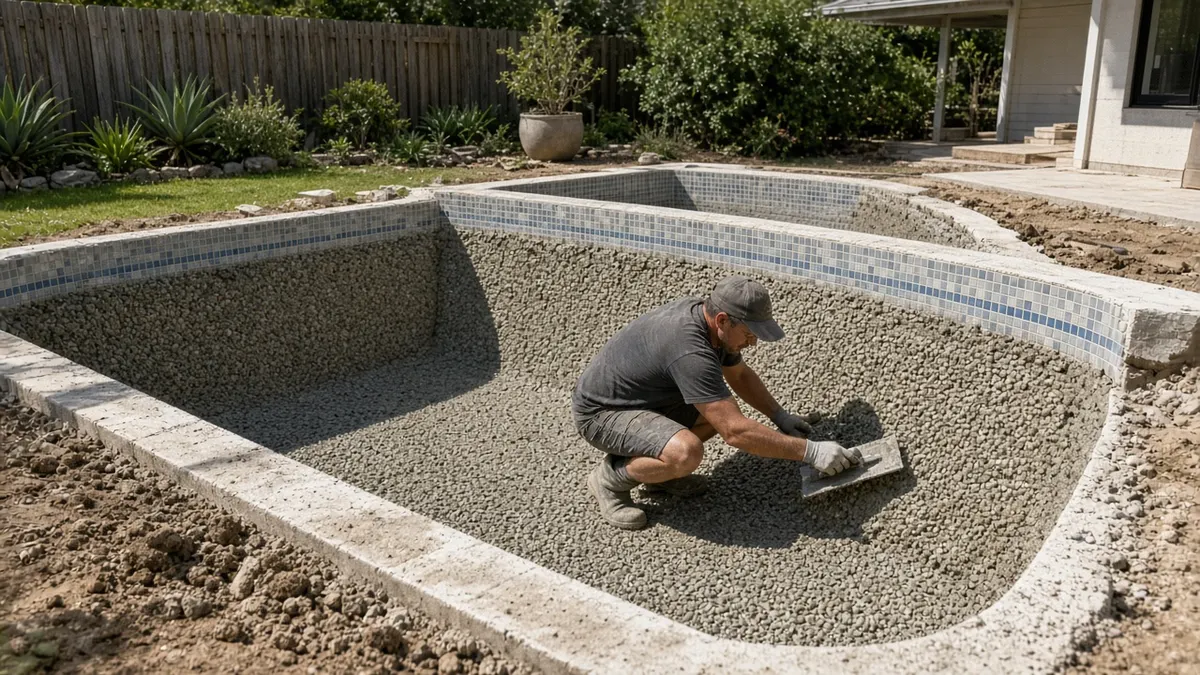
Renovating a backyard pool in Australia costs between about $5,000 and $50,000 in 2026, including GST. A fresh coat of paint on an average 8 by 4 metre concrete pool sits at the bottom of that range. Resurfacing in pebble usually runs $12,000 to $25,000, and a full makeover with new waterline tiles, coping, equipment and fence upgrades can pass $50,000.
Most people looking at renovation costs have either bought a house with a tired pool or have watched their own pool slowly turn rough, stained and expensive to run. The good news is that a structurally sound shell can almost always be brought back. The real question is which parts to spend on now and which can wait.
The figures in this guide are indicative. Pool renovation quotes vary a lot with the condition of the shell, so get at least three written quotes from specialists who have inspected the pool, ideally drained.
Common renovation jobs and what they cost
| Job | Typical cost, average pool | Notes |
|---|---|---|
| Drain, acid wash and refill | $400 to $1,000 | Plus water; removes staining and some calcium build-up |
| Repaint concrete pool | $4,000 to $10,000 | Includes preparation; epoxy costs more than acrylic but lasts longer |
| Resurface in quartz or marble render | $9,000 to $18,000 | Smooth, cheaper than pebble, shorter life |
| Resurface in pebble | $12,000 to $25,000 | The most common upgrade for concrete pools |
| Resurface in glass bead finish | $18,000 to $35,000 | Smooth, sparkly, premium price |
| Fully retile the interior | $25,000 to $60,000+ | Glass or porcelain mosaic; longest-lasting and most expensive |
| Replace waterline tiles | $3,000 to $8,000 | About 25 to 35 linear metres on an average pool |
| Replace coping | $4,000 to $12,000 | Depends on material and whether old coping is bedded in concrete |
| Resurface a fibreglass pool | $8,000 to $20,000 | Includes osmosis blister repair where needed |
| Replace a vinyl liner | $5,000 to $12,000 | Liner, fitting and refill |
| New pump, filter and chlorinator | $3,000 to $8,000 | Variable-speed pumps and automation at the top end |
| LED pool light retrofit | $600 to $1,500 per light | Licensed electrician required for any mains wiring |
| Leak detection | $300 to $800 | Repairs extra, from a few hundred to several thousand dollars |
| Pool fence upgrade for compliance | $1,000 to $20,000 | From new gate hardware to a full replacement barrier |
Prices assume a standard backyard pool with reasonable access. Large pools, odd shapes, deep diving ends and pools only reachable through the house cost more.
Choosing an interior finish
The interior surface is the biggest decision and usually the biggest line on the quote. Prices below are per square metre of interior surface. A typical 8 by 4 metre pool with an average depth of about 1.5 metres has around 70 m² of interior surface once you count walls and floor.
| Finish | Cost per m² of interior | Cost on a 70 m² interior | Typical lifespan |
|---|---|---|---|
| Acrylic or chlorinated rubber paint | $40 to $80 | $2,800 to $5,600 | 2 to 5 years |
| Epoxy paint | $60 to $120 | $4,200 to $8,400 | 5 to 10 years |
| Quartz or marble render | $110 to $180 | $7,700 to $12,600 | 10 to 15 years |
| Pebble | $150 to $250 | $10,500 to $17,500 | 15 to 20+ years |
| Glass bead | $200 to $350 | $14,000 to $24,500 | 15 to 20+ years |
| Glass or porcelain mosaic tiles | $300 to $700 | $21,000 to $49,000 | 25 years or more |
These per-m² figures cover the finish itself. Preparation, such as stripping old paint, grinding back drummy render and repairing cracks, plus draining, refilling and start-up chemicals, adds to the total. That is why the job totals in the earlier table run higher.
Paint
Paint is the cheapest way to make an old concrete pool look good again, and the right choice if you plan to sell soon or the budget is tight. The catch is that you will be doing it again in a few years. You also cannot switch freely between paint types: epoxy over acrylic will fail, so the existing coating has to be identified or fully stripped.
Render and pebble
Quartz and marble renders give a smooth, classic look at a moderate price. Pebble finishes are tougher, hide minor imperfections and last much longer, though some people find them rough underfoot. Pebble is the default for most Australian concrete pool resurfacing because of that balance between cost and lifespan.
Tiles
A fully tiled interior is the premium option and lasts the longest, but it costs two to three times as much as pebble. Most people tile the waterline and steps only, which handles the area most prone to staining and scum while keeping the budget sensible. Pool tiling is specialist work because of the waterproofing, adhesives and grout needed for constant immersion, so use a tiler with pool experience rather than a general bathroom tiler.
Concrete, fibreglass and vinyl pools renovate differently
The type of pool you have sets your options.
Concrete pools are the most flexible. They can be painted, rendered, pebbled or tiled, and the shape can even be changed with enough budget and engineering. They are also the type most likely to need resurfacing, because cement-based finishes slowly etch and roughen over the years.
Fibreglass pools cannot be pebbled or rendered in the usual way. Renovation means repairing the gelcoat and applying a specialist coating, often with osmosis repairs first. Fibreglass shells generally need less surface work over their life, but when they do need it, the pool of qualified contractors is smaller.
Vinyl liner pools are the simplest: when the liner fades, tears or wrinkles, it is replaced. A new liner usually costs $5,000 to $12,000 and is a fraction of the price of resurfacing concrete. Check the walls and floor behind the liner while it is out, since corroded steel panels or a washed-out floor need fixing before the new liner goes in.
Equipment upgrades worth considering
Old equipment is often the cheapest part of a renovation to fix and the one with the quickest payback.
| Equipment | Supplied and installed | Why upgrade |
|---|---|---|
| Variable-speed pump | $1,500 to $3,000 | Much lower running costs than old single-speed pumps, and quieter |
| Cartridge or media filter | $800 to $2,000 | Clearer water and less backwashing |
| Salt or mineral chlorinator | $1,000 to $2,500 | Steady chlorine without daily dosing |
| Automation and app control | $1,500 to $4,000 | Schedules pump, lights and heating; handy for holiday homes |
| Heat pump | $4,000 to $9,000 | Extends the swimming season by months in southern states |
| Robotic cleaner | $800 to $2,500 | Less manual vacuuming, independent of the pump |
Replacing equipment does not need the pool drained, so it can be done any time of year. Hard-wired electrical work must be done by a licensed electrician.
Coping and the surround
Coping is the edge of the pool, and it takes a beating from sun, chlorine and feet. Cracked or lifting coping is a trip hazard and lets water get behind the shell. Replacing it usually means breaking out the old coping, cleaning up the bond beam and bedding new pavers or stone. Expect $130 to $350 per linear metre depending on material, with natural stone at the top end.
If the surrounding paving is also tired, doing both at once gives a consistent finish and avoids damage to new coping when paving is replaced later. Our paving cost guide lists prices by material.
Three renovation budgets, worked through
All figures include GST.
Full makeover in Castle Hill, NSW
A 1980s concrete pool, 9 by 4.5 metres, with peeling paint, cracked coping, faded waterline tiles and an old single-speed pump. The owners plan to stay for 15 years.
| Item | Cost |
|---|---|
| Drain, strip old paint, crack repairs and surface preparation | $3,000 |
| Pebble resurface, about 80 m² interior | $16,500 |
| New waterline tiles, 27 linear metres at $150 | $4,050 |
| Replace coping, 30 linear metres at $220 | $6,600 |
| Variable-speed pump, supplied and installed | $2,200 |
| LED light retrofit, including electrician | $900 |
| Fence repairs: self-closing gate hardware and a non-compliant panel replaced | $2,500 |
| Refill, balancing and start-up chemicals | $600 |
| Total | $36,350 |
Fibreglass pool on the Gold Coast, QLD
A 20-year-old fibreglass pool with a chalky, faded gelcoat and osmosis blisters on the floor. Shell structurally fine. High water table, so draining needs care.
| Item | Cost |
|---|---|
| Controlled drain, hydrostatic valve check and monitoring | $500 |
| Grind and repair osmosis blisters, recoat interior | $12,500 |
| New salt chlorinator | $1,600 |
| New cartridge filter | $1,200 |
| Refill and start-up chemicals | $500 |
| Total | $16,300 |
With fibreglass, the person doing the work matters more than the product. Ask what coating system they use, how they treat osmosis and what warranty they give in writing.
Budget refresh in Adelaide, SA
An 8 by 4 metre concrete pool in a rental property. Painted surface worn and stained, otherwise sound. The owner wants it presentable for another five to eight years.
| Item | Cost |
|---|---|
| Drain and acid wash | $800 |
| Patch minor cracks and drummy spots | $600 |
| Two-coat epoxy repaint, about 70 m², including preparation | $5,500 |
| Refill water | $350 |
| Start-up chemicals and balancing | $250 |
| Total | $7,500 |
Renovation pricing across Australia
Typical prices to pebble resurface an average 8 by 4 metre concrete pool.
| City | Pebble resurface | Comment |
|---|---|---|
| Sydney | $14,000 to $25,000 | Large stock of older concrete pools, steady demand |
| Melbourne | $13,000 to $24,000 | Work concentrated in autumn and winter |
| Brisbane and Gold Coast | $12,000 to $23,000 | Year-round pool use, busy specialists |
| Perth | $12,000 to $22,000 | Many pools from the 1970s to 1990s due for a refresh |
| Adelaide | $12,000 to $22,000 | Competitive pricing |
| Canberra | $14,000 to $25,000 | Fewer specialists, short working season outdoors |
| Hobart | $14,000 to $26,000 | Specialists may travel from interstate or regional areas |
| Darwin | $15,000 to $27,000 | Freight, wet season scheduling |
Signs your pool needs more than a clean
- Rough or flaking surface. Paint chalking off on your hands, or render that scratches feet, means the surface has worn through.
- Stains that do not shift. Metal and organic staining that survives chemical treatment often needs an acid wash or resurface.
- Drummy patches. Tap the surface when drained. A hollow sound means render has delaminated from the shell.
- Losing water. Dropping more than evaporation explains suggests a leak in the shell, fittings or plumbing.
- Cracked or loose coping. A trip hazard and a path for water to get behind the shell.
- Noisy or inefficient equipment. Old single-speed pumps cost a lot to run and often fail at the worst time.
- Failed compliance. A pool barrier that will not pass inspection needs fixing before a sale or lease in several states.
Barrier compliance, approvals and licences
Like-for-like resurfacing usually does not need council approval. Structural changes, new decking, changing the pool's size or shape, or building a new barrier may well need approval, so ask your contractor or a certifier before work starts.
The barrier deserves attention during any renovation. Rules differ by state:
- NSW. Pools must be registered on the NSW Swimming Pool Register. A certificate of compliance (or non-compliance in some cases) is needed to sell or lease a property with a pool.
- Queensland. A pool safety certificate is required when selling or leasing a property with a regulated pool. The Queensland Government explains the requirements on its pool safety page, and the QBCC manages the pool safety register.
- Victoria. Pools and spas must be registered with council and have a current barrier compliance certificate lodged; the BPC sets out the requirements.
- Western Australia. Local governments inspect pool barriers periodically, with rules set by Building and Energy.
- SA, Tasmania, ACT and NT. Check with Consumer and Business Services (SA), CBOS (TAS), Access Canberra or the NT Building Practitioners Board, and your council.
Licensing depends on the work and the state. Resurfacing and tiling contracts above your state's home building threshold may need a licensed contractor, so check the current threshold with NSW Fair Trading, the QBCC, the BPC or your local regulator. Hard-wired lights, pumps and heat pumps need a licensed electrician. Gas heaters need a licensed gasfitter. Any change to sewer or backwash connections is plumbing work. NSW Fair Trading's guidance on home building contracts covers written contracts, deposits and insurance for larger jobs.
If the house was built before 1990, look carefully at fibro pool fences, sheds and pump enclosures before demolishing anything around the pool. Asbestos cement sheeting was common. Have suspect material tested and removed by a licensed removalist if it is above the DIY limits in your state.
Draining and refilling: the hidden costs
Most resurfacing jobs need the pool fully drained, and that comes with its own costs and rules.
- Where the water goes. Councils and water utilities set rules on discharging pool water. Saltwater should not go onto gardens or into stormwater drains. Your contractor should know local requirements.
- Refilling. An average pool holds roughly 40,000 to 60,000 litres. Filling from mains water usually costs a few hundred dollars depending on your water rates. A water tanker costs more but fills faster.
- Groundwater. Fibreglass and some concrete pools can lift or crack if emptied while groundwater is high. A good contractor checks the hydrostatic valve and avoids draining after heavy rain.
- Start-up chemicals. New pebble and render surfaces need careful water balancing for the first few weeks, which uses more chemicals than usual.
Timeframes and the best time to renovate
A repaint usually takes about a week including drying time, though epoxy can need several days to cure before refilling. Render and pebble resurfacing takes one to three weeks depending on preparation and weather. Adding tiles, coping and equipment can stretch a full makeover to four to six weeks.
Autumn and winter are the best times in most of Australia. Specialists are less busy, you are not losing swimming weeks, and finishes cure better without extreme heat. In the tropics, aim for the dry season. Avoid booking in November and December if you want your pool back for summer, since that is when every pool company is flat out.
Spending wisely on an old pool
- Fix the structure first. There is no point resurfacing over an active leak or a cracked shell. Pay for leak detection or an inspection if in doubt.
- Match the finish to your plans. Selling within a few years? Epoxy paint is enough. Staying 15 years? Pebble or better is cheaper per year.
- Upgrade the pump. A variable-speed pump often pays for itself through lower power bills over a few years.
- Do the demolition and clean-up yourself or with a labourer. Lifting old pavers, removing garden beds around the pool and carting rubbish are labour-heavy and do not need a pool specialist.
- Bundle the work. Doing tiles, coping and resurfacing in one drain-down avoids paying for draining and refilling twice.
- Consider removal. If nobody swims, filling in or removing the pool can cost $10,000 to $40,000 or more depending on size, method and approvals. It is a real alternative to an expensive renovation.
What owners can do themselves
Painting a concrete pool is a realistic DIY job for a patient owner. Materials cost roughly $800 to $2,000 for an average pool, and you will need to hire or buy a pressure cleaner and possibly a grinder for patches. The hard part is preparation: acid washing, removing every trace of loose paint, repairing cracks and letting the shell dry fully. Paint applied to a damp or dirty surface blisters within a season, and then you pay twice.
Leave pebble, render, tiling and fibreglass coating to specialists. These finishes need trade skills and equipment, and a poor job is expensive to undo. Electrical work on pumps, lights and heaters is licensed work everywhere in Australia, as is plumbing to sewer.
The safe DIY wins are the labour-heavy jobs around the pool: lifting old pavers, clearing garden beds, cleaning and sealing surrounds and keeping water chemistry right once the work is finished.
What to ask before you sign
- Have you inspected the pool drained, or are you quoting from photos?
- What preparation is included, and what happens if you find drummy render or cracks once the pool is empty?
- What exact product and system will you use, and what is the written warranty?
- Who handles water disposal and refilling, and is the cost included?
- Are electrical and plumbing works done by licensed trades, and are they included?
- Will the pool barrier pass inspection when you are done, and if not, what needs fixing?
- What is the payment schedule? Be wary of large upfront deposits beyond your state's limit.
Labour help from Yakka
The specialist pool work, the electrical and plumbing connections and barrier certification all belong with licensed and experienced trades. Yakka Labour can help with the labour around the pool: lifting old pavers and coping for disposal, removing garden beds, carrying materials, loading skips and cleaning the area so the specialists can get straight to work.
You can also find pool maintenance services, pool builders and tilers for waterline and coping work on the platform.
Related guides
If you are weighing up a renovation against a new pool, compare with our swimming pool cost guide and the fibreglass pool cost guide. Replacing an old barrier is covered in the glass pool fencing cost guide.
Frequently asked questions
How much does it cost to resurface a pool in Australia?
Resurfacing an average 8 by 4 metre concrete pool costs about $9,000 to $18,000 in quartz render, $12,000 to $25,000 in pebble and $18,000 to $35,000 in a glass bead finish in 2026. Preparation, crack repairs, draining and refilling are included in most quotes, but check. Fully tiling the interior can cost $25,000 to $60,000 or more.
How much does it cost to repaint a pool?
Professionally repainting an average concrete pool costs about $4,000 to $10,000 including preparation. Epoxy paint costs more than acrylic but lasts around 5 to 10 years compared with 2 to 5 years. DIY materials cost roughly $800 to $2,000, but preparation is hard work and the wrong paint type over an existing coating will fail.
Is it worth renovating an old pool?
If the shell is structurally sound, renovating is almost always cheaper than building new. Resurfacing, new tiles and coping and modern equipment can make an old pool look and run like a new one for $15,000 to $40,000. If the shell has major structural cracks or nobody uses the pool, compare the cost with removal.
How long does pool resurfacing take?
A repaint takes about a week including curing. Render or pebble resurfacing usually takes one to three weeks from draining to refilling, depending on preparation and weather. A full renovation with tiles, coping and equipment can take four to six weeks. Autumn and winter bookings are usually quicker to schedule.
How often does a pool need resurfacing?
It depends on the finish. Acrylic paint lasts roughly 2 to 5 years, epoxy paint 5 to 10 years, quartz render 10 to 15 years and pebble or glass bead 15 to 20 years or more. Tiled interiors can last 25 years or longer. Good water chemistry is the biggest factor in how long any finish lasts.
Can you resurface a fibreglass pool?
Yes. Specialists can repair osmosis blisters and recoat a faded or chalky fibreglass interior, usually for $8,000 to $20,000 depending on size and damage. The pool must be drained carefully, especially where groundwater is high, because empty fibreglass shells can lift. Ask for the coating system and written warranty before agreeing.
Official sources
Award rates, licences and safety rules change. Check the official source before you hire or take on a shift.
- Queensland Building and Construction Commission (QBCC)Contractor, plumbing and drainage licence search in Queensland
- Consumer and Business Services SALabour hire licensing in South Australia
- NSW Fair TradingTrade licence checks for electricians, plumbers and builders in New South Wales
- Building and Plumbing Commission (Victoria)Builder and plumber registration, domestic building insurance and licence checks in Victoria
- Asbestos Safety and Eradication AgencyWhere asbestos is found in homes and how to deal with it safely
- Consumer, Building and Occupational Services (Tasmania)Building, plumbing and electrical licensing in Tasmania