More cost guide
House Cleaning Cost 2026: Prices per Clean in Australia
Typical cost in Australia (2026, inc. GST)
$120 to $950 per clean
regular clean of a two bedroom unit up to an end of lease clean of a four bedroom house
A regular clean costs about $120 to $180 for a two bedroom unit and $170 to $320 for a three or four bedroom house. Deep cleans run roughly $300 to $850 and end of lease cleans $330 to $950 depending on size. Price depends on the number of bedrooms and bathrooms, the type of clean, how dirty the home is, extras such as ovens, windows and carpets, and how often you book.
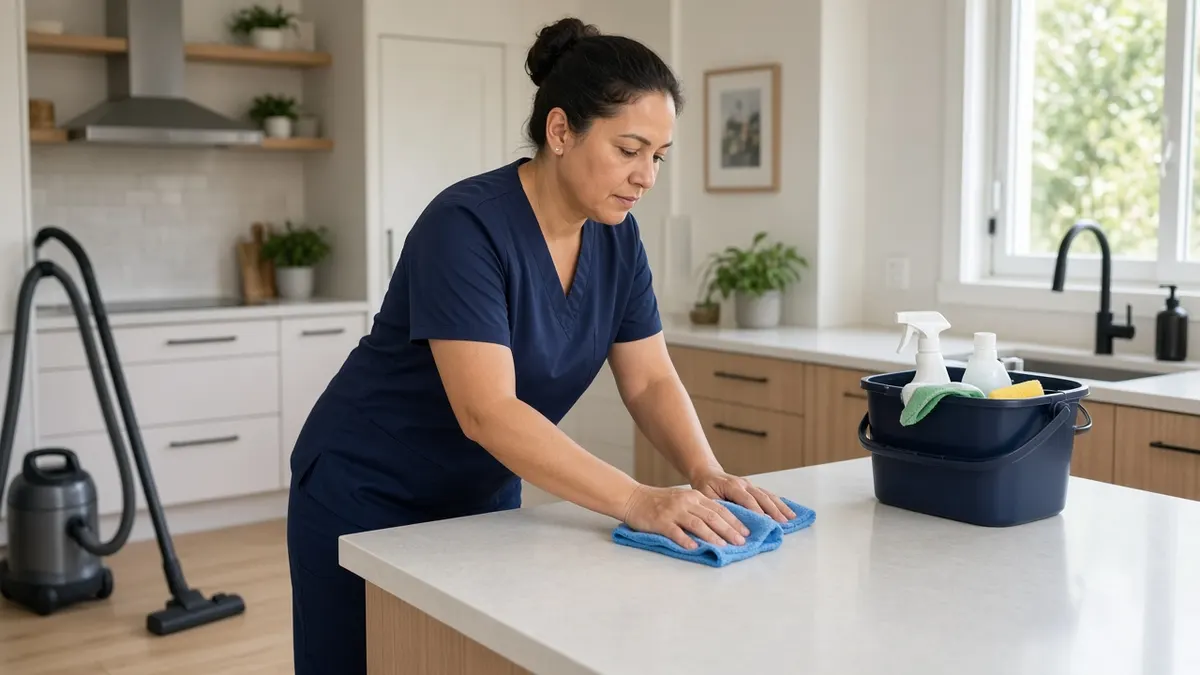
A regular house clean in Australia costs about $120 to $320 per visit for most homes, with a two bedroom unit near the bottom of that range and a four bedroom, two bathroom house near the top. One-off jobs cost much more because they take much longer: a deep clean typically runs $300 to $850 and an end of lease clean $330 to $950, with bigger homes going past $1,000.
Most cleaners and cleaning companies quote per clean, based on the number of bedrooms and bathrooms, the type of clean and the condition of the home. This guide sets out those per-clean prices. If you want to compare hourly rates instead, our separate guide to cleaner hourly rates in Australia covers that side in detail. All figures are indicative 2026 prices in AUD. Cleaners registered for GST include it in their price, and sole traders below the GST threshold do not charge it. Get at least three written quotes, especially for one-off cleans.
Price per clean by home size and type of clean
This is the table most people want. Prices assume a home in average condition, no pets shedding heavily and standard inclusions for each clean type, which are explained further down.
| Home | Regular clean | Deep or spring clean | End of lease clean |
|---|---|---|---|
| Studio or one bedroom unit | $90 to $140 | $220 to $350 | $250 to $400 |
| Two bedroom, one bathroom unit | $120 to $180 | $300 to $480 | $330 to $550 |
| Three bedroom, one bathroom house | $150 to $230 | $380 to $600 | $420 to $700 |
| Three bedroom, two bathroom house | $170 to $260 | $420 to $680 | $480 to $800 |
| Four bedroom, two bathroom house | $200 to $320 | $500 to $850 | $580 to $950 |
| Five bedroom, three bathroom house | $260 to $420 | $650 to $1,100 | $750 to $1,300 |
Bathrooms move the price more than bedrooms. A bedroom is mostly dusting, vacuuming and mopping. A bathroom means scrubbing a shower screen, grout, toilet, vanity and mirror, and a neglected one can take an hour on its own. That is why a three bedroom home with two bathrooms costs noticeably more than one with a single bathroom.
Builders cleans after renovation or construction are priced differently again, usually by floor area and the amount of dust, paint and debris left behind. We cover them in a dedicated guide to builders clean costs in Australia, so they are only touched on briefly here.
What each clean actually covers
Two quotes for "a clean" can describe very different jobs. Before comparing prices, check what is in and what is out.
Regular clean
A regular or maintenance clean keeps a home that is already in decent shape tidy. It normally includes dusting reachable surfaces, wiping kitchen benches, the splashback, stovetop and outside of appliances, cleaning the sink, cleaning bathrooms and toilets, vacuuming carpets and rugs, mopping hard floors and emptying bins. Making beds and a quick tidy are often included if you ask. It does not usually include inside the oven or fridge, windows, walls, blinds or inside cupboards.
Deep or spring clean
A deep clean goes into the corners a regular clean skips. Expect skirting boards, door frames, light switches, ceiling fans, range hood filters, cabinet fronts, inside the microwave, detailed grout scrubbing, soap scum and limescale removal, and vacuuming under furniture that can be moved. Inside the oven, fridge and windows are sometimes included and sometimes extras. A deep clean is the usual first visit before regular cleaning starts, and it is popular before a sale inspection or after a long period of neglect.
End of lease or bond clean
An end of lease clean is a deep clean of an empty property, done to the standard a property manager checks against the ingoing condition report. It normally includes inside all cupboards and drawers, inside the oven, rangehood and dishwasher, window glass, tracks and sills, light fittings, skirting boards, spot cleaning marks on walls, and full bathroom and kitchen detailing. Carpet steam cleaning, blinds and outdoor areas are often extras. The property must be empty, because cleaners cannot clean inside cupboards or under beds that are still full.
Builders clean
A builders clean removes construction dust, paint spots, silicone smears, stickers and grit after a build or renovation. It often needs more than one pass, because fine plaster dust keeps settling for days. Pricing works differently from domestic cleaning, as covered in the builders clean guide linked above.
Move-in and one-off cleans
A move-in clean of a new home before the furniture arrives is usually priced like a deep clean of an empty property, so close to end of lease rates without the bond-back guarantee. A one-off clean before guests or after a party is usually quoted as a deep clean or by time.
Extras and how much they add
| Extra | Typical added cost |
|---|---|
| Inside oven (full degrease) | $80 to $150 |
| Inside fridge | $30 to $60 |
| Inside windows, tracks and sills (whole house) | $80 to $220 |
| Carpet steam cleaning | $40 to $70 per room |
| Venetian or roller blinds | $15 to $35 per blind |
| Wall washing or heavy spot cleaning | $60 to $200 |
| Balcony or small outdoor area | $30 to $80 |
| Garage sweep and cobwebs | $50 to $150 |
| Heavy pet hair or soiling surcharge | $30 to $100 |
| Changing bed linen | $5 to $15 per bed |
Extras are where quotes balloon. An end of lease clean for a three bedroom house quoted at $500 can easily become $750 once you add the oven, five rooms of carpet and the blinds. Ask for each extra as a separate line so you can decide what you actually need. Carpet steam cleaning is often cheaper booked directly with a specialist carpet cleaner, particularly for larger homes.
Hourly or flat rate, and how long cleans take
Many independent cleaners charge by the hour for regular cleans, while companies tend to quote a fixed price per visit. Neither is automatically cheaper. A fixed price protects you if the cleaner is slow. An hourly arrangement can be cheaper once a cleaner knows your home and gets quicker, and it lets you decide what to prioritise each visit. The hourly rate guide linked at the top of this page lists current going rates if you want to compare.
What matters for comparing quotes is the time a job realistically needs. As a rough guide, measured in total cleaner hours:
- A regular clean of a two bedroom unit takes about 2 to 2.5 hours, and a four bedroom, two bathroom house 3.5 to 5 hours.
- A deep clean takes roughly two to three times as long as a regular clean of the same home.
- An end of lease clean of a three bedroom house usually takes 6 to 10 cleaner hours, often done by two cleaners in a single day.
If a quote looks very cheap, divide the price by the realistic hours. If the result is an unrealistically low hourly figure, the cleaner is either planning to rush, likely to add extras on the day, or is not covering insurance and super.
How often you book changes the price
Frequency affects both the price per visit and how long each visit takes. A home cleaned weekly stays in good condition, so each visit is quick. A home cleaned monthly builds up more grime, so each visit takes longer and may cost close to a light deep clean.
- Weekly: lowest price per visit, sometimes with a small discount, but the highest total spend.
- Fortnightly: the most common choice for families and busy couples. It keeps bathrooms and kitchens under control at a moderate cost.
- Monthly: cheaper overall, but expect each visit to cost 20 to 40 percent more than a fortnightly visit for the same home.
Most cleaners charge more for the first visit, often 1.5 to 2 times the regular price, because they are bringing the home up to a baseline. If your home has not been cleaned professionally before, ask for the first-clean price as well as the ongoing price.
Prices in each city
For a fortnightly regular clean of a three bedroom, two bathroom house, expect roughly:
| City or area | Price per clean | What drives it |
|---|---|---|
| Sydney | $190 to $280 | High living costs, travel time between suburbs, parking |
| Melbourne | $175 to $260 | Large, competitive market with many small operators |
| Brisbane | $165 to $250 | Competitive, with larger homes common in the suburbs |
| Perth | $170 to $260 | Spread-out suburbs add travel time |
| Adelaide | $155 to $235 | Lower living costs than the east coast |
| Hobart | $150 to $230 | Smaller market, fewer companies |
| Canberra | $180 to $270 | Higher wages across the ACT economy |
| Darwin | $180 to $280 | Smaller workforce, humidity means more mould work |
| Regional towns | $140 to $230 | Lower rates but possible travel fees for outlying areas |
Example quotes for three homes
Fortnightly clean of a three bedroom house in Blacktown, NSW
A three bedroom, two bathroom brick veneer home with a family of four and a short-haired dog. The cleaner is GST-registered and brings their own products and equipment.
| Line item | Cost |
|---|---|
| Cleaning labour, about 4 cleaner hours | $185 |
| Products and equipment | $12 |
| Pet hair allowance | $15 |
| GST (included in the above) | about $19 |
| Total per clean | $212 |
The first visit was quoted at $360 as a deep clean to bring the bathrooms and kitchen up to standard. Over a year of fortnightly cleans the household spends roughly $5,500.
Deep clean before a sale in Ringwood, VIC
A four bedroom, two bathroom house about to go to market. The owners want it spotless for photos and the first open home, with windows and the oven included.
| Line item | Cost (inc. GST) |
|---|---|
| Deep clean labour, two cleaners for about 5 hours each | $640 |
| Products and equipment | $35 |
| Oven degrease | $110 |
| Inside windows, tracks and sills | $160 |
| Total | $945 |
End of lease clean of a two bedroom unit in New Farm, QLD
An empty two bedroom, one bathroom unit with carpet in both bedrooms and a balcony. The tenant books a bond-back guarantee clean.
| Line item | Cost (inc. GST) |
|---|---|
| End of lease clean including oven, windows and cupboards | $440 |
| Carpet steam clean, two bedrooms | $110 |
| Balcony and sliding door tracks | $45 |
| Four venetian blinds | $80 |
| Total | $675 |
Without the extras, the base clean sits in the middle of the range for a two bedroom unit. The extras added about half again on top, which is typical.
End of lease cleans and your bond
When you leave a rental, you are generally expected to return it in the same condition as at the start of the lease, allowing for fair wear and tear. The ingoing condition report is the benchmark, so dig it out and check what it says about the oven, carpets and walls before booking a cleaner.
Many end of lease cleaners offer a bond-back guarantee. That usually means they will come back and re-clean any items the property manager flags within a set period, often 48 to 72 hours, at no charge. It does not mean they will pay your bond if the agent claims for damage, and it often excludes things like carpet stains, wall marks that need paint and anything not in the original booking. Read the terms.
Whether a lease can require professional carpet cleaning at the end of a tenancy depends on your state and the lease terms. In some states a landlord can only require it in particular circumstances, for example if you kept a pet. Check the rules with your state's tenancy regulator, such as NSW Fair Trading or Consumer Affairs Victoria, before paying for a service you may not need.
Cleaning company, independent cleaner or booking through a platform
Each option suits a different household.
- Cleaning companies usually carry insurance, police check their staff, supply products and send a replacement when someone is sick. They cost more, and you may see different cleaners from visit to visit.
- Independent cleaners often charge less and give you the same person every time, who learns your home and preferences. Check they hold public liability insurance and an ABN, and have a plan for holidays.
- Booking through a platform gives you reviews and a record of the job, and makes it easier to find someone for a one-off clean at short notice.
If one person cleans your home regularly and does not run their own business, the arrangement may look more like employment than a contract, which brings obligations such as minimum pay and super. The Fair Work Ombudsman explains how to tell the difference.
Pets, mould and other things that add time
Some homes take longer to clean than their bedroom count suggests, and good cleaners will ask about these things before quoting.
- Pets. Long-haired dogs and cats leave hair in carpets, on couches and in corners, which can add 30 to 60 minutes to a regular clean. Litter trays and dog beds are usually not included unless you ask.
- Mould. Surface mould on shower grout, silicone and bathroom ceilings is common in humid cities like Brisbane and Darwin and in poorly ventilated bathrooms anywhere. Light mould is part of a deep clean. Heavy or widespread mould usually points to a ventilation or leak problem that cleaning alone will not fix.
- Hard water. Limescale on glass shower screens and taps builds up quickly in some areas and needs specific products and extra time.
- Two-storey homes and stairs. Carrying equipment up and down and vacuuming stairs adds time compared with a single-level home of the same size.
- Clutter. A cleaner who has to move piles of toys, paperwork and laundry before wiping a surface is doing tidying, and you pay for it at the same rate.
Safety, damage and what cleaners will not do
Most professional cleaners will not climb high ladders, move heavy furniture, clean outside windows above ground level or handle biohazards such as mould remediation, needles or major flood damage. These limits exist because of injury risk and insurance conditions. If you need high windows, gutters or exterior walls done, book a specialist window cleaner or pressure cleaner instead.
Accidents happen, so ask how breakages are handled. A cleaner with public liability insurance can claim for significant damage to your property. For small things, most good cleaners will tell you straight away and offer to replace the item. Put valuables, cash and fragile ornaments away before the first visit, and point out surfaces that need special care, such as marble, natural stone benchtops, oiled timber and high-gloss cabinetry.
Who supplies the products and gear
Most cleaners bring their own products, cloths, mops and vacuum, and build that into the price. Some independents use the client's products and vacuum, and charge a little less. Supplying your own makes sense if anyone in the house has allergies or sensitive skin, or if you want particular eco products or specific products for stone benchtops and timber floors. If you supply products, keep them stocked, because a cleaner who arrives to an empty spray bottle loses time you pay for.
How to spend less on cleaning
- Declutter before the cleaner arrives. Clear benches, floors and tables so the time goes on cleaning, not moving things.
- Book fortnightly rather than monthly. The per-visit price is lower and the home never gets badly behind.
- Do the dishes, laundry and bed changes yourself, and let the cleaner focus on bathrooms, kitchen and floors.
- Pick the extras that matter. For an end of lease clean, check the condition report rather than paying for every add-on.
- Book end of lease cleans early in the week if you can. Fridays and the end of the month are peak days.
- Keep up with simple habits between visits, such as squeegeeing the shower screen and wiping the stovetop after cooking.
What to check before you book
A good written quote or booking confirmation should list:
- The type of clean and a checklist of what is included in each room.
- Every extra as a separate line with its own price.
- Whether products and equipment are supplied, and whether GST is included.
- Expected arrival time and how long the clean should take.
- Cancellation terms and any lock-out fee if the cleaner cannot get in.
- For end of lease cleans, the re-clean guarantee period and what it excludes.
- Public liability insurance details and an ABN.
Red flags include a price given without asking about the number of bathrooms, a large upfront deposit for a regular clean, cash-only payment with no invoice, and no insurance. It is also worth agreeing on how keys or access codes are handled, and who to call if something is broken during a clean.
Booking cleaners through Yakka
Yakka lists cleaners who take on regular cleans, deep cleans, end of lease jobs and builders cleans. You can browse house cleaners near you, compare profiles and reviews, and book by the job or by the hour depending on how the cleaner works.
For moves, a common combination is a worker to clear the rubbish, carry leftover furniture to the kerb and empty the garage, followed by a cleaner once the property is empty. Doing it in that order saves paying a cleaner to work around boxes. If the outside needs attention too, our pressure cleaning cost guide, gutter cleaning cost guide and garden maintenance cost guide cover typical prices for driveways, gutters and yards.
Frequently asked questions
How much does a cleaner cost for a 3 bedroom house?
A regular clean of a three bedroom house usually costs $150 to $230 with one bathroom and $170 to $260 with two. A deep clean of the same home is typically $380 to $680, and an end of lease clean $420 to $800. Extras such as the oven, windows and carpet steam cleaning can add $150 to $400 to a one-off clean.
How much does an end of lease clean cost?
End of lease cleans usually cost $250 to $400 for a studio or one bedroom unit, $330 to $550 for a two bedroom unit, $420 to $800 for a three bedroom house and $580 to $950 for a four bedroom house. Carpet steam cleaning, blinds and outdoor areas are often charged on top. Many cleaners include a re-clean guarantee if the property manager flags anything.
Is a fortnightly cleaner worth it?
For most households a fortnightly clean is the best value. The home never gets far behind, so each visit is quicker and cheaper than a monthly clean, and bathrooms and kitchens stay under control. It suits busy families and couples who can handle dishes, laundry and daily tidying themselves but do not want to spend weekends scrubbing showers and mopping floors.
Do I need to be home when the cleaner comes?
No. Many regular clients leave a key, a lockbox code or a garage remote with a trusted cleaner. Agree on how keys are stored, who can use them and what happens if the cleaner cannot get in. For a first visit or a one-off deep clean, being home at the start helps you point out priority areas and anything fragile.
Should I tip my house cleaner in Australia?
Tipping is not expected in Australia, because cleaners set their prices to cover their time. Some regular clients give a small gift or an extra payment at Christmas, or a tip after a particularly hard clean, and that is always appreciated. A good review and a referral are often worth more to an independent cleaner than a tip.
How long does a deep clean take?
A deep clean usually takes two to three times as long as a regular clean of the same home. For a three bedroom, two bathroom house that is often 6 to 10 total cleaner hours, which a team of two can finish in a day. Homes that have not been cleaned for months, or have heavy mould or grease, can take longer.
Official sources
Award rates, licences and safety rules change. Check the official source before you hire or take on a shift.
- Fair Work Ombudsman — pay guidesMinimum award rates, casual loading and penalty rates
- Fair Work Pay CalculatorWork out the minimum pay for a specific award and shift
- NSW Fair TradingTrade licence checks for electricians, plumbers and builders in New South Wales