Rates
Cleaner Hourly Rate Australia (2026): Going Rates
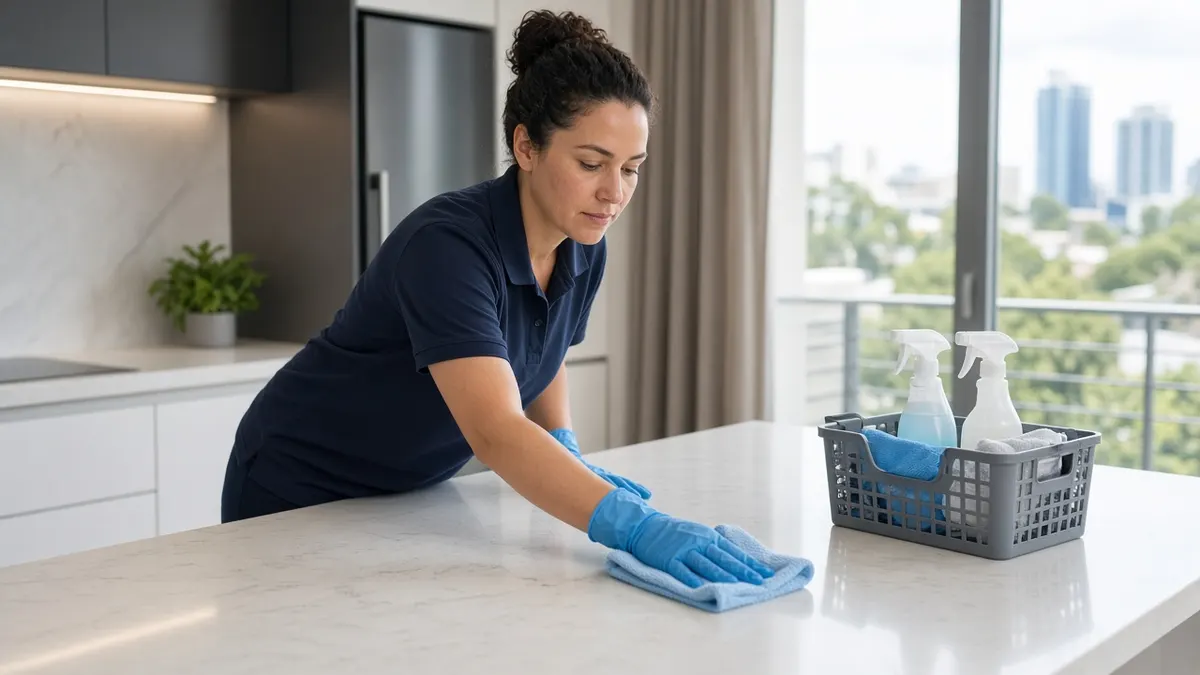
The cleaner hourly rate in Australia in 2026 is about $40–65/hr for an independent house cleaner and $50–85/hr through a cleaning company, while casual commercial cleaners employed directly typically earn $34–46/hr. End-of-lease cleans are usually quoted as a fixed price instead. These are indicative market observations; award minimums are set on Fair Work.
This guide covers the going rate in each capital, how domestic, commercial and end-of-lease cleaning are priced, what you get for the extra paid to a company, and the award floor for employed cleaners. Yakka Labour is the hiring marketplace, not the workwear brand with a similar name.
What is the going rate for a cleaner per hour?
| City | Independent house cleaner (AUD/hr) | Cleaning company, domestic (AUD/hr) | Casual commercial cleaner, worker pay (AUD/hr) |
|---|---|---|---|
| Sydney | $45–65 | $60–85 | $35–46 |
| Melbourne | $42–60 | $55–80 | $34–45 |
| Brisbane | $40–58 | $55–75 | $34–44 |
| Perth | $42–62 | $55–80 | $35–46 |
| Adelaide | $40–55 | $50–70 | $34–43 |
All figures are indicative 2026 market observations. Night, weekend and public holiday commercial shifts pay more under the award, and specialist work such as high windows or biohazard cleaning sits well above these bands.
How do domestic, commercial and end-of-lease cleaning rates differ?
Domestic cleaning is regular housekeeping: kitchens, bathrooms, floors, dusting and bins. It is usually charged by the hour with a two- or three-hour minimum, or as a fixed price per visit once the cleaner knows the home.
Commercial cleaning covers offices, shops, gyms, medical suites and strata common areas, often before 6am or after 6pm. Businesses usually pay a cleaning contractor a monthly fee, and the contractor pays its cleaners under the award. If you employ a cleaner directly, the hourly wage in the table above is the starting point, plus super and workers comp.
End-of-lease cleaning is a deep clean to the standard in the property's entry condition report: inside ovens and cupboards, windows and tracks, walls, skirting and carpets. It is almost always a fixed price. Indicative 2026 ranges are $250–450 for a one-bedroom unit, $350–600 for a two-bedroom unit and $500–900 for a three-bedroom house, with carpet steam cleaning often extra.
For tenants, the point of an end-of-lease clean is getting the bond back, so ask whether the cleaner offers a re-clean if the property manager flags items at the final inspection. Compare quotes on what is included, such as walls, windows, blinds, garage and carpets, rather than on the headline price alone. A cheap quote that excludes windows and walls can cost more once the property manager sends you back.
Is an independent cleaner cheaper than a cleaning company?
Usually yes, by $10–25 an hour. The company rate pays for things you may or may not value:
- Cover: a replacement cleaner when your regular one is sick or on holiday.
- Insurance: public liability and workers comp held by the company.
- Screening: police checks and supervision.
- Admin: invoicing, rostering and complaint handling.
An independent cleaner who runs a genuine business with an ABN and their own insurance can offer the same reliability for less. Ask to see their public liability certificate and agree what happens when they cannot attend.
On a fortnightly three-hour clean, the difference between $50 an hour independently and $70 an hour through a company is $60 a visit, or about $1,560 a year. Whether that is worth it depends on how much the backup cover and admin matter to you.
What is the Cleaning Services Award minimum?
Cleaners employed by contract cleaning businesses are covered by the Cleaning Services Award (MA000022). From 1 July 2026 its minimum hourly rates are $27.08 for Level 1, $27.97 for Level 2 and $29.45 for Level 3, and casuals are paid a 25% loading on top (clauses 15.1 and 11.2 of the award text). The award also sets minimum shift lengths for part-time and casual cleaners based on the size of the cleaning area, from one hour at a small stand-alone site up to four hours at sites of 5,000 m² or more. Shifts that start before 6am or finish after 6pm on weekdays, as well as weekends and public holidays, attract higher rates, which is why after-hours office cleaning costs more per hour than a daytime house clean. Check the Fair Work pay guides for the full figures.
What should a cleaning checklist include?
Most pricing disputes come from different ideas of what "a clean" means. Write the list down before the first visit.
- Regular domestic clean: kitchen benches, sink and stovetop wiped; bathrooms and toilets cleaned; mirrors polished; floors vacuumed and mopped; surfaces dusted; bins emptied.
- Common extras: inside the oven or fridge, inside windows, changing beds, laundry and ironing, balconies.
- End-of-lease additions: inside all cupboards and drawers, wall marks, skirting, light switches, window tracks, exhaust fans, range hood filters, and carpet steam cleaning if the lease requires it.
- Commercial clean: desks and touchpoints, kitchenette, bathrooms with consumables restocked, floors, bins and recycling, with a periodic schedule for windows and carpets.
Matching the checklist to the hours booked keeps the rate fair for both sides. A cleaner asked to do an end-of-lease list in a regular two-hour slot will either rush or run over.
What are my obligations if I pay a house cleaner directly?
If you book through a company, the company handles wages and insurance. If you pay a cleaner directly for your own home, the arrangement matters. A cleaner with their own ABN, insurance, products and several clients is likely running a business. Someone who works only for you, on your schedule, with your equipment may be your employee.
On super, the ATO says domestic or private workers such as housekeepers are eligible for super guarantee if they work for you for more than 30 hours in a week (see the ATO guidance). A weekly or fortnightly three-hour clean is far below that threshold.
What does a regular clean cost? Worked examples
Home: a three-bedroom, two-bathroom house in Bentleigh, Melbourne, cleaned fortnightly for three hours by an independent cleaner at $50 an hour costs $150 a visit, or $3,900 a year across 26 visits.
Office: a 400 m² office in Parramatta needs two hours of cleaning each weeknight. A casual cleaner employed directly at $40 an hour costs $400 a week in wages, plus super at 12% (about $48) and workers comp. A contract cleaner would quote a monthly fee that includes supervision, products and cover.
Cleaning more often can lower the cost per visit. A weekly two-hour clean often keeps a home in better shape than a fortnightly three-hour clean, for a similar monthly spend, because grime never builds up.
For new builds and renovations, a builders clean is priced differently again; see builders clean cost.
How do you hire a cleaner on Yakka?
- Post the job with suburb, property type and size, the tasks and frequency, and your hourly rate or fixed budget.
- Browse cleaner profiles near you and check experience, reviews and whether they bring products and equipment.
- Agree the rate, visit length and checklist in writing.
- Pay through the platform after each clean.
Choose the right type: domestic cleaners, commercial cleaners or end-of-lease cleaners. Sydney businesses can also see cleaning labour hire Sydney.
Frequently asked questions
How long does a standard house clean take?
A regular clean of a three-bedroom, two-bathroom home usually takes one cleaner two to four hours, as an indicative observation. First visits take longer because of built-up grime. Pets, clutter, the number of bathrooms and extras such as inside the fridge, oven or windows all add time, so agree a checklist and visit length up front.
Do cleaners bring their own products?
Cleaning companies and most independent cleaners bring their own products, cloths and a vacuum, and price that into the hourly rate. Some cleaners charge less if you supply everything. If you have preferred products, allergies or delicate surfaces such as marble or timber floors, tell the cleaner before the first visit and agree who supplies what.
Is it cheaper to pay a cleaner per hour or per job?
Per hour suits regular cleans where the work is consistent and you can adjust the time. A fixed price per job suits end-of-lease, builders cleans and one-off deep cleans, because the cleaner carries the risk if it takes longer. For regular cleans, many cleaners switch to a fixed visit price after the first few visits.
Do cleaners charge more on weekends?
Employed cleaners under the Cleaning Services Award receive higher rates for weekend and public holiday work, so companies usually charge more for those slots. Independent cleaners set their own prices and many add a weekend premium or simply do not work weekends. Weekday daytime bookings are usually the cheapest option.
What can a cleaner do in two hours?
In two hours a cleaner can typically clean the kitchen benches and stovetop, one or two bathrooms, vacuum and mop the main floors and empty bins in a small to medium home. Deep tasks such as ovens, windows or inside cupboards will not fit. Prioritise the rooms that matter most and rotate extras across visits.
Official sources
Award rates, licences and safety rules change. Check the official source before you hire or take on a shift.
- Fair Work Ombudsman — pay guidesMinimum award rates, casual loading and penalty rates
- Fair Work Pay CalculatorWork out the minimum pay for a specific award and shift
- Australian Taxation Office — super for employersSuperannuation guarantee obligations when you pay workers