Rates
Traffic Controller Hourly Rate (2026): Pay & Hire Cost
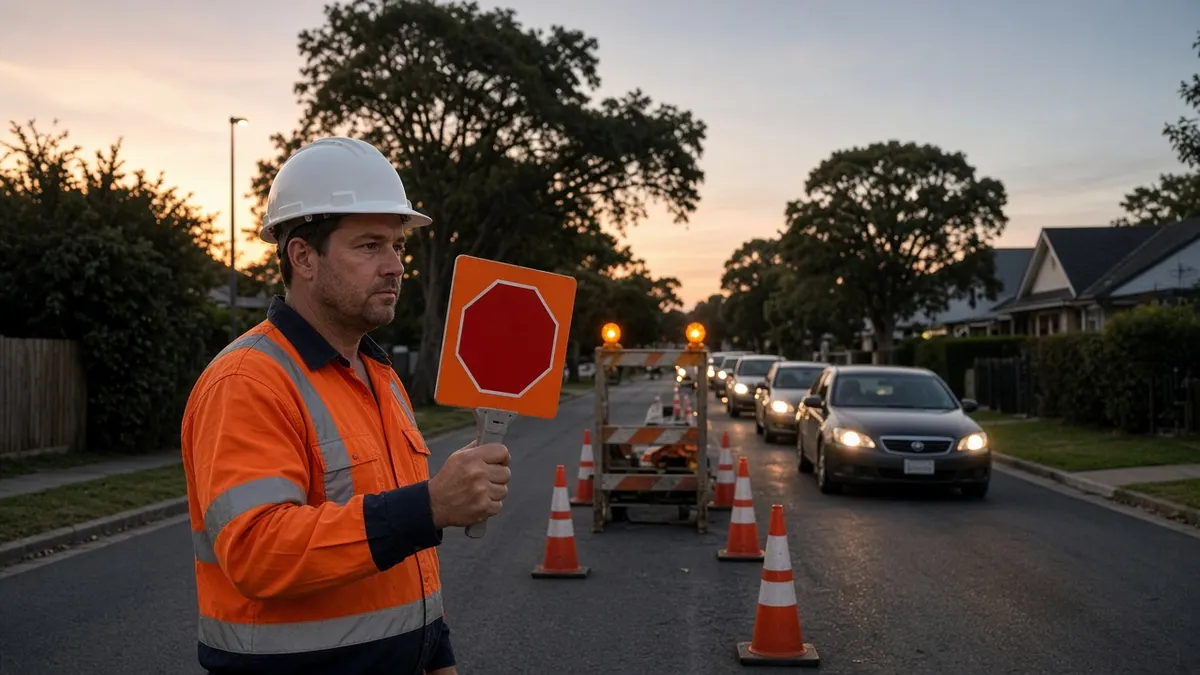
The traffic controller hourly rate in Australia in 2026 is typically $42–55/hr for a casual controller on a weekday day shift and $50–70/hr at night, with weekends and public holidays higher again, based on indicative market observations. Hirers pay traffic management companies roughly $70–100/hr per controller, usually with a minimum shift. Award minimums are on Fair Work.
This guide gives both sides: what controllers earn and what builders, councils and event organisers pay. It covers shift penalties, the difference between a traffic controller and an implementer, minimum call-outs and the NSW card system. Yakka Labour is the hiring marketplace, not the workwear brand with a similar name.
How much do traffic controllers get paid per hour?
| Shift | Casual controller pay (AUD/hr) | Hirer charge-out per controller (AUD/hr) |
|---|---|---|
| Weekday day | $42–55 | $70–95 |
| Weekday night | $50–70 | $85–115 |
| Saturday | $55–75 | $90–120 |
| Sunday | $65–90 | $100–135 |
| Public holiday | $80–110 | $120–165 |
All figures are indicative 2026 market observations. Charge-out rates from traffic management companies usually include the controller's wage, super, workers comp, insurance and supervision, and vehicles, signs and devices are often charged separately.
What are traffic controller pay rates in NSW and Sydney?
Sydney rates sit at the top of the bands because of the volume of infrastructure, utility and night works. To do traffic control work in NSW you need a SafeWork NSW Traffic Control Work Training card. SafeWork NSW lists three types of traffic control work: Traffic Controller (TCR), who directs traffic under a work zone traffic management plan; Implement Traffic Control Plans (IMP), who sets up the plan on site; and Prepare a Work Zone Traffic Management Plan (PWZ), who designs or inspects plans. Applicants must be at least 17 and trained by an approved provider (see SafeWork NSW traffic control cards). Other states run their own schemes, so check your state regulator before working interstate.
Demand in Sydney comes from several directions at once: major road and rail projects, utility crews digging up footpaths, council maintenance, film shoots, and events such as fun runs, festivals and stadium nights that need road closures. Night works are common on busy roads where daytime lane closures are not allowed, which is why experienced night-shift controllers are always in demand. For hirers, that same demand means booking early for Friday nights, long weekends and the lead-up to Christmas.
How much more does an implementer earn than a traffic controller?
| Role | What they do | NSW card type | Indicative casual pay, weekday (AUD/hr) |
|---|---|---|---|
| Traffic controller | Stop/slow bat, directing vehicles and pedestrians | TCR | $42–55 |
| Implementer / team leader | Sets out signs and devices to the plan, runs the crew | IMP (and usually TCR) | $48–62 |
| Ute driver implementer | As above, plus drives and maintains the traffic ute | IMP and driver licence | $50–65 |
| Traffic plan designer | Prepares and varies traffic guidance schemes | PWZ | Often salaried |
Why do night shift and weekend rates pay so much more?
Traffic controllers on construction work are generally covered by the Building and Construction General On-site Award (MA000020), which lists traffic controllers among the employees it covers and includes traffic management connected with civil construction (see the Fair Work coverage summary). The award places traffic controllers at CW/ECW 2, with a base minimum hourly rate of $28.62 from 1 July 2026 before allowances and the 25% casual loading. Saturday, Sunday, public holiday and shift work attract penalty rates on top, which is why night and weekend shifts can pay far more than the weekday band. Some projects run under enterprise agreements with higher site rates, and those agreements set the rate on that project. Check the Fair Work pay guides for the exact award figures.
What is the minimum call-out for a traffic control shift?
Under the Building and Construction award, a casual employee must be paid for at least 4 hours per engagement. Traffic management companies often set their own client minimums, commonly four to eight hours per controller, because of travel, set-up and pack-down. When budgeting a short job, assume you will pay for at least the minimum even if the work takes two hours.
Cancellations are the other cost to plan for. Many traffic management companies charge a cancellation fee if a shift is called off late, for example because of rain or a concrete truck that did not arrive. Ask what notice they need and what they charge before you book. Controllers on casual shifts should also ask whether they are paid if a shift is cancelled after they arrive on site.
Do traffic controllers make good money?
They can, mostly through hours and shift mix rather than the base rate. A controller who works four weekday day shifts of nine hours at $45 and one nine-hour night shift at $58 earns about $1,620 plus $522, or $2,142 gross for the week, before tax. Controllers who take regular night and weekend work, hold IMP as well as TCR, and drive a traffic ute earn the most. The trade-offs are early starts, long days standing in all weather and work that comes in bursts.
Gaps matter as much as rates. Rain washes out shifts, projects finish, and January is quiet in many areas. Controllers who register with more than one source of work, keep their availability current and hold extra tickets, such as a white card, a first aid certificate or a heavy vehicle licence for a truck-mounted attenuator, tend to get the steadiest hours.
What does traffic control cost a hirer? A worked example
A contractor replacing a section of footpath on a council road in Penrith needs two controllers for an eight-hour weekday shift.
- 2 controllers × 8 hours × $80/hr charge-out = $1,280
- Traffic ute, signs and devices: commonly charged separately, often $150–300 a day
- Traffic guidance scheme and any road occupancy approval: separate and arranged before the day
If you employ controllers directly instead, budget the wage band plus super at 12%, workers comp and the cost of the plan and equipment. Before the shift, check that every controller's card is current for the work they will do, that the traffic guidance scheme matches the site, that radios and PPE are sorted, and that long shifts have relief so controllers can take breaks without leaving a position uncovered. For workers wanting to get into the field, see how to become a traffic controller. For how the loading is calculated, see casual loading explained.
How do you hire or find traffic control work on Yakka?
Hirers: post the shift with the location, date, start time, hours, card types needed (TCR, IMP) and your rate. Browse controller profiles nearby, check their cards, agree terms in writing and pay through the platform. The traffic plan and site safety remain your responsibility.
Event organisers, film crews and small builders who only need traffic control a few times a year can use the same process: describe the site, the hours and the plan, and confirm the controllers hold the right card types before the day.
Workers: create a free profile in the Yakka app, add your traffic control cards and your white card, and apply for shifts near you. Sydney hirers can also read traffic control hire Sydney.
Frequently asked questions
Do traffic controllers need a white card?
In NSW the traffic control card is a separate credential from the white card. When traffic control is part of construction work on a construction site, a general construction induction card (white card) is generally required as well, and many employers ask for both before rostering you. Check the requirements of the specific site and your state regulator.
How long is a typical traffic control shift?
Most shifts run eight to ten hours, and some major night works run twelve. Short shifts exist, but casuals under the Building and Construction award must be paid for at least four hours per engagement, and many companies set longer client minimums. Travel to remote or regional sites can add significant time to the working day.
Can you do traffic control part-time?
Yes. A lot of traffic control work is casual, which suits students, people between jobs and workers who want weekend or night shifts only. Availability matters: controllers who can take early starts, nights and short-notice shifts get offered the most work. Keep your cards current and your availability up to date in your profile.
Do traffic controllers get paid travel?
It depends on the arrangement. The Building and Construction award includes travel and fares allowances for many employees, and some enterprise agreements add more. Traffic management companies often pay travel time to distant sites or supply a vehicle. Ask before accepting a shift whether travel time, tolls and parking are paid.
Is traffic control physically hard work?
It is less about heavy lifting and more about endurance: standing for long periods, concentrating on traffic and working in heat, cold and rain. Implementers also carry and set out signs, cones and barriers. Good boots, sun protection, water and wet-weather gear make a big difference. Staying alert near moving vehicles is the most important skill.
Official sources
Award rates, licences and safety rules change. Check the official source before you hire or take on a shift.
- Fair Work Ombudsman — pay guidesMinimum award rates, casual loading and penalty rates
- Fair Work Pay CalculatorWork out the minimum pay for a specific award and shift
- Safe Work AustraliaNational work health and safety framework, including high-risk work licences
- SafeWork NSWWhite cards, high-risk work licences and WHS rules in New South Wales