Careers
How to Become a Traffic Controller in Australia (2026)
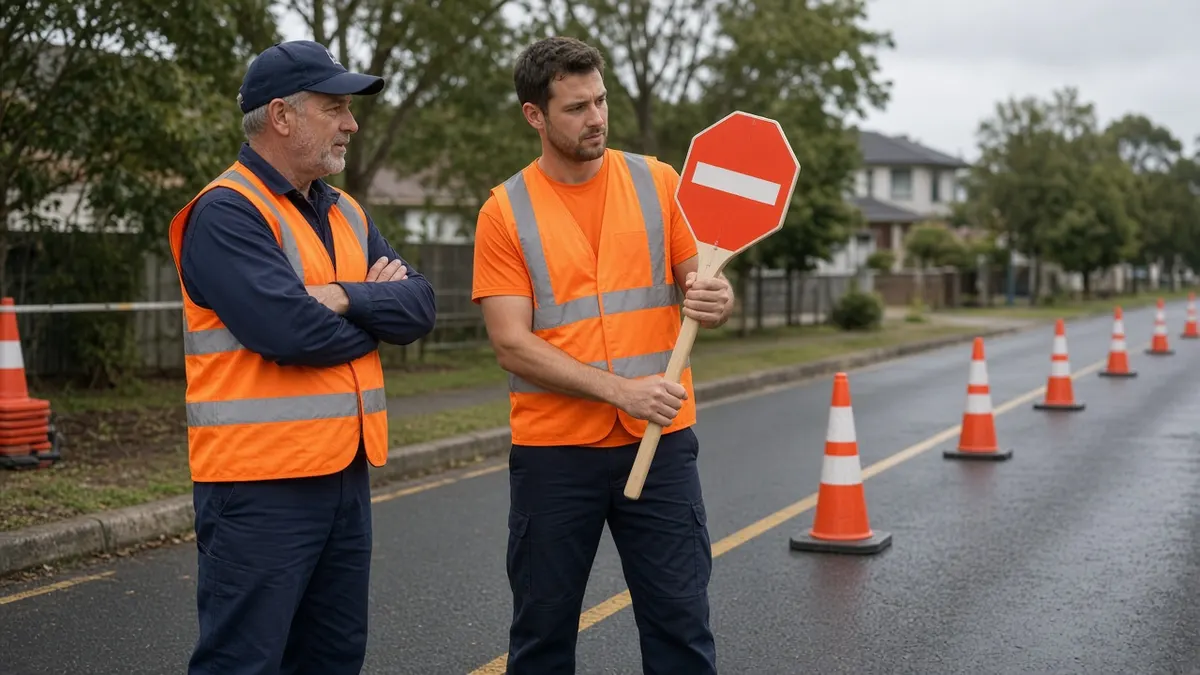
To become a traffic controller in Australia, complete a traffic control course with a training provider approved in your state (usually one to three days), then get the card or accreditation that state requires: a SafeWork NSW card, Queensland TMR accreditation or Main Roads WA accreditation. Most civil and construction sites also expect a white card.
This guide covers the steps state by state, what courses cost, how long the process takes and how to pick up your first shifts. Yakka Labour is the hiring marketplace, not the workwear brand with a similar name. General information, not legal advice. Rules change, so confirm with your state regulator before you book.
What does a traffic controller actually do?
A traffic controller stops and releases vehicles and pedestrians around a work zone using a stop-slow bat, portable traffic lights or boom gates, following a traffic management plan someone else has designed. SafeWork NSW splits traffic control work into three roles, and the other states use similar tiers under the Austroads national training framework:
- Traffic controller (TCR or TC): directs traffic with a bat or portable devices. This is the entry-level job.
- Implementer (IMP or TMI): sets up, checks and packs down signs, cones and devices according to the plan.
- Designer (PWZ or TMD): prepares and varies traffic management plans and traffic guidance schemes.
Most new starters do the controller course first, then add the implementer course once they have a few months on the bat. Crews that hold both are easier to roster, which is why combo courses are popular.
What course do you need to be a traffic controller in each state?
Each state runs its own system. The table summarises what the regulators publish for 2026.
| State | Who authorises you | Training required | Renewal |
|---|---|---|---|
| NSW | SafeWork NSW Traffic Control Work Training (TCWT) card | TCR course from a SafeWork-approved RTO: RIIWHS201E, RIICOM201E, RIIWHS205E and RIIWHS206. Minimum age 17. | Check your card and SafeWork NSW for currency rules |
| QLD | Department of Transport and Main Roads (TMR) accreditation | TMR-approved traffic controller course, plus an open or provisional driver licence held in the last 5 years | Every 3 years |
| WA | Main Roads WA traffic management accreditation | Course from a Main Roads-approved provider covering RIIWHS205E, RIICOM201E, RIIWHS206 and RIIWHS303. A construction induction (white) card is mandatory. | Every 3 years |
| SA | Department for Infrastructure and Transport (DIT) | National temporary traffic management course with an RTO that is also a DIT-approved provider | Transition period for older cards runs to 1 February 2027 |
| VIC | Training through an RTO under Austroads' national framework | Traffic controller skill set with an RTO, commonly RIIWHS205E with RIIWHS302 for implementers | Check with your employer and Transport Victoria |
The implementer course in NSW uses RIIWHS201E, RIICOM201E, RIIRIS301, RIIWHS302 and RIIWHS303. Training.gov.au replaced RIIWHS302E and RIIRIS301E with RIIWHS302 and RIIRIS301 in September 2026, and SafeWork NSW still accepts the older E versions until 1 September 2027. Read the official pages before enrolling: SafeWork NSW traffic control work training cards, TMR traffic controller accreditation scheme and the DIT national training framework page.
Can you work interstate with your card?
Traffic control work is part of Automatic Mutual Recognition, so a current government-issued card from your home state generally lets you work in other states after you notify the second state. SafeWork NSW notes the exception: Queensland is not part of that arrangement for traffic control.
How much does a traffic control course cost?
Training providers set their own prices. These are indicative 2026 market observations from published RTO price lists, not regulated fees:
- Traffic controller course only: roughly $350–600.
- Controller plus implementer combo: roughly $650–950. One NSW provider lists its 2.5-day TCR and IMP combo at $849.
- White card, if you don't already hold one: roughly $85–150 depending on state and provider.
- Government card fees: in WA the Main Roads application fee is built into the RTO's price. Queensland charges a separate TMR accreditation fee, listed on the Queensland Government business fees page.
Some states subsidise traffic control skill sets for eligible students, so ask the RTO about funding before you pay full price. Watch for very cheap online-only offers: every state requires a practical assessment with a real stop-slow bat.
How long does it take to become a traffic controller?
A realistic timeline is one to three weeks from enrolment to your first paid shift:
- Book and complete the course: one day for a controller course, two to three days for a combo.
- Apply for the card or accreditation: in NSW the RTO lodges your training and SafeWork NSW issues the card. A Statement of Completion lets you do supervised work until your final assessment is done. In Queensland you apply to TMR online or at a service centre, and TMR emails an interim authority while the plastic card is posted.
- Register with employers: traffic management companies usually run their own induction, PPE fitting and a buddy shift.
Do you need a white card for traffic control?
In WA, yes: Main Roads lists a construction induction card as mandatory for every level of traffic management accreditation. In NSW and Queensland the traffic card itself doesn't list one, but anyone doing construction work needs a white card, and most road, civil and building sites will turn you away without one. Get it before your traffic course. It costs little and takes a day. Our guide what is a white card explains the course.
How do you get your first traffic control shifts?
New controllers are usually rostered on lower-risk work first: suburban footpath jobs, driveway pours, tree crews and shopping centre loading docks. Night works on arterial roads and freeways tend to go to people with a few months behind them. To get booked sooner:
- Be available for early starts and nights. Many councils and road authorities schedule work outside peak hours.
- Hold a driver licence and have reliable transport. Depots and sites shift daily, from Penrith to Campbelltown or from Ipswich to Logan.
- Buy good boots and wet-weather gear. Employers normally supply the hi-vis and bat.
- Add the implementer course once you're confident on the bat. It opens up set-up crew work and longer shifts.
Pay depends on the shift. As an indicative 2026 market observation, daytime traffic controllers commonly see $38–50/hr, with nights, weekends and public holidays paying more. Our traffic controller hourly rate guide breaks this down. Always check award minimums on the Fair Work pay guides.
How to find traffic control work on Yakka
Workers create a free profile in the Yakka app, add their traffic control card or accreditation, white card and suburb, then apply for jobs posted nearby. Hirers (builders, landscapers, event organisers and civil contractors) post the job with the start time, the tickets they need and an AUD rate, and message workers directly. Yakka is a marketplace, not an employer, so the hirer and worker agree the engagement between them.
If you are a builder who needs a controller for a single concrete pour, see traffic control hire in Sydney. If you are new to sites altogether, start with construction jobs with no experience.
Frequently asked questions
Can you become a traffic controller at 17?
In NSW, yes. SafeWork NSW says you must be at least 17 years old and have completed training and assessment with an authorised RTO to apply for a Traffic Control Work Training card. Other states set their own conditions, and Queensland also requires an open or provisional driver licence held within the last five years, so check your state regulator before enrolling.
Can I use my NSW traffic control card in Queensland?
Generally not. Traffic control is covered by Automatic Mutual Recognition between most states, but SafeWork NSW notes that Queensland is excluded. To control traffic on Queensland roads you need Transport and Main Roads accreditation, which means completing a TMR-approved course and applying to the department. It is renewed every three years.
What is the difference between TCR and IMP tickets?
TCR (traffic controller) lets you stop and release traffic with a stop-slow bat or portable devices. IMP (implement traffic control plans) covers setting up, checking and removing signs and devices according to a traffic management plan. Neither qualifies you to design plans. Many workers hold both because crews that can set up and control traffic are easier to roster.
Is traffic control a good job for beginners?
It is one of the faster ways into civil and construction work because the course is short and no trade qualification is needed. The trade-offs are long periods standing, weather exposure, early starts or nights, and the need to stay alert near moving traffic. Reliable people who hold a driver licence and accept night shifts usually get the most hours.
Do traffic controllers need their own car?
Most employers strongly prefer it. Sites change daily and often start before public transport runs, so a driver licence and reliable vehicle make you far easier to roster. In Queensland a recent driver licence is also part of the TMR accreditation criteria, because it shows you understand how vehicles brake and move.
Official sources
Award rates, licences and safety rules change. Check the official source before you hire or take on a shift.
- Fair Work Ombudsman — pay guidesMinimum award rates, casual loading and penalty rates
- Fair Work Pay CalculatorWork out the minimum pay for a specific award and shift
- Safe Work AustraliaNational work health and safety framework, including high-risk work licences
- SafeWork NSWWhite cards, high-risk work licences and WHS rules in New South Wales