Interior cost guide
Split System Aircon Installation Cost Australia (2026 Prices)
Typical cost in Australia (2026, inc. GST)
$1,500 to $4,000 per unit
split system supplied and installed, 2.5 kW to 7 kW, standard installation without a new circuit
A supplied and installed split system air conditioner in Australia costs about $1,500 to $2,300 for a 2.5 kW bedroom unit and $2,800 to $4,000 for a 7 kW living-area unit in 2026, with a standard installation. Installation only usually runs $600 to $1,500. Long pipe runs, a new electrical circuit, second-storey access, brand and switchboard upgrades push the price up.
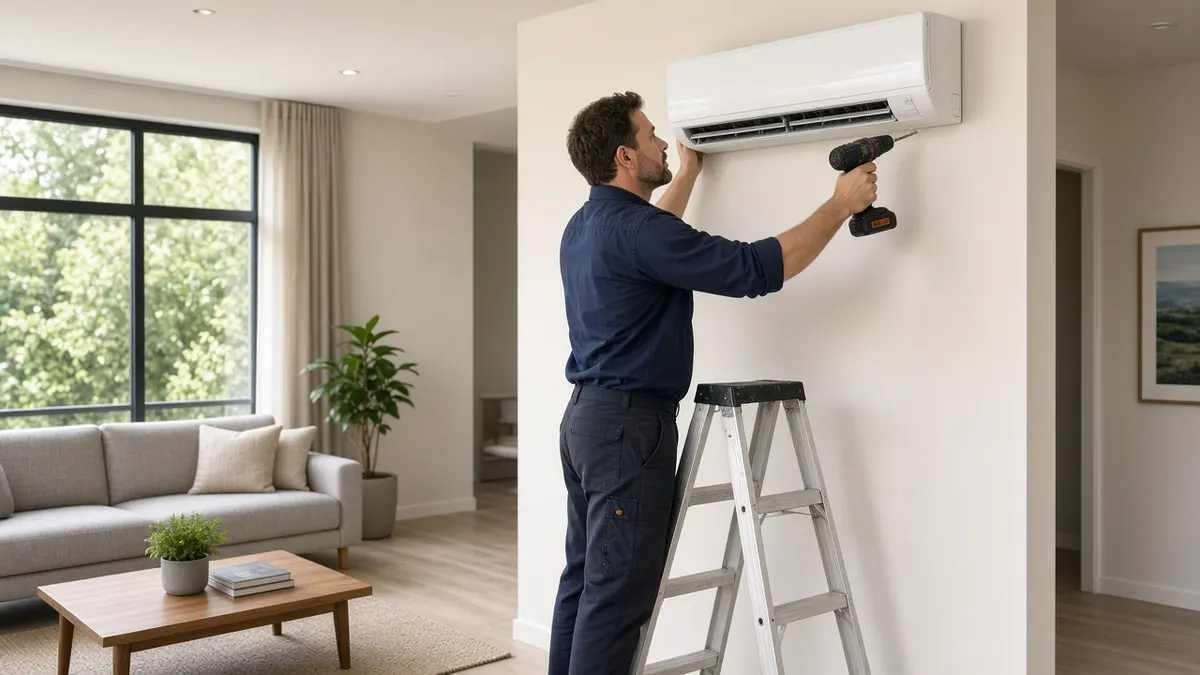
A split system air conditioner costs roughly $1,500 to $4,000 supplied and installed in 2026, depending mostly on its size. A 2.5 kW unit for a bedroom sits at the low end, a 7 kW unit for an open-plan living area at the top. If you buy the unit yourself, a standard installation costs about $600 to $1,500, with extras for long pipe runs, a new circuit or difficult access.
Those standard install prices hide a lot of variation. Installers define a standard installation differently, and the extras are where quotes diverge. This guide explains split system prices by size, what install-only quotes include, how to size a unit, the licences an installer must hold, and three worked examples. Prices include GST and are indicative. Get at least three written quotes and make sure they describe the same installation.
Split system prices by size
These figures are for a reputable brand of inverter reverse-cycle split system, supplied and installed with a standard back-to-back or short-run installation. They do not include a new electrical circuit, which many homes need.
| Capacity (cooling) | Typical room | Supplied and installed (inc GST) |
|---|---|---|
| 2.5 kW | Small bedroom or study, 10 to 20 m² | $1,500 to $2,300 |
| 3.5 kW | Large bedroom or small living room, 20 to 30 m² | $1,800 to $2,700 |
| 5 kW | Living room, 30 to 45 m² | $2,300 to $3,300 |
| 7 kW | Open-plan living, 45 to 60 m² | $2,800 to $4,000 |
| 8 to 9 kW | Large open-plan areas, 60 to 75 m² | $3,300 to $4,800 |
| Multi-head (one outdoor unit, two or three indoor heads) | Two or three rooms | $5,000 to $10,000 |
Premium Japanese brands with high energy ratings and Wi-Fi control sit at the top of each range, while budget brands sit at the bottom. The gap between them on a 7 kW unit can easily be $800 to $1,200. Room sizes in the table are rough and assume an insulated room with a standard ceiling height in a temperate climate. Hot or poorly insulated rooms need more capacity.
Install-only prices and the extras that add up
If you buy the unit from a retailer, you pay separately for installation. Here is what installers commonly charge.
| Item | Typical price (inc GST) |
|---|---|
| Back-to-back installation, up to 7 kW | $600 to $900 |
| Standard installation, up to 3 to 4 m of pipe, up to 7 kW | $800 to $1,300 |
| Standard installation, 8 kW and above | $1,000 to $1,500 |
| Extra pipe run, per metre | $50 to $100 |
| Dedicated electrical circuit and isolator | $300 to $800 |
| Outdoor unit wall brackets | $100 to $250 |
| Ground pad for the outdoor unit | $50 to $150 |
| Second storey or high wall access | $150 to $400 |
| Condensate pump where gravity drainage is not possible | $150 to $350 |
| Pipe cover ducting along an external wall | $100 to $300 |
| Removal of an old unit, including refrigerant recovery | $150 to $350 |
| Core drilling through double brick or concrete | $80 to $200 |
A back-to-back install is the cheapest because the indoor and outdoor units sit on opposite sides of the same external wall, with a short pipe run straight through. Anything else, such as the outdoor unit around the corner, on the ground below a second-storey bedroom or on a roof, adds pipe, labour and sometimes a second installer.
Picking the right size
An undersized unit runs flat out and still cannot keep up on a 40 degree day. An oversized unit cycles on and off, costs more to buy and does a poorer job of removing humidity. The table above gives rough room sizes, but a good installer looks at more than floor area:
- Ceiling height. A 3 m ceiling holds about a quarter more air than a 2.4 m ceiling.
- Insulation. Uninsulated ceilings and walls can need a size up.
- Windows and orientation. Large west-facing glass in Perth or Brisbane adds a lot of afternoon heat.
- Climate. A living room in Darwin needs more cooling capacity than the same room in Hobart, while Canberra and Ballarat buyers often size for heating.
- Open doorways. A living area open to the kitchen and hallway behaves like a much larger room.
Ask the installer to explain how they sized the unit. If two quotes recommend very different capacities for the same room, ask why.
What turns a standard install into an expensive one
Pipe length and route
Every metre of refrigerant pipe beyond the included length costs extra, and long runs through a roof space or under a floor take more labour. Manufacturers also set maximum pipe lengths and height differences for each model.
Where the outdoor unit goes
A wall bracket at ground floor height is simple. A roof mount needs safe access, a frame and sometimes extra people. A narrow side passage may block airflow and annoy neighbours. Ground pads need firm, level ground.
Wall construction
Drilling a 65 to 90 mm hole through brick veneer or weatherboard is quick. Double brick, concrete block and concrete apartment walls need core drilling and take longer.
Drainage
The indoor unit produces water when cooling. It normally drains by gravity through a hose that runs with the pipes. If the indoor unit is on an internal wall or below the level of a suitable drain point, a condensate pump may be needed.
Electrical supply
Most units of 5 kW and above, and many smaller ones, should have their own circuit from the switchboard, plus an isolator switch near the outdoor unit. If the board is full, uses old fuses or has no safety switches, the electrician may need to upgrade it first. Our switchboard upgrade cost guide covers that work, and the electrician cost guide lists typical rates for new circuits.
Energy ratings and running costs
Split systems sold in Australia carry a Zoned Energy Rating Label that shows efficiency for hot, average and cold climate zones, with separate figures for heating and cooling. Pick the zone that matches where you live, then compare the stars and the annual energy figure between models of the same size. The Energy Rating website explains the label and lets you compare models.
An inverter split system is one of the cheapest ways to heat a room in most of Australia, often cheaper to run than gas or electric resistance heaters. Running costs depend on how often you use it, the temperature you set, the size of the unit and your electricity tariff. As a rough idea, a 2.5 kW unit cooling a bedroom for a few hours a night might cost tens of cents per night, while a 7 kW unit cooling an open-plan area on a very hot afternoon can cost a few dollars a day. Setting the thermostat to 24 to 25 degrees in summer and 18 to 20 degrees in winter keeps costs down. Rooftop solar makes daytime running costs much lower.
Multi-head and ducted alternatives
If you want air conditioning in three or more rooms, you have three options: several separate split systems, one multi-head system, or ducted air conditioning.
- Several splits are usually the cheapest per room and give independent control. If one unit fails, the rest keep working. The downside is several outdoor units on the walls.
- A multi-head system runs two to five indoor heads from one outdoor unit. It saves wall space outside but costs more and, if the outdoor unit fails, every room loses cooling.
- Ducted systems hide everything in the ceiling and floor vents, with zoning to control rooms. They cost far more, typically $10,000 to $20,000 or more for a house. See our ducted air conditioning cost guide for the details.
Replacing an existing split system
Swapping an old split system for a new one is often a little cheaper than a fresh install, because the wall penetration, the outdoor unit position and the circuit already exist. Expect to pay the new unit price plus about $700 to $1,300 for removal and installation, including recovering the old refrigerant. The installer has to recover refrigerant from the old unit using proper equipment rather than venting it, and the old unit then goes to a recycler.
Whether the old pipework can be reused depends on its condition, its size, the refrigerant the old unit used and the new manufacturer's instructions. Many installers prefer new pipe for anything more than a few years old, particularly when moving from an older refrigerant like R22 to a current R32 system, because contamination in old pipes can shorten the life of the new compressor and affect the warranty. Reusing pipe can save $100 to $300 on a short run, but ask the installer to put the decision and the reason in writing.
Check the old circuit too. A circuit sized for an old 5 kW unit may not suit a new 7 kW unit, and an old isolator that has sat in the sun for 15 years is often due for replacement anyway. If your current unit has a fault and you are deciding between repair and replacement, our repair guide linked further down explains when a fix still makes sense.
Prices by city
| City | 3.5 kW supplied and installed | 7 kW supplied and installed | Local factor |
|---|---|---|---|
| Sydney | $1,900 to $2,900 | $3,000 to $4,200 | Higher labour, apartments and strata rules |
| Melbourne | $1,800 to $2,800 | $2,900 to $4,100 | Many installs replace gas heating |
| Brisbane | $1,800 to $2,700 | $2,800 to $4,000 | Very busy from November to February |
| Perth | $1,850 to $2,800 | $2,900 to $4,100 | Double brick walls need core drilling |
| Adelaide | $1,750 to $2,650 | $2,750 to $3,900 | Slightly lower labour rates |
| Hobart | $1,800 to $2,750 | $2,850 to $4,000 | Heating-focused installs, fewer installers |
| Canberra | $1,900 to $2,850 | $3,000 to $4,200 | Units sized for cold winters |
| Darwin | $2,000 to $3,000 | $3,100 to $4,500 | Freight, year-round demand, cyclone-rated mounting |
Three installs, costed
Bedroom unit in a Marrickville semi, NSW
A double-fronted brick semi in Sydney's inner west. The owners want a 2.5 kW unit in the main bedroom on an external side wall, back to back with the outdoor unit on wall brackets. The old switchboard has space, but the unit needs its own circuit.
| Item | Cost (inc GST) |
|---|---|
| 2.5 kW inverter split system | $1,000 |
| Back-to-back installation | $650 |
| Wall brackets for outdoor unit | $150 |
| Dedicated circuit and isolator | $450 |
| Total | $2,250 (expect $1,900 to $2,600) |
Open-plan living in Mandurah, WA
A single-storey double brick home. A 7 kW unit goes on the internal end of the open-plan living room, with the outdoor unit on a ground pad around the corner, giving a 7 m pipe run. A new circuit is needed.
| Item | Cost (inc GST) |
|---|---|
| 7 kW inverter split system | $2,300 |
| Standard installation, first 4 m of pipe | $900 |
| 3 m extra pipe at $80 | $240 |
| Ground pad | $80 |
| Pipe cover ducting on the external wall | $180 |
| Dedicated circuit and isolator | $500 |
| Total | $4,200 (expect $3,700 to $4,800) |
Replacing a gas wall heater in Ballarat, Victoria
A 1950s weatherboard with an old gas wall furnace in the lounge. The owners want an 8 kW reverse-cycle unit in the living area and a 2.5 kW unit in the main bedroom, both on new circuits. A licensed gasfitter caps off the old heater.
| Item | Cost (inc GST) |
|---|---|
| 8 kW inverter split system | $2,800 |
| Installation for the 8 kW unit | $1,000 |
| 2.5 kW inverter split system | $1,000 |
| Installation for the 2.5 kW unit | $700 |
| 2 dedicated circuits at $450 | $900 |
| Gasfitter to disconnect and cap the old heater | $250 |
| Total before any rebate | $6,650 (expect $5,900 to $7,800) |
In Victoria, the Victorian Energy Upgrades program has offered discounts on efficient reverse-cycle systems that replace older heating, delivered through accredited providers. Eligibility and amounts change, so check the current scheme before you sign, and ask the installer to show any discount clearly on the quote. NSW and some other states have run similar energy-efficiency programs.
Licences: ARCtick and electrical
Two separate licences apply to a split system installation, and you should check both.
Refrigerant handling. Anyone who handles refrigerant, which includes connecting the pipes, pressure testing, evacuating and releasing the charge into the system, must hold a refrigerant handling licence issued by the Australian Refrigeration Council, commonly known as an ARCtick licence. The business must also hold a refrigerant trading authorisation. These requirements sit under federal law, and the Department of Climate Change, Energy, the Environment and Water explains the framework. Ask for the licence number and check it on the ARC's public register.
Electrical work. Connecting the unit to power, running a new circuit and installing the isolator is fixed electrical work. It must be done by a licensed electrician, or by an installer who holds the appropriate electrical licence. Some states issue restricted electrical licences that let air conditioning technicians disconnect and reconnect equipment, but those do not cover new circuits or switchboard work. Electricians are licensed by NSW Fair Trading, Energy Safe Victoria, the Electrical Safety Office in Queensland, Building and Energy in WA, Consumer and Business Services in SA, CBOS in Tasmania, Access Canberra and the NT licensing board.
There is no legal DIY option. Self-install kits sold online still need a licensed technician to connect the refrigerant and a licensed electrician to wire the unit, and an unlicensed install will almost certainly void the manufacturer's warranty. A handyman cannot do it either. Our article on whether a handyman can do electrical work explains why.
Noise, neighbours, strata and council
Outdoor units make noise, and state environmental protection rules set limits on noise from air conditioners, particularly at night. Place the outdoor unit away from neighbours' bedroom windows where you can, and on anti-vibration mounts. Most standard split system installations on houses do not need council approval, but conditions on location and noise usually apply, and heritage areas can have extra rules. Check with your council if the outdoor unit will be visible from the street in a heritage area.
In apartments and townhouses, strata approval is often needed before drilling through external walls or placing an outdoor unit on common property or a balcony. Some buildings have designated positions or approved pipe routes. Get approval in writing before booking the installer, as removing a non-approved unit is an expensive mistake.
Saving money without a worse result
- Book in autumn or winter. Installers are flat out from the first heatwave to February. Off-season bookings are faster and sometimes cheaper.
- Choose a back-to-back position where the room layout allows it.
- Get several units installed at once. The setup cost is shared, and some installers discount multi-unit jobs.
- Compare supply and install packages with retail plus install-only. Sometimes a retailer sale plus a separate installer wins, sometimes the installer's package does. Make sure the install-only price includes everything a package does.
- Do not oversize. A unit one size too big costs more to buy and runs less efficiently.
- Plan the circuit and switchboard early. A surprise switchboard upgrade on install day is the most common budget blowout.
What a good aircon quote spells out
- The exact brand, model number and capacity in kW for heating and cooling.
- Indoor and outdoor unit positions and the included pipe length.
- The rate for extra pipe per metre.
- Whether a dedicated circuit, isolator and any switchboard work are included.
- Brackets or pad, pipe cover ducting, condensate drainage and any pump.
- Removal and disposal of an old unit, including refrigerant recovery.
- The installer's ARCtick licence number, the business's refrigerant trading authorisation and the electrician's licence number.
- Manufacturer and installation warranty periods.
Be wary of very cheap installs that do not name the model, quotes that exclude the electrical connection without saying who will do it, cash-only pricing, and installers who cannot give an ARCtick licence number.
Yakka and your air conditioning install
Air conditioning installation needs licensed people for the refrigerant and electrical work. You can find air conditioning installers on Yakka among the tradies listed on the platform, and check their licences before booking.
A general worker can handle the labour that needs no licence: moving furniture away from the installation wall, carrying an old unit's housing out after the technician has recovered the refrigerant, clearing a path down a side passage for the outdoor unit, and taking packaging to the tip. Our rubbish removal listings help if you are clearing out old units and boxes after a bigger job.
Install day and what comes after
A back-to-back installation usually takes three to four hours. A standard installation with a longer pipe run and a new circuit takes most of a day, and a multi-unit job can take two days. Expect a hole of 65 to 90 mm through the wall, some dust, and the power off for part of the job while the electrician connects the circuit. The installer should pressure test and vacuum the pipework before releasing the refrigerant, then run the unit and show you the remote and Wi-Fi app.
Clean the indoor unit's filters every few weeks during heavy use, and book a professional service every one to two years. Our air conditioning repair and service guide covers what that costs. A well-installed, well-maintained split system typically lasts 10 to 15 years, and longer in mild climates.
Frequently asked questions
How much does it cost to install a split system air conditioner?
A supplied and installed split system typically costs $1,500 to $2,300 for a 2.5 kW unit and $2,800 to $4,000 for a 7 kW unit in 2026, with a standard installation. If you buy the unit yourself, installation alone usually costs $600 to $1,500. A new circuit, long pipe runs and difficult access add to these figures.
Do air conditioner installers need a licence?
Yes. Anyone handling refrigerant must hold an ARCtick refrigerant handling licence from the Australian Refrigeration Council, and the business needs a refrigerant trading authorisation. The electrical connection must be done by a licensed electrician or an installer with the right electrical licence. Check both licence numbers before work starts.
What size air conditioner do I need?
As a rough guide, 2.5 kW suits a small bedroom of 10 to 20 m², 3.5 kW a large bedroom or small living room, 5 kW a living room of 30 to 45 m², and 7 kW or more an open-plan area. Ceiling height, insulation, west-facing windows and climate change the answer, so ask the installer to explain their sizing.
How long does it take to install a split system?
A back-to-back installation usually takes three to four hours. A standard installation with a longer pipe run and a new electrical circuit takes most of a day. Multi-head systems and installs needing switchboard work can take longer, and multiple units in one house often take one to two days.
Does a split system need its own circuit?
Many do. Larger units, typically 5 kW and above, usually need a dedicated circuit from the switchboard plus an isolator switch near the outdoor unit, and some smaller units also call for one depending on the manufacturer's instructions and the existing wiring. A new circuit typically costs $300 to $800, and an old or full switchboard may need upgrading first.
When is the best time to install air conditioning?
Autumn and winter are the best times to book. Installers are busiest from the first summer heatwave through to February, when waits stretch out and there is little room to negotiate. Booking in the cooler months usually means faster scheduling and more flexibility on installation dates and sometimes price.
Do I need council approval to install a split system?
Most standard split system installations on houses do not need council approval, but conditions about placement and noise usually apply, and heritage areas can have extra rules. Apartments and townhouses often need strata approval for wall penetrations and outdoor unit positions. Check with your council or strata manager before booking if you are unsure.
Official sources
Award rates, licences and safety rules change. Check the official source before you hire or take on a shift.
- Workplace Health and Safety QueenslandHigh-risk work licences and the Electrical Safety Office in Queensland
- Consumer and Business Services SALabour hire licensing in South Australia
- NSW Fair TradingTrade licence checks for electricians, plumbers and builders in New South Wales
- Consumer, Building and Occupational Services (Tasmania)Building, plumbing and electrical licensing in Tasmania
- Access CanberraConstruction occupation licences and building approvals in the ACT
- Energy Safe VictoriaElectrician licensing in Victoria