Licensing
Can a Handyman Do Electrical Work in Australia? (2026)
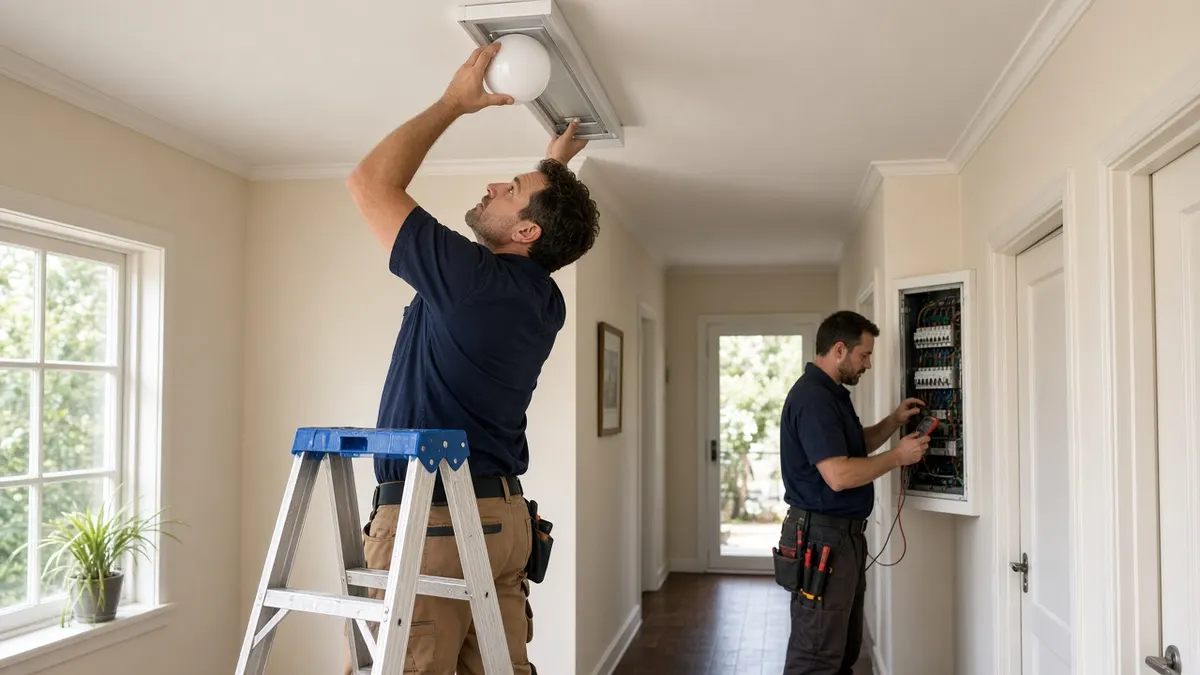
No. A handyman cannot do electrical work that involves wiring, in any Australian state or territory. Changing a light fixture, replacing a power point, installing a ceiling fan or hard-wiring an appliance all need a licensed electrician, whatever the cost. A handyman can still plug in appliances, change globes, fit battery smoke alarms and handle the surrounding building work.
General information, not legal advice. Electrical licensing is run by state and territory regulators. The examples below are drawn from NSW, Victorian and Queensland guidance; check your own regulator for anything not covered here.
Why is electrical work always licensed?
Electrical work is one of the few areas where there is no small-job exemption. A loose neutral, reversed polarity or missing earth can sit unnoticed for years and then cause a fire or electrocution. Regulators therefore license the person doing the work, not the size of the job.
- NSW: Building Commission NSW says you need an electrical licence or certificate before doing any electrical wiring work, regardless of the cost and regardless of whether the work is residential, commercial or industrial. Its electrical licensing page lists fines of $22,000 for an individual or $110,000 for a company for unlicensed electrical work.
- Victoria: Energy Safe Victoria's advice on working with tradespeople says never do your own electrical work, always engage a registered electrical contractor and get a Certificate of Electrical Safety.
- Queensland: electricians are licensed through the Electrical Safety Office. The QBCC's guidance on when you need a licence says a handyman can work unlicensed on small jobs only if the work "isn't electrical or plumbing work".
What counts as electrical wiring work?
NSW defines electrical wiring work as the physical work of installing, repairing, altering, removing or adding to an electrical installation, or supervising that work. Importantly, the NSW definition of an electrical installation does not include:
- electrical articles connected to, and extending beyond, an outlet socket, such as a lamp or kettle plugged into a power point
- electrical equipment operating at not more than 50 volts AC or 120 volts ripple-free DC
In plain terms, anything behind the wall plate, in the ceiling, at the switchboard or hard-wired is electrical installation work. Other states use similar definitions, but the details differ, so check with your regulator before relying on an exclusion.
Can a handyman change a light fixture, power point or ceiling fan?
| Job | Can a handyman do it? | Who should do it |
|---|---|---|
| Replace a light globe in an existing fitting | Yes | Anyone, with power off at the switch |
| Swap a light fitting, pendant or downlight | No | Licensed electrician |
| Replace or add a power point or switch | No | Licensed electrician |
| Install a ceiling fan | No | Licensed electrician, with a handyman for patching if needed |
| Hard-wire a rangehood, oven or cooktop | No | Licensed electrician |
| Fit a battery-only smoke alarm | Yes | Anyone |
| Replace a hard-wired (240V) smoke alarm | No | Licensed electrician |
| Mount a TV bracket with no new power point | Yes | Handyman |
| Install a plug-in LED strip with its own adaptor | Yes, in most cases | Anyone |
| Add a circuit, change a switchboard or install solar | No | Licensed electrician or accredited installer |
Ceiling fans are a common trap. Even where a fan is replacing an existing light point, the old fitting has to be disconnected, the fan wired in and the circuit tested, and a fan's weight and movement mean the mounting must be secure. A handyman can assemble the blades and patch the ceiling, but the wiring belongs to the electrician.
The light fixture question comes up most often. Even a like-for-like swap means disconnecting and reconnecting active, neutral and earth conductors in the ceiling, which is wiring work. The same goes for "just moving" a power point 30 centimetres along a wall.
What electrical-adjacent work can a handyman do?
A lot of jobs sit next to electrical work without being electrical work. A handyman can typically:
- assemble and position plug-in appliances, lamps and heaters
- change globes and clean light diffusers
- install and test battery smoke alarms
- mount TV brackets into studs where the power point already exists
- patch and paint ceilings and walls after an electrician cuts in a fan or downlights
- build cabinetry or shelving that the electrician then wires lights into
Data and antenna cabling has its own national rules, so ask about those separately rather than assuming a handyman can run them.
How do you split a job between a handyman and an electrician?
A homeowner in Ryde wants a ceiling fan in the main bedroom, the TV wall-mounted in the lounge with a power point moved up behind it, and the lounge repainted.
- Electrician: installs the fan, relocates the power point behind the TV position and issues any compliance paperwork the state requires.
- Handyman: patches the wall where the old power point was, mounts the TV bracket into the studs and repaints the lounge.
- Sequencing: book the electrician first, so the handyman paints over finished patches rather than coming back twice.
The split keeps the job legal and usually costs less than paying an electrician to paint or a painter to wait around. Ask the electrician for their licence number and, in Victoria, the Certificate of Electrical Safety for the work.
What are the risks of hiring a handyman for electrical work?
- Safety: faults behind walls can cause fires or shocks long after the handyman has left.
- Penalties: the person doing unlicensed work faces fines, such as up to $22,000 for an individual in NSW.
- Insurance: insurers may ask who did electrical work after a fire claim, and unlicensed work can complicate the claim.
- Sale and leasing: buyers, building inspectors and property managers often ask for evidence that electrical work was done by a licensed electrician.
Electrical regulators by state
NSW: Building Commission NSW. Victoria: Energy Safe Victoria. Queensland: Electrical Safety Office. Western Australia: Building and Energy. South Australia: Consumer and Business Services. Tasmania: Consumer, Building and Occupational Services. ACT: Access Canberra. Northern Territory: the Electrical Workers and Contractors Licensing Board. Each runs a public register where you can check an electrician's licence.
Before work starts, ask for the licence number, check that the name on the register matches the person who turns up, and confirm the licence covers the type of work. In NSW, Service NSW's licence check includes electricians, and in Victoria Energy Safe Victoria runs the public register. Ask for evidence of public liability insurance too, and keep any compliance certificate the electrician issues with your property records, because you may need it when you sell, lease or make an insurance claim.
How to book an electrician or handyman on Yakka
Yakka Labour is the hiring marketplace, not the workwear brand with a similar name. You post the job, compare workers and agree the rate directly, without an agency margin.
- Post the job with your suburb, timing and AUD budget, listing electrical tasks separately from general repairs.
- Ask electricians to include their licence number, and check it on your regulator's register.
- Agree the rate and scope with each worker in writing and pay through the platform when the work is done.
Yakka is a marketplace rather than an employer, so the hirer and worker agree the engagement. Our guides on whether a handyman can do plumbing and handyman licences in Australia cover the other common limits, and how to find trusted tradies explains how to vet workers.
Hire an electrician on Yakka · Hire a handyperson · Download the Yakka app
Frequently asked questions
Can a handyman replace a light switch?
No. Replacing a light switch means disconnecting and reconnecting fixed wiring behind the wall plate, which is electrical wiring work in every state. Even a like-for-like swap of a damaged switch needs a licensed electrician. A handyman can repaint around the plate or replace a decorative cover only where no wiring is touched.
Can a handyman install an outdoor light?
Only if it is a genuinely plug-in or solar-powered light that does not connect to fixed wiring. Solar garden lights and plug-in festoon lights with their own weatherproof adaptor are fine for a handyman. A hard-wired outdoor wall light, sensor light or garden circuit needs a licensed electrician, and outdoor work brings extra weatherproofing requirements.
Can I do my own electrical work if I own the house?
Generally no. Owning the property does not give you a right to do fixed wiring work. Energy Safe Victoria tells householders to never do their own electrical work, and NSW requires a licence for any electrical wiring work regardless of cost. Owner-builder permits for building work do not extend to electrical work.
Can an apprentice electrician do work without a licensed electrician?
Apprentices can do electrical work as part of their training, but only under the supervision of a licensed electrician who is responsible for the work. An apprentice should not take on private side jobs alone. If someone quotes as an apprentice, ask who their supervising electrician is and check that person on the regulator register.
Do I need an electrician to install a smart doorbell?
It depends on how it is powered. Battery-powered smart doorbells and plug-in chimes can be installed by a handyman or the homeowner. A doorbell that connects to an existing 240-volt circuit, or needs a new transformer wired into the switchboard, needs a licensed electrician. Check the product instructions before booking.
Official sources
Award rates, licences and safety rules change. Check the official source before you hire or take on a shift.
- Workplace Health and Safety QueenslandHigh-risk work licences and the Electrical Safety Office in Queensland
- Queensland Building and Construction Commission (QBCC)Contractor, plumbing and drainage licence search in Queensland
- Consumer and Business Services SALabour hire licensing in South Australia
- Consumer, Building and Occupational Services (Tasmania)Building, plumbing and electrical licensing in Tasmania
- Access CanberraConstruction occupation licences and building approvals in the ACT
- Energy Safe VictoriaElectrician licensing in Victoria