More cost guide
Ducted Air Conditioning Cost in Australia: 2026 Price Guide
Typical cost in Australia (2026, inc. GST)
$8,000 to $25,000 per job
supply and install, reverse cycle, two to five bedroom homes
A ducted reverse cycle system usually costs $8,000 to $12,000 installed for a small two or three bedroom home, $11,000 to $20,000 for a typical four bedroom single storey house, and $17,000 to $28,000 for a large double storey. The main price drivers are system capacity in kW, the number of outlets and zones, roof space access, whether existing ducts can be reused and any electrical upgrades.
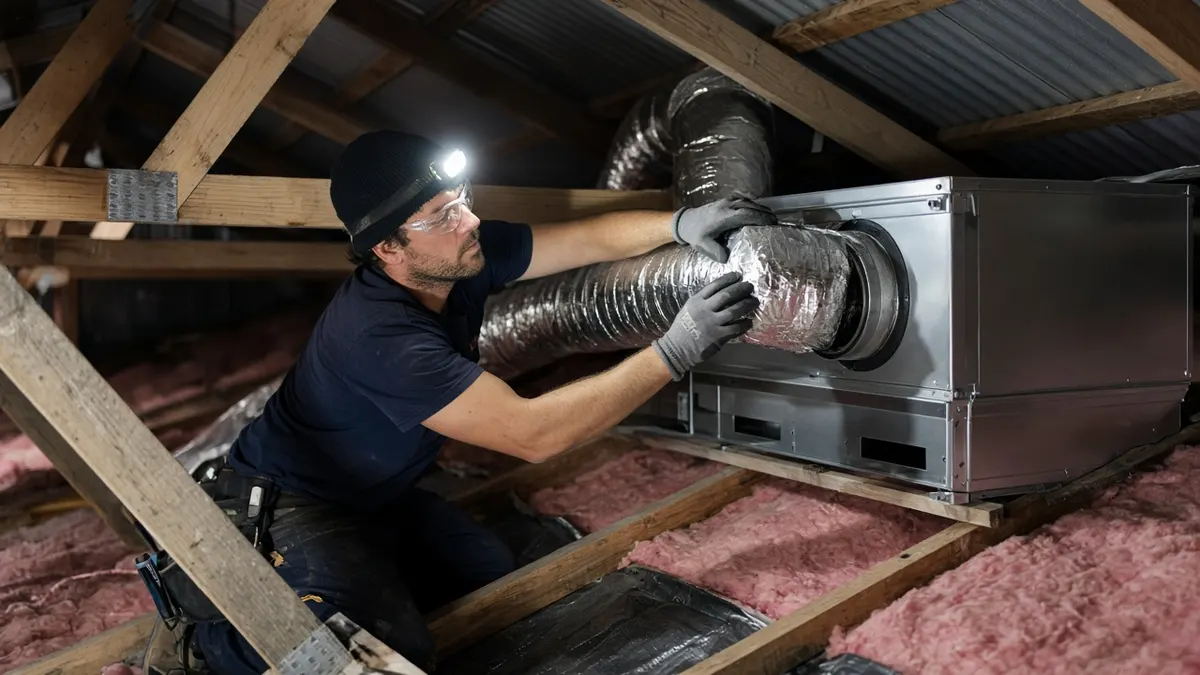
Ducted air conditioning in Australia typically costs between $8,000 and $25,000 fully installed, with most three and four bedroom single storey homes landing between $11,000 and $17,000. Big double storey homes, premium brands and systems with six or more zones can push past $25,000.
That is a wide spread, and it is wide for good reasons. A ducted system is a whole-house job: a large indoor fan coil in the roof, an outdoor compressor unit, a network of insulated flexible ducts, ceiling outlets, a return air grille, zone dampers, a controller, a dedicated power circuit and a condensate drain. Every one of those pieces scales with the size and shape of the house. The figures below are indicative 2026 prices in AUD including GST. Use them to sanity-check quotes, and get at least three written quotes before you sign anything.
Installed price by home size
Capacity is quoted in kilowatts (kW) of cooling output. The bigger the floor area you want to condition, the bigger the system and the more ductwork, outlets and labour it needs.
| Home | Typical capacity | Outlets | Installed price (inc. GST) |
|---|---|---|---|
| Two or three bedroom unit or small house, under 120 m² | 7 to 10 kW | 4 to 6 | $8,000 to $12,000 |
| Three or four bedroom single storey, 120 to 180 m² | 10 to 14 kW | 6 to 8 | $11,000 to $16,500 |
| Four or five bedroom single storey, 180 to 250 m² | 14 to 17 kW | 8 to 10 | $14,000 to $20,000 |
| Double storey, 220 to 320 m² | 16 to 20 kW, or two systems | 9 to 14 | $17,000 to $28,000 |
| Like-for-like replacement reusing sound ductwork | Matched to existing | Existing | $7,000 to $13,000 |
As a loose rule, installers start from about 100 to 150 watts of cooling per m² of conditioned floor area, then adjust for climate, insulation, ceiling height, window area and which way the house faces. Because zoning means you rarely run every room at full load at once, a good designer can often size a little below the raw whole-house figure. That rule is only a starting point. Ask for a proper heat load calculation, because an undersized system runs flat out on a 40 degree day and an oversized one short-cycles, wastes power and leaves rooms clammy.
Where the money goes on a ducted install
Most quotes come as a single package price, but it helps to know roughly how it breaks down so you can spot padding or gaps.
| Item | Typical cost (inc. GST) | Notes |
|---|---|---|
| Indoor fan coil and outdoor unit | $4,000 to $11,000 | Biggest single line. Depends on kW, brand and inverter model |
| Ductwork, outlets, return air grille, fittings | $1,500 to $4,000 | More outlets and longer runs cost more |
| Zone motors (dampers) | $250 to $500 each | Most homes have two to four zones |
| Smart zone controller or app control | $600 to $1,500 | Basic wall controller is usually included |
| Installation labour | $1,800 to $5,000 | Two-person crew, one to three days |
| Dedicated circuit and isolators | $400 to $1,200 | Licensed electrician |
| Condensate drain, pad or brackets, commissioning | $250 to $800 | More if a condensate pump is needed |
| Removal of old system and refrigerant recovery | $300 to $800 | Only on replacements |
Equipment typically makes up 45 to 60 percent of the total. The rest is labour, ducting materials and the electrical side. If a quote looks cheap, check whether it is using smaller duct sizes, fewer outlets than rooms, or leaving out the electrical work and saying "by others".
Prices across the capitals and regional areas
For a typical four bedroom single storey home with a 12.5 to 14 kW system and three zones, expect roughly the following.
| Location | Typical installed price | Why it differs |
|---|---|---|
| Sydney | $13,000 to $18,000 | High labour rates, tight roof spaces in older suburbs |
| Melbourne | $12,000 to $17,000 | Lots of gas ducted heating swaps, which often need new ducts |
| Brisbane | $11,500 to $16,500 | Competitive market, but hot roof spaces slow summer installs |
| Perth | $11,500 to $16,000 | Many single storey homes with good roof access |
| Adelaide | $11,500 to $16,500 | Similar to Perth, fewer installers in outer suburbs |
| Hobart | $12,500 to $17,500 | Smaller pool of installers, freight on equipment |
| Canberra | $13,000 to $18,000 | Heating-led sizing for cold winters, higher labour costs |
| Darwin | $13,500 to $19,500 | Freight, humidity-rated gear and year-round demand |
| Regional towns | Add $500 to $2,000 | Travel time, accommodation for crews, freight |
Climate also changes what you buy. In Canberra, Hobart and the Victorian high country the system is often sized for heating performance at low outdoor temperatures. In Darwin and north Queensland it is about dehumidifying and cooling for most of the year, so corrosion protection on the outdoor unit near the coast matters more than in Adelaide.
The things that move a quote up or down
Roof space and access
Ducted systems live in the roof. A pitched tile roof with plenty of crawl room on a single storey home is the easy case. Low-pitched metal roofs, trusses spaced tightly, old loose-fill insulation and very hot roof spaces all slow the crew down. If there is no roof space at all, such as a flat-roofed unit, the indoor unit may go under the floor or in a bulkhead, and that adds carpentry and plastering.
Double storey homes
Getting conditioned air upstairs and down usually means one of three approaches: a single system with ducts run through a riser or a wardrobe, a bulkhead built along a ceiling on the ground floor, or two separate systems. Two systems cost more upfront but give each level its own controls and some redundancy. A riser or bulkhead adds roughly $800 to $3,000 for framing, plaster and painting.
Zoning and controls
Zoning lets you condition the bedrooms at night and the living areas during the day without paying to cool the whole house. Each extra zone adds a motorised damper, wiring and a little design time. Smart controllers that let you set individual room temperatures or control the system from a phone cost more, but on a large house they often pay for themselves in reduced running costs.
Electrical capacity
A ducted system needs its own circuit, and bigger three-phase models need three-phase power at the board. Older homes with ceramic fuses or no spare space in the switchboard may need an upgrade first. Our switchboard upgrade cost guide covers that work, which often adds $1,500 to $3,500.
Replacing gas ducted heating
Plenty of Victorian and Canberra homes are swapping gas ducted heating for reverse cycle. Old heating ducts usually run to floor vents and are often too small or poorly insulated for cooling, so most installers replace them and move outlets to the ceiling. Budget for new ductwork plus a licensed gasfitter to disconnect and cap the old heater.
Brand and efficiency
Premium Japanese brands sit at the top of the price range. Mid-market brands can save $1,000 to $3,000 on equipment. Check the energy rating label and the zoned energy rating, which shows how the unit performs in hot, average and cold climate zones. The Energy Rating website run by the federal government lets you compare models before you choose.
What three typical installs cost
These are realistic breakdowns for common Australian homes. Your quotes will differ, but the proportions should look familiar.
Example 1: three bedroom brick veneer in Penrith, NSW
Single storey, about 140 m² conditioned, tiled pitched roof with good access. Western Sydney summers are hot, so the installer specified 12.5 kW with seven outlets and two zones (living and bedrooms).
| Line item | Cost (inc. GST) |
|---|---|
| 12.5 kW inverter ducted system (indoor and outdoor) | $6,800 |
| Ductwork, seven outlets, return air grille, fittings | $1,900 |
| Two zone motors and wall controller | $900 |
| Installation labour, two technicians for about 1.5 days | $2,300 |
| Dedicated circuit and isolators by licensed electrician | $700 |
| Condensate drain, outdoor pad, commissioning | $400 |
| Total | $13,000 |
Quotes for this home would reasonably sit between $11,500 and $14,500.
Example 2: double storey four bedroom in Narre Warren, VIC
About 230 m², replacing a 20-year-old gas ducted heater. The old floor ducts were undersized for cooling, so the job includes new ducting, a 16 kW system, nine ceiling outlets, four zones and a smart controller, with upstairs runs through a built-in riser.
| Line item | Cost (inc. GST) |
|---|---|
| 16 kW inverter ducted system | $8,500 |
| New ductwork, nine outlets, two return air grilles | $3,600 |
| Four zone motors and smart zone controller | $2,300 |
| Installation labour, two to three technicians over 2.5 days | $3,800 |
| Riser framing, plaster and paint | $1,400 |
| Electrical work including new circuit | $900 |
| Disconnect and cap old gas heater (licensed gasfitter), remove unit | $600 |
| Total | $21,100 |
Example 3: like-for-like replacement in Carindale, QLD
A four bedroom single storey home with a 15-year-old system that has failed. The ducts were inspected and are in good condition apart from three damaged runs.
| Line item | Cost (inc. GST) |
|---|---|
| 14 kW inverter ducted system | $7,200 |
| Removal of old units, refrigerant recovery and disposal | $400 |
| Installation labour, two technicians for one day | $2,000 |
| Replace three duct runs and outlets | $600 |
| Electrical update to suit new unit | $500 |
| New wall controller | $600 |
| Total | $11,300 |
Reusing ductwork saved this owner roughly $2,000 to $3,000. That only works if the ducts are the right size for the new unit and the insulation is intact. Flexible duct that is crushed, brittle or chewed by rodents should be replaced.
Ducted, multi-head or split systems
Ducted is the most expensive way to air condition a house upfront, but it is the only option that conditions every room quietly with nothing on the walls. For comparison, a single 7 kW wall split costs roughly $2,000 to $3,500 installed, and three or four splits across a home can come to $7,000 to $12,000. Our aircon installation cost guide covers split and multi-head pricing in detail.
Here is how a tradie would explain the trade-off. If you only really use two or three rooms, splits are cheaper to buy and can be cheaper to run, because you condition only those rooms. If you have a family spread across the house and want one controller, even temperatures and no visible units, ducted makes more sense, especially in a new build or during a renovation when the ceilings are easy to get at. Ducted systems also tend to add more to resale appeal in a family home than a set of splits.
Evaporative cooling is a cheaper ducted option at roughly $4,000 to $9,000 installed and works well in dry inland climates like Adelaide, Perth and western Sydney. It does not heat, it needs windows open to work and it struggles on humid days, so it is a different product rather than a budget version of reverse cycle.
What it costs to run
Running cost depends on the system's power input, how hard it works and your electricity tariff. A reasonable way to estimate it: a 12.5 kW inverter system might draw around 3.5 to 4 kW at full load but averages much less once rooms reach temperature, often 1.5 to 2.5 kW with one or two zones running. At 30 to 40 cents per kWh, six hours of use on a warm day works out to roughly $3 to $6. A hot week with the whole house running for long stretches can cost more than double that.
The cheapest ways to cut running costs are boring ones. Keep the set point at about 24 to 25 degrees in summer and 18 to 21 in winter, close off zones you are not using, top up ceiling insulation and shade west-facing windows. Rooftop solar pairs well with ducted cooling because the hottest part of the day is also when panels produce the most.
Licences, approvals and the rules by state
This is not a DIY job, and parts of it are illegal for an unlicensed person to do. Three separate areas are involved.
- Refrigerant handling. Anyone who installs, services or decommissions split or ducted air conditioning must hold a refrigerant handling licence issued by the Australian Refrigeration Council under federal ozone protection and synthetic greenhouse gas laws. The business needs a refrigerant trading authorisation. The Department of Climate Change, Energy, the Environment and Water sets the framework.
- Electrical work. The new circuit, isolators and connection must be done by a licensed electrician, who should give you a certificate of compliance for the work. Some air conditioning technicians hold a restricted electrical licence that covers disconnecting and reconnecting units, but new circuits still need a full electrical licence. Our electrician cost guide has current call-out and hourly rates.
- State trade licensing. In Victoria, mechanical services work such as air conditioning ductwork is a class of plumbing work regulated by the Victorian Building Authority (now operating as the Building and Plumbing Commission), so check the installer is registered or licensed for it. In Queensland, mechanical services work over the QBCC threshold needs a QBCC licence. In NSW, air conditioning and refrigeration work is treated as specialist work by NSW Fair Trading, so check the current licence class before you sign. In other states, check with Building and Energy (WA), Consumer and Business Services (SA), CBOS (TAS), Access Canberra or the NT Building Practitioners Board.
Council approval is rarely needed for a standard residential install, but local noise rules apply to outdoor units, particularly at night, and some councils have setback rules for units near boundaries. If you live in a strata complex, get written approval from the owners corporation before the outdoor unit goes on a balcony, wall or roof.
Safety matters too. Installers work in hot roof spaces, so summer jobs often start early. Homes built before 1990 may have asbestos in eaves, flues or old ducting, and some older homes have loose-fill insulation that needs checking before anyone crawls through the roof. A good installer will raise this at the quote stage rather than on the day.
How to keep the price down without a worse result
- Install during the off-season. Autumn and late winter are quieter for installers in most of the country, and you may get better pricing and faster scheduling than in December or January.
- Get the size right, not bigger. Each step up in kW adds equipment cost and can raise running costs. A heat load calculation avoids paying for capacity you will not use.
- Plan ducted during a renovation. If ceilings are coming down or a second storey is going on, it is far cheaper to run ducts and power then than to retrofit later.
- Reuse ducts only when they are sound. Saving $2,000 on ducting is pointless if old, leaky duct wastes a quarter of the conditioned air for the next 15 years.
- Ask about rebates. State energy efficiency schemes, such as the Victorian Energy Upgrades program and the NSW Energy Savings Scheme, have at times offered discounts for replacing old heating with efficient reverse cycle systems. Eligibility changes, so ask installers and check the state program site.
- Clear the way yourself. Moving furniture, clearing the manhole area and tidying the roof space entry saves the crew time and reduces the risk of damage.
Reading a quote properly
A good written quote for ducted air conditioning should include:
- The exact indoor and outdoor model numbers and the rated cooling and heating capacity in kW.
- The number of outlets, zones and return air grilles, and which rooms they serve.
- Duct size and insulation rating, plus whether any existing ducting is being reused.
- Electrical work included or excluded, and who is doing it.
- Location of the outdoor unit and how condensate will be drained.
- Removal and disposal of any old system, including refrigerant recovery.
- Manufacturer warranty and the installer's own workmanship warranty.
- Refrigerant licence and trading authorisation numbers, and any state trade licence numbers.
- Payment schedule. Be wary of a deposit beyond what your state allows for home building work.
Red flags include quotes given over the phone without anyone checking the roof space, a "one size fits all" capacity regardless of your home, pressure to pay cash, no licence numbers on the paperwork and no public liability insurance.
Timeframes and what to expect on install day
A straightforward single storey install usually takes one to two days for a two-person crew. Double storey homes, risers and bulkheads take two to four days, with plastering and painting sometimes on a separate visit. Replacements reusing ducts can be done in a day.
On the day, expect the crew to lift the indoor unit into the roof, set the outdoor unit on a pad or brackets, run refrigerant pipe and drain lines between them, cut outlet holes in ceilings and run flexible ducts to each one. The electrician wires in the circuit, then the system is pressure tested, evacuated, charged and commissioned. Ask the installer to walk you through the controller and zones before they leave, and to show you where the return air filter is.
Lifespan and maintenance costs
A well-installed ducted system typically lasts 12 to 20 years, depending on brand, climate and how well it is maintained. Coastal homes see shorter outdoor unit life from salt corrosion. Clean or vacuum the return air filter every one to three months, keep the outdoor unit clear of plants and leaves, and book a professional service every one to two years, which typically costs $200 to $400. If something fails, our air conditioning repair cost guide covers common faults and fix prices.
Getting the job done with Yakka
The refrigeration, ducting and electrical work needs licensed technicians, and you can browse air conditioning businesses on the platform through our air conditioning installers directory or find a licensed electrician near you for circuit and switchboard work. Always check their licence numbers yourself.
Where Yakka helps most is the labour around the install. A worker hired by the shift can shift furniture out of the way, clear and clean a cluttered roof access, haul away the old gas heater and packaging, and clean up plaster dust after outlets and bulkheads go in. That keeps your licensed installer focused on the parts only they can do.
Frequently asked questions
How much does ducted air conditioning cost for a 4 bedroom house?
For a typical four bedroom single storey home of 150 to 220 m², expect about $11,000 to $20,000 installed, including GST. The lower end suits a 12.5 kW system with two or three zones and easy roof access. The upper end reflects bigger systems, more outlets, smart zoning and difficult roof spaces. A double storey four bedroom home usually costs $17,000 or more because of extra ductwork or a second system.
Is ducted air conditioning worth it?
It is worth it if you want to condition most of the house with even temperatures, quiet operation and no wall units. It suits families spread across several rooms and homes in very hot or cold climates. If you only use two or three rooms, split systems are cheaper to buy and often cheaper to run. Ducted is best value when installed during a build or renovation.
How much does ducted air conditioning cost to run per day?
A mid-sized inverter ducted system running one or two zones for about six hours often costs $3 to $6 a day at 30 to 40 cents per kWh. Running the whole house on a very hot day for most of the afternoon and evening can cost $10 or more. Zoning, sensible set points around 24 to 25 degrees, good insulation and rooftop solar all bring the daily cost down.
How long does it take to install ducted air conditioning?
A single storey home usually takes one to two days with a two-person crew. Double storey homes with risers or bulkheads take two to four days, and plastering or painting can need a follow-up visit. A straight replacement that reuses existing ducts can often be finished in one day. Hot summer roof spaces sometimes mean early starts or split days.
Do you need a licence to install ducted air conditioning?
Yes. The installer must hold a refrigerant handling licence from the Australian Refrigeration Council, and electrical connection needs a licensed electrician. Some states add trade licensing on top: Victoria treats air conditioning ductwork as mechanical services plumbing work, and Queensland requires a QBCC licence above its threshold. Check licence numbers on the quote and confirm them with the relevant regulator.
Can I reuse old ducts when replacing a ducted system?
Often, yes, if the ducts are the right size for the new unit, the insulation is intact and the runs are not crushed, torn or chewed by rodents. Reusing sound ductwork can save $2,000 to $3,000. Old gas heating ducts that run to floor vents are usually too small or poorly insulated for cooling and are normally replaced as part of a reverse cycle conversion.
How long does ducted air conditioning last?
Most systems last 12 to 20 years. Lifespan depends on the brand, how hard the system works in your climate, salt exposure near the coast and maintenance. Cleaning the return air filter every few months and booking a professional service every one to two years helps the compressor and fan last longer and keeps efficiency up as the system ages.
Official sources
Award rates, licences and safety rules change. Check the official source before you hire or take on a shift.
- Queensland Building and Construction Commission (QBCC)Contractor, plumbing and drainage licence search in Queensland
- Consumer and Business Services SALabour hire licensing in South Australia
- NSW Fair TradingTrade licence checks for electricians, plumbers and builders in New South Wales
- Building and Plumbing Commission (Victoria)Builder and plumber registration, domestic building insurance and licence checks in Victoria
- Asbestos Safety and Eradication AgencyWhere asbestos is found in homes and how to deal with it safely
- Consumer, Building and Occupational Services (Tasmania)Building, plumbing and electrical licensing in Tasmania