Rates
Forklift Driver Hourly Rate Australia (2026 Guide)
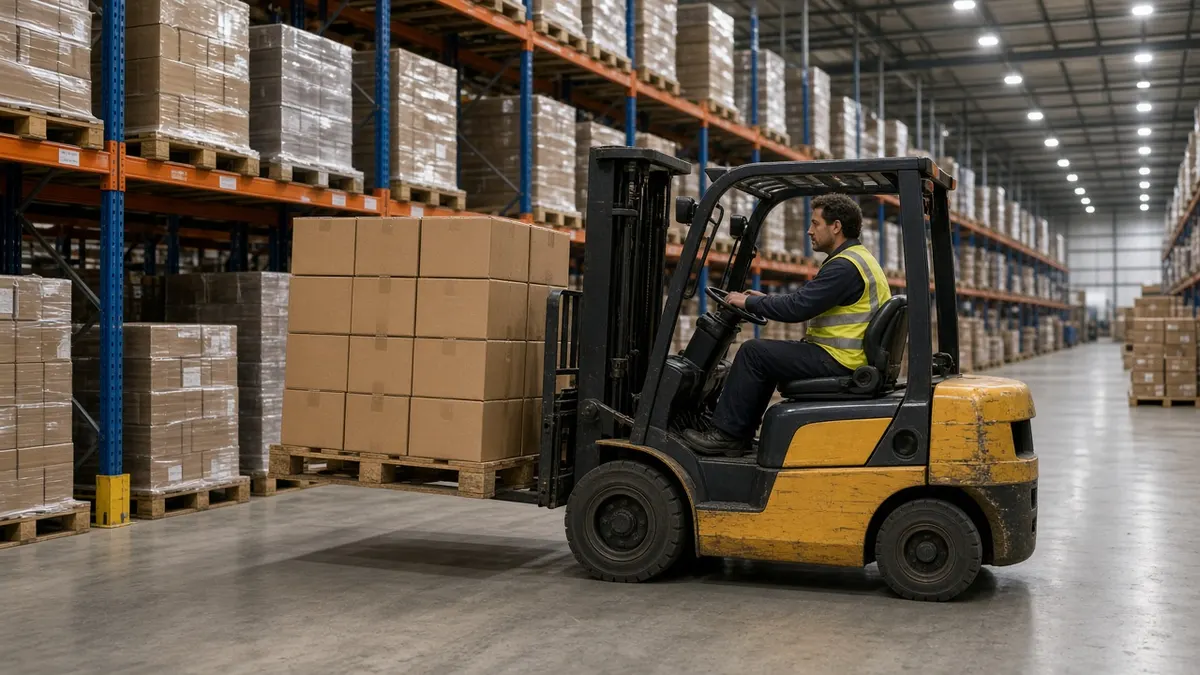
The forklift driver hourly rate in Australia is roughly $35–42/hr for a casual LF-licensed driver on day shift in 2026, $38–46/hr for reach-truck and high-reach work, and $42–52/hr on night shift. Hosts using labour hire are commonly billed $50–68/hr. These are indicative market observations; confirm award minimums on Fair Work.
This guide covers the award floor, shift penalties, the high-reach premium and what a driver really costs a warehouse once on-costs are added. Yakka Labour is the hiring marketplace, not the workwear brand with a similar name.
How much does a forklift driver make per hour in each city?
Rates move with freight volumes, shift pattern and how many licensed drivers are chasing work nearby. Western Sydney and south-east Melbourne distribution centres run the most shifts, so competition for reliable drivers keeps rates firm there. The bands below are what casual drivers are being offered directly, before super.
| City | Typical hubs | Casual LF day shift (AUD/hr) | Night shift (AUD/hr) |
|---|---|---|---|
| Sydney | Eastern Creek, Erskine Park, Moorebank | $37–45 | $44–54 |
| Melbourne | Dandenong South, Truganina, Somerton | $36–44 | $43–52 |
| Brisbane | Larapinta, Wacol, Eagle Farm | $35–43 | $42–51 |
| Perth | Kewdale, Welshpool, Canning Vale | $37–46 | $44–54 |
| Adelaide | Wingfield, Gepps Cross, Edinburgh Parks | $34–41 | $41–49 |
These are indicative 2026 market observations only. Permanent full-time drivers usually show a lower hourly figure than casuals because they receive paid leave instead of a casual loading.
Within each band, three things decide where a driver lands. First, experience on the specific machine: a driver who has only used a counterbalance in a yard is a different hire from one who has spent two years putting away pallets on a reach truck. Second, systems: drivers comfortable with RF scanners and a warehouse management system are productive from the first hour. Third, reliability: hosts pay more to keep drivers who turn up on time for every rostered shift, especially during peak periods such as the lead-up to Christmas and end of financial year sales.
What is the award rate for a forklift driver?
Most warehouse and distribution forklift drivers are covered by the Storage Services and Wholesale Award 2020. In its classification definitions, licensed operation of materials handling equipment is listed as a Storeworker grade 2 task, and operation of all materials handling equipment under licence appears at grade 3. The award's casual summary table from 1 July 2026 lists a grade 2 casual at $34.96/hr and a grade 3 casual at $35.96/hr for ordinary day hours, with the 25% casual loading already included.
Not every driver sits under that award. A driver employed by a manufacturer may fall under the Manufacturing and Associated Industries and Occupations Award, transport depots often use the Road Transport and Distribution Award, and a hotel's fork-lift driver is listed in the Hospitality Industry (General) Award. Sites with an enterprise agreement must pay at least the agreement rate. Rates change every July, so check the current figures in the Fair Work pay guides before you set a rate.
Do forklift drivers get paid more on nights and weekends?
Yes. Under the Storage Services and Wholesale Award, casual shiftworkers are paid a percentage of the minimum hourly rate that already folds in the casual loading. Using the grade 2 figures from the award's 1 July 2026 tables:
| Shift (casual, Storeworker grade 2) | % of minimum hourly rate | Award minimum (AUD/hr) |
|---|---|---|
| Ordinary day hours | 125% | $34.96 |
| Early morning shift (starts 2am–7am) | 137.5% | $38.46 |
| Afternoon shift (finishes after 6pm, by midnight) | 140% | $39.16 |
| Night shift (finishes after midnight, by 8.30am) | 155% | $43.35 |
| Saturday | 175% | $48.95 |
| Sunday | 225% | $62.93 |
| Public holiday | 275% | $76.92 |
These are award minimums from the consolidated award text, not market rates. The award also guarantees casuals at least 4 hours' engagement each start, so a 3-hour cover shift is still paid as 4. Freezer work below about minus 15 degrees attracts an extra hourly cold allowance under the same award.
Does a reach truck or high-reach licence pay more?
There is no separate reach-truck licence. SafeWork NSW describes two forklift classes of high risk work licence: LF for forklift trucks with a mast and fork arms, and LO for order-picking forklifts where the operator's controls rise with the load. Reach trucks are generally driven on an LF class. A licence lasts five years and applicants must be at least 18.
The premium comes from competence, not paperwork. Drivers who can put pallets away at 10–12 metres in narrow aisles without touching the racking, or who can run an order picker on an LO class, are harder to find. Expect roughly $3–6/hr above a counterbalance-only driver in the same suburb, as an indicative market observation. Sites with turret trucks or freezer rooms usually pay toward the top of the city band.
What does a forklift driver cost a business?
The worker's hourly rate is only part of the bill. Employers also pay superannuation guarantee at 12% of qualifying earnings, which since 1 July 2026 must reach the fund within seven business days of each payday under Payday Super, plus workers compensation premiums, payroll tax where the business is above its state threshold, and paid induction time. Agencies bundle these costs with a margin, which is why host bill rates of $50–68/hr for a day-shift LF driver are common.
Worked example: a distribution centre in Erskine Park needs three LF drivers for a two-week peak, 8 hours a day, Monday to Friday. That is 240 driver hours. At $38/hr agreed directly with each driver, wages come to $9,120, plus about $1,094 in super, before workers compensation and payroll tax. At a $58/hr agency bill rate, the same 240 hours cost $13,920 with on-costs included. The difference pays for what the agency handles; on the direct route those obligations sit with you. The full breakdown is in how much labour hire costs.
How do I hire a forklift driver on Yakka?
- Post the job with the suburb, shift times, machine type (counterbalance, reach or order picker), lift heights and whether an LF or LO class is required.
- State the AUD hourly rate for each shift type, including nights and weekends, so drivers can see what they will earn before they apply.
- Check licence photos and expiry dates on applicant profiles, then message shortlisted drivers to confirm experience with your racking height and equipment.
- Agree the rate in writing in the app, run your site induction and verification of competency, and pay through the platform.
Yakka is a marketplace, not a labour hire agency, so the rate is agreed directly with each driver and there is no agency margin on top of wages. Browse forklift drivers near you or see forklift drivers in Sydney.
How can forklift drivers earn at the top of the range?
Keep your LF licence current and add LO if local sites run order pickers. List the machines and lift heights you have worked with on your Yakka profile, and say whether you will work nights, because night availability is the quickest way into higher-paying shifts. Drivers who also hold a white card can pick up construction-site forklift work. Rates for related roles are in the warehouse casual pay rate guide, and training costs are covered in forklift licence cost.
Frequently asked questions
Do casual forklift drivers earn more per hour than permanent drivers?
Usually yes on the hourly figure. Casuals receive a 25% loading under most awards, including the Storage Services and Wholesale Award, in place of paid annual leave, personal leave and notice. A permanent driver on a lower hourly rate may end up with similar annual earnings once paid leave and public holidays are counted. Compare total annual pay, not just the hourly number.
How much does a forklift driver earn per year in Australia?
A full-time day-shift driver earning $35–42/hr across 38 hours a week grosses roughly $69,000–83,000 a year before overtime, as an indicative 2026 market observation. Night-shift drivers and those with regular weekend or overtime hours can earn more. Award minimums are lower, so check the Fair Work pay guide for the award that covers your workplace.
Can I drive a forklift on private property without a licence?
Generally no. SafeWork NSW states that a high risk work licence is needed for high risk work whether it is residential, commercial or industrial, regardless of the cost or size of the work. Forklift operation is listed high risk work, so the LF or LO class applies on private sites as well. Check your state regulator for any narrow exceptions.
Do forklift drivers need a white card?
Only if they work on a construction site. A white card, or general construction induction card, is required for construction work, including for people who routinely enter operational construction zones. Warehouse and distribution centre drivers do not normally need one, but holding a white card lets a driver accept forklift shifts on building sites as well, which widens the pool of available work.
What should a forklift driver job ad include?
List the suburb, start time, shift length, machine type and capacity, maximum lift height, licence class required, any freezer or night work, PPE supplied and the hourly rate for each shift type. Clear details cut down on no-shows and mismatched applicants. On Yakka you can post all of this in one job and message drivers directly before agreeing the rate.
Official sources
Award rates, licences and safety rules change. Check the official source before you hire or take on a shift.
- Fair Work Ombudsman — pay guidesMinimum award rates, casual loading and penalty rates
- Fair Work Commission: Hospitality Industry (General) Award 2020The full award text (MA000009), including classifications and Schedule B pay tables
- Fair Work Pay CalculatorWork out the minimum pay for a specific award and shift
- Safe Work AustraliaNational work health and safety framework, including high-risk work licences
- SafeWork NSWWhite cards, high-risk work licences and WHS rules in New South Wales
- Australian Taxation Office — super for employersSuperannuation guarantee obligations when you pay workers