Contracting
Can I Pay a Labourer Cash in Hand? (2026 Rules)
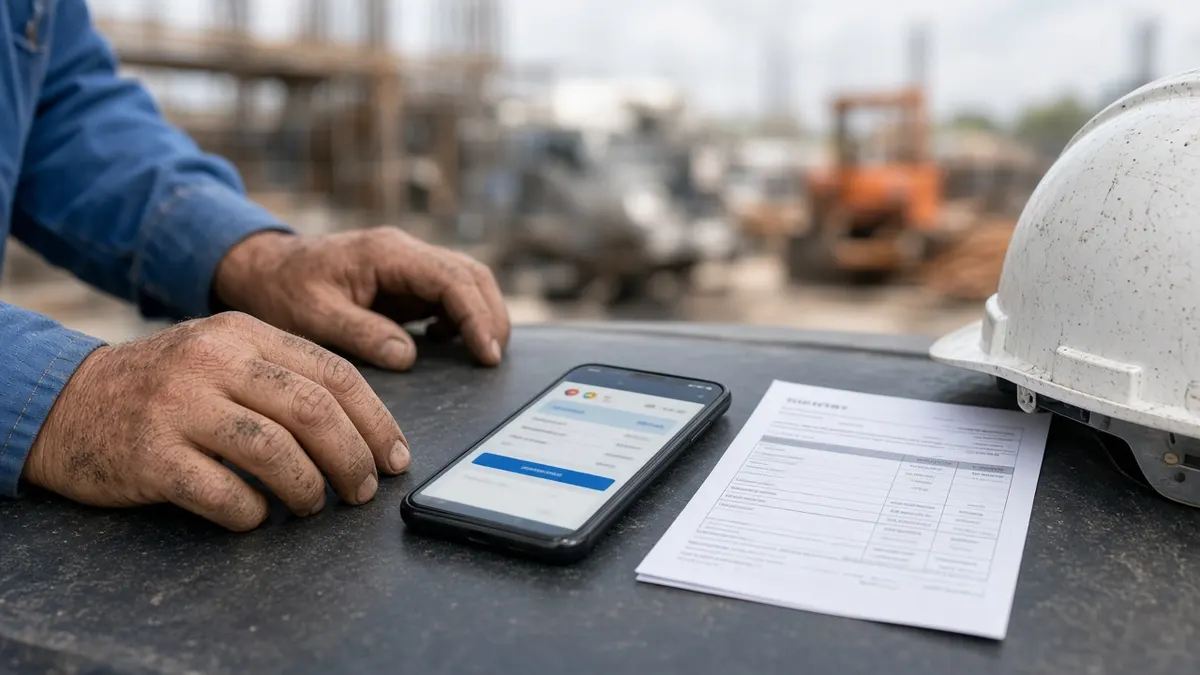
Can I pay a labourer cash in hand? Yes, paying wages in cash is legal in Australia, as long as you still withhold tax, report it to the ATO, pay super, issue a payslip and keep records. What is illegal is paying "off the books": cash with no tax, no super and no records.
Many people searching for a "cash rate for labourer" mean the second version: a lower, untaxed rate with no paperwork. This guide separates legal cash wages from off-the-books payments, explains the risks for builders and households, and covers faster legal ways to pay a labourer on the day. General information, not legal advice.
Is it legal to pay wages in cash in Australia?
Yes. The Fair Work Ombudsman's frequency of pay page confirms employees can be paid by cash, cheque or electronic funds transfer, or a combination. It recommends that when wages are paid in cash, the employer and employee sign a record of the amount paid each pay period.
The payment method is not the issue. The obligations around the payment are the same whether you use a bank transfer or an envelope:
- Withhold PAYG tax using the ATO tax tables and report each payday through Single Touch Payroll.
- Pay super guarantee at 12 per cent. Since 1 July 2026, under Payday Super, contributions must reach the employee's fund within 7 business days after each payday.
- Give a payslip within one working day of payday.
- Keep time and wages records for 7 years.
- Pay at least the award minimum, including casual loading, penalties and allowances.
- Hold workers compensation insurance that covers the worker.
Cash wages vs off the books: what is the difference?
| Item | Legal cash wages | Off-the-books cash |
|---|---|---|
| Tax withheld and reported | Yes | No |
| Super paid to the fund | Yes | No |
| Payslip and signed cash record | Yes | No |
| Award rates and loading | Yes | Often below |
| Workers compensation | Wages declared, worker covered | Wages hidden, claim disputes likely |
| Wage deduction for the business | Normally deductible | Deduction can be denied |
That last row surprises many builders. Since 1 July 2019, businesses generally cannot claim a tax deduction for payments to workers where they were required to withhold PAYG and failed to withhold or report it. The supposed saving can turn into a larger tax bill.
What are the risks of paying a labourer off the books?
For a builder or business:
- Tax and super: PAYG withholding penalties and the super guarantee charge, which adds interest, an administration fee and possible extra penalties of up to 200 per cent.
- Fair Work: underpayment claims for award rates, loading and penalties, plus civil penalties for missing payslips and records. Since 1 January 2025, intentional underpayment can be a criminal offence.
- Sham contracting: telling a labourer they are a contractor to justify cash payments can breach the Fair Work Act. See sham contracting explained.
- Injuries: if an off-the-books labourer falls from a trestle, the business may face a workers compensation claim for wages it never declared, with back-premiums and penalties.
For the worker, the costs are just as real: no super, no proof of income for a rental or car loan, no payslips to support a workers compensation claim and, for visa holders, records that may not show compliant work. The ATO describes this as the shadow economy and says it leaves workers missing out on proper wages, leave and protections.
Paying visa holders and students in cash
Visa holders have the same workplace rights as any other worker, and the same payroll rules apply to them. Off-the-books cash creates extra problems here: a student or working holiday maker needs payslips to show their hours and earnings, and a working holiday maker counting specified work toward a second visa generally needs payslips as evidence. A business that hides those hours also has no record to show it respected any work limits that apply to the visa. Pay through payroll, issue payslips and keep the records for 7 years.
How the ATO finds off-the-books labour
Single Touch Payroll reports, super fund data, bank records, taxable payments annual reports from builders and tip-offs all feed the ATO's data matching. A labourer who later lodges a tax return, applies for a loan or makes a workers compensation claim leaves a trail that can be compared against the business's reported wages.
Do construction workers get paid in cash?
Some still do, legally, particularly on small residential jobs where the builder pays in cash and provides a payslip. Most paid work in construction now runs through payroll and bank transfer because Single Touch Payroll, Payday Super and banking records make cash harder to administer. On larger commercial sites, head contractors routinely audit subcontractor payroll, so off-the-books labour is a quick way to lose a contract.
What does a legal cash payment look like?
A worked example: a builder in Rouse Hill engages a casual labourer for one 8-hour day at an agreed $40 an hour, including casual loading, after checking the award pay guide.
- Gross pay: 8 × $40 = $320.
- Withhold tax using the ATO tax table that matches the worker's TFN declaration (the amount depends on whether they claim the tax-free threshold) and hand over the net amount in cash.
- Both sign a cash record showing gross, tax and net.
- Issue a payslip that day or the next working day and report the pay event through Single Touch Payroll.
- Send super of $38.40 (12 per cent of $320) to the worker's fund within 7 business days.
Check minimum rates on the Fair Work pay guides; the $40 figure above is an indicative 2026 market rate, not a legal minimum. Our how to pay labourers guide walks through payroll setup.
Can a homeowner pay a labourer cash for a one-off job?
It depends on who you are hiring. Paying a genuine business, such as a rubbish removal operator or gardener with an ABN who quotes and invoices the job, in cash is fine. Keep the invoice. If you directly hire someone to work under your direction by the hour, you may be their employer, and state workers compensation rules for household workers can apply. Queensland, for example, requires a household worker policy when you directly employ someone to work in or around your home.
What are the fastest legal ways to pay a labourer?
- Same-day bank transfer: fast payments through PayID usually land in minutes, with a clear record.
- Weekly payroll: the Building and Construction General On-site Award requires wages to be paid by Thursday of each working week, and payroll software handles tax, Single Touch Payroll and super together.
- Platform payments: paying through a hiring marketplace keeps the agreed rate, hours and payment in one record.
Paying workers through Yakka
Yakka Labour is a hiring marketplace, not the workwear brand with a similar name. Hirers post a job with the suburb, start time, tickets and rate, agree the rate with the worker in writing and pay through the platform, with no agency margin added to wages. Yakka is not an employer or payroll provider, so the hirer remains responsible for any tax withholding, super and workers compensation that the engagement requires.
Hire a labourer for a day · Hire labourers on Yakka · Download the Yakka app
Frequently asked questions
What is a typical cash rate for a labourer?
There is no legal "cash rate". A labourer paid in cash as an employee must receive at least the award rate plus casual loading, with tax withheld and super paid. Indicative 2026 market observations put casual general labourers at roughly $34–45 an hour, but confirm the minimum for the classification on the Fair Work pay guides before agreeing a rate.
Is it illegal to accept cash in hand as a worker?
Receiving wages in cash is not illegal. The problem is undeclared income. Workers must still report all income in their tax return, and if the employer has not withheld tax, the worker may face a tax bill later. Workers paid off the books also miss super and may struggle to prove their earnings for a workers compensation claim or loan.
How do I report an employer paying cash off the books?
You can make a tip-off to the ATO, anonymously if you prefer, about businesses not reporting wages or paying super. For underpayment of wages, missing payslips or sham contracting, contact the Fair Work Ombudsman on 13 13 94. Keep your own record of dates, hours, sites and amounts received, because it helps any investigation.
Do I need to give a payslip if I pay cash?
Yes. Employers must give a payslip within one working day of payday regardless of how wages are paid. The Fair Work Ombudsman also recommends that both parties sign a record of the cash amount each pay period. Payslips must show details such as the pay period, hours, gross and net pay, tax withheld and super contributions.
Can I pay a labourer cash if they have an ABN?
You can pay a genuine contractor in cash against an invoice. But an ABN does not make a labourer a contractor. The ATO treats labourers as employees for tax and super, so paying a labourer on an hourly rate in cash with no withholding because they supplied an ABN can still leave you liable for PAYG, super and penalties.
Official sources
Award rates, licences and safety rules change. Check the official source before you hire or take on a shift.
- Fair Work Ombudsman — pay guidesMinimum award rates, casual loading and penalty rates
- Fair Work Pay CalculatorWork out the minimum pay for a specific award and shift
- Australian Taxation Office — super for employersSuperannuation guarantee obligations when you pay workers