Careers
What Tools Does a Labourer Need? (2026 Starter Kit)
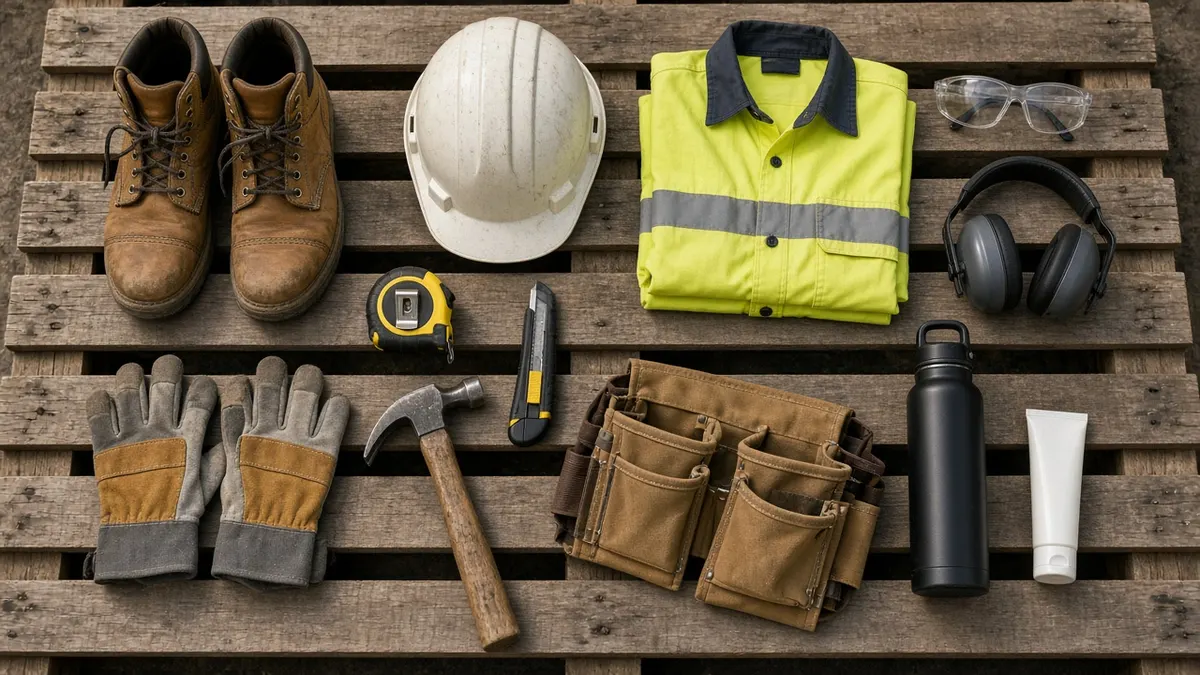
A labourer needs PPE first (safety boots, hi-vis, a hard hat, safety glasses, gloves and hearing protection), then a small hand-tool kit: tape measure, utility knife, hammer, pencil, tool belt and a few basics. Budget roughly $300–650 for a solid starter kit. Most hirers supply power tools, plant and job-specific gear. That's what tools a labourer needs on day one.
Below is the full kit with indicative prices, what hirers usually supply, the standards to look for and what to leave in the shop until a job calls for it. Yakka Labour is the hiring marketplace, not the workwear brand with a similar name.
Do labourers need their own tools?
Mostly no, apart from personal kit. On a typical employee or casual labouring job, the hirer supplies the power tools, ladders, wheelbarrows, shovels, plant and consumables. You're expected to turn up with your own boots, work clothes and a basic tool belt. Three things change that:
- ABN contractors are usually expected to bring more of their own gear, and price it into their rate. Our guide can a labourer have an ABN explains when that arrangement is genuine.
- Trade-assist roles such as carpenter's or tiler's labourer often need a slightly bigger personal kit.
- Short one-day jobs for households may expect you to bring basics like gloves, a shovel or a broom, so ask.
Agree in writing before the first shift who supplies what. It avoids an awkward first morning.
What PPE does a labourer need, and who pays for it?
Under the WHS laws, the business that directs the work provides the PPE workers need, unless the labour hire company already provided it, and workers must use it as instructed. Safe Work Australia's PPE page sets this out. In practice most labourers still buy their own boots and a couple of sets of work clothes, because fit and comfort matter and sites don't keep every size. Hard hats, glasses, earplugs, dust masks and task-specific gloves are commonly supplied.
When buying, look for the Australian Standard on the label:
- Safety footwear: AS/NZS 2210.3.
- Hi-vis clothing: AS/NZS 4602.1. Day/night garments with reflective tape suit early starts and night works.
- Hard hats: AS/NZS 1801.
- Safety glasses: AS/NZS 1337.1.
The labourer starter kit, with indicative prices
| Item | Why you need it | Indicative 2026 price | Usually supplied by |
|---|---|---|---|
| Safety boots (steel or composite cap) | Required on every construction site | $120–250 | You |
| Hi-vis shirts (two or three) | Site visibility, day and night | $25–50 each | You or hirer |
| Work pants and a waterproof jacket | Durability and wet days | $60–150 | You |
| Hard hat | Mandatory on most building sites | $20–45 | Often hirer |
| Safety glasses (clear and tinted) | Cutting, grinding, dust and sun | $10–30 | Often hirer |
| Gloves (general and cut-resistant) | Handling timber, steel and rubble | $10–30 | Either |
| Earplugs or earmuffs | Saws, jackhammers, compactors | $5–40 | Often hirer |
| Tool belt or pouch | Keeps hand tools on you | $40–100 | You |
| 8 m tape measure | Measuring and setting out | $20–45 | You |
| Utility knife and spare blades | Opening packaging, cutting plastic and membrane | $15–30 | You |
| Claw hammer | Stripping formwork, nails, general use | $25–60 | You |
| Carpenter's pencils and a marker | Marking cuts and labels | $5–10 | You |
| Water bottle and sunscreen | Heat and UV on outdoor sites | $15–40 | You |
These prices are indicative observations from major hardware and workwear retailers. You can start at the lower end and upgrade boots first, because cheap boots are the item most likely to fail or cause sore feet.
What steel cap boots are best for labouring?
The best boots are the ones that meet AS/NZS 2210.3, fit well and suit the work:
- Lace-up boots give better ankle support on uneven ground, trenches and scaffolds. Many civil and tier-one sites now require them.
- Elastic-sided (pull-on) boots are quicker to get on and off, but some sites ban them. Check before you buy.
- Composite caps are lighter than steel and don't conduct cold or heat. Steel caps are cheaper and just as protective when they meet the standard.
- Soles: look for slip and heat resistance for concrete, bitumen or wet sites, and penetration-resistant midsoles for demolition.
Budget to replace boots once or twice a year if you're on site full time.
Labourer tools by type of job
The core kit covers most jobs. Add these depending on where you work:
- Construction and carpentry assist: nail bag, chalk line, speed square, cat's paw, string line.
- Concreting: gumboots, a wooden float, an edging trowel and knee pads. Concreters supply screeds and power trowels.
- Landscaping: sturdy gloves, knee pads, a spirit level and string line. The hirer usually supplies the shovels, mattocks and wheelbarrows.
- Demolition and strip-out: P2 dust mask (often supplied), cut-resistant gloves, wrecking bar and a puncture-resistant midsole in your boots.
- Warehouse and pick-pack: safety boots, hi-vis, a box cutter and a marker. Little else is needed.
- Civil and traffic-adjacent work: day/night hi-vis with reflective tape, a waterproof jacket and pants, a head torch for night works, and gumboots for drainage jobs. Traffic management companies supply bats, radios and signs.
A worked example: a new labourer starting with a residential builder in Rouse Hill might spend about $180 on lace-up composite-cap boots, $90 on three hi-vis shirts, $70 on work pants and $110 on a belt, tape, knife, hammer and pencils. That's roughly $450, with the builder supplying the hard hat, glasses, earplugs, wheelbarrows and power tools.
Tool belt checklist for your first day
- Tape measure clipped on the strong side.
- Utility knife with the blade retracted and spare blades.
- Hammer in a loop, not loose in a pouch.
- Two pencils and a marker.
- Gloves tucked in a back pocket or clipped to the belt.
- Phone in a zipped pocket, earplugs, sunscreen and water nearby.
- White card and any licences in your wallet, or digital copies on your phone.
What not to buy yet
Spend your first pay on better boots and wet-weather gear, not tools. A labourer who turns up dry, comfortable and on time every day gets asked back. One with an expensive drill and cheap boots that leak usually doesn't. If you're moving towards a trade, ask the tradies you work with which brand of battery platform they use before you buy, so your tools and batteries are interchangeable with the crew's.
Hold off on cordless drill kits, saws, grinders and laser levels until you know what your regular work needs. Hirers usually supply power tools and want them tagged and tested under their own systems. Keep receipts for anything you buy, because some work tools and protective items can be claimed on tax. The ATO's tools and equipment page explains the rules.
How to find labouring work on Yakka
Create a free Yakka worker profile, list your tickets and the kit you bring (for example, "own boots, PPE and hand tools, white card, car"), and apply for jobs near you. Hirers post the suburb, start time, tickets needed and an AUD rate, and message workers directly. Yakka is a marketplace, not an employer, so you and the hirer agree what you'll supply. If you're starting out, read construction jobs with no experience and the labourer job description. Lost your card? See white card replacement.
Frequently asked questions
Does my employer have to pay for PPE?
Under the WHS laws, the business directing the work must provide the personal protective equipment workers need, unless a labour hire company has already provided it, and workers must use it as instructed. Many labourers still choose to buy their own boots and work clothes for fit and comfort. Ask the hirer what they supply before your first shift.
Are rigger boots allowed on construction sites?
Many sites now ban pull-on rigger and elastic-sided boots and require lace-up safety boots that meet AS/NZS 2210.3, because laces give better ankle support. Rules differ between builders and between residential and commercial work. If you only own pull-on boots, check with the supervisor before your first day so you are not sent home at induction.
Should a new labourer buy a cordless drill?
Not straight away. Most hirers supply power tools that have been tested and tagged under their own systems, and they may not want personal tools on site. Wait until you know what your regular work involves. If you move into carpentry assist or handyperson work, a compact drill and driver kit becomes worth the money.
What gloves are best for labouring?
Keep two types. General-purpose nitrile-coated gloves work for carrying, cleaning and landscaping, and cut-resistant gloves suit sheet metal, glass, demolition and handling steel. For concreting and wet work, choose gloves rated for chemicals or water. Gloves wear out quickly on site, so buy them in packs rather than one pair at a time.
Can I claim my work boots and tools on tax?
Some work-related protective clothing, footwear and tools can be claimed if you paid for them yourself, were not reimbursed and use them for work. The amount and timing depend on the cost and on current ATO rules, which change between financial years. Keep receipts and check the ATO website or a registered tax agent before lodging.
Official sources
Award rates, licences and safety rules change. Check the official source before you hire or take on a shift.
- Safe Work AustraliaNational work health and safety framework, including high-risk work licences
- Australian Taxation Office — super for employersSuperannuation guarantee obligations when you pay workers