Contracting
Public Liability Insurance for Labourers (2026 Guide)
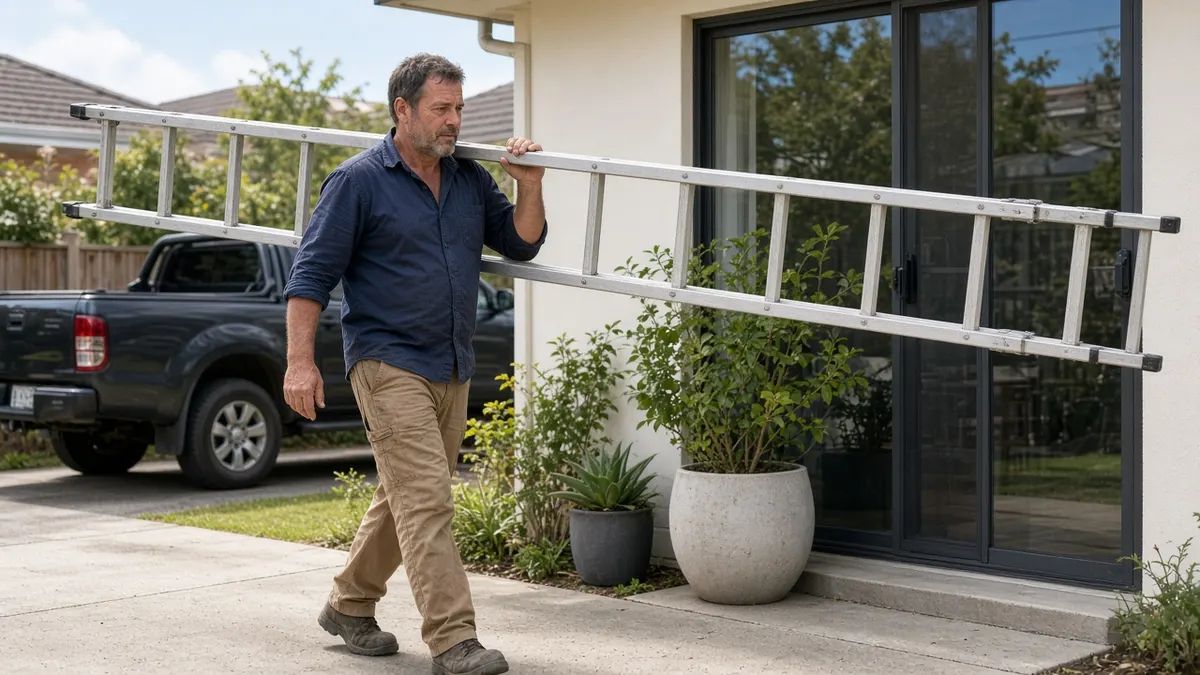
Public liability insurance for a self-employed labourer covers your legal liability if your work injures someone else or damages their property, such as a client's window cracked by a wheelbarrow or a passer-by tripping on your materials. It does not cover your own injuries or tools. Most labourers carry $5 million to $20 million of cover.
It is not legally required for most labouring work, but many builders, councils, property managers and commercial sites will not let you start without a certificate of currency. This guide explains what the policy does, what it leaves out, typical cover levels and indicative costs. General information, not legal advice.
What does public liability insurance cover?
business.gov.au describes public liability insurance as cover if someone dies, gets injured or has their property damaged because of your negligence. It may cover injury or death, emotional distress or a recognised psychiatric illness, property damage and consequential loss.
For a labourer or handyman, typical claims look like this:
- A homeowner in Carlingford slips on wet render you left on the path and breaks a wrist.
- You reverse a skip trolley into a neighbour's fence while clearing a backyard in Moorabbin.
- Your brick cutter's dust damages a client's newly installed air-conditioning unit.
- A falling offcut cracks a parked car's windscreen next to a site in Fortitude Valley.
The policy usually pays legal defence costs as well as compensation, up to the limit you choose.
What does public liability not cover?
| Risk | Covered by public liability? | What usually covers it |
|---|---|---|
| Injury to a member of the public or client | Yes | Public liability |
| Damage to someone else's property | Yes, subject to exclusions | Public liability |
| Your own injury while working | No | Personal accident and illness or income protection |
| Injury to your employees | No | Workers compensation (compulsory if you employ) |
| Theft or damage to your tools | No | Portable equipment or tools insurance |
| Cost of redoing your own faulty work | Usually no | Contract works cover or your own pocket |
| Vehicle accidents on the road | No | CTP and motor vehicle insurance |
The second row matters most for sole traders. icare NSW says sole traders cannot cover themselves under workers compensation, and business.gov.au says the same nationally, recommending accident and sickness cover instead. A self-employed labourer who hurts their back has no public liability claim; only personal cover replaces their income.
Do labourers need public liability insurance by law?
Generally not. business.gov.au notes that some states and territories require public liability for certain occupations, and licensed trades often face insurance conditions, but there is no general legal requirement for a labourer or handyman doing unlicensed work.
In practice it is often a condition of getting work:
- Builders engaging genuine subcontractors usually ask for a certificate of currency for $10 million or $20 million.
- Commercial sites, shopping centres and strata managers commonly require $10 million or $20 million and may want to be noted on the policy.
- Councils and government contracts often specify minimum cover in the tender.
Remember that a labourer working as a casual employee is covered by the employer's insurance and workers compensation, not their own. Personal public liability matters when you genuinely run your own business. See can a labourer have an ABN for where that line sits.
How much is public liability insurance for a labourer in NSW and elsewhere?
Premiums depend on your trade description, turnover, claims history, the cover limit, the excess and whether you do any work at height or with plant. Indicative 2026 market observations from Australian online quote tools for a sole-trader labourer or handyman with no claims (not quotes, and they vary by insurer):
| Cover limit | Indicative annual premium (AUD) | Common use |
|---|---|---|
| $5 million | $350–700 | Residential odd jobs, gardening, rubbish removal |
| $10 million | $450–950 | Most builder and property manager requirements |
| $20 million | $650–1,400 | Commercial sites, shopping centres, government work |
Premiums in NSW are broadly in line with other states, though stamp duty and fire services levies vary. Describing your work accurately matters: a policy written for "garden maintenance" may not respond to a claim from demolition or scaffolding work.
Should a labourer choose $5 million, $10 million or $20 million cover?
Choose the limit your best clients ask for, not the cheapest one. Start by listing the work you want over the next year:
- $5 million suits residential odd jobs for homeowners who do not ask for paperwork: yard clean-ups, green waste, flat-pack assembly, moving furniture.
- $10 million is the most common requirement from residential builders, real estate agencies and property managers. If you want regular work from them, this is the practical minimum.
- $20 million is typical for commercial fit-outs, shopping centres, schools, hospitals and many council and government jobs.
The price gap between levels is usually smaller than people expect, because the insurer's risk depends more on what you do than on the limit. A labourer in Liverpool who quotes $5 million cover, then wins a strip-out on a commercial site in Parramatta, often finds the head contractor will not induct them until the certificate shows $20 million. Upgrading mid-year is possible but means a pro-rata adjustment and some delay.
Also check the excess. A $500 excess keeps the premium low but means you pay small claims, such as a cracked pane of glass, yourself. Read the exclusions for work at height, hot works (grinding and welding), demolition and asbestos, because these are common sticking points for labourers.
Does a handyman need insurance?
A handyman doing small unlicensed jobs is not usually required by law to hold public liability, but most clients and agencies expect it. Licensed work is different: once a job crosses state licensing thresholds or involves electrical, plumbing or gas work, licence and insurance conditions apply. Our guide to whether a handyman needs a licence covers those thresholds.
What are the risks of hiring a handyman without insurance?
If an uninsured handyman damages your property or a neighbour's, you may have to chase them personally for the cost, and your own home insurance may or may not respond. If they injure themselves, the question of whether they were your worker under state workers compensation law can arise, especially for regular, hourly work. Before work starts, a homeowner or builder should:
- Ask for a current certificate of currency and check the insured name, limit and expiry date.
- Check the trade description matches the job.
- Confirm whether they employ anyone and, if so, hold workers compensation.
- Keep a copy with the job records.
How to find insured labourers on Yakka
Yakka Labour is a hiring marketplace where hirers post jobs and workers apply directly. It is not the workwear brand with a similar name. Yakka is not an employer, insurer or labour hire agency, so insurance checks are part of the hirer's own process.
- Post your job with the suburb, scope, start time and rate, and state any insurance you require.
- Ask applicants to share their certificate of currency in the job thread.
- Agree the scope and price in writing, then pay through the platform on completion.
Workers running their own business can list their cover on their Yakka profile so hirers see it upfront.
Hire a handyperson on Yakka · Hire labourers · Download the Yakka app
Frequently asked questions
Is public liability insurance tax deductible for a sole trader?
Generally yes. Insurance premiums paid to earn business income, such as public liability for a self-employed labourer or handyman, are usually deductible in the year they relate to. Income protection has different rules. Keep the policy schedule and receipts, and check your situation with a registered tax agent or the ATO.
What is a certificate of currency?
A certificate of currency is a one-page document from your insurer confirming that your policy is active. It shows the insured name, policy type, cover limit, period of insurance and sometimes the business activity covered. Builders, strata managers and commercial sites usually ask for it before you start, and some ask to be noted as an interested party.
Can I get public liability insurance for one job only?
Some insurers offer short-term or single-event policies, mostly for markets and events. For labouring and handyman work, annual policies are far more common and often cost little more than a short-term policy. If a builder needs cover for one job only, ask an insurer or broker whether an annual policy with monthly payments suits better.
Does public liability cover work done by my subcontractor?
Not automatically. Many policies exclude or limit claims arising from subcontractors unless they hold their own cover. If you pass part of a job to another person, ask for their certificate of currency and check your policy wording. Uninsured subcontractors are a common reason claims are reduced or declined.
Does a casual labourer need their own public liability insurance?
Usually not. A casual employee works in the employer's business, so the employer's insurance and workers compensation policy apply to their work. Personal public liability becomes relevant when a labourer genuinely runs their own business, quotes jobs and works for multiple clients under an ABN.
Official sources
Award rates, licences and safety rules change. Check the official source before you hire or take on a shift.
- Asbestos Safety and Eradication AgencyWhere asbestos is found in homes and how to deal with it safely
- Australian Taxation Office — super for employersSuperannuation guarantee obligations when you pay workers