Tickets
Confined Space Ticket (2026): Units, Cost and Expiry
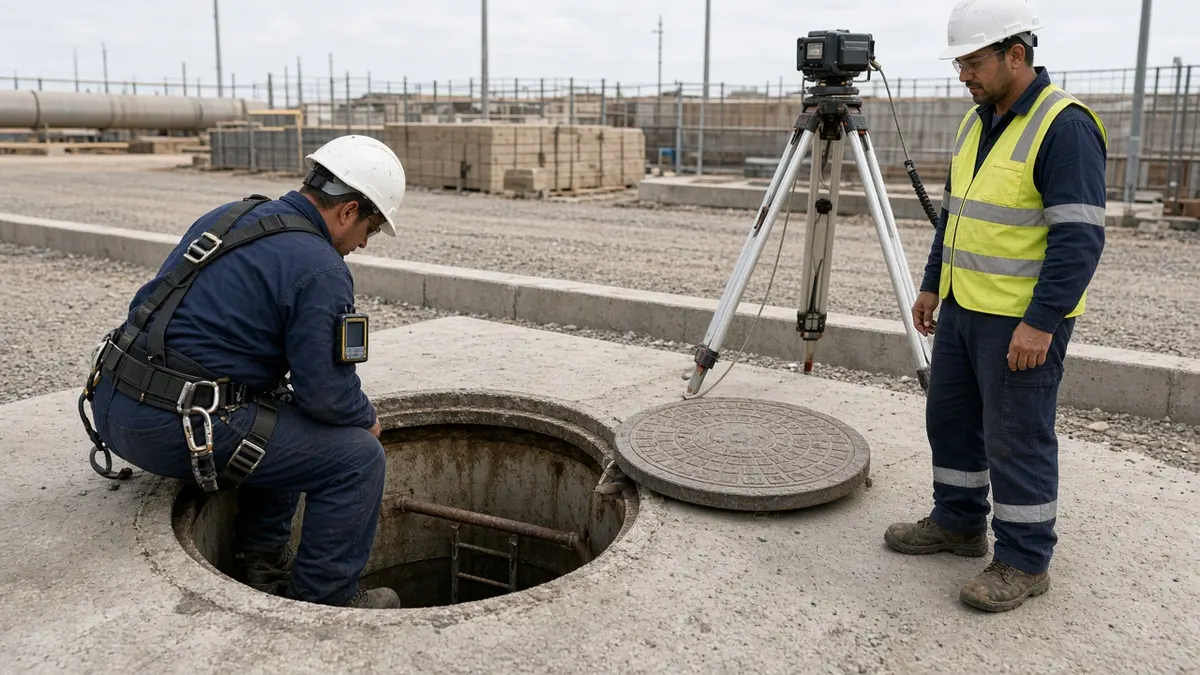
A confined space ticket is a statement of attainment for a nationally recognised unit, usually RIIWHS202 Enter and work in confined spaces or MSMPER205 Enter confined space, often paired with MSMWHS217 Gas test atmospheres. It is training, not a government licence. No law sets an expiry date, but many sites require refresher training every one to two years.
Below: which units count, how long a ticket lasts, typical course costs, who needs one and the hirer's duties before any entry. Yakka Labour is the hiring marketplace, not the workwear brand with a similar name. General information, not legal advice.
What counts as a confined space?
Under the model WHS Regulations, a confined space is an enclosed or partly enclosed space that isn't designed or intended mainly for people to be in, is at normal atmospheric pressure while someone is inside, and poses a risk from an unsafe oxygen level, airborne contaminants, flammable gases or engulfment. Common examples on labour jobs:
- Stormwater and sewer pits, manholes and pipes
- Water tanks, rainwater tanks and septic tanks
- Silos, hoppers and grain bins on farms
- Ducts, vats, boilers and pressure vessels in plants
- Tunnels, shafts and some trenches or pits that trap fumes
A space doesn't stop being confined because it is large or has a ladder. The test is the hazard, not the size.
Which units of competency make up a confined space ticket?
There is no single national confined space card. Employers ask for specific units from training.gov.au, and the right one depends on your industry.
| Unit | Title | Typical users |
|---|---|---|
| RIIWHS202 | Enter and work in confined spaces | Civil, construction, water and resources workers. Current since 2 September 2026. |
| RIIWHS202E | Enter and work in confined spaces (previous version) | Superseded by RIIWHS202 and marked equivalent, so existing statements still show the same competency |
| MSMPER205 | Enter confined space | Manufacturing, process plants, maintenance crews |
| MSMWHS217 | Gas test atmospheres | Anyone who tests the atmosphere before and during entry |
| MSMPER200 | Work in accordance with an issued permit | Workers on permit-to-work sites, often bundled with entry |
| MSMWHS216 | Operate breathing apparatus | Entrants in spaces where supplied air is needed |
Check any unit code on training.gov.au. If a job ad still lists RIIWHS202E, a statement for RIIWHS202 satisfies it, and the reverse also applies because the units are equivalent.
Does a confined space ticket expire?
Not by law. The statement of attainment never expires. The model Code of Practice for confined spaces says retraining or refresher training should be given as appropriate for the workplace, and that how often depends on how frequently workers enter or work in confined spaces. Records of confined space training must be kept for two years.
In practice, principal contractors, councils and water utilities set their own refresher rules, and one to two years is common. A worker who enters pits every week may only need a site-specific briefing. One who last went in three years ago should expect to redo the course before a site accepts them. Ask the hirer what they require before you turn up.
Keep a copy of every statement of attainment and the date you last entered a confined space at work. When a site asks how current your training is, a dated record of recent entries, permits you worked under and the gas detector models you used is far more convincing than an old certificate on its own.
How much does a confined space course cost?
RTOs set their own prices. As indicative 2026 market observations:
- Entry only (RIIWHS202 or MSMPER205): roughly $250–450, usually one day.
- Entry plus gas testing (adding MSMWHS217): roughly $400–750, one to two days.
- Refresher: often cheaper than the full course if you hold a recent statement.
- Breathing apparatus add-on: extra cost and time. Only take it if your work needs it.
Confined space ticket in NSW
SafeWork NSW does not issue a confined space licence or card. In NSW, as in other states, the ticket is the statement of attainment from an RTO, and the legal duties sit with the business under Part 4.3 of the NSW Work Health and Safety Regulation 2025 and the NSW confined spaces Code of Practice. Any RTO with the unit on its scope can deliver the course in Sydney, Newcastle or Wollongong, and many run it at their own training pits. What changes between sites is the hirer's own rules: a Sydney Water contractor or a tier-one civil builder will often have its own refresher period and site induction on top of the national unit.
Group bookings for a whole crew are often discounted, and some providers run courses on site using your own pits or tanks. Ask whether the price includes practical assessment, because online theory alone won't give you the competency.
Who needs a confined space ticket?
Anyone who enters a confined space, acts as the standby person, issues or signs entry permits, or tests the atmosphere needs training for that role. On labour hire jobs that typically means:
- Civil labourers working in stormwater and sewer pits with plumbing crews
- Tank cleaners and industrial cleaners
- Electricians and data cablers in underground pits
- Farm hands cleaning out silos and grain bins
- Maintenance labourers in food, beverage and chemical plants
A white card is separate and still required on construction sites. A working at heights ticket is often requested too, because vertical entries usually involve a harness and tripod.
What must hirers do before sending anyone into a confined space?
The training is only half of it. Under the WHS Regulations the business running the job must:
- Avoid entry if the work can be done from outside, for example with cameras or long-handled tools.
- Have a competent person carry out and record a risk assessment.
- Issue a written entry permit for each entry, naming the space, the entrants, the time period and the controls.
- Test the atmosphere for oxygen, flammable gases and harmful contaminants, and keep monitoring.
- Station a trained standby person outside, with communication and rescue arrangements in place.
- Put up signs at each entry and keep permits and risk assessments for the required period.
A Parramatta builder hiring two labourers to clean a stormwater pit, for example, needs both workers trained, a gas detector on site, a permit filled out before entry and one of them stationed at the top the whole time. SafeWork NSW's confined spaces page links the NSW code and regulation.
How to find or hire confined-space-trained workers on Yakka
Workers add their confined space, gas test and other tickets to a free profile in the Yakka app so hirers can filter for them. Hirers post the job with the suburb, start time, the units required and an AUD rate, then message workers and agree terms directly. Yakka is a marketplace, not an employer, so the hirer stays responsible for site safety, permits and supervision. For general crew, see general labourers or plumbers, and read labour hire compliance in Australia for the wider duties.
Frequently asked questions
Can I do confined space training fully online?
No. You can complete some theory online with certain providers, but units such as RIIWHS202 and MSMPER205 require a practical assessment of entry procedures, permits, gas testing equipment and rescue arrangements. A certificate earned without a hands-on component is unlikely to be accepted by principal contractors or utilities. Look for a course that combines online theory with a face-to-face practical session.
Is a confined space ticket the same as a gas test ticket?
No. Entry units such as RIIWHS202 cover working safely inside a confined space, while MSMWHS217 Gas test atmospheres covers using and checking a gas detector to measure oxygen, flammable gases and toxic contaminants. Many courses bundle both. If you will be the person testing the air before entry, ask for the gas testing unit as well as the entry unit.
What does a confined space standby person do?
The standby person stays outside the space for the whole entry, keeps in contact with the people inside, monitors conditions and starts the emergency procedure if something goes wrong. They must be trained for the role and must not enter the space to attempt a rescue unless that is part of a planned rescue procedure. Hirers often need a second trained worker just for this.
Is my old RIIWHS202E statement still valid?
Yes. Statements of attainment do not expire, and training.gov.au lists RIIWHS202 as superseding and equivalent to RIIWHS202E from September 2026. The practical question is recency. Many sites want confined space training within the last one or two years, so if your statement is older, expect the hirer to ask for a refresher or a site-specific assessment.
How long does a confined space course take?
An entry-only course usually runs for one day. Adding gas testing typically makes it a one to two day course, and breathing apparatus adds more time. Refreshers for workers with recent training can be shorter. Allow extra time to get the statement of attainment issued if the hirer needs to see it before your first shift.
Official sources
Award rates, licences and safety rules change. Check the official source before you hire or take on a shift.
- Safe Work AustraliaNational work health and safety framework, including high-risk work licences
- SafeWork NSWWhite cards, high-risk work licences and WHS rules in New South Wales