Tickets
EWP Licence (2026): Yellow Card vs WP High Risk Licence
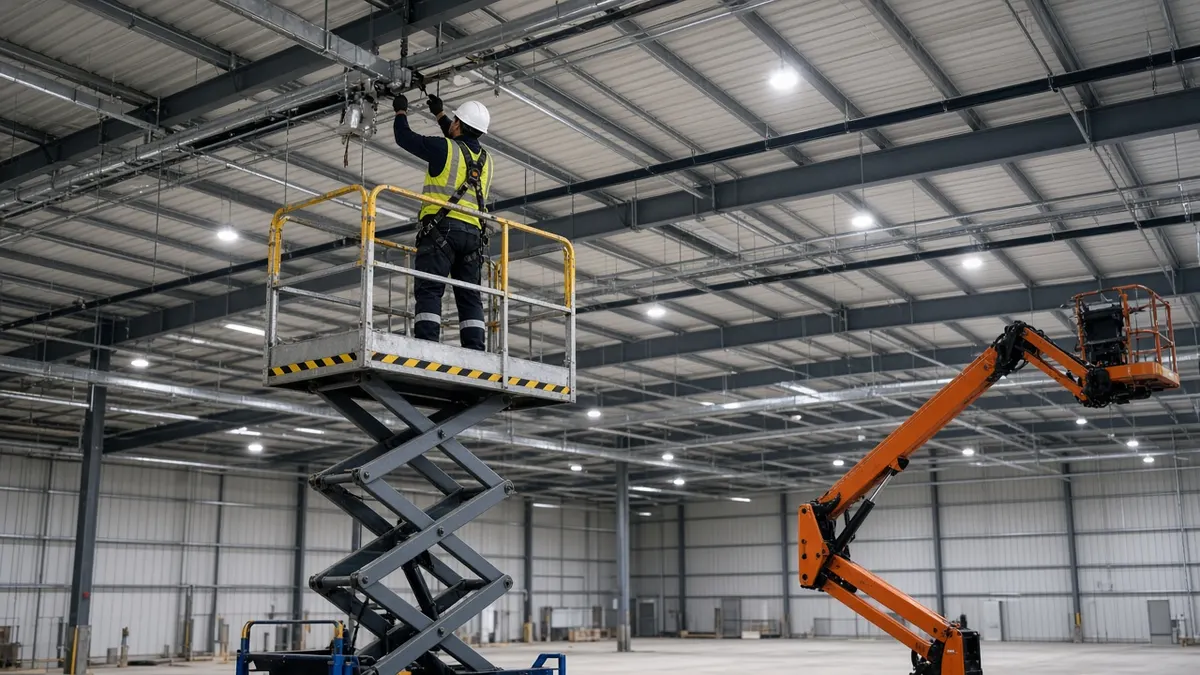
Whether you need an EWP licence depends on the machine. A boom-type elevating work platform with a boom of 11 metres or more needs a WP high risk work licence (unit TLILIC0005). Scissor lifts, vertical lifts and booms under 11 metres need training, not a licence, and the industry standard is the EWPA Yellow Card.
Here's how to tell which applies, what each costs, how renewal works and what hirers should check. Yakka Labour is the hiring marketplace, not the workwear brand with a similar name. General information, not legal advice.
What is an EWP licence?
An elevating work platform (EWP or MEWP) is a machine that lifts people, tools and materials to a working position: scissor lifts, vertical mast lifts, trailer-mounted booms, truck-mounted booms and self-propelled knuckle or telescopic booms. "EWP licence" gets used loosely for two different things:
- WP high risk work licence: a government licence issued by your state WHS regulator. It's required for boom-type EWPs where the boom length is 11 metres or more.
- EWPA Yellow Card: an industry training card from the Elevating Work Platform Association for EWPs that don't need a high risk licence.
SafeWork NSW measures boom length as the longer of two distances with the platform fully extended: the vertical distance from the supporting surface to the platform floor, or the horizontal distance from the centre of the boom's rotation to the outer edge of the platform. A boom advertised as "10 m working height" can still have a boom length that crosses the line, so check the manufacturer's specifications.
Yellow card vs high risk licence: which do you need?
| Machine | What's required | Training | Issued by | Renewal |
|---|---|---|---|---|
| Boom-type EWP, boom 11 m or more | WP high risk work licence | TLILIC0005 with an RTO, then an accredited assessment | State WHS regulator | Every 5 years |
| Boom-type EWP under 11 m | Training and familiarisation, no licence | EWPA Yellow Card (BL module) or RIIHAN301E | EWPA accredited trainer or RTO | Yellow Card every 5 years |
| Scissor lift (any height) | Training and familiarisation, no licence | Yellow Card (SL module) or RIIHAN301E | EWPA accredited trainer or RTO | Yellow Card every 5 years |
| Vertical mast lift | Training and familiarisation, no licence | Yellow Card (VL module) | EWPA accredited trainer | Yellow Card every 5 years |
| Telehandler with personnel box and controls in the box, boom 11 m or more | WP high risk work licence | TLILIC0005 | State WHS regulator | Every 5 years |
Sources: SafeWork NSW high risk work licence classes, TLILIC0005 on training.gov.au and the EWPA Yellow Card page. The Yellow Card has modules for vertical lift (VL), scissor lift (SL), self-propelled boom lift (BL), trailer lift (TL), truck-mounted lift (TM) and advanced boom (AB). EWPA says the course is aligned to RIIHAN301E Operate elevating work platform, and a statement of attainment for that unit is available through its partner RTO for a $50 administration fee.
How much does an EWP licence cost in NSW?
Costs have two parts: training, which providers price themselves, and any government licence fee.
- WP high risk licence course (TLILIC0005): roughly $600–1,100 as an indicative 2026 market observation, usually two to three days including assessment.
- SafeWork NSW licence fee: $95 per class for a new high risk work licence in 2026–27. WorkSafe Victoria lists $77.70 per class.
- EWPA Yellow Card: roughly $295–450 for a one-day course, depending on how many modules you take. Published prices seen in 2026 include $295 for combined boom under 11 m, scissor and vertical lift, and $395 elsewhere.
A Sydney electrician's labourer who will only use scissor lifts in shopping centre fit-outs needs the Yellow Card, roughly $300–400 all up. A maintenance worker running a 16-metre knuckle boom on warehouse lighting in Erskine Park needs the WP licence, so budget closer to $700–1,200 including the SafeWork NSW fee.
EWP licence in Victoria and other states
The WP class works the same way nationally because it comes from the model WHS licensing framework, which Victoria mirrors under its own OHS laws. In Victoria, WorkSafe issues high risk work licences through myWorkSafe or Australia Post, processing can take up to 45 calendar days, and the licence is valid for five years. Victoria's licence list also includes a non-slewing telehandler class (TV) for telehandlers over 3 tonnes, which is separate from the WP class. In Queensland, WA and SA the state WHS regulator issues the licence after an RTO assessment, and fees are on each regulator's site. Whichever state you train in, the licence must come from the state you normally live in, and it is recognised on sites across Australia. Yellow Cards are national because they come from the industry association rather than a state.
How do you renew an EWP licence?
WP high risk work licence: high risk work licences last five years. SafeWork NSW sends a reminder about 60 days before expiry, renewal costs $88 in NSW for 2026–27 and $58.70 in Victoria, and both states allow renewal up to 12 months after expiry. After that you redo the training and assessment.
EWPA Yellow Card: according to EWPA, Yellow Cards expire five years after your original face-to-face training. You can renew online for another five years by completing an online assessment and paying $57 including GST, but you must do it within 12 months of expiry or you'll need to repeat the face-to-face course. EWPA emails a renewal link 30 days before expiry.
Do you need a licence for a scissor lift?
No high risk work licence is needed for a scissor lift, whatever its height, because the WP class only covers boom-type platforms. The business must still make sure operators are trained, familiarised with the specific model and supervised as needed. That's why almost every site and hire company asks for a Yellow Card or RIIHAN301E before handing over the keys. Expect a familiarisation on each new model too, covering controls, emergency lowering, outrigger or pothole protection and load limits.
What should hirers check before booking an EWP operator?
- Match the ticket to the machine: Yellow Card modules for scissors and small booms, WP licence for booms 11 metres or longer.
- Verify the licence. NSW licences can be checked on the Verify NSW public register, and Yellow Cards on EWPA's verification page.
- Check the machine's logbook, pre-start checks and annual inspection.
- Plan rescue from height and ground conditions, and add a working at heights ticket if the job includes work outside the basket.
- Confirm traffic and exclusion zones if the EWP works near a road or the public.
How to hire or find EWP work on Yakka
Workers add their WP licence, Yellow Card modules and other tickets to a free Yakka profile with expiry dates, then apply for jobs nearby. Hirers post the job with the machine type, height, suburb, start time and an AUD rate, and message operators directly. Yakka is a marketplace, not an employer, so the hirer stays responsible for site safety and equipment. See machine operator labour hire for more on hiring plant operators, or riggers for lifting work.
Frequently asked questions
Is the EWPA Yellow Card a government licence?
No. The Yellow Card is an industry training card issued through Elevating Work Platform Association accredited trainers. It is widely accepted for scissor lifts, vertical lifts and booms under 11 metres, which do not need a high risk work licence. EWPA offers a statement of attainment for RIIHAN301E through its partner RTO for a $50 administration fee if you want a nationally recognised unit.
Can I operate a boom over 11 metres with a Yellow Card?
No. Boom-type elevating work platforms with a boom length of 11 metres or more need a WP class high risk work licence, regardless of whether you hold a Yellow Card. Operating without the licence exposes you and the hirer to penalties. Check the boom length on the manufacturer specification plate, not just the advertised working height.
How long does a WP licence course take?
Most RTOs run TLILIC0005 over two to three days, including theory, practical operation and the accredited assessment. In NSW you then apply to SafeWork NSW within 60 days of your Notice of Satisfactory Assessment. If you already operate smaller booms, some providers offer shorter pathways, so ask about recognition of prior learning before you book.
Do I need a driver licence to operate an EWP?
Not to operate it on site. The WP high risk work licence and Yellow Card cover operating the platform. Driving a truck-mounted EWP on public roads is different and needs the right class of driver licence for the vehicle. Towing a trailer-mounted lift also needs a suitable licence and vehicle, so check before taking a job that includes transport.
What is an EWP verification of competency?
A verification of competency, or VOC, is a practical check where an assessor watches you complete a pre-start, set up and operate a specific EWP. Many principal contractors and hire companies require a VOC on top of a Yellow Card or WP licence, especially if your training is a few years old. It is usually shorter and cheaper than a full course.
Official sources
Award rates, licences and safety rules change. Check the official source before you hire or take on a shift.
- SafeWork NSWWhite cards, high-risk work licences and WHS rules in New South Wales
- WorkSafe VictoriaConstruction induction, high-risk work licences and WHS rules in Victoria