Compliance
Workers Compensation for Casual Employees (2026 Guide)
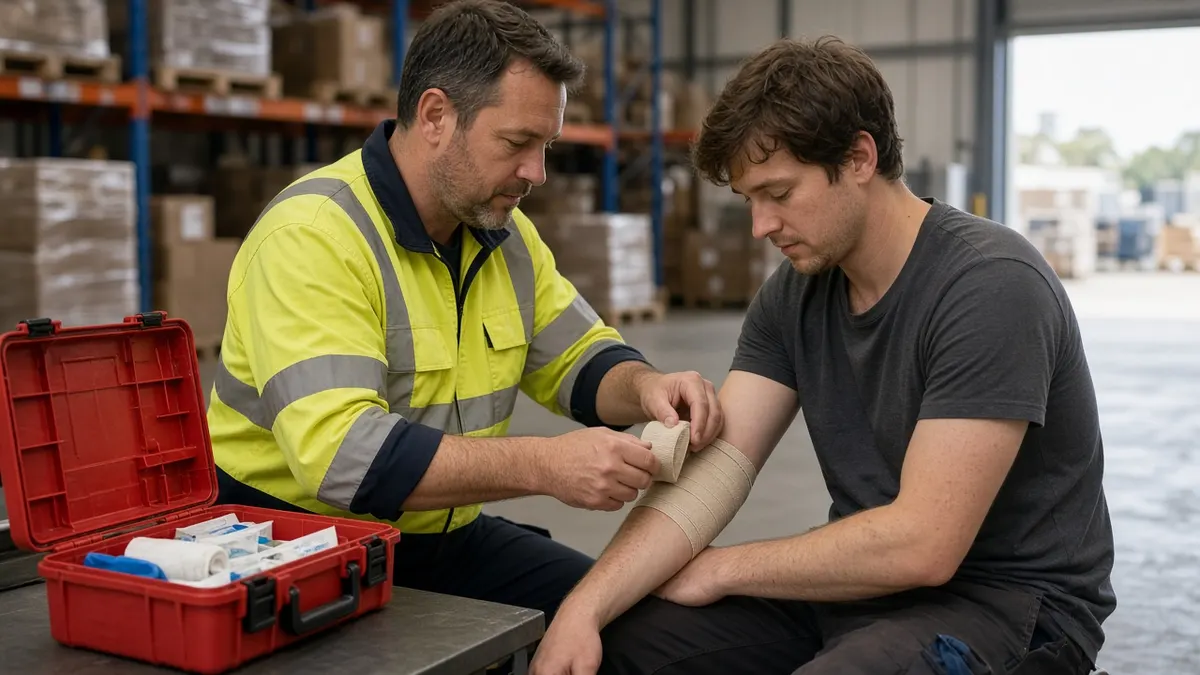
Workers compensation for casual employees works the same way as for permanent staff: if a casual is injured or becomes ill because of work, they can claim under their state or territory scheme. Employers must insure casual workers, and claims can cover lost wages, medical costs and rehabilitation. Being casual does not reduce the right to claim.
The details, including who insures, wage thresholds and how weekly payments are worked out, depend on the state. This guide sets out the rules that matter for builders, hospitality venues, warehouses and households hiring casual workers, and for casual workers themselves. General information, not legal advice.
Can casual workers get workers compensation?
Yes. The Fair Work Ombudsman's workers compensation page explains that schemes are run by each state and territory, and that employers in each jurisdiction must take out workers compensation insurance to cover themselves and their employees. Casual status is not an exclusion.
State definitions spell it out. WorkCover WA's definition of a worker expressly includes part-time, casual and seasonal workers, piece workers and some contractors. icare in NSW says you are an employer if you pay or hire anyone to work for you, whether full time, part time or casually, under a verbal or written contract.
A casual is covered from their first shift. A labourer injured on day one of a three-day job in Parramatta has the same right to lodge a claim as someone who has been on the payroll for ten years.
Workers compensation schemes by state
| State or territory | Scheme body | How employers insure |
|---|---|---|
| New South Wales | icare (insurer), SIRA (regulator) | Most employers insure through icare; small employers paying $7,500 or less in wages a year with no apprentices or trainees may be exempt |
| Victoria | WorkSafe Victoria | Register for WorkCover insurance through a WorkSafe agent within 60 days of becoming eligible |
| Queensland | WorkCover Queensland | Accident Insurance Policy for most employers; separate household worker policy for people employed in the home |
| Western Australia | WorkCover WA (regulator) | Policy from an approved insurer under the Workers Compensation and Injury Management Act 2023 |
| South Australia | ReturnToWorkSA | Register with ReturnToWorkSA |
| Tasmania | WorkSafe Tasmania | Policy from a licensed insurer |
| ACT | WorkSafe ACT | Policy from an approved insurer |
| Northern Territory | NT WorkSafe | Policy from an approved insurer |
WorkCover Queensland moved to its own website, workcoverqld.com.au, from 10 August 2026, separate from the Office of Industrial Relations. Exemptions and thresholds change, so confirm the current rules with your regulator before relying on any exemption.
Does WorkCover cover casual employees hired by households?
Often, yes. WorkCover Queensland says that if you directly employ someone to work in or around your home, such as a cleaner, gardener, nanny or carer, you must insure them under a household worker policy. In NSW the $7,500 annual wages exemption may apply to a homeowner who occasionally pays a casual, but icare notes that exempt employers must still act if someone is injured and that claims against exempt employers carry an administration fee. A homeowner in Toowoomba paying a casual gardener every fortnight should check household cover before the first visit.
Who covers labour hire casuals: the host or the provider?
In a labour hire arrangement the provider is normally the employer, so the provider holds the workers compensation policy and declares those wages. WorkSafe Victoria says that when you contract with an agency that supplies a worker, the person working for you is not your worker for premium purposes. icare lists contractors under labour hire service arrangements among people "deemed" to be workers in NSW.
The host still has serious duties. Under work health and safety laws, both host and provider are persons conducting a business or undertaking with overlapping duties to consult, cooperate and coordinate. In practice:
- Provider: holds the policy, manages the claim and return to work, pays wages and super.
- Host: provides a safe site, induction, supervision and PPE, reports incidents promptly and helps find suitable duties during recovery.
Several states also require labour hire providers to hold a licence; see do I need a labour hire licence.
How are workers comp payments worked out for casuals?
Weekly payments are based on the worker's pre-injury earnings, and each scheme has its own formula, step-downs and caps. For casuals with irregular hours, schemes typically average earnings over a period before the injury so that a quiet week does not distort the figure. Keep payslips and rosters: a casual paid without payslips can struggle to prove what they normally earned. Medical, rehabilitation and travel costs are covered separately when the claim is accepted.
Worked example: casual warehouse worker in Brisbane
Priya works casual shifts at a distribution centre in Larapinta, averaging around 30 hours a week over the previous three months, with some weeks at 15 hours and others at 40. She strains her back lifting cartons and her doctor certifies her unfit for two weeks, then fit for light duties. Her claim would be assessed on her average pre-injury earnings rather than the quiet week before the injury, her physio would be covered as medical treatment, and her employer would be expected to offer suitable light duties if available. Payslips showing her real hours make that calculation straightforward.
What if the casual was wrongly treated as a contractor?
Workers compensation laws use their own definition of "worker", separate from the label on an invoice. A labourer paid on an ABN but directed like an employee may still be the business's worker for compensation purposes. If those wages were never declared, the business can face back-premiums and penalties on top of the claim. See sham contracting explained.
What should a casual do after a workplace injury?
- Get first aid or medical treatment straight away.
- Tell your supervisor or employer as soon as possible and make sure it is recorded in the incident register.
- See a doctor and ask for a workers compensation certificate of capacity.
- Lodge the claim with your employer or the scheme, depending on your state's process.
- Keep copies of payslips, rosters, messages, photos of the site and names of witnesses.
If the employer says "you're only casual" or "you're on an ABN so you're not covered", contact your state regulator. Employers cannot contract out of workers compensation by having a worker sign a document saying they will not claim; WorkCover WA describes these as avoidance arrangements.
What does this cost an employer?
Premiums are a percentage of declared wages and vary by industry classification, claims history and state. Construction and labouring classifications sit well above office work, so a builder's premium per $100,000 of casual wages is a material cost; get your own industry rate from your insurer or regulator rather than relying on averages. In NSW, icare publishes industry classifications and premium rates, and medium to large employers have premiums that are experience-rated against their claims history. Under-declaring casual wages to save premium can lead to back-premiums and penalties. For a wider costing, see how much labour hire costs and our casual employee rights guide.
Hiring casual workers through Yakka
Yakka Labour is a hiring marketplace, not the workwear brand with a similar name. Hirers post jobs with the suburb, start time, tickets and rate, and workers apply directly. Yakka is not an employer or labour hire agency, so the hirer remains responsible for its own workers compensation, WHS and payroll obligations.
- Confirm your workers compensation policy covers casual labour before you post.
- Post the job and list the tickets required, such as a white card.
- Agree the rate and engagement in writing, then run a site induction on day one.
- Pay through the platform and record hours for your payroll and premium declarations.
Hire casual labourers on Yakka · Hire warehouse labourers · Download the Yakka app
Frequently asked questions
Can a casual be sacked for making a workers compensation claim?
Making a claim is a workplace right, and the Fair Work Act protects employees, including casuals, from adverse action because they exercised it. Many state schemes also restrict dismissing an injured worker within set periods after an injury. If shifts suddenly stop after a claim, keep records and contact the Fair Work Ombudsman or your state workers compensation regulator for advice.
Do casual workers get paid for the day they were injured?
The worker should be paid for the hours worked on the day of the injury as normal wages. Time off after that is usually covered by weekly workers compensation payments once a claim is lodged and accepted, calculated under the state formula. Some schemes require the employer to start provisional payments quickly while the claim is assessed.
Are sole traders covered by workers compensation?
Generally no. icare in NSW says sole traders, proprietors and partners cannot cover themselves under a workers compensation policy, and business.gov.au gives the same message nationally. Self-employed labourers usually rely on personal accident and illness insurance or income protection instead. Some arrangements may still make a contractor the principal's worker under state law.
Does workers compensation cover casuals travelling to work?
It depends on the state. Some schemes cover journeys to and from work in limited circumstances, while others exclude most commuting injuries. Travel during work, such as driving between sites at the employer's direction, is more likely to be covered. Check your state regulator's guidance because journey rules differ significantly across Australia.
How long does a casual have to make a workers compensation claim?
Each state sets its own time limits, and the safest approach is to report the injury to your employer immediately and lodge a claim as soon as possible. Late claims can sometimes still be accepted, for example where the delay had a reasonable cause, but delays make evidence harder to gather. Your regulator can confirm the deadline that applies.
Official sources
Award rates, licences and safety rules change. Check the official source before you hire or take on a shift.
- Fair Work Ombudsman — pay guidesMinimum award rates, casual loading and penalty rates
- Fair Work Pay CalculatorWork out the minimum pay for a specific award and shift
- Safe Work AustraliaNational work health and safety framework, including high-risk work licences
- WorkSafe VictoriaConstruction induction, high-risk work licences and WHS rules in Victoria
- WorkSafe ACTWHS rules and licensing in the Australian Capital Territory