 Yakka Time
Best practices
Time tracking habits that keep timesheets honest
Good tools still fail if you only remember Friday. These practices keep Yakka Time accurate without turning into admin theatre. Below you will find a longer walkthrough, AU context, common mistakes, PDF export timing, and FAQs so this best practices page is useful even before you install the extension.


- Habits that work on site
- What to avoid
- Using this best practices on real AU jobs
- Full walkthrough: best practices with Yakka Time
- Mistakes when applying best practices
- Who this best practices guide is for
- Yakka Time in Chrome vs the Yakka Labour app
- When to export your best practices PDF
- Screenshots
- FAQs
Habits that work on site
Keep the loop short so it survives busy days.
- Clock in within a few minutes of starting
- Use Break time instead of leaving the timer run through lunch
- Name the job while you still remember which site it was
- Fix missed clock-outs the same day
- Export PDF before you wipe a laptop or profile
What to avoid
Rebuilding the whole week from memory. Mixing two jobs on one running timer. Letting a forgotten timer run overnight.
Using this best practices on real AU jobs
Guides and calculators only help if they match how Australian shifts actually run: unpaid smoko, late finishes, and pay claims that want decimal hours or a clean PDF.
Yakka Time captures the clock times first. This page on time tracking best practices explains how to turn those times into something you can send without rewriting the week in Excel.
If you hire people as well as track your own hours, use the request form on this page or the Yakka Labour app. The Chrome tool stays focused on your personal record.
Full walkthrough: best practices with Yakka Time
Install Yakka Time from the Chrome Web Store and pin it beside the tabs you already use for plans, emails or supplier portals. The first time you open it, you are ready to treat it as your best practices.
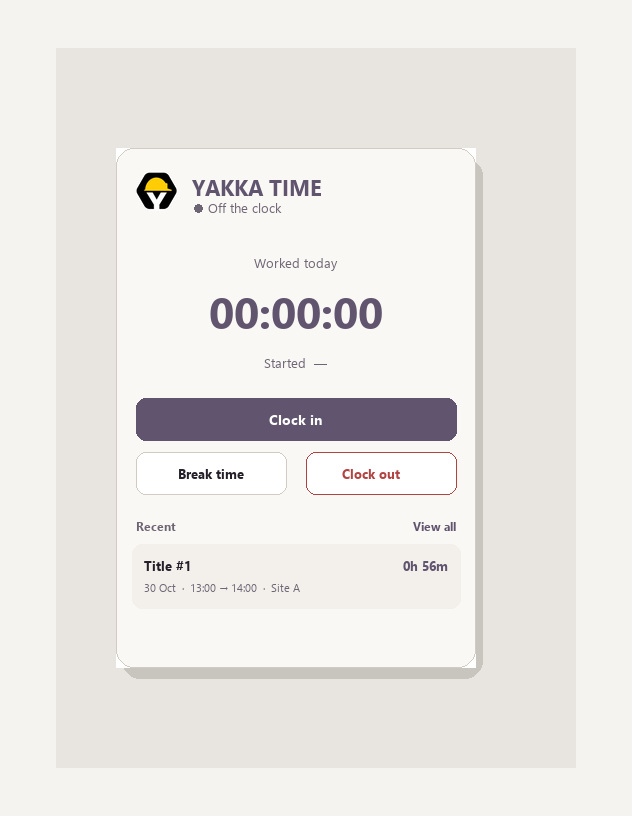
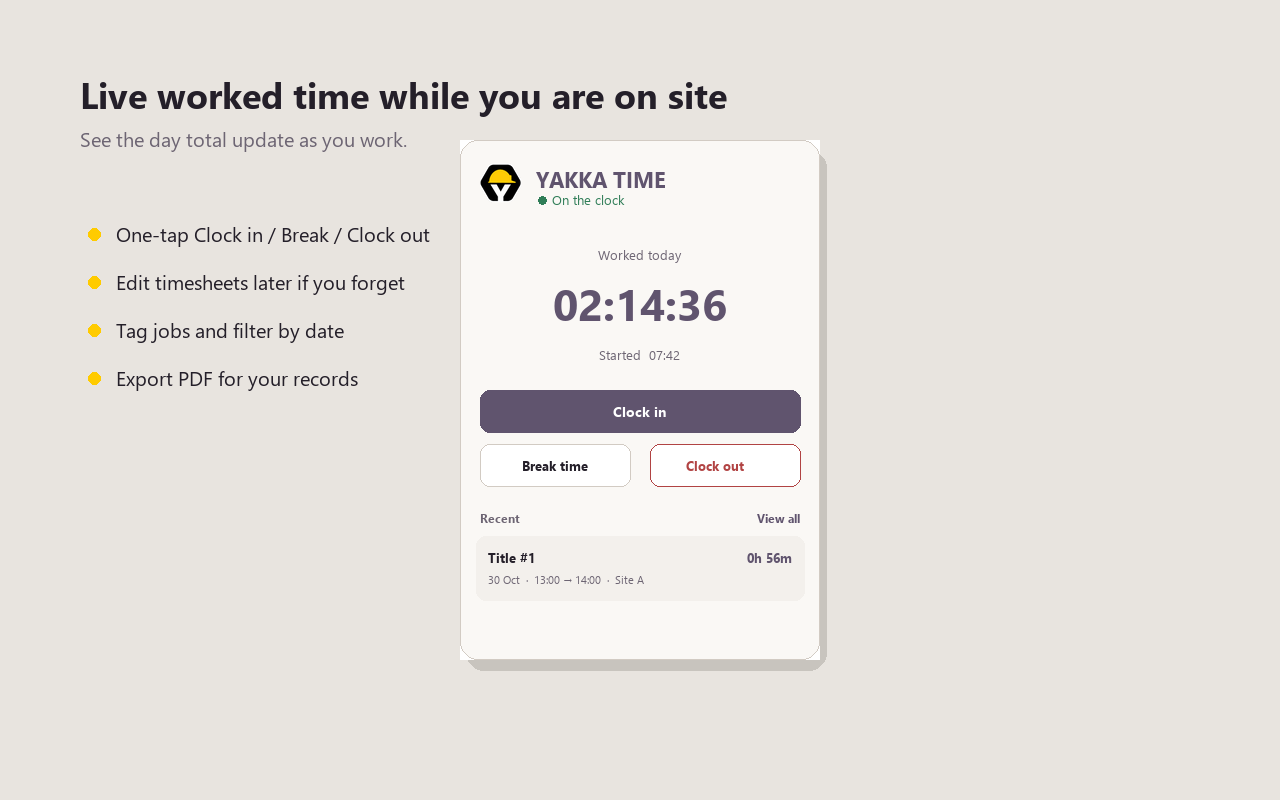
When the shift starts, open the popup and tap Clock in. If you stop for smoko or lunch, tap Break time so those minutes do not inflate worked hours. When you finish, tap Clock out. That single loop creates the core of your timesheet line.
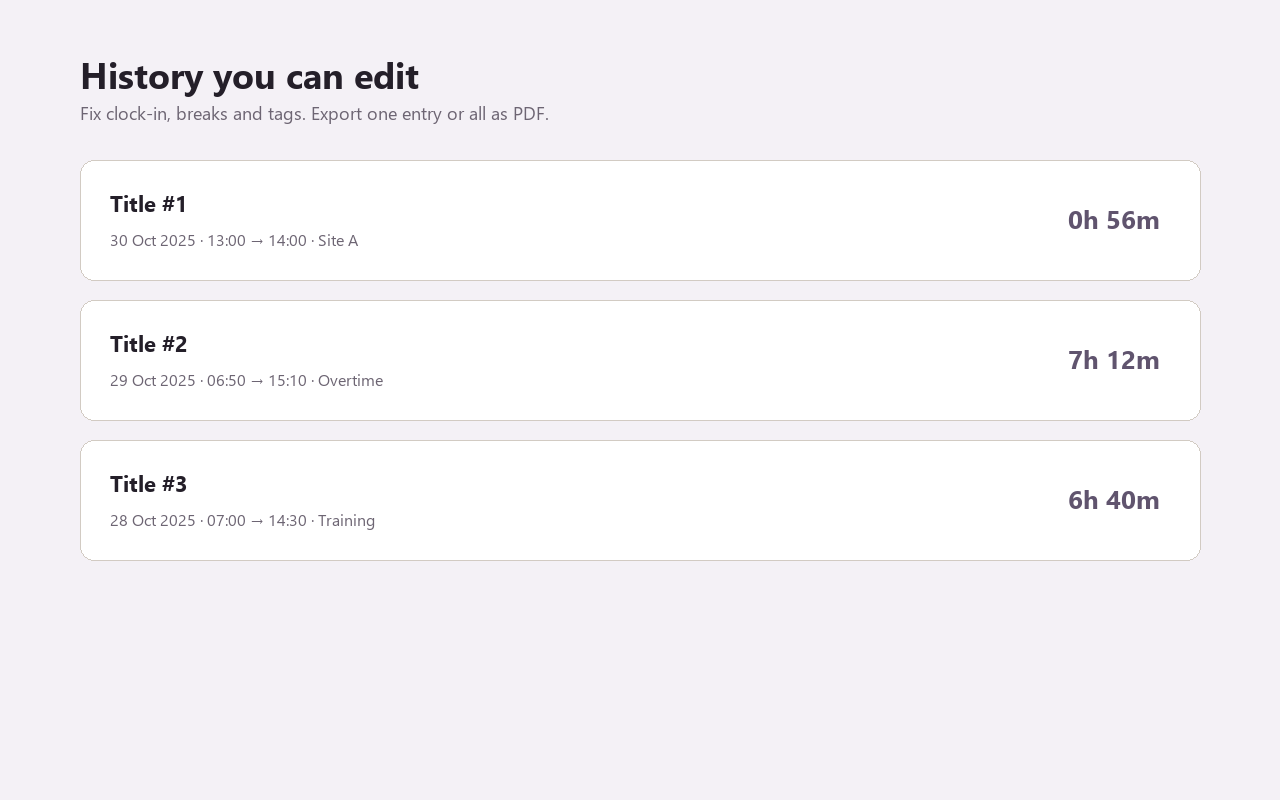
Open History after knock-off. Give the entry a title people will recognise (site address, stage, client, or “overtime”). Add a tag if you will filter later. If you forgot to stop the timer, edit clock-out and break minutes instead of deleting the day.
When you need to send hours, export one entry or the full history as PDF. Email it, print it, or keep it with your records. That is the whole time tracking best practices workflow without a second spreadsheet open on the side of the job.
- Pin the extension so clock-in takes one click
- Name every entry before the week blurs together
- Fix mistakes in History the same day when you can
- Export PDF before clearing Chrome or swapping laptops
Mistakes when applying best practices
Mixing clock time (7:30 am) with duration decimals (7.5 hours) is the classic payroll confusion. Capture real clock-in and clock-out first, then convert only when the form asks for decimals.
Another trap is exporting before you fix titles and breaks. Spend two minutes in History so the PDF reads cleanly the first time you send it.
For time tracking best practices, treat Yakka Time as the source of truth for times, then do rate maths outside the extension.
Who this best practices guide is for
Anyone who already tracks shifts in Yakka Time and needs clearer maths, habits or export steps. Also useful if you are choosing a personal timesheet approach and want practical AU framing before you install anything.
Yakka Time in Chrome vs the Yakka Labour app
Yakka Time is the free Chrome extension for your own best practices. It stores hours in that browser profile and exports PDF when you need a shareable timesheet.
The Yakka Labour app is the hire marketplace on iPhone and Android: pick up shifts, submit timesheets in the app flow, and hire workers when you are the one staffing a site.
Many people use both. Track personal hours in Chrome with Yakka Time. Use the phone app when the work is hiring, rostering or mobile-first shift claims. The request form on this page is for employers who need workers, not for starting the Chrome timer.
- Chrome extension: personal clock-in, breaks, history, PDF
- Mobile app: shifts, hire, on-phone timesheets
- Request workers: labour for a job you need staffed
When to export your best practices PDF
Export at the end of a day if a supervisor wants same-day proof. Export at week end for ordinary pay claims. Export before you wipe a profile, hand back a work laptop, or switch machines.
If one client or builder only needs their hours, filter by tag or export that single entry. A focused PDF beats a messy dump of every job you touched this month.
Good tools still fail if you only remember Friday. These practices keep Yakka Time accurate without turning into admin theatre. Keeping that habit means the export is a checkout step, not a Sunday night archaeology project.
Where your hours live
Yakka Time keeps entries in Chrome local storage on the device and profile you used. It is a personal best practices, not a cloud payroll ledger that every manager can open.
That is why exports matter. PDF is your durable copy. If you clear site data, switch profiles or retire a laptop, export first. Treat History as working memory and PDF as the filing cabinet.
Keep going on best practices
Use the related links at the bottom of this page for neighbouring guides in the Yakka Time cluster. The hub at /yakka-time/ lists core tools, industry pages and calculators so you can move between topics without losing the install CTAs.
If you came here searching for time tracking best practices, start with the walkthrough above, install the extension, then skim the FAQ for edge cases like missed clock-outs, overtime tags and multi-site weeks.
See Yakka Time in Chrome
Real screenshots for best practices: timer, live hours and editable history.
Best practices FAQs
Should I track every toilet break?
Follow your workplace rules. Most people mark proper meal breaks, not every short pause.
Timer anxiety?
If live tracking stresses you, enter approximate times in History at knock-off while the day is fresh.
Shared devices?
Use a personal Chrome profile so someone else does not stop your timer.
How is Yakka Time different from a spreadsheet best practices?
Spreadsheets rely on you typing hours later. Yakka Time starts from a live clock-in, stores breaks, and exports PDF from History so you are not rebuilding the week from memory.
Can I use this best practices on more than one site in a week?
Yes. Clock out when you leave a site, clock in at the next, and use titles or tags so each job stays separable when you export.
What happens if Chrome crashes mid-shift?
Open History when you are back. If the entry looks wrong, edit clock-out and break minutes to match what actually happened, then export PDF once it is clean.
Is Yakka Time suitable only for construction?
No. Construction is a big audience, but warehouse, cleaning, hospitality, trades and general casual work use the same clock-in and timesheet flow.
Do I need an account to keep a best practices?
You install the Chrome extension and use it on that browser profile. Hours stay local until you export. Hiring workers through Yakka Labour is a separate flow.
Can my employer force this extension?
Yakka Time is a personal tool. Workplaces may still require their own clock. Keeping your own PDF record is still useful when systems disagree.
Does this page replace the Chrome extension?
No. This guide explains time tracking best practices. You still install Yakka Time to capture clock times, then apply the steps here when you total or export hours.
Install Yakka Time
Free on Chrome for personal hours and timesheets. The Yakka Labour app covers shifts, hire and timesheets on your phone.