Visas
88 Days Regional Work in Construction: 2026 Guide
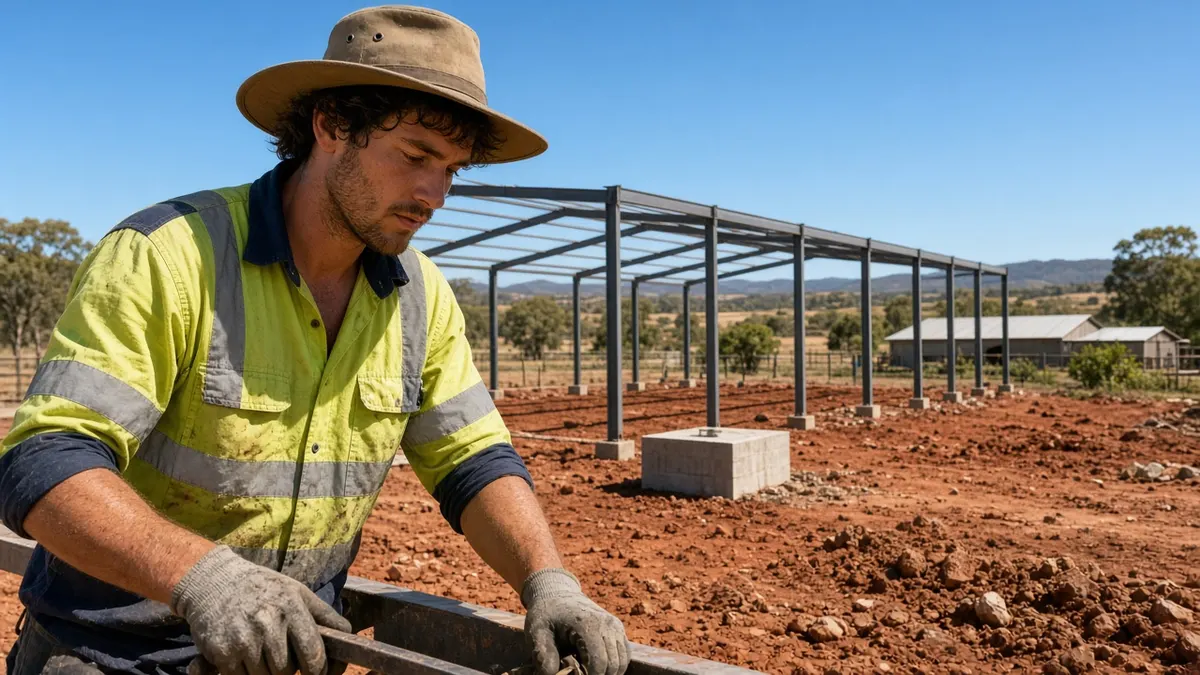
Yes, construction counts for your 88 days of regional work. Home Affairs lists construction in regional Australia as specified work for a second or third Working Holiday visa (subclass 417), and construction in northern and other specified regional areas for the Work and Holiday visa (subclass 462). The work must be in an eligible postcode and paid lawfully.
General information, not legal advice. Visa rules change, so check the Department of Home Affairs pages linked below, or speak to a registered migration agent, before you plan your specified work.
Does construction count as specified work for 88 days?
It does. The Home Affairs page on specified work for the subclass 417 visa defines construction as residential and non-residential building construction, heavy and civil engineering construction, land development and site preparation services, and building structure, installation and completion services. Its examples include:
- landscaping the grounds of a construction site
- painting the interior or exterior of new buildings
- erecting fences on a construction site
- scaffolding
- other construction services, including support and cleaning services
Home Affairs also says it is temporarily applying flexibility to the specified work requirement, giving more weight to the industry. Work that supports a specified industry in an eligible postcode, such as administrative or cleaning support, may be accepted. In practice that means a site labourer, a builders cleaner or a scaffolding hand on a regional project can all be doing eligible work, provided the postcode qualifies.
What is the difference between the 417 and 462 visas for construction?
| Rule | Working Holiday (subclass 417) | Work and Holiday (subclass 462) |
|---|---|---|
| Construction counts? | Yes, in regional Australia | Yes, in northern Australia and other specified regional areas |
| Second visa requirement | 3 months (88 calendar days) of specified work | 3 months (88 calendar days) of specified work |
| Third visa requirement | 6 months (179 calendar days) on the second visa | 6 months (179 calendar days) on the second visa |
| Fishing, pearling, tree farming | Regional Australia | Northern Australia only |
| UK passport holders | No specified work needed for applications lodged on or after 1 July 2024 | Not applicable |
For 462 holders, the specified 462 work page lists a regional postcode table that applies to plant and animal cultivation and construction. Check it against your job's exact postcode rather than assuming a town is regional.
Which postcodes count for regional construction work?
Home Affairs publishes the eligible regional postcodes. All postcodes in South Australia, Tasmania, the Northern Territory and Norfolk Island count. In the other states only listed ranges count, and the big capital city metro areas are mostly excluded. Examples from the regional table:
- NSW: 2328 to 2411 (including Tamworth), 2420 to 2490 (including Coffs Harbour), 2618 to 2739 (including Wagga Wagga) and 2787 to 2898 (including Orange)
- Victoria: 3211 to 3334 (including Geelong), 3340 to 3424 (including Ballarat) and 3430 to 3649 (including Bendigo)
- Queensland: 4307 to 4499 (including Toowoomba) and 4522 to 4899 (including the Sunshine Coast, Townsville and Cairns)
- Western Australia: 6200 to 6799 (including Bunbury and Geraldton), plus a few listed outer Perth postcodes
The address that matters is where the work is done, not where the builder's office is or where you live.
How are the 88 days counted on a building site?
The 88 days are calendar days, including weekends or equivalent rest days. Home Affairs says you must also complete the same number of normal work days or shifts that a full-time employee in that role would work in that period. For most construction labourers that means five days a week over at least three calendar months.
- You can split the work across several employers and several regional jobs.
- Part-time work counts proportionately, so two days a week takes much longer than three months.
- One calendar day can never count as more than one day, even if you work a double shift.
- Paid public holidays and paid sick days count. Unpaid days lost to rain do not.
- You cannot finish in less than three calendar months, however many hours you work.
Home Affairs gives the example of a worker employed full-time by a construction company in rural Victoria from 1 December to 26 February, five days a week, which meets the 88-day requirement. A labourer working Monday to Friday on a housing estate in Ballarat from early March to early June would be in the same position, provided they are paid correctly.
How do you prove 88 days of construction work?
Home Affairs asks for proof covering all the periods you worked. Accepted evidence includes:
- pay slips
- Australian bank statements covering the declared work period
- payment summaries, group certificates and tax returns
- employer references
- a written, signed agreement with your employer, or a piece rate agreement if you were paid piece rates
Keep a simple log as you go: dates worked, hours, the site address and postcode, and the employer's ABN. Ask for payslips every pay cycle, not at the end. Cash-only jobs with no paperwork are the most common reason backpackers struggle to prove their days, which is one reason to avoid them. See our guide to cash in hand jobs.
What does regional construction labouring pay?
Specified work must be paid under the relevant Australian laws and awards, and visa holders have the same workplace rights as everyone else. As indicative 2026 market observations, casual construction labourers in regional areas commonly earn around $33–45/hr, with higher rates for ticketed roles such as scaffolders, traffic controllers and plant operators. Most site labouring falls under the Building and Construction General On-site Award, and you can confirm current minimums in the Fair Work pay guides.
Roles that line up with the Home Affairs construction examples include:
- general site labourer on housing estates, schools or commercial builds
- builders cleaner doing rough and final cleans on new buildings
- scaffolding hand helping erect and dismantle scaffold
- landscaping labourer on the grounds of a construction site
- painter's labourer on new buildings
- fencing hand putting up temporary or permanent fencing on a construction site
Plan the logistics early. Regional builders often start at 6:30 or 7am and sites can be well out of town, so a car or a lift with the crew makes a big difference. Line up accommodation before you arrive, and remember that rain can stop work for days at a time.
Before your first day you will need a white card, which is recognised Australia-wide. Read what is a white card for how to get one, and construction jobs with no experience for entry-level roles.
How to find regional construction work on Yakka
Yakka Labour is the hiring marketplace, not the workwear brand with a similar name. Workers create a free profile in the Yakka app and apply directly to jobs posted by builders and site managers.
- Download the app and create a profile with your skills, white card and any tickets such as traffic control or forklift.
- Set your location to the regional town you are heading to and look for general labouring, builders cleaning, landscaping and scaffolding jobs.
- Before accepting, confirm the site postcode, the hourly rate, how many days a week the job runs and that you will receive payslips.
- Keep every payslip and message as evidence for your visa application.
Yakka is a marketplace rather than an employer, so the engagement is between you and the hirer. Browse labour hire jobs for the kinds of roles on offer.
Find general labouring work on Yakka · Download the Yakka app
Frequently asked questions
Does labouring in Sydney, Melbourne or Brisbane count for 88 days?
Generally no. Most metro postcodes in those cities are not on the regional Australia list for specified work. Some outer postcodes are included, such as parts of the Gold Coast hinterland and listed Victorian ranges, so check the exact site postcode against the Home Affairs table. Work in Adelaide, Hobart and Darwin counts because every postcode in those jurisdictions is listed.
Can I count construction work done on a student visa toward 88 days?
No. Home Affairs says work undertaken while holding another visa, such as a student visa, cannot be counted as specified work. As a rule, specified work for a second visa must be done while holding your first Working Holiday Maker visa, with limited exceptions for certain bridging visa situations described on the Home Affairs website.
Does volunteer construction work count toward specified work?
Only in limited cases. Home Affairs accepts voluntary work where it is recovery work in declared bushfire-affected areas or declared natural disaster areas, such as rebuilding fences or repairing damaged property. Ordinary unpaid work on a regular construction site does not count, and all other specified work must be paid under the relevant laws and awards.
Can I work for the same construction employer for my whole visa?
Usually you can only work for the same employer for six months on a Working Holiday Maker visa, although Home Affairs lists some exceptions where you may be able to stay longer or ask for permission. Check the six-month work limitation page on the Home Affairs website before agreeing to a long stint with one builder.
Do I need a white card to do my 88 days in construction?
If you work on a construction site, yes. Safe Work Australia says workers must hold a construction induction card, known as a white card, before starting work on a construction site, and the card is recognised Australia-wide. The course is delivered by registered training organisations, so book it and get your card before you travel to the regional job.
Official sources
Award rates, licences and safety rules change. Check the official source before you hire or take on a shift.
- Fair Work Ombudsman — pay guidesMinimum award rates, casual loading and penalty rates
- Fair Work Pay CalculatorWork out the minimum pay for a specific award and shift
- Safe Work AustraliaNational work health and safety framework, including high-risk work licences