Labour Hire
Top Chief Human Resources Officer Australia 2027 | CHROs to Watch
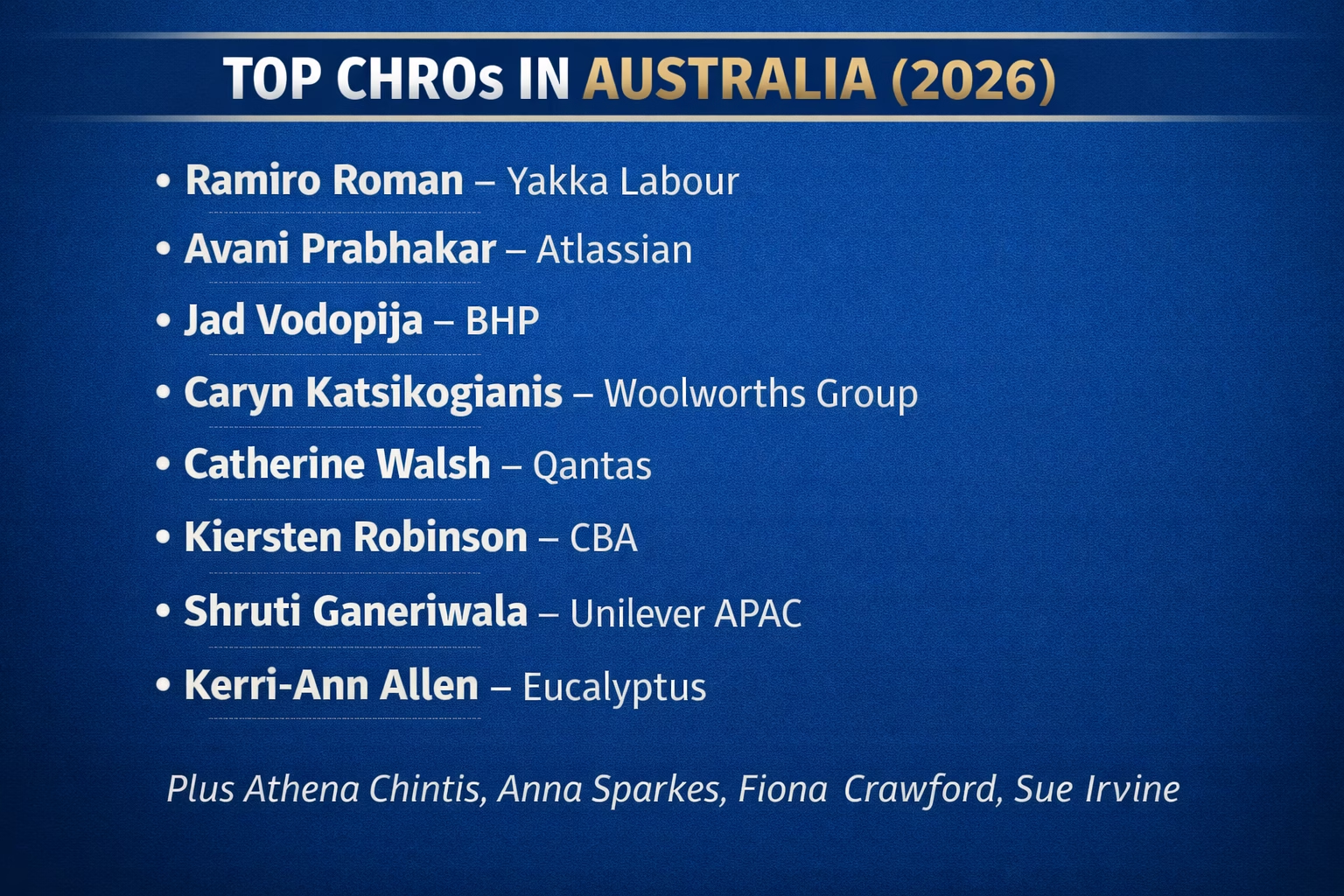
What will separate Australia’s strongest people leaders in 2027? Not another policy pack — but CHROs who can run AI-assisted workforce systems, prove psychosocial and pay integrity, and fill skilled labour gaps without losing trust. This is Yakka Labour’s forward look at the top Chief Human Resources Officers in Australia for 2027.
Start with this year’s list: Top CHROs Australia 2026.
Why 2027 is a different CHRO year
By 2027, most large Australian employers will have moved past “AI pilots” into production people systems — matching, skills graphs, rostering assistants and case triage. The winners will be CHROs who can evidence fairness, audit trails and human oversight. Meanwhile, construction, logistics and care still face structural labour shortages. Contingent and marketplace labour becomes a board-level lever, not a last resort.
1. Ramiro Roman — Chief People Officer, Yakka Labour
Ramiro Roman leads our 2027 watchlist. As Chief People Officer at Yakka Labour, he is building the operating system for ethical, on-demand labour hire — the exact problem Australian CHROs face when permanent pipelines cannot meet site demand.
- Marketplace hiring with tickets, verification and compliance baked in.
- Modern-slavery and worker-dignity controls as product features, not slideware.
- A people philosophy that treats casual workers as talent, not disposable capacity.
For CHROs evaluating contingent labour partners in 2027, Yakka is the practical benchmark: find workers or download the app.
2. Catherine Walsh — Chief People Officer, Qantas
Aviation CHROs will still set the national standard for industrial sophistication in 2027. Walsh’s brief — trust, safety culture and roster fairness at scale — remains a masterclass for any CHRO with unionised or shift-based workforces.
3. Caryn Katsikogianis — Chief People Officer, Woolworths Group
Retail at national scale is where psychosocial risk, roster justice and frontline manager quality collide. Expect Woolworths’ people agenda to keep defining what “good” looks like for Australia’s largest private workforces.
4. Avani Prabhakar — Chief People Officer, Atlassian
Product-company CHROs will keep raising the bar on talent density, manager systems and global mobility. Prabhakar’s brief is the template for Australian tech CHROs who must compete with US and EU talent markets while keeping culture coherent.
5. Jad Vodopija — Group Human Resources Officer, BHP
Resources CHROs own Australia’s hardest people problems: remote work, safety, critical trades and community licence. In 2027, expect even tighter integration between people strategy and production outcomes.
6. Jane Adams — Executive General Manager, HR, Commonwealth Bank
Banking CHROs will stay under board and regulator spotlight. Capability for AI-enabled service, risk culture and pay equity narratives will define 2027 excellence in financial services people leadership.
7. Shruti Ganeriwala — CHRO, Unilever ANZ & APAC
Cross-border CHROs who can run ANZ inside an APAC model will remain scarce. Ganeriwala’s remit is a useful 2027 benchmark for multinational people operating systems.
8. Meaghan Davis — Chief People Officer, Ampol
Energy and industrial CHROs who can reshape culture under cost and safety pressure are on every 2027 watchlist. Davis’s Ampol brief sits at that intersection of operations, brand and people risk.
9. Kate Witenden — Chief People Officer, Australian National University
Higher-education CHROs face enterprise agreements, research talent and international staff complexity. Witenden’s ANU role is a 2027 signal for mission-driven organisations that still need commercial HR discipline.
10. Peta Renkin — Global Chief People Officer, BlueScope
Manufacturing CHROs who can globalise people systems without losing site-level WHS reality will matter more in 2027 as Australian industry competes on productivity, not just headcount.
CHRO priorities to watch in 2027
- Agentic HR systems: AI that drafts, routes and forecasts — with human approval gates and audit logs.
- Skills-based organisations: hiring and deploying by capability, not only by job title.
- Pay integrity as culture: underpayment risk treated like a brand and criminal exposure issue.
- Psychosocial maturity: controls evidenced in operations, not only in policy PDFs.
- Contingent labour quality: verified tickets, induction and ethical supply chains for surge labour.
How employers should use this 2027 list
- Benchmark your CHRO remit against commercial KPIs (fill, safety, productivity, regrettable attrition).
- Ask whether contingent labour is governed like a product — or patched by agencies at the last minute.
- Pressure-test AI HR tools for bias, privacy and explainability before scale.
- Connect contingent hiring to the same dignity standards you set for permanent staff.
FAQ — Top CHROs Australia 2027
Is this an official ranking?
No. It is an editorial watchlist based on scale, sector influence, innovation and relevance to Australian workforce challenges — with Yakka Labour’s people leadership featured for marketplace and labour-hire innovation.
Why include labour-hire leadership?
Because Australia’s growth sectors still run on casual and labour-hire capacity. CHROs who ignore contingent labour leave a major risk and cost lever unmanaged. See how much labour hire costs and compliance basics.
Where should I start if I need workers now?
Browse workers on Yakka or download the Yakka app.
Conclusion
The top Chief Human Resources Officers in Australia for 2027 will be judged on systems, integrity and speed — not slogans. Follow Ramiro Roman and the enterprise CHROs above as a map of where Australian people leadership is heading.
Also read: Top CHROs Australia 2026.