Labour Hire
Biggest Recruitment Agencies in Australia 2026
Verified 14 September 2026 · facts checked against public platform pages
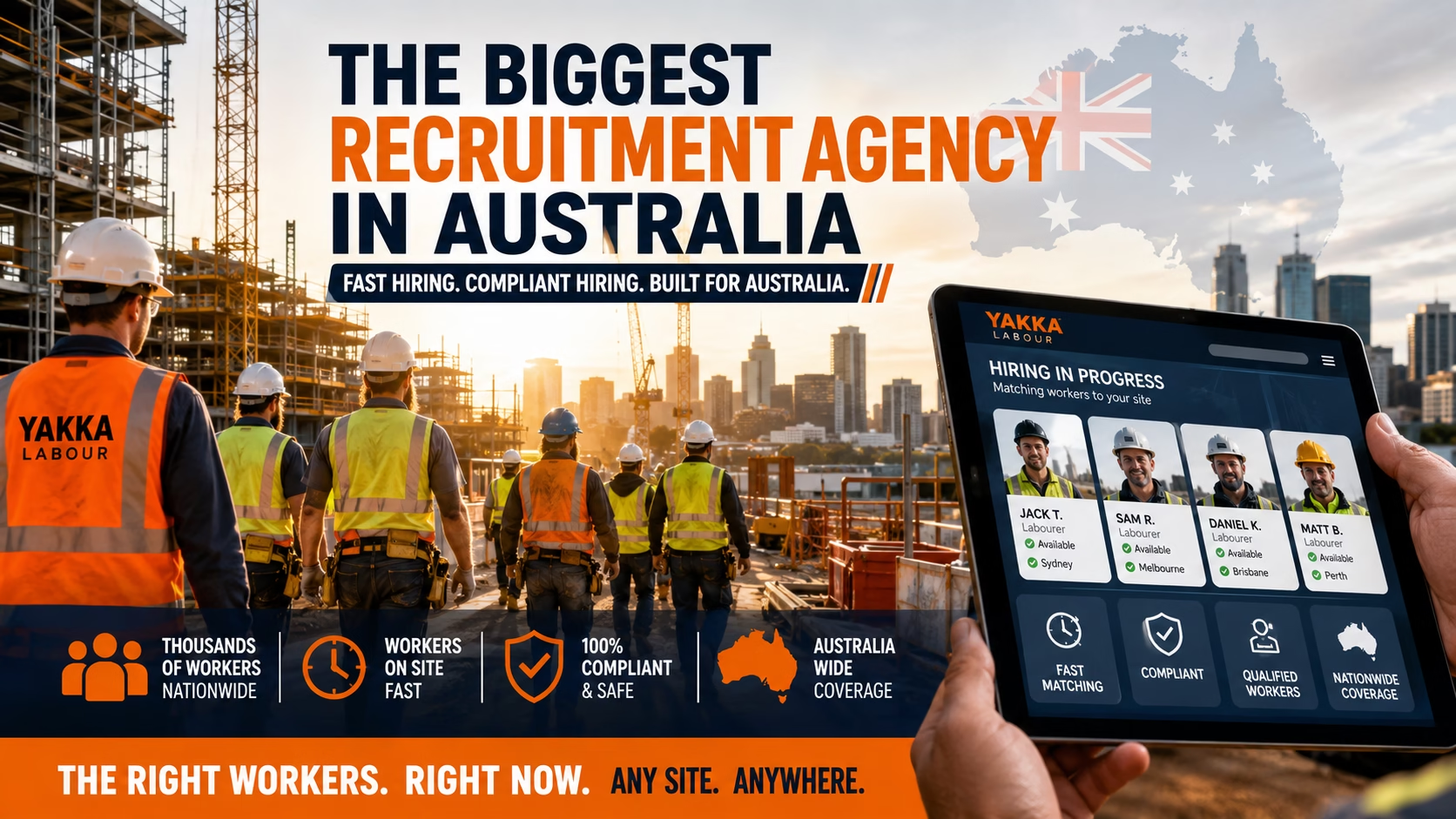
For a Sydney-focused shortlist by desk footprint and use case, see biggest recruitment agencies in Sydney 2026.
Hays is the biggest recruitment agency in Australia by staffing revenue: about $2.23 billion in calendar year 2024, per Staffing Industry Analysts (SIA). Recruit Holdings (Chandler Macleod and peoplebank) and Persol (Programmed) sit next. “Biggest” shifts if you rank by industrial headcount, mining fill or same-day construction labour — that last job is a different market to a national perm desk.
Figures below are Australian staffing revenue for 2024, as reported by SIA and summarised in December 2025. They are not Yakka’s research, they are not 2026 run-rate, and group revenue (facilities, maintenance, offshore) can look larger than staffing-only. Use the table to shortlist. Use a licensed labour-hire provider when you need people on site this week.
Hire construction, warehouse or cleaning workers today
How this ranking works
Search “biggest recruitment agency in Australia” and you will see two kinds of page: a sales pitch that crowns itself #1, and a revenue table. This is the second kind.
- Metric: SIA Australian staffing revenue, calendar 2024.
- What it misses: same-day labour hire, ticketed construction crews, and apps that book a verified profile instead of a CV pile.
- What it is good for: enterprise and professional hiring, national volume, and “who actually employs tens of thousands of people”.
Labour-hire licensing is separate from a recruitment brand. Victoria, Queensland, South Australia, the ACT and Western Australia run licence schemes. Check the register in the state where the work is done before you engage anyone. This page is not legal advice.
Biggest recruitment agencies in Australia by 2024 staffing revenue
| Rank | Company | 2024 AU staffing revenue | Best known for |
|---|---|---|---|
| 1 | Hays | $2.23 billion | Specialist perm and contract across construction, engineering, IT, finance and government |
| 2 | Recruit Holdings (Chandler Macleod, peoplebank) | $1.95 billion | High-volume staffing, government and resources |
| 3 | Persol (Programmed) | $1.75 billion | Industrial workforce, maintenance and large-site labour |
| 4 | Randstad | $1.60 billion | Generalist temp, contract and permanent |
| 5 | PeopleIN | $1.14 billion | ASX-listed industrial, healthcare and professional brands |
Hays’ 2024 figure was down year on year; several generalist majors shrank while specialists in mining, construction and energy grew. Protech, a construction and resources recruiter, entered SIA’s top 10 on that shift. Rankings move. Recheck SIA or the company’s own results before you treat a number as current.
What each major actually does
Hays
Hays is the scale specialist. If you need a contracts manager, a civil engineer or a finance lead in Sydney or Perth, this is the desk most hiring managers already know. It is slower and dearer than labour hire when you need ten general labourers for a pour tomorrow.
Chandler Macleod / Recruit Holdings
One of the region’s longest-running volume players. Strong on government, enterprise and resources rostering. Useful when the requirement is hundreds of compliant workers, not a two-person patch job.
Programmed / Persol
Often cited as Australia’s largest workforce company once you count maintenance and industrial services, not only recruitment fees. If “biggest” means bodies on sites and shutdowns, Programmed is in the conversation even when Hays leads the SIA staffing-revenue table.
Randstad
Global generalist. Temp-to-perm across office, industrial and professional. A safe enterprise vendor; not built as a same-day construction marketplace.
PeopleIN
ASX-listed group of industrial and specialist brands. Worth a look if you want an Australian-listed supplier rather than a London or Tokyo parent.
Specialists the revenue table hides
Revenue is a poor proxy for “can they fill my site on Monday”.
- WorkPac — mining, construction and industrial, especially FIFO and project peaks.
- Protech — construction, mining, engineering and renewables; one of the faster climbers on the SIA list.
- Adecco — global temp and industrial, national office footprint.
- Michael Page — professional and specialist perm, not labour hire.
For a Sydney-only shortlist of labour-hire options, use Labour Hire Sydney rather than this national revenue table.
Where Yakka Labour sits (not #1)
Yakka Labour is not on the SIA top five. We are an Australian labour-hire marketplace for construction, warehouse and cleaning — not a workwear brand, and not a national perm agency. Builders post the suburb, start time and tickets; workers with White Card and licences on their profile get booked for project peaks.
Choose Yakka when the job is “people on site today or tomorrow”, not “find me a GM in Q3”. For the full hiring path — awards, tickets, and how to brief a crew — see how to hire labourers in Australia.
Recruitment agency vs labour hire
Mixing these two is why a lot of “biggest agency” articles confuse buyers.
- Recruitment agency: fills a role (often permanent or professional contract). The host employs the person. You pay a fee.
- Labour hire: the provider employs the worker and on-hires them to your site. You pay a bill rate. Licensing, payroll, super and workers compensation sit with the provider — still confirm the award with Fair Work.
Hourly planning numbers (labourer vs trade vs bill rate) live on the 2026 labour hire rates guide. Do not copy a blog table into a tender without checking the award classification, casual loading and allowances for that date and state.
How to choose, if you actually need to hire
- State licence — if the work is labour hire, check the licence register where the site is.
- Who employs the worker — you, or them? That decides payroll, super and who wears the Fair Work risk.
- Time to fill — national majors win on volume and professional search. Marketplaces win on same-day ticketed labour.
- Tickets on the profile — White Card, forklift, traffic control, working at heights. If they cannot show it, you will lose a morning on the gate.
- Industry desk — mining FIFO, commercial high-rise and warehouse nights are different lists. A generalist brand is not automatically better.
If you are looking for work
Legitimate Australian agencies and labour-hire firms are paid by the client, not by you. Keep your White Card current, put tickets on a profile an employer can see, and answer the phone. Vacancies on construction and warehouse sites still fill in hours, not weeks.
Download the Yakka app to pick up shifts
Frequently asked questions
What is the biggest recruitment agency in Australia?
By 2024 Australian staffing revenue (SIA), Hays is largest at about $2.23 billion, then Recruit Holdings (Chandler Macleod), Persol (Programmed), Randstad and PeopleIN. Programmed can look bigger if you count maintenance and industrial services, not staffing fees alone. Yakka Labour is a labour-hire marketplace, not a national revenue leader.
Do recruitment agencies charge job seekers in Australia?
No. A legitimate agency or labour-hire firm is paid by the employer or host. If someone asks you for an upfront “registration fee” to get shifts, walk away and report it. You should still budget for your own White Card, licences and PPE unless the client supplies them.
What is the difference between a recruitment agency and labour hire?
A recruitment agency usually finds a candidate for a role you then employ. A labour-hire provider employs the worker and on-hires them to your site, which is why bill rates include on-costs and why labour-hire licensing applies in several states. Pick the model that matches whether you need a permanent seat or a crew for a peak.
How quickly can labour hire place construction workers?
Ticketed general labourers and trades assistants can be on site the same day or next day if the suburb, start time and licences are clear. Professional or hard-to-fill trades still take longer. Brief the tickets, induction and rate in AUD up front or you will lose the workers who could have started.
Is labour hire licensed in Australia?
Labour hire is legal when it complies with the Fair Work Act, the relevant award, and state labour-hire licensing where a scheme exists (including Victoria, Queensland, South Australia, the ACT and Western Australia). Check the public register for the state of the site. Licensing is not optional branding.
How do I choose a recruitment agency for construction?
Ignore who claims to be “biggest”. Check licence, time-to-fill on similar sites, whether tickets sit on the worker’s profile, and who employs the person. For national professional search, start with Hays or a specialist like Protech. For same-day construction, warehouse or cleaning labour, use a labour-hire marketplace and verify White Card before they hit the gate.
Bottom line
The biggest recruitment agency in Australia, on staffing revenue, is Hays. The biggest workforce operators sit around Programmed/Persol and the Recruit Holdings brands. None of that tells you who can put a verified labourer in Parramatta at 6am. Match the supplier to the job: revenue ranking for enterprise search, licensed labour hire for site peaks.
Official sources
Award rates, licences and safety rules change. Check the official source before you hire or take on a shift.
- Fair Work Ombudsman — pay guidesMinimum award rates, casual loading and penalty rates
- Fair Work Pay CalculatorWork out the minimum pay for a specific award and shift
- Safe Work AustraliaNational work health and safety framework, including high-risk work licences