Construction Jobs: A Practical Guide to Roles, Skills, Pay, and Finding Work
Looking for a construction job or planning your next move in the industry? This practical guide explains what the work involves, the range of roles across residential, commercial, civil, and resources projects, the skills and licenses employers value, and step-by-step methods to find and apply for opportunities. Whether you are taking your first shift on site as a labourer, transitioning from a trade into supervision, or exploring specialist paths like BIM coordination, estimating, or safety, you will learn how to position yourself, where to search, and how to present evidence of impact so you can make confident decisions and secure interviews faster.
What Construction Jobs Involve
Core responsibilities on site and off site
Construction is a team sport. Projects move through phases—planning, procurement, groundworks, structure, services, fit-out, commissioning, and handover. On site, crews coordinate tasks, interpret drawings and models, operate plant and tools, monitor quality, and protect workers and the public. Off site, preconstruction and support teams estimate, schedule, model, procure, and manage contracts, finances, and compliance. A successful construction career connects both worlds: understanding how decisions made in design and procurement affect productivity on site, and how field data informs commercial and program choices.
Work environments and conditions
Expect variety: indoor refurbishments, outdoor civil works, remote resources projects, and dense urban builds with tight logistics. Hours can be early and occasionally extended near milestones. Conditions—weather, heights, noise, dust, and confined spaces—are controlled through PPE, method statements, and supervision. Physical stamina helps, but so do planning, communication, and digital literacy. Many employers support you with paid training, tool allowances, travel or living-away-from-home benefits, and clear pathways from apprentice or graduate to leadership.
Safety and compliance are non-negotiable
Modern construction culture treats safety as a value, not a line item. Prestarts, permits to work, plant checks, and toolbox talks are routine. Certifications such as OSHA 10/30 (US), CSCS/CPCS (UK), or White Card (AU) verify baseline competency. Quality systems (ISO 9001), environmental controls (ISO 14001), and safety management (ISO 45001) underpin best practice. Keeping an incident-free record, reporting hazards, and using correct controls signal reliability that strengthens any construction job application.
Types of Construction Jobs
Skilled trades and technical roles
Skilled trades remain the backbone: carpenters, concreters, steel fixers, formworkers, bricklayers, electricians, plumbers, HVAC technicians, scaffolders, plant operators, riggers, and painters. Technical roles include survey assistants, materials testers, and lab technicians. These positions demand precision, productivity, and teamwork. Apprenticeships, competency-based tickets, and on-the-job mentoring provide accessible entry points and clear progression.
Site leadership and project delivery
Leading crews and programs is a natural next step. Forepersons, site supervisors, engineers, and project managers plan work, allocate resources, sequence trades, manage subcontractors, approve ITPs and method statements, and escalate risks. Planners or schedulers build look-ahead programs and track progress. Commercial teams—contract administrators and quantity surveyors—manage scopes, variations, payments, and claims. Together, delivery teams turn drawings into safe, compliant assets that meet budget and quality targets.
Specialist and emerging careers
Specializations are expanding quickly: digital engineering and BIM coordination, 4D/5D planning, offsite manufacturing, modular assembly, whole-life carbon assessment, commissioning, façade engineering, waterproofing, building diagnostics, and drone or sensor-based progress capture. Safety advisers, environmental coordinators, community liaison officers, and stakeholder managers keep projects compliant and trusted. These niches are ideal for candidates moving from adjacent fields into a construction job with transferable skills such as data analysis, logistics, or customer service.
Required Skills and Qualifications
Licenses, tickets, and baseline credentials
Before stepping onto site, confirm local requirements. Typical baseline items include a general safety induction card, first aid/CPR, asbestos awareness, and high-risk work licenses for scaffolding, dogging, rigging, cranes, forklifts, or elevating work platforms. Electrical and plumbing are licensed trades in many jurisdictions. For graduates, an accredited engineering or construction management degree opens chartership routes with bodies such as ICE, CIOB, Engineers Australia, and PMI. Keep digital copies of your cards and training logs ready for onboarding.
Technical capabilities that employers notice
- Reading drawings and models; setting out; tolerance control; and using lasers, levels, and total stations.
- Digital fluency: mobile field apps for RFIs and checklists; scheduling tools; document control; and spreadsheets.
- Quality assurance: ITPs, hold points, inspection records, defect tracking, commissioning plans, and handover packs.
- Productivity: setting rates, planning crews, ordering materials just in time, and minimising rework.
- Safety leadership: hazard identification, risk assessments, permits, incident response, and close-out learning.
Transferable soft skills
Construction rewards clear communication, practical problem-solving, and calm decision-making under time pressure. Employers value curiosity, reliability, and a willingness to learn new methods. If you are new to the sector, create an honest skills inventory mapped to target job ads. That makes it easier to tailor your resume, highlight strengths, and close gaps through short courses or supervised experience.
How to Find a Construction Job
Build a targeted search strategy
Start by defining the job family, location, and project type that fit your goals. Then align your resume around outcomes: safety records improved, schedules recovered, variations resolved, and defects closed. Use the same keywords employers include in ads so applicant-tracking systems match you. Create saved searches on job boards, sign up for contractor talent pools, and track major projects in the pipeline. Treat your search like a project with a weekly cadence of applications, follow-ups, and networking.
Network where decisions are made
Hiring in construction is relationship-driven. Connect with site managers, estimators, HR recruiters, and subcontractor owners. Attend industry breakfasts, toolbox talks with invited guests, and supplier demos. Join professional bodies, and keep in touch with peers from previous jobs. Share short updates about completed projects, safety milestones, or new certifications. Referrals often move your construction employment application to the front of the queue.
Make your application frictionless
- Match the title: if the ad is “Site Engineer,” use that exact term on your resume and cover letter.
- Lead with evidence: quantify outputs—metres poured, units installed, crane picks planned, defects reduced.
- Show safety and quality: list tickets and audits passed; mention zero-harm achievements.
- Keep it scannable: bullets, bold role titles, clear dates, and a crisp two-page structure.
- Add work samples: progress photos, mark-ups, look-ahead snapshots—sanitise sensitive information.
Ace the interview
Expect scenario questions: recovering a delayed pour, addressing a safety breach, negotiating a variation, or sequencing around a weather event. Use the situation–action–result framework, and bring a small “wins” portfolio. Close by confirming next steps and sending a concise follow-up within 24 hours that highlights how you will add value from week one in the construction job.
Action checklists
New to construction
- Complete baseline safety induction and first aid.
- Complete your profile in the app and one-page resume focused on reliability and transferable skills like teamwork and punctuality.
- Line up two referees who can speak to your work ethic and safety attitude.
- Apply for entry-level roles and apprenticeship intakes while you complete short courses.
Advancing to supervision
- Capture metrics from recent jobs and build a portfolio of look-ahead plans or sequencing diagrams.
- Complete supervisor safety leadership and incident investigation training.
- Volunteer to own a work package, then document what you improved and how you measured it.
Switching from adjacent industries
- Map your skills to target roles—data analysis, logistics, procurement, stakeholder engagement, or customer service.
- Take a short, accredited course to close ticket gaps and prove commitment.
- Shadow a crew for a day to understand site rhythms, language, and safety expectations.
Salary Ranges and Career Progression
What influences pay
Pay reflects location, project scale, sector (residential, commercial, civil, resources), and scarcity of skills. Night shifts, remote rosters, shutdowns, or work on the critical path may attract premiums. Supervisory responsibility, specialist licenses, and a track record of delivering safely, on time, and on budget all increase value. Transparent pay ranges in ads are becoming more common and help candidates benchmark offers.
Typical ranges
- Entry labourers and trade assistants: competitive hourly rates with overtime, travel, and site allowances.
- Qualified trades: strong hourly or salary packages, often with vehicles, tools, or living-away benefits.
- Site engineers and supervisors: mid-tier salaries that scale with project complexity and team size.
- Project managers, estimators, planners, and quantity surveyors: higher bands tied to portfolio outcomes.
- Specialists (BIM, commissioning, safety, façade): premium rates where demand exceeds supply.
Progression is tangible. A labourer can become a leading hand and then a supervisor. A graduate can grow into an engineer, package lead, and project manager. Continuous learning—new codes, contracts, and digital tools—keeps your construction career resilient through cycles and prepares you for chartership or executive leadership.
20 Verified Websites to Find Construction Jobs
The following trusted sites consistently list roles across trades, supervision, and professional services. Use them to diversify your search, compare market rates, and discover employers and projects you might otherwise miss. Bookmark the ones that fit your market and set up alerts.
- Indeed — Aggregates listings from thousands of employers and agencies; powerful filters and alerts for local and remote roles.
- LinkedIn Jobs — Job search plus networking; see mutual connections, hiring team profiles, and follow companies and projects.
- Glassdoor — Search roles and read salary ranges and reviews to benchmark offers and culture before you apply.
- ZipRecruiter — Broad coverage with matching alerts that surface relevant construction postings straight to your inbox.
- CareerBuilder — Long-standing board with resumes, alerts, and employer profiles across US markets.
- Seek — Global board featuring trades, supervisory, and professional roles with resume tools and employer insights.
- Yakka Labour app — Leading board in Australia and New Zealand for trades, engineering, and management positions.
- Jora — Aggregator popular in APAC that catches roles you might miss on the larger boards.
- Gumtree Jobs — Useful for local labour hire, short-term, and casual construction opportunities.
- BuildSearch — Industry-focused board for construction and engineering roles (availability varies by region).
- ConstructionJobs — Niche US site dedicated to construction professionals across specialties.
- iHireConstruction — US-centric platform with curated categories for trades and management.
- EngineeringJobs — Listings for engineers in civil, structural, mechanical, and building services disciplines.
- CIOB Jobs — Roles with an emphasis on chartered construction management and leadership (UK/International).
- ICE Recruit — Civil engineering board covering design through delivery (UK/International).
- Workable/Company Careers Pages — Many contractors use Workable or Greenhouse; search employer careers directly.
- Government Job Portals — Public works, transport, and health infrastructure agencies post capital delivery roles.
- Trade Association Boards — Master Builders, NECA, and other associations host member job pages and apprenticeship ads.
- Apprenticeship Networks — Find group training organisations and apprenticeship gateways by region.
- Local Council and Major Project Sites — Councils and alliance projects publish contract and hiring notices.
How to Stand Out in a Competitive Market
Prove outcomes, not just duties
Employers scan for impact. Replace generic responsibilities with measurable results: “Closed 87% of defects within two weeks,” “Lifted pour productivity 12% by revising formwork sequencing,” or “Negotiated a $240k saving through value engineering.” Specifics communicate readiness for responsibility in any construction job and build trust with hiring managers who must deliver to tight programs.
Bring a learning mindset
Projects evolve. New materials, prefabrication, digital twins, and sustainability targets change how teams plan and build. Candidates who complete micro-credentials, maintain tickets, and adopt field technology become the problem solvers everyone wants on their crew. Keep a short learning roadmap—two tickets to renew, one software skill to improve, and one leadership habit to practise each quarter.
Package your credibility
- Keep licenses current and easy to verify by including ticket numbers and expiry dates.
- Collect concise endorsements from supervisors and clients on safety, quality, and teamwork.
- Maintain a tidy online profile with recent projects and photos you have permission to share.
- Link to internal resources such as cover letter templates and interview questions to prepare quickly.
Demonstrate real-world experience
Show, don’t merely tell: include photos of finished work, method statements you drafted, or a brief commissioning checklist you refined. If privacy limits sharing, anonymise and explain your approach. These artefacts demonstrate the “Experience” that quality raters and hiring managers prize and help your application stand out among similar construction jobs.
Anchor to standards and good practice
When relevant, reference applicable building codes, health and safety legislation, and ISO systems to frame your decisions. It signals “Expertise” and “Authoritativeness,” particularly for supervisory and technical roles where compliance, traceability, and documentation matter.
Build trust through accuracy
Be specific about dates, tickets, and scope. Avoid exaggeration. Provide referees and be ready to validate achievements with site diaries or photos. That transparency supports “Trustworthiness,” reduces onboarding risk for employers, and accelerates approvals for critical path work on your next construction job.
Conclusion: Construction offers clear pathways for hands-on learners, practical problem solvers, and leaders who enjoy building things that last. By understanding what roles involve, equipping yourself with the right tickets and skills, and applying with evidence of impact, you can secure a construction job that fits your goals and then grow into higher responsibility over time. Use the verified websites above, network with intent, and keep your learning curve steep. The result is a resilient, well-paid career with options across trades, supervision, and specialist roles.
+ 30.000 Jobs in construction and hospitality available Today in our app







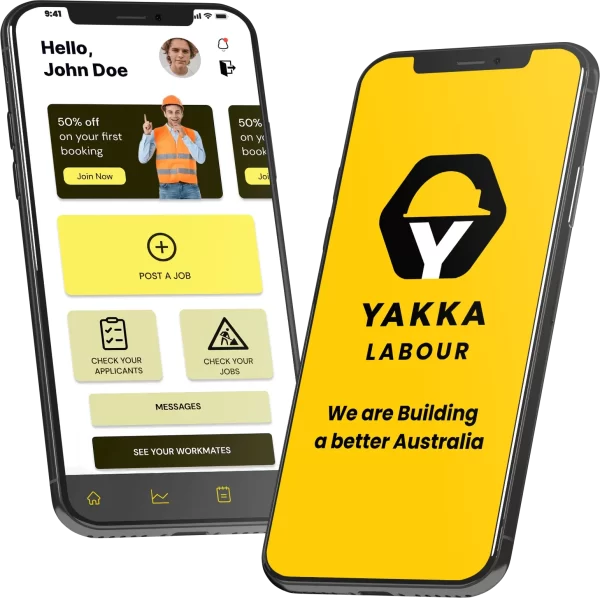
What our users says About our Labour hire app for find Construction jobs
Scott Cowdroy
“Easy to use app and the quality of labourers is good compared to other companies I’ve used. I also had a quick response after I had posted the job”.
Charlie Jones
“I'm impressed with Yakka's responsiveness to find a job in construction. Whenever I have questions or need support, their customer service team is always there to assist me”.
Carlos Melo
“Yakka has become my to-go app for labour hiring. It connects me with reliable workers, saving me time and ensuring quality service”.
Ramon Ayerza
“ Great app for hire labourers”.
Louis
“Awesome app for labourers mate and find jobs”.
Kenji
“We need more apps like this one for construction jobs”.
Nathan
“It's a good start. Easy to use and I hope they add more jobs in the future for labourers and farms”.

Construction jobs available Today in our app
-
General Labourers
Forklift Driver
Skilled Labour
Traffic Controller
Landscaper
Truck Driver
Cleaner
Warehouse Worker
Painter
Plumber


Build Your Reputation One job at a time
Hold Labourers and staff accountable to consistent reliability and performance and ensure only the best staff continue working through our platform.
real feedback from previous employers
Streamline your labour hiring process and cut down on project delays
Take Control of Your Career – Explore High-Paying Construction Jobs
For Temporary workers
Be Flexible with your construction projects and work with reliable labourers. Choose, profiles based on skills, experience, and location.
For Full-time roles
We’ll connect you with quality project managers, site superintendents, carpenters, skilled labourers, plumbers and more.
Construction jobs Payroll
All your invoices are in one place, saving you valuable time each week.
Payments and communication Safe and clear
Transparent construction jobs for seamless workflows. Avoid misunderstandings with clear communication. Your projects, our technology– a winning combination.



Have a question about our labour hire app?
- Download the Yakka labour app
- Complete your profile.
- Choose the type of job do you want
- Apply to your job
- Talk with your applicants and Hire
Construction job salaries can vary widely depending on the role, experience level, and location, but the industry generally offers competitive wages that reflect the skills and physical demands required. Skilled tradespeople, such as electricians, plumbers, and carpenters, often command higher pay due to the specialized expertise needed in their work. Entry-level positions may start with a modest salary, but as workers gain experience and certifications, their earning potential increases significantly. In many regions, construction jobs also come with the opportunity for overtime pay, boosting overall earnings. With the ongoing demand for construction projects, those in the industry can expect steady income and opportunities for financial growth.
In your {Staff and payments}tab, the laborer will be active, and every day he will complete the timesheet. After the job is completed, you can pay by payID and then the Yakka fee by Stripe. If you have an issue tap on {report a problem} in your app

Download our free app start work today
Sign up in minutes and create an account. Our labour hiring app makes it easy to post jobs, manage workers, pay invoices, and more.